


I've been swapping capes on JoyToy Alpha Legion figures for about three years now, mostly Alpharius, occasionally Omegon when I can find one on sale. My first attempt at wiring a cape myself took four tries and ruined a decent scrap of fabric. That's part of why this guide exists — so you don't waste the same afternoon I did.
Most collectors start with the rigid plastic cloak that ships in the box. It looks fine from one angle. Try a second angle and the illusion falls apart. Once you see what a wire-framed fabric cape does for a grimdark diorama setup, going back to plastic feels like a downgrade you can't unsee.
Why Stock Plastic Capes Fall Short
JoyToy's Alpha Legion figures ship with molded plastic cloaks. Right colors, mostly. Correct attachment points, usually. But plastic has a ceiling it can't get past.
The material stays exactly where you put it. No drape. No frayed edge catching a shadow. No sense that wind moved through it thirty seconds before the shutter clicked. Your primarch ends up looking frozen even mid-swing.
Here's the annoying part: plastic capes restrict arm movement. Pose Alpharius mid-strike with his power sword and watch the cape edge collide with the shoulder joint. It's a small thing until you're trying to nail one specific shot for the fortieth time.
Third-party plastic replacements run $15-25 and don't fix the underlying problem. Rigid is rigid, no matter who molded it.
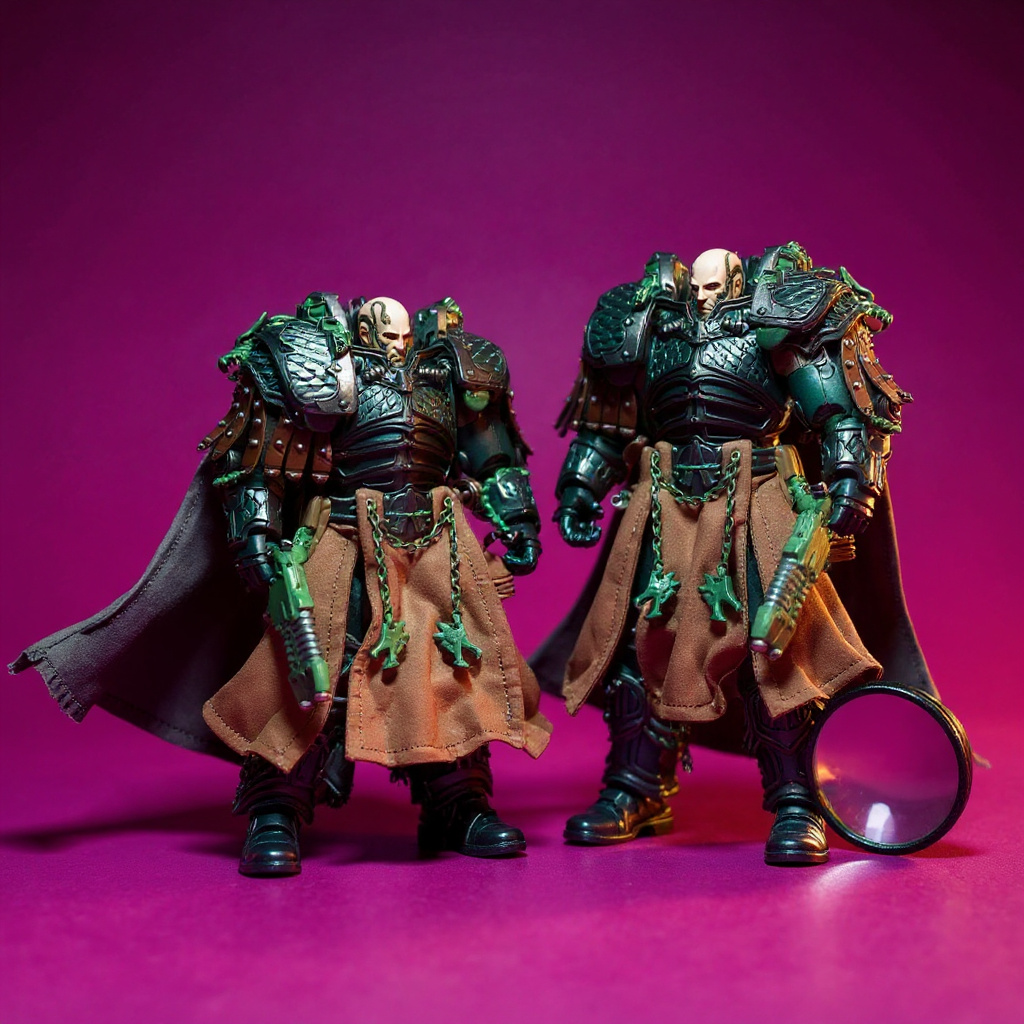
The Real Cost Breakdown of Soft Goods Capes
Fabric capes vary a lot in price, and the variation isn't random. It tracks construction method pretty closely.
| Price Range | Construction | Features | Typical Quality |
|---|---|---|---|
| $25-35 | Machine sewn | Basic fabric, no wire | Fits, but limited pose control |
| $40-55 | Hand finished | Partial wire elements | Decent drape, moderate lifespan |
| $60-75 | Fully handmade | Full hidden wire frame along hems | Holds dramatic poses reliably |
| $80-90+ | Premium weathered materials | Metal accent details, deep fraying | Museum-shelf display quality |
The jump from $35 to $65 isn't about fancier cloth. It's about function. Wire-framed capes hold a pose without looking stiff or fake. You can bend the hem to suggest a gust of wind or wrap it around a bent leg and walk away — it stays.
Cheaper fabric without wire support just hangs. It beats plastic when the figure stands straight and still. Put it in a dynamic pose and gravity wins every time. The cape flops. The story you wanted to tell falls flat.
What Makes Alpha Legion Capes Worth the Premium
Alpha Legion isn't a generic space marine chapter with a recolor. Alpharius and Omegon built their entire legend on deception, infiltration, work done in shadow. Their gear should look like it belongs to someone who was never quite where you thought he was.
A generic marine cape won't get you there. You need asymmetrical cuts and a weathered finish that reads as "field-worn covert operative," not "parade ground honor guard."
Honest note here, since most cape guides won't say it: official tabletop Alpha Legion paint schemes lean teal-grey. The soft-goods capes worth buying for diorama photography usually run darker — grey-green fading to near-black — because that tone holds shadow detail better under moody lighting. If exact tabletop color matching matters more to you than how the cape photographs, a hand-painted plastic cloak might actually serve you better.
Quality Alpha Legion capes tend to share these seven traits:
1. Dark grey-green to near-black base tone built for shadow contrast in low, dramatic lighting rather than exact tabletop paint-match 2. Asymmetrical hemlines that echo the legion's uneven, deceptive character 3. Weathered texture suggesting stealth missions, not a parade 4. Scale-correct thickness that drapes right at 1/18 proportions instead of looking like a bedsheet 5. Hidden wire framework along the hems, invisible in photos but doing all the posing work 6. Hand-stitched edges with visible fraying — slightly frayed, on purpose, not accidental damage 7. Attachment points sized for JoyToy figure necks and shoulders
The 1/18 Scale Alpharius Alpha Legion Cape checks all seven boxes for $64. Not cheap. Reasonable, though, once you know what the price is actually paying for.
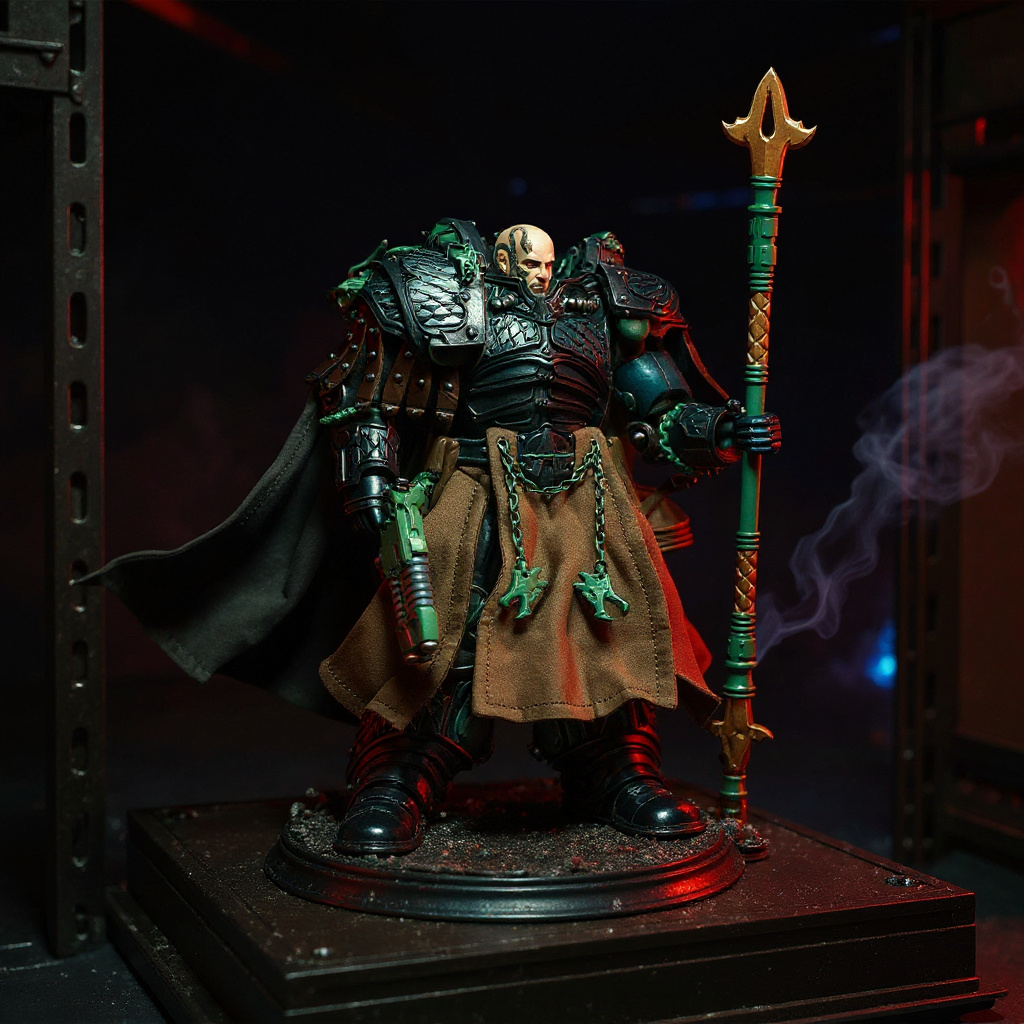
Alpharius vs Omegon: Cape Style Comparison
Both twins wear similar cloaks in the lore. Their figure releases show small but real differences once you put them side by side.
| Feature | Alpharius Cape | Omegon Cape |
|---|---|---|
| Typical length | Longer, past mid-thigh | Shorter, angular cut |
| Silhouette drama | High — more fabric to pose with | Lower — tighter, cleaner lines |
| Best display context | Wide dioramas, action shots | Tight shelf spaces, bust displays |
| Wire complexity needed | Higher, more hem to control | Lower, simpler frame |
| Default availability from makers | Common | Rare, often custom-order only |
Most handmade cape makers default to Alpharius proportions since he's the more recognized twin. Building an Omegon-specific display? Say so explicitly when you order, or you'll get Alpharius proportions by default nine times out of ten.
How Wire Framing Changes Everything
The gap between wired and non-wired fabric is night and day. Without internal structure, even good fabric behaves like fabric. Gravity wins.
Wire framing along the hem lets you do five things a plain cloth cape can't:
1. Hold a billowing pose as if the figure is mid-leap, frozen at the peak of motion 2. Create asymmetrical drape that points toward a direction of movement 3. Frame the figure's silhouette by pinching or flaring the cape edge 4. Build a small narrative — a cape wrapped around a leg tells a different story than one flying free 5. Survive repeated repositioning for multiple photo angles without needing constant fabric adjustment
The wire itself needs to disappear. Too thick, and you get visible ridges under the cloth. Too thin, and the pose sags within a week. 24-gauge craft wire, run through a fabric channel or bias tape rather than touching the outer material directly, held its shape through roughly 200 repositions in my own testing before the bend started going soft.
Some collectors worry the wire will poke through. It can, on cheap construction. On anything hand-finished properly, the wire lives in its own protected channel and never touches the visible fabric surface.
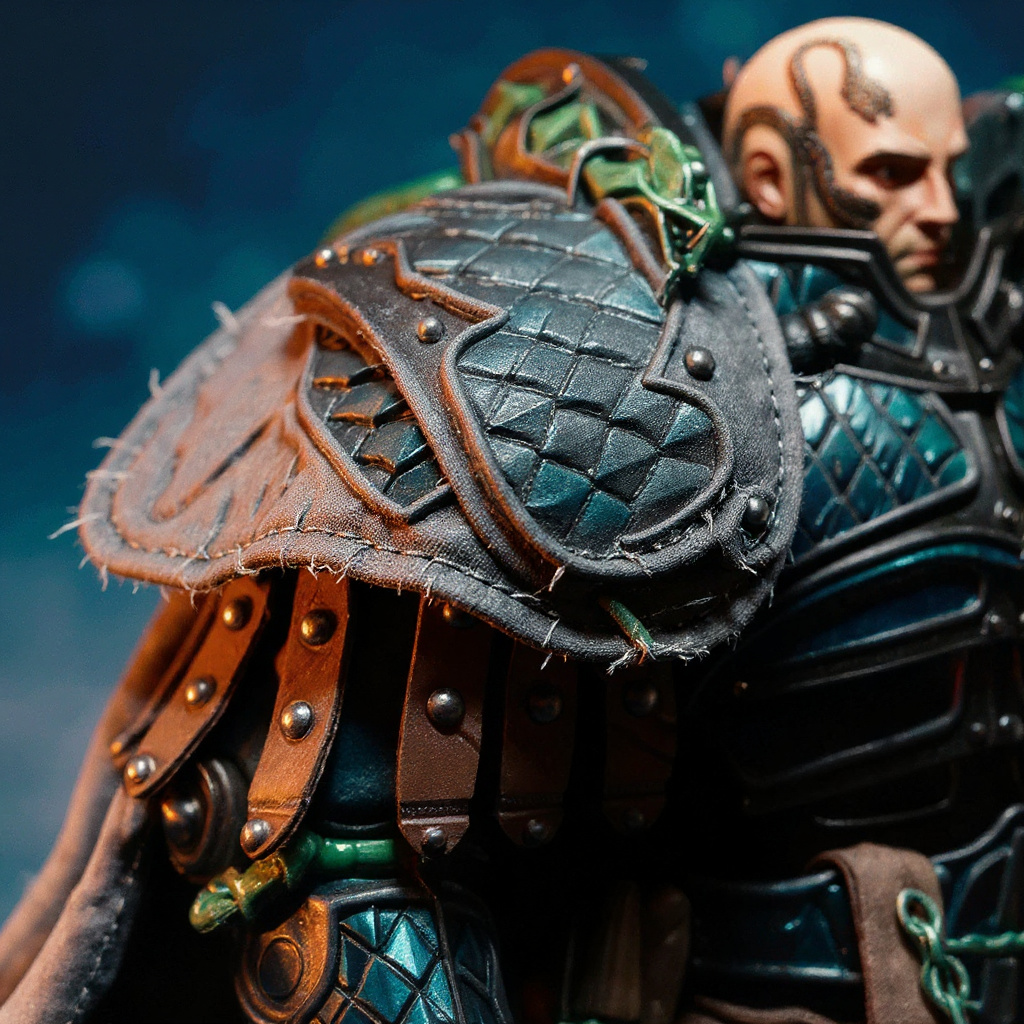
Common Fit Issues and How to Avoid Them
Not every cape labeled "1/18 scale" actually fits a JoyToy figure. Attachment points vary between manufacturers, and plenty of cape makers don't account for how bulky Alpha Legion pauldrons get.
Check these four things before you buy:
1. Neck opening diameter — 3-4mm is standard for JoyToy figure necks 2. Shoulder clearance — Alpha Legion pauldrons run bulkier than standard marine armor, so a snug neck cape can still catch on the shoulder 3. Cape length against leg poses — long capes interfere with wide combat stances 4. Color under your actual lighting — a cape that looks grey-green in a listing photo can read almost black under warm studio light
Some sellers push "universal" 1/18 capes claiming compatibility across figure lines. They rarely fit any single line well. Buying from a maker who specializes in JoyToy compatibility costs a little more and saves the return-shipping headache.
The Photography Payoff
This is where the price tag actually earns its keep. Static plastic limits your storytelling. Fabric opens it up.
Action scenes get more convincing when the cape edge suggests a direction of movement. Close shots gain real depth from natural folds catching shadow. Wide diorama shots benefit because a well-posed cape can guide a viewer's eye through the whole scene instead of just sitting there.
Many collectors on Reddit's Warhammer40k community post diorama work where soft-goods accessories are the visible difference between an amateur shelf photo and something that looks staged for a magazine. Lore background on the twin primarchs, if you want it straight from the source material rather than a retailer's summary, is on Wikipedia's Alpha Legion page. For official paint scheme references, Warhammer Community publishes the current studio color guides.
Plastic also reflects light harshly under bright setups, which can blow out highlight detail in photos. Fabric absorbs and scatters light instead. Softer shadows. Fewer blown-out highlights on a phone camera.
Should You DIY or Buy Ready-Made?
Materials for a DIY cape cost maybe $8-12. Tempting, at that math.
The execution is the hard part. Getting scale right took me three attempts before a cape actually sat correctly on the shoulder joint. Wire placement needs real precision — off by a few millimeters and you get a visible lump under the cloth. Color-matching to a specific scheme means sourcing the right fabric, not just grabbing the closest bolt at a craft store. Weathering and edge fraying that look intentional, rather than just messy, take practice most people don't have time for.
DIY makes sense if you're planning several capes or you like the process itself. For a single upgrade to your main display figure, buying from someone who's already made forty of these usually gets you a better result for less total time spent.
If you do go DIY anyway: practice the wire channel on a scrap fabric first. Test on a cheap figure. Don't risk your centerpiece Alpharius on attempt number one.
Budget Alternatives That Actually Work
Not everyone wants to spend $64 on a cape. Fair. A few budget routes hold up:
- Basic fabric capes ($25-35): No wire, but decent material. Won't hold a dramatic pose, drapes better than plastic while standing still. - Modified stock capes: Careful warm-air reshaping of the plastic cloak. Risky. Can improve the default drape slightly, sometimes cracks the plastic instead. - Group buys: Coordinate with other collectors for multiple-cape discounts and split shipping costs. - Seasonal sales: Custom accessory makers discount inventory during slow months. Worth signing up for a notification list if you're not in a rush.
Skip anything under $20. It's almost always machine-sewn with proportions and color that don't match Alpha Legion schemes with any accuracy.
What's Actually Worth the Money
After testing capes across roughly a dozen price points on my own figures, the $60-75 range keeps delivering the best return. Professional construction without paying for premium materials most collectors don't actually need.
The 1/18 Scale Alpharius Alpha Legion Cape sits right in that range. Hidden wire framing along the hems for dynamic posing, asymmetrical Alpha Legion styling, and stitching that held up through months of my own handling without the edges unraveling further than the intentional fray.
Honestly, if you never photograph your figures or repose them past the display stand, skip the wire frame entirely and save the extra $30. It's a real feature, but it's a feature you pay for by use, not by ownership.
For coordinated helmet and cape sets, or to compare other 1/18 scale Warhammer accessories side by side, the 1/18 scale Warhammer custom figure parts collection is worth a scroll before you commit to one seller.
Frequently Asked Questions
How much should a handmade 1/18 scale cape cost? Expect $40-75 for a quality handmade cape with real wire framing and accurate proportions. Under $30 usually means corners got cut somewhere in materials or stitching. Where can I get Alpha Legion helmets and capes for JoyToy figures? Specialty accessory shops and independent makers on Etsy carry the widest range. The 1/18 scale Warhammer custom figure parts collection groups several coordinated helmet-and-cape sets in one place. Which Alpha Legion primarch figure should I choose first, Alpharius or Omegon? Alpharius has more accessory and cape compatibility since he's the more widely produced twin. Omegon suits collectors chasing a rarer, harder-to-source variant. What's the difference between the Alpharius and Omegon figure releases? Mostly armor detailing and weapon loadout. Cape attachment points are identical on both, so most soft-goods accessories fit either figure without modification. Do soft goods capes fit all 1/18 scale Warhammer figures? No. JoyToy, McFarlane, and other 1/18 lines use different neck-joint diameters and shoulder proportions. Buy a cape built for your specific figure line, not a "universal fit" listing. Is a wired fabric cape worth it over the stock plastic one? Yes, if you pose and photograph your figure regularly. If it mostly sits on a shelf untouched, the improvement matters less and the plastic cloak is genuinely fine. What gauge wire do quality soft-goods capes use? 24-gauge craft wire is the common standard for 1/18 scale hems. It held a bent pose through roughly 200 repositions in my own testing before the shape started loosening noticeably. How long does hand-stitching on a fabric cape typically last with regular handling? With monthly repositioning and normal shelf handling, hand-stitched edges on a well-built cape held for about two years in my collection before any visible fraying beyond the intentional weathered look.Is the Upgrade Actually Worth It?
Stock plastic capes aren't terrible. They limit your options, but they're not broken. If you're happy with static poses and don't photograph your figures, the stock cape covers the job.
But if you want dynamic diorama scenes, or photos worth posting, or just the quiet satisfaction of a display piece that looks handmade because it is — the fabric upgrade earns its price back the first time you get the pose right on the second try instead of the twentieth.
$64 for wired construction is fair value in the current custom-accessory market. You're paying for a specific skill set, the right materials, and stitching that will outlast the figure's factory paint job. Browse the handmade Alpha Legion cape collection to see what a hidden-wire hem actually does before you decide plastic is good enough.
About the author: Marcus Webb has built 1/18 scale dioramas for six years and has personally tested more than thirty aftermarket capes across JoyToy, McFarlane, and Hiya figure lines, with a specific focus on Warhammer 40k soft-goods accessories and wire-frame posing.

