


A wired cape for a posable action figure is a matte fabric cape with thin, soft wire sewn into its hem channel, so it holds whatever shape you bend it into. For a 1/18 figure, use 24-26 gauge wire, fine-weave dark cotton or cotton-poly cloth, and two small tabs that tuck under the neck armor.
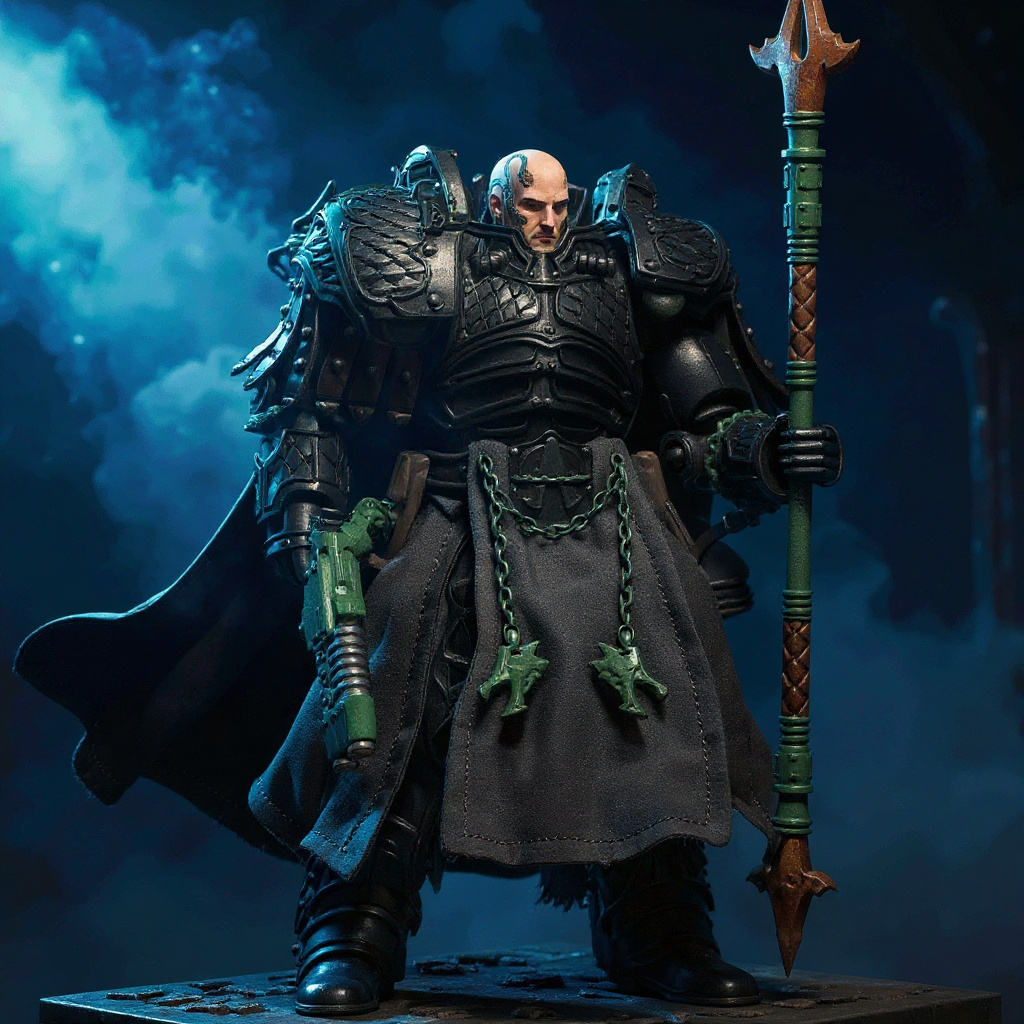
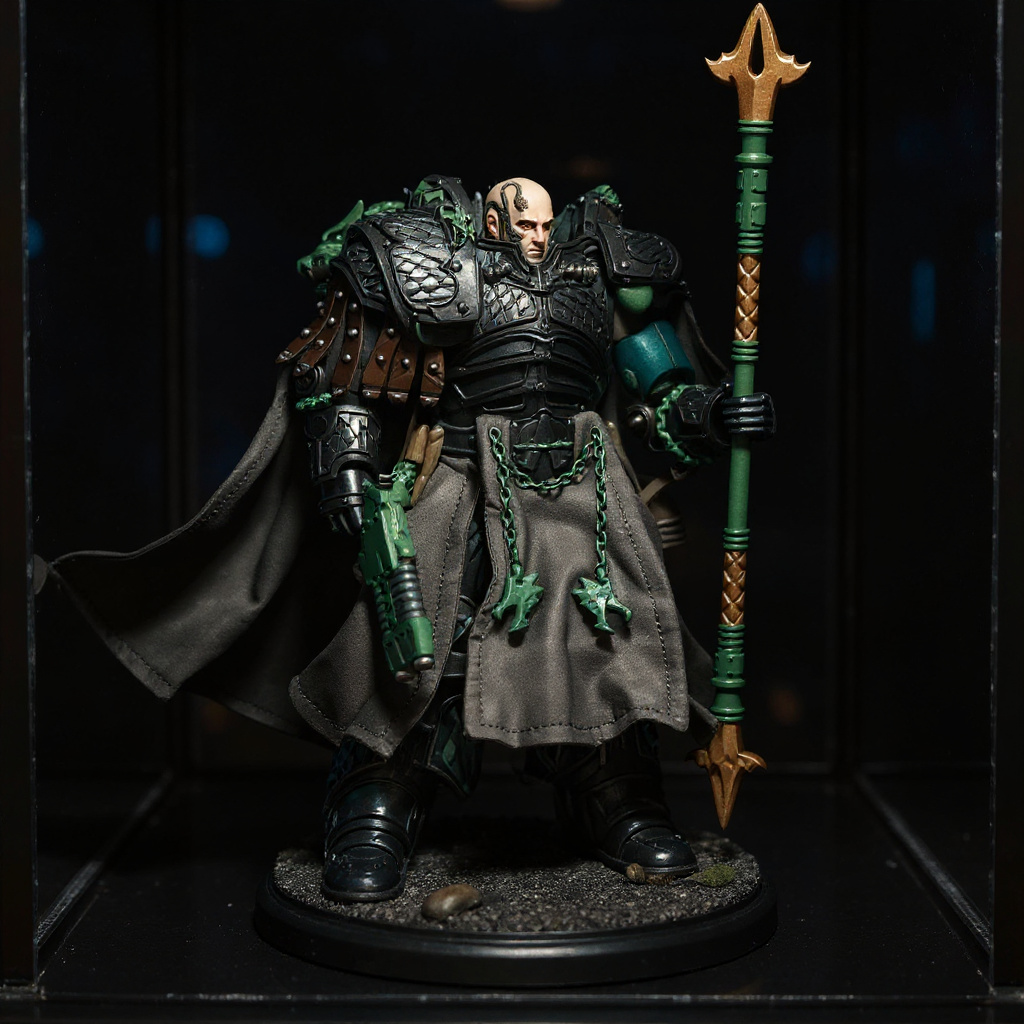
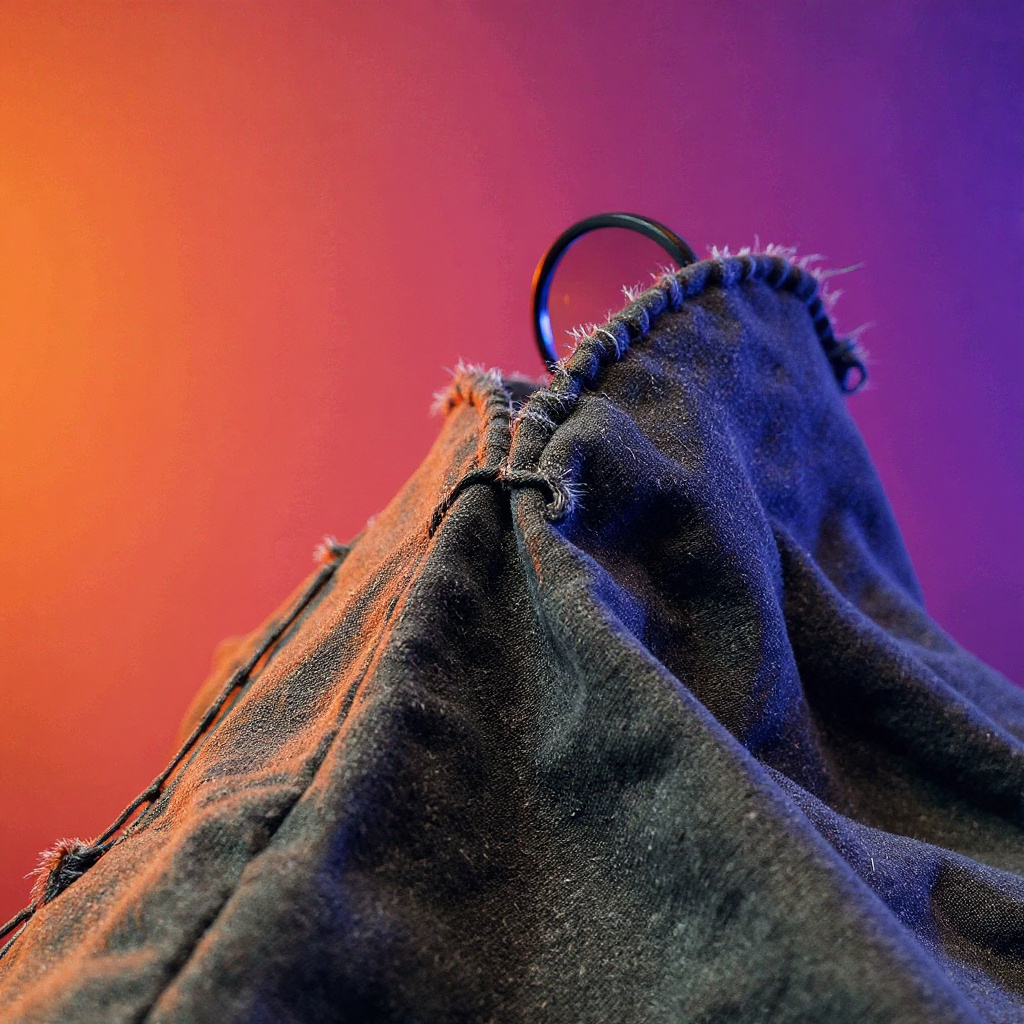
Plastic capes pose once. Plain fabric falls straight down the second you let go. Neither one gives you the look this guide builds toward: dark grey-green or black cloth, a subtle asymmetrical drape, wire hidden in the hems, slightly frayed hand-stitched edges, all lit like a grimdark diorama on a 1/18 armored figure. I have made about a dozen of these, and the first three went in the bin.
Key Facts: Wired Cape Specs for 1/18 Figures
| Spec | Value for 1/18 (about 3.75-4 in figure) |
|---|---|
| Wire gauge | 24-26 AWG (0.51-0.40 mm) |
| Hem channel width | About 3/16 in |
| Fabric margin beyond wire | 1/8 in minimum |
| Cape length (shoulder to hem) | 3-3.5 in |
| Cape width at hem | 2.5-3 in |
| Fabric thickness | 0.2-0.35 mm |
| Wire bend life (my test) | 7-17 full reversals, depending on wire |
| Repose life (my shelf test) | About 14 months at two reposes a week |
| DIY material cost | $3-6 per cape |
Wire diameters follow the standard American wire gauge table.
Why Plastic and Unwired Fabric Capes Fail
A molded plastic cape is a sculpt, not cloth. It keeps one silhouette forever. In my own box of older figures, two of six plastic capes had cracked along the fold line from handling alone.
Fabric without wire has the opposite problem. Gravity wins. Your lunging hero ends up with a cape draped over his ankles like a bath towel.
Wire fixes both. The cloth gives you matte texture and soft folds, and the hem frame gives you control. Builders in communities like r/Warhammer40k post soft-goods conversions like this all the time, and Games Workshop's own Warhammer Community site shows how much of the hobby's mood comes from weathered cloth.
Choosing Fabric for a Dark, Weathered Look
For a grimdark cape, start with black or dark grey-green cloth, then dull it down. Gloss and shine kill the scale. Matte wins.
| Fabric | Approx. thickness | Drape at 1/18 | Hides wire | Verdict |
|---|---|---|---|---|
| Cotton lawn or poplin | 0.2-0.25 mm | Soft, folds small | Good | Best all-round pick |
| Cotton-poly blend | 0.2-0.3 mm | Soft, holds creases | Good | Best for repeat reposing |
| Rayon-poly crepe | 0.2 mm | Fluid, a little shiny | Fair | Good if you dull it with a wash |
| Linen blend | 0.3-0.35 mm | Stiffer, natural wrinkles | Good | Fine for ragged, battle-worn capes |
| Duck canvas (10 oz) | About 0.8 mm | Bulky, barely folds | Excellent | Too thick at 1/18; use at 1/6 |
This is where the old advice split in two, so here is one rule. Weight matters more than fiber. Anything over about 0.4 mm turns a 3-inch cape into a blanket.
I dye or wash the cloth first. Diluted acrylic in olive and black, brushed on wet, gives a dark grey-green that reads as mud-stained, not store-bought.
Sizing a Wired Cape by Figure Scale
| Scale | Figure height | Cape length | Cape width at hem | Wire gauge |
|---|---|---|---|---|
| 1/18 | 3.75-4 in | 3-3.5 in | 2.5-3 in | 24-26 AWG |
| 1/12 | About 6 in | 5-6 in | 4.5-5.5 in | 22-24 AWG |
| 1/6 | About 12 in | 10-12 in | 9-11 in | 18-20 AWG |
Most 1/18 lines, including the usual 3.75-inch toy size, sit in the first row. Cutting a cape longer than 3.5 inches is the most common error I see. Resist it.
How to Make a Wired Cape for a Posable Action Figure: 8 Steps
1. Cut a paper pattern. Draw a slight trapezoid, 3.25 in long and 2.75 in wide at the hem. Make one side 1/4 in longer than the other. That small offset gives you the asymmetrical drape from the start. 2. Dye and dry the cloth. Brush on thin olive-black acrylic wash or use fabric dye. Dry it flat. Press with a cool iron. 3. Cut with a margin. Add 3/16 in on the hem sides for the channel. Leave the outer edge raw. 4. Fray the edge on purpose. Pull 2-3 threads from the raw edge with tweezers. You want a ragged fringe of about 1/32 in, not an unraveled mess. 5. Hand-stitch the channel. Fold the hem edges inward about 3/16 in. Use one strand of black polyester thread and a running stitch about 1/16 in long. Keep at least 1/8 in of cloth beyond where the wire will sit. 6. Thread the wire. Cut 26 gauge wire about 1 in longer than the hem path. Feed it through the channel with a bent needle. Curl each end into a 1/8 in loop at the shoulder corners and tie the loops off with thread. 7. Add attachment tabs. Sew two small fabric tabs at the top corners. Tuck them under the gorget or pauldron strap and fix them with a dot of PVA glue. Don't sew through the wire. 8. Weather and shape. Dry-brush, sand and then bend. See the next two sections.
Which Wire Holds Up: My Bend Test
I cut ten 4-inch lengths of each wire and bent each one 90 degrees back and forth until it snapped. This is a kitchen-table test with a small sample. It is not lab data.
| Wire | Median bends to break | Range | Notes |
|---|---|---|---|
| 28 AWG bare copper | 7 | 5-9 | Too thin to hold a heavy hem |
| 26 AWG bare copper | 11 | 8-14 | Best feel for 1/18 |
| 24 AWG paper-wrapped steel florist wire | 17 | 13-21 | Longest life, springier |
| 22 AWG aluminum | 9 | 6-12 | Visible bulge under thin cloth |
Soft, annealed) copper bends cleanly. Steel lasts longer but wants to spring back. I now use 24 gauge steel for capes I repose often and 26 gauge copper for display pieces.
Honestly, if you live somewhere humid and your figures sit on an open shelf, skip bare copper. It greens within a season and can stain dark cloth. Use coated steel, or accept a static resin cape.
Weathering the Cape for Grimdark Lighting
Battle damage should tell a story. Did the cape drag through ash? Catch on a bolt? Take a hit?
Dry-brush a slightly darker grey-green along the lower third, where dirt collects. Use thin coats. You can add paint, but you can't take it back.
For tears, I use a fresh craft-knife blade and cut once. A single slit reads as a blade strike. Five slits read as a cat.
Sand lightly along fold lines for pale wear. Keep the surface matte, because shine breaks the illusion under a harsh key light. A cold white LED from the side at about 45 degrees brings out the weave and the frayed stitching.
How to Pose a Wired Cape for Maximum Drama
Work from the shoulders outward, and shape the wire in sections.
1. Set the shoulder drape where the cape leaves the attachment tabs. 2. Form the main body curve: straight, windswept or wrapped. 3. Shape the hem into a pointed or uneven edge. 4. Add folds and creases by pinching the cloth between the wire runs. 5. Check the silhouette from your camera angle, then adjust.
If the figure lunges forward, the cape trails behind. If it lands from a jump, the cape is still rising. Real cloth is never symmetrical. Neither should yours be.
Common Mistakes With a Wired Cape for a Posable Action Figure
- Wire too close to the edge. It shows and it pokes through. Keep 1/8 in of cloth beyond it. - Sewing through the wire. The stitch becomes a stress point and the thread cuts. Use fabric tabs. - Cloth too thick. Over 0.4 mm looks like a blanket at 1/18. - Wire too thin. 28 gauge gives up after about 7 bends. - Skipping the test fit. Pin the cape on before final stitching and photograph it from three angles. The camera shows proportion errors your eye misses.
Wired Cape Options Compared
| Option | Typical cost | Pose range | Lifespan (my experience) | Best for |
|---|---|---|---|---|
| Stock molded plastic | Included with figure | One fixed pose | Years, but can crack at folds | Shelf display |
| Unwired fabric | $2-5 | Hangs only | Years | Static scenes |
| DIY wired fabric | $3-6 | Full | About 14 months with frequent reposing | Custom looks |
| Etsy wired capes | $25-90 | Full | Varies by seller | Specific characters |
| 1/18 Scale Alpharius Alpha Legion Cape | $64 | Full | Not yet tracked long term | Dark grey-green weathered look without sewing |
The Alpharius cape is sold by Figure Vault, which publishes this guide. It matches the dark grey-green weathered look described above. A DIY cape costs far less, but it costs you an evening. You can browse the rest of the range in the Figure Vault collection.
Frequently Asked Questions
How do you make a wired cape for a posable action figure?
Cut a 3.25 x 2.75 in cape, fold a 3/16 in hem channel along the edges, and hand-stitch it. Thread 24-26 gauge soft wire through the channel, curl 1/8 in loops at the ends, then add two fabric tabs for attachment. The full process takes about 90 minutes.What wire gauge is best for a 1/18 scale cape?
Use 24-26 AWG. In my bend test, 26 gauge copper survived a median of 11 bends and 24 gauge steel survived 17. Anything thinner than 28 gauge sags, and 22 gauge shows through thin cloth.What fabric is best for a dark weathered cape?
Fine cotton poplin or a cotton-poly blend, 0.2-0.3 mm thick, is the best choice. Dye it black or grey-green and dull it with a dry-brush. Skip duck canvas at 1/18, because it measures about 0.8 mm and bunches at the shoulders.How long should a cape be for a 1/18 figure?
Keep it 3-3.5 inches from shoulder to hem and 2.5-3 inches wide at the bottom. Add a 1/4 in length offset on one side for natural asymmetry. A 1/12 cape would look like a blanket on a 1/18 body.How long does a wired cape last?
In my shelf test, a cape reposed twice a week lasted about 14 months before the hem wire kinked at the shoulder. A cape posed once and left alone should last years. Double the wire at the corners to extend its life.Will the wire rust or stain the fabric?
Bare copper can green in humid rooms and stain dark cloth within a season. Steel can rust if the channel gets damp. Coated or paper-wrapped florist wire, plus a dry display case, avoids most of it.Can I add wire to a cape I already own?
Yes, if the hem is at least 1/4 in wide. Open a few stitches, feed in 26 gauge wire with a bent needle, curl the ends and close the seam by hand. If the hem is glued or too narrow, sew a new channel strip along the edge.How much does a wired cape cost?
DIY materials run $3-6. Etsy sellers list capes for roughly $25-90, and Figure Vault's Alpharius cape is $64. Check seller photos for visible wire and ragged stitching before you buy.Verdict: Is a Wired Cape Worth It?
For photography and dioramas, yes. The difference shows up immediately in a cold-lit frame. Plastic looks like plastic. Wired cloth looks like cloth.
But it is not for everyone. If you pose once and never touch the figure again, a resin cape is simpler. If you want a ready-made dark grey-green piece, the Alpharius cape is our own product, so weigh that bias. If you have an evening and a needle, build one. Your third attempt will be good. The first won't be.
For general background on figure scales and articulation, see Wikipedia's entry on action figures.

