


This guide covers fabric, sizing, wire, photography and one specific example: a navy blue and white school uniform with a pleated skirt, collared shirt and tie.
What Soft Goods Are, and Why Collectors Buy Them
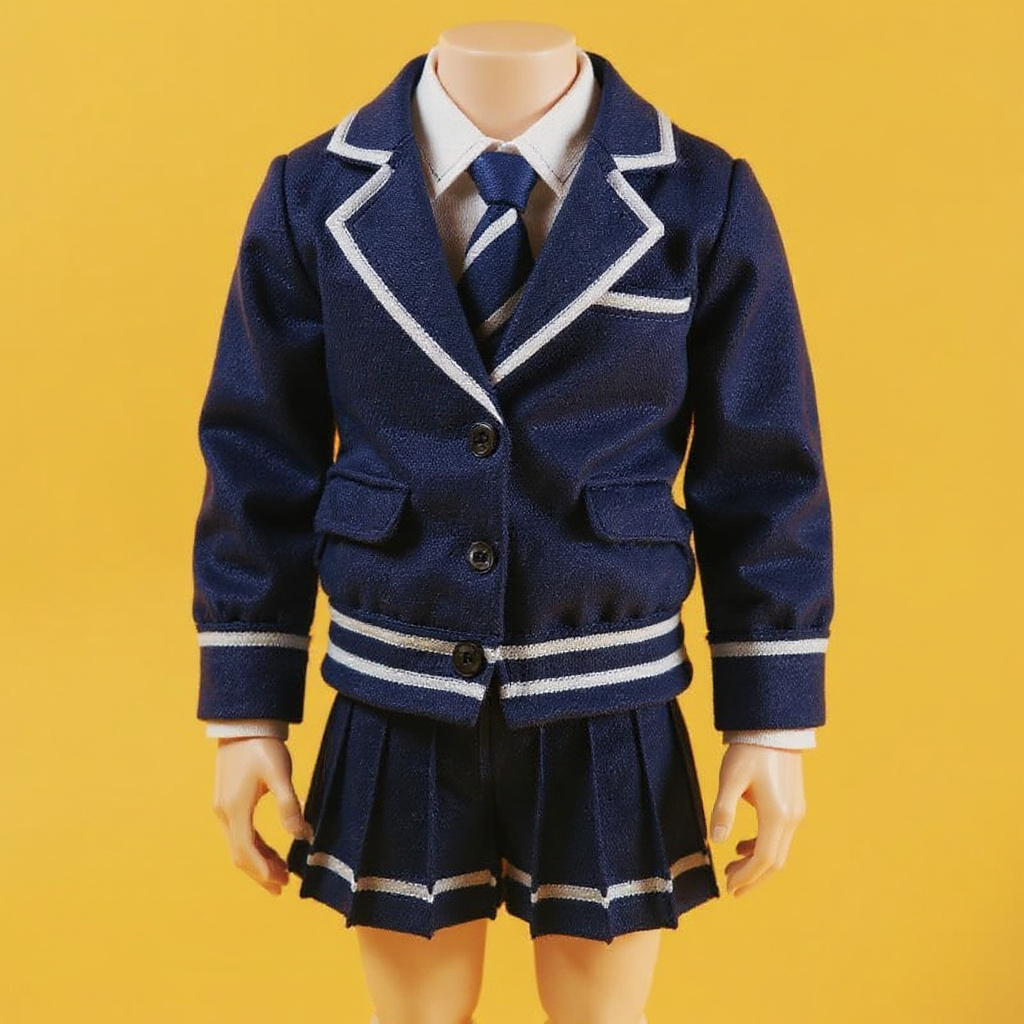
Soft goods are cloth garments made for action figures. They are not molded plastic. Cotton, polyester twill and thin blends drape over the figure the way real clothing drapes over a person. Folds form at the elbow. A skirt swings.
Plastic outfits can't do that. A sculpted plastic jacket stays frozen in the shape the factory gave it, and it won't bunch when the figure sits or bends.
Collectors buy 1/12 scale clothing for three reasons: swapping a stock outfit for a character-accurate one, repairing a lost original, and photography. The last one matters most to me. I have shot the same figure in a molded blazer and in a sewn one, and the sewn one looked like a small person in the frame. The molded one looked like a toy.
The tradeoff is wear. Fabric frays, and handling stretches seams. If you want a figure that gets handled daily, soft goods are a poor match. Honestly, if your figures live in a humid room or get played with by kids, skip fabric outfits entirely. Mildew and torn seams will end the experiment quickly.
How 1/12 Scale Sizing Works for Action Figure Fabric Outfits
The scale ratio is simple. One unit on the figure equals twelve on the real subject, so a 6-foot person becomes a 6-inch figure (Scale model on Wikipedia). Brands do not follow it strictly. Figures sold as 1/12 run from about 5.5 to 7 inches, and body shapes vary a lot.
I measured the shoulders and chest of several bare figures with digital calipers. I took each reading at the widest point of the torso, with arms down, and rounded to the nearest 0.5 mm. Treat these as typical ranges. Individual figures and body versions differ.
| Figure line | Approx. height | Shoulder width (cm) | Chest width (cm) | Fit note |
|---|---|---|---|---|
| Figma (female bodies) | 13.5-14.5 cm | 3.0-3.5 | 2.4-2.8 | Slim; needs narrow patterns |
| S.H.Figuarts (female) | 13.5-14.5 cm | 3.2-3.8 | 2.6-3.0 | Slim to standard |
| Marvel Legends (male) | 15-16 cm | 4.8-5.5 | 3.6-4.2 | Broad; narrow outfits will not close |
| Mezco One:12 | 16-17 cm | 4.5-5.0 | 3.2-3.8 | Tailored patterns work well |
| NECA (7-inch lines) | 17-18 cm | 4.8-5.2 | 3.4-3.9 | Often closer to 1/10 |
The pattern is clear. A shirt cut for a slim anime-style body will not close on a Marvel Legends torso. The reverse gives a baggy shirt with sleeves that pool at the wrists. Brand name tells you less than measurements do, so always compare the seller's listed dimensions to your own.
How to Measure Your Figure (6 Steps)
1. Remove the stock outfit and pose the figure with arms straight down. 2. Measure shoulder width across the widest point of the upper torso. 3. Measure chest width at the armpit line, front to side. 4. Measure waist width at the narrowest point of the torso. 5. Measure arm length from shoulder joint to wrist. 6. Write all five numbers down and compare them with the seller's listed dimensions, allowing 1-2 mm of ease.
Wire in Sleeves and Collars: What It Does
Without wire, fabric hangs. Limp. Sleeves droop and collars flatten.
With wire, you can shape a sleeve into a bent-arm pose and it stays put. A rolled cuff holds its fold. A collar can frame the face. You pose the cloth like a tiny stylist, then pose the figure.
The wire has to be thin enough to disappear and stiff enough to hold. I have had the best results with 24 AWG wire, which is about 0.5 mm across (American wire gauge on Wikipedia). Thicker wire printed ridges through thin cotton on my test pieces. Thinner wire sagged after a dozen pose changes. That is one person's testing, not a lab result.
Not every seller lists wire. If a listing doesn't mention it, assume the sleeves are unwired.
How to Add Wire to a Sleeve (5 Steps)
1. Cut a length of 24 AWG wire about 2 cm longer than the sleeve seam. 2. Fold both ends into small loops so the tips can't poke through. 3. Wrap the wire in thin fabric tape or thread. 4. Stitch it into the inside of the seam, not the outer fabric. 5. Bend it gently, then check the outside for bumps in bright light.
Example: A Navy Blue and White School Uniform Set
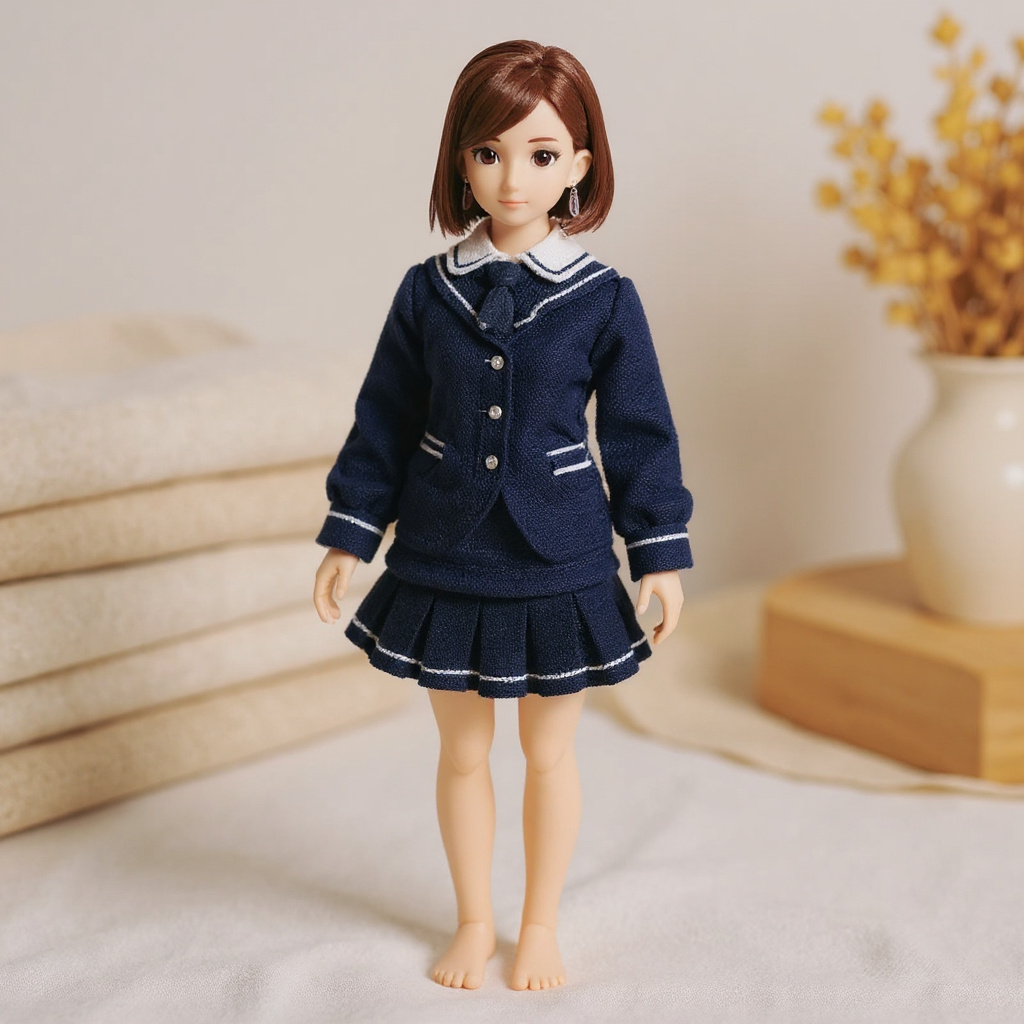
A school uniform is a good test for 1/12 action figure soft goods clothing. It has many small parts: a collared shirt, a tie, pleats, and a skirt or trousers. Each part has to scale down without looking bulky.
The Momo Ayase School Uniform Replacement Set is one example I looked at. It is a navy blue and white soft fabric outfit sized for 1/12 figures. It has a pleated skirt, a collared shirt with a tie, visible fine stitching, and wire in the sleeves and collar so you can pose them. It is shown on a bare-jointed 1/12 body against a plain desk background, which is the best way to judge fit. The listed price is $48.75. It is meant for figures with slim female proportions, so check the seller's measurements against your own figure.
It is one option among several. Other makers sell similar outfits on Etsy, eBay and independent shops. Whatever you choose, look for the same markers of quality:
- Hems and pleats that stay sharp at 1/12 size. - A tie that is sewn or knotted at scale, not a flat printed strip. - A clean neckline where the collar sits flat. - Stitches small enough to look right but still visible up close.
The outfit's source material is the series Dandadan. Fans care about exact uniform colors, and the Dandadan community on Reddit is a good place to compare references before you buy.
Mass-Produced vs. Handmade Fabric Outfits for Figures
These ranges come from marketplace listings I browsed. Prices change, so check current listings.
| Feature | Generic mass-produced set | Handmade set |
|---|---|---|
| Typical price | $15-30 | $40-80 |
| Fabric | Thin polyester, often shiny | Cotton blends, twill, matte synthetics |
| Stitching | Machine, minimal finishing | Fine hand or machine detail |
| Wire in sleeves or collar | Rare | Common, but confirm in the listing |
| Sizing options | One size, 'fits most' | Sometimes by measurement |
| Wear in my experience | Seams loosened within months of regular posing | Held up through repeated posing |
The gap isn't magic. A $20 set can look fine in a photo if you never re-pose it. But if you change poses weekly, seam quality is what you are paying for.
Common Fit Problems and How to Fix Them
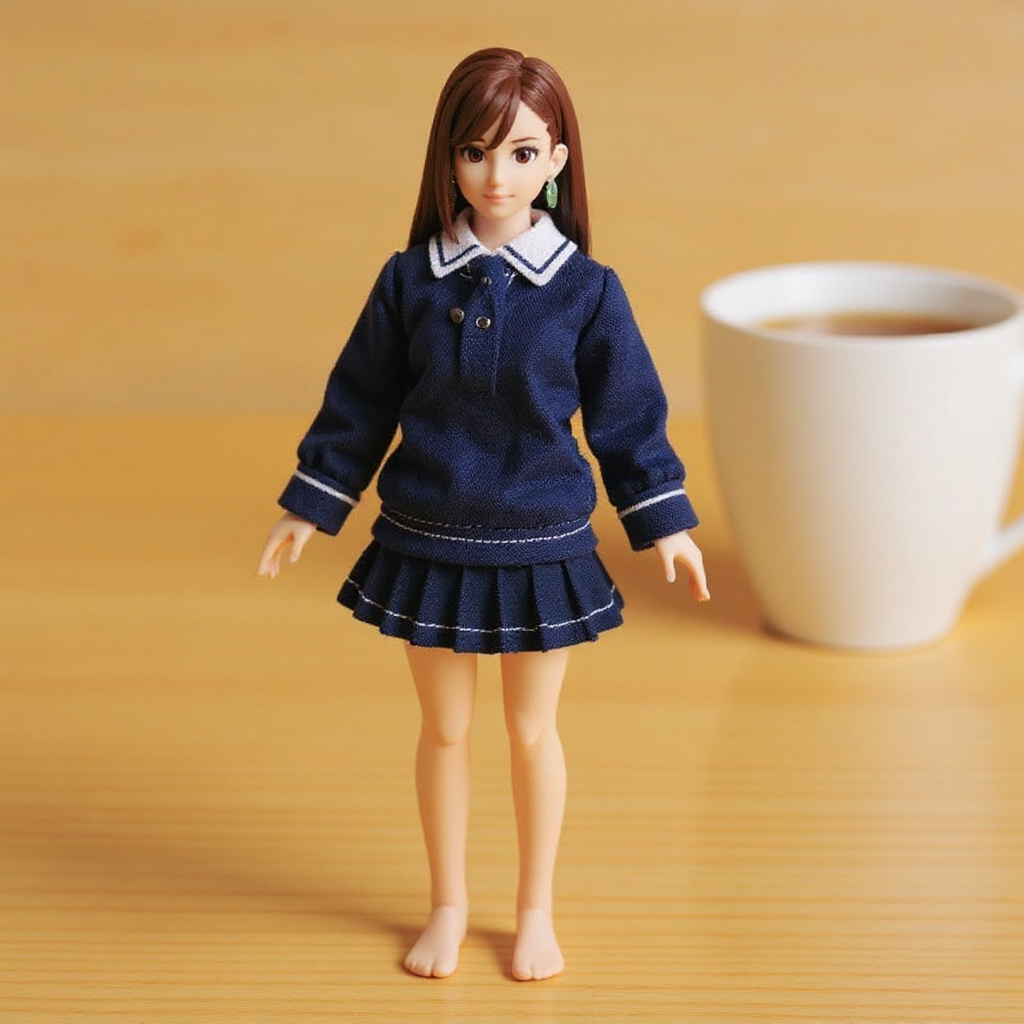
Even good action figure fabric outfits go wrong in predictable ways:
1. Shoulders too narrow. The garment slides off or bunches at the neck. 2. Chest too tight. The fabric pulls and looks painted on. 3. Sleeves too long or short. Cuffs pool at the wrist or leave the forearm bare. 4. Waist placement off. Skirts and trousers ride too high or too low. 5. Joint interference. Fabric snags on elbow and knee hinges. 6. Neck opening too small. You stretch the collar to get the head through. 7. Closure problems. Velcro or snaps show, or the sides don't align.
Shoulder width causes the most trouble. Fixing the other six is easier than finding a replacement garment for a mismatched shoulder.
Photographing Soft Goods
Soft light helps. I use a desk lamp aimed through a sheet of white printer paper, set about 45 degrees to the figure. Hard light makes every pleat look like a crease and every thread look fuzzy.
Pose the fabric first, then the figure. Shape the sleeves and collar before you move the arms, or the cloth will drag and wrinkle. Keep the background plain: a desk, a sheet of gray card, nothing else. The outfit should be what the eye finds first.
Step back and crop later. Wide lenses at close range stretch proportions and make a 6-inch figure look distorted. If you want to share your work, r/ActionFigures is an active place to get feedback.
How to Choose 1/12 Scale Clothing Worth Buying
The checklist is short:
- Photos on a real figure. Flat lay shots hide fit problems. - Named fabric. 'Cotton blend' or 'polyester twill' beats 'soft fabric.' - Dimensions listed. Shoulder, chest and sleeve length at minimum. - Wire stated. If it isn't mentioned, don't assume it's there. - Return policy. Miniature sizing is unforgiving.
For more outfits and figure accessories, browse all collections at The Figure Vault or the full product catalog. The store homepage lists new arrivals.

