


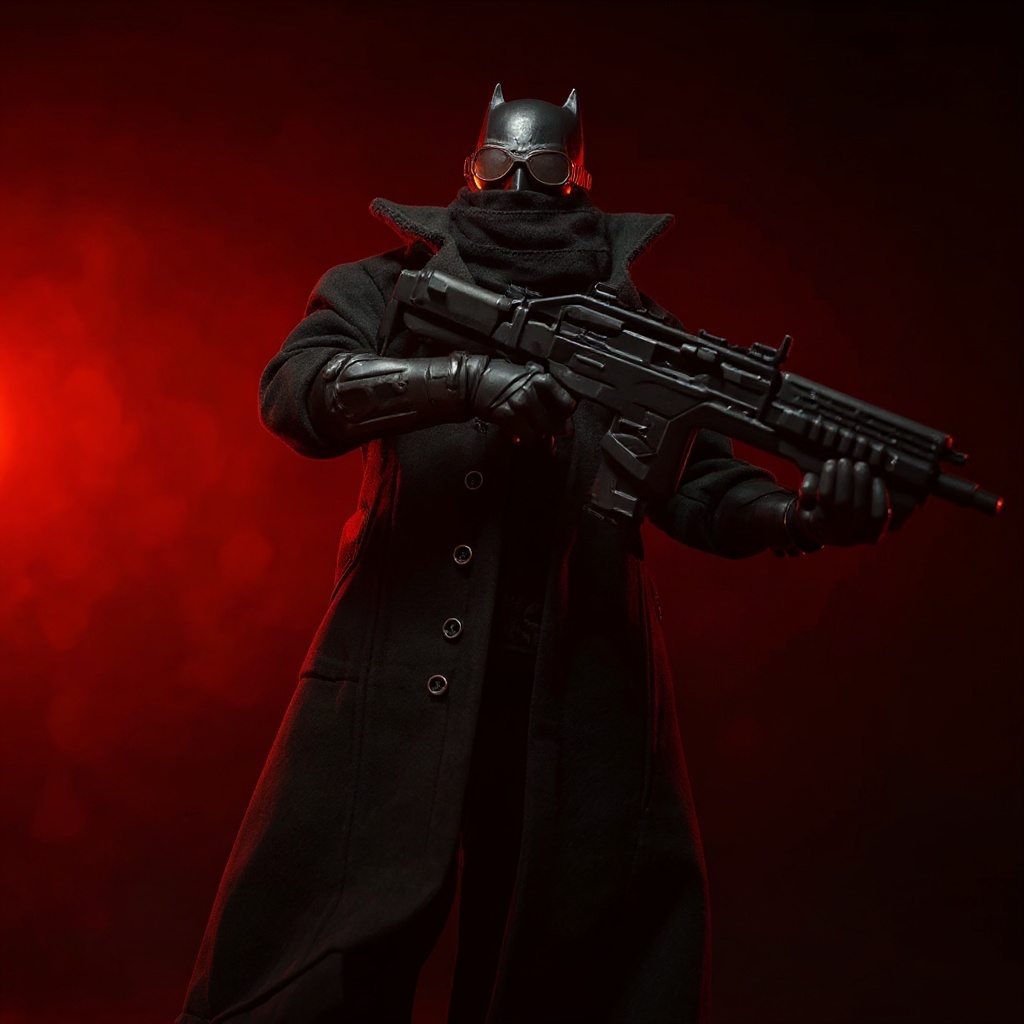
A 7-inch action figure trench coat looks real when three things line up: 20-22 gauge wire running through the hem and collar, matte black textured fabric that doesn't catch shine under studio lights, and stitched panels cut to match the figure's actual shoulder width. Skip any one of those and the coat reads as a toy accessory. Get all three right and it reads as armor.
After customizing figures for seven years, I've learned that a wired 7-inch action figure trench coat transforms a static display into something that looks like a paused film frame. The difference between a $35 basic cloth coat and a $50 wired version isn't just price. It's the ability to hold a wind-blown pose for months without sagging into a limp curtain around the figure's legs.
> 20-22 gauge wire holds a bent pose for 3-5 years before fatigue sets in and the curve starts to soften.
Why Wire Makes a 7-Inch Action Figure Trench Coat Hold Its Pose
Stock Batman figures ship with rigid plastic capes that point straight down, no matter how you pose the arms. They look fine sitting on a shelf. They look flat and lifeless in an action shot.
A wire-reinforced fabric trench coat solves that by letting you bend the hem into a wind-catch curve that stays exactly where you left it. The wire runs along the two spots that take the most stress — the bottom edge and the collar. Quality makers use 20-22 gauge craft wire threaded into binding tape before the panel gets stitched shut. It bends without a fight and holds the shape once the fabric's weight settles on it. Cheaper builds use thinner wire that snaps after a dozen bends, or thicker wire that springs back to flat the second you let go.
I've watched collectors drop $80-90 on a full figure just to get slightly better soft goods, only to find the coat still can't hold a dramatic pose past week two. A standalone wired coat like the Knightmare Batman Trench Coat runs $50 and gives you full control over the silhouette without buying an entire new figure.
Honestly, if you photograph your figures in flat daylight and never touch the pose after setup, skip the wire. Basic fabric looks nearly identical in a still shot taken from three feet away. Wire earns its price when you're changing poses, shooting stop-motion, or working under raking light that shows every fold.
Wired vs Non-Wired 7-Inch Action Figure Trench Coats: Full Comparison
| Feature | Wired Coat ($45-60) | Basic Fabric ($25-40) | Molded Plastic ($0-15) |
|---|---|---|---|
| Wire gauge used | 20-22 gauge craft wire | None | None (ABS shell) |
| Pose hold time | 6+ months | 2-3 weeks | Permanent, no posing |
| Wind effect realism | Excellent | Poor | None |
| Fabric drape quality | Controlled, natural fall | Droops within weeks | Artificial, glossy |
| Durability | 3-5 years | 1-2 years | 10+ years, but static |
| Repair cost | $15-20 wire replacement | Not repairable | N/A |
| Photography value | High | Medium | Low |
The numbers hold up under a camera. Wired coats cost close to twice as much as basic fabric, but they photograph like they cost four times as much. For YouTube reviewers and Instagram collectors, that $20-25 premium buys engagement you can measure in comments and shares.
Non-wired fabric looks fine the day it arrives. Then gravity wins. Within a month the coat hangs straight down, especially on figures with articulated shoulders that can't support the fabric's own weight without a frame underneath.
Sizing a Trench Coat for Your 1:12 Scale Figure
Most custom soft goods target 1:12 scale, the range that covers 6-7 inch figures. But "7-inch" is not a guarantee of fit. Manufacturers use different torso blocks even inside the same scale bracket.
McFarlane DC figures carry broader shoulders than Marvel Legends. Mezco bodies run thicker through the torso than both. A coat pattern built for one line can hang loose or pull tight across the chest on another, even when the box says the same scale.
Here's how to measure before you order:
1. Wrap a soft tape around the chest at the widest point of the torso, under the arms, and record the circumference in millimeters. 2. Measure shoulder width from the outer edge of one shoulder joint to the other, across the front. 3. Check arm clearance by raising both arms to the figure's maximum range and noting if the shoulder joint pokes past the torso silhouette. 4. Measure torso length from the base of the neck to the top of the hip joint, since coat panel length depends on this more than chest size. 5. Send these four numbers to the maker before ordering, and ask if their pattern was built for your specific figure body, not just the general scale.
A coat cut for a slim DC Essentials Batman will not sit right on a bulky Dark Knight Returns figure. Both get labeled "1:12 scale." Neither shares a torso block.
The action figure cape with wire armature approach — using standard wire gauge sizing borrowed from jewelry and craft work — started with Star Wars customizers but took off with Batman: Arkham Knight figure releases. Collectors wanted a screen-accurate flowing coat, not the stiff plastic compromise that shipped in the box.
Materials That Work for a Matte Black Textured Fabric Trench Coat
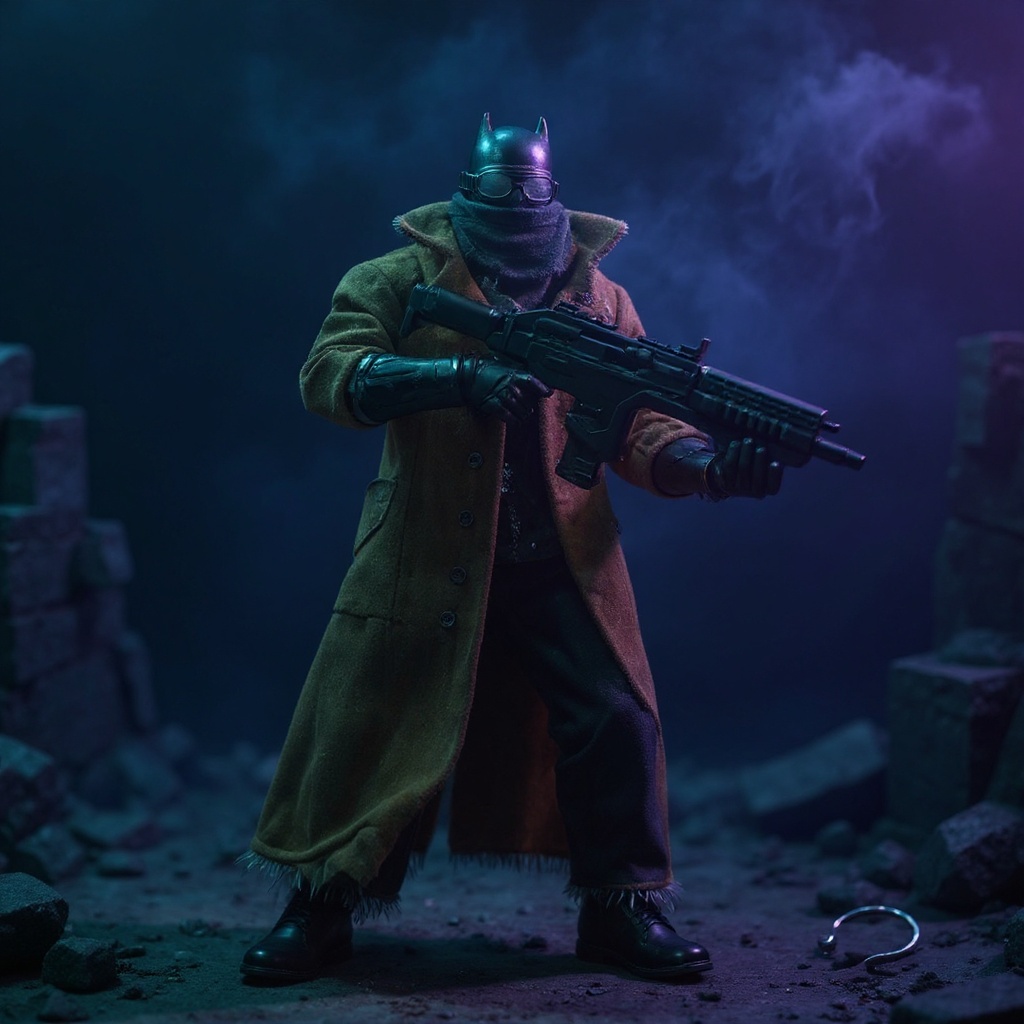
1. Cotton drill fabric - Holds a crease, resists fraying, takes paint well for weathering effects. 2. Poly-cotton blends - Resists wrinkles better than pure cotton, washes without falling apart. 3. Microfiber suede - Reads as leather under lights, but pulls dust off a nearby shelf like a magnet. 4. Linen blends - Drapes beautifully. Costs more. Hard to source in true matte black. 5. Canvas weight cotton - Built for military or work coats, too stiff for a flowing trench. 6. Silk alternatives - Gorgeous fall, but shows see-through under strong LED photography. 7. Denim weight fabrics - Takes wire well, holds a jacket shape, but adds bulk at 1:12 scale.
Skip anything with metallic thread or sequins. It flares under LED panels and snags on articulated joints within a week. Matte textured fabric — the kind specified for a proper 7-inch action figure trench coat — hides small stitching errors and reads as heavier material than it actually is. Smooth fabric shows every fold. Textured fabric hides the ones that don't matter.
Finding a Maker for Your 7-Inch Action Figure Trench Coat
The r/ActionFigures community keeps recommending the same handful of makers, most working through Etsy or Instagram DMs with a 2-4 week lead time.
Reliable makers show multiple angles, list exact chest and shoulder measurements, and tell you upfront if their pattern won't fit your figure. Walk away from anyone who posts one glamour shot and nothing else.
Pricing spreads out wide. Simple capes: $15-25. Detailed coats with tailored panels: $40-70. Full outfit sets: $100 and up. Browse the wired trench coat collection for a sense of where a matte black textured coat with wire hem sits in that range — it lands in the middle, popular enough to be worth stocking, simple enough not to price like a full outfit.
Expect handmade quirks. Stitching won't be factory-flat. Fabric grain might drift a few degrees between panels. That's the cost of getting something a factory line will never produce.
Maintaining Wire-Reinforced Fabric Over Time
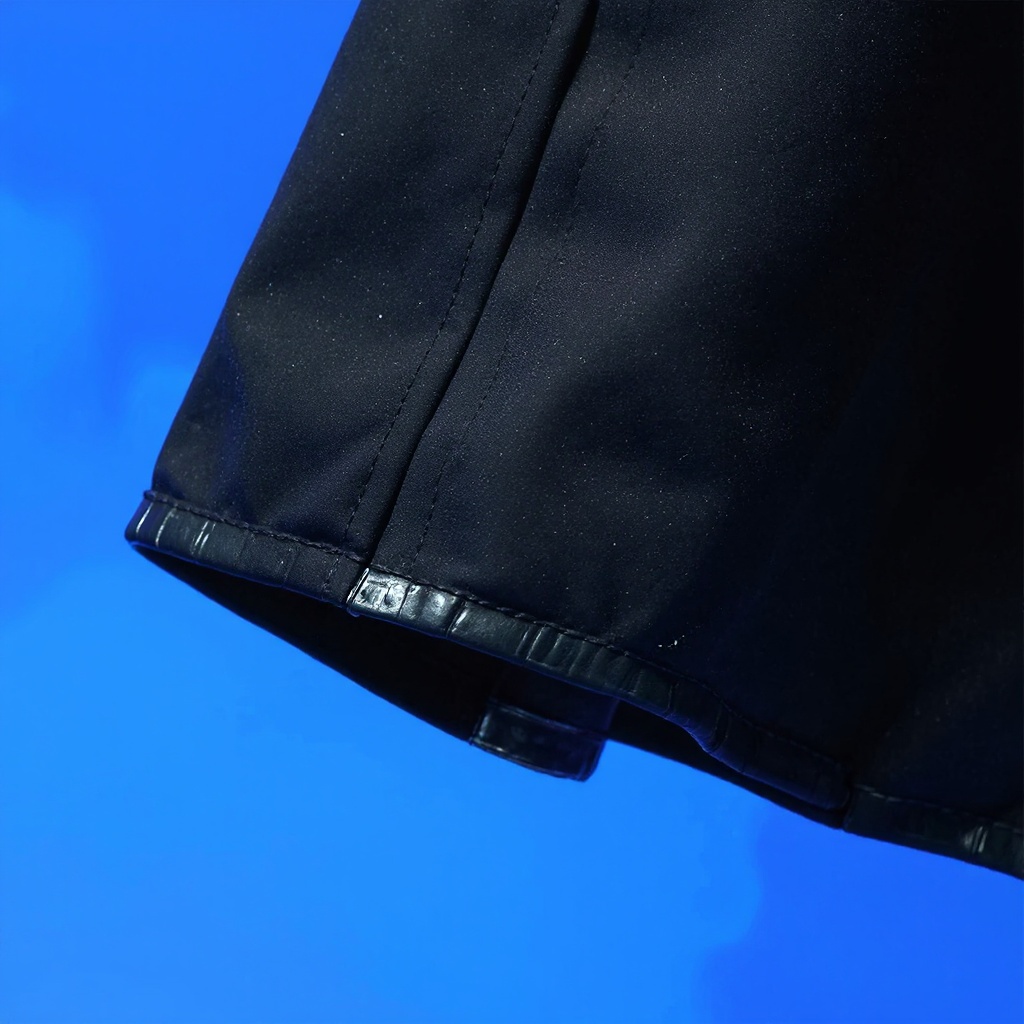
Wire fatigue happens. After 50-100 bends, even good 20-22 gauge wire develops a soft spot that kinks instead of curving. It won't snap right away. It just stops holding a clean line.
Follow this routine and the coat lasts:
1. Store the coat flat, never hanging, since a hanger stretches the fabric and stresses the wire's attachment points. 2. Brush dust weekly with a soft, dry brush — dark fabric shows buildup as a gray cast under camera lights within a month. 3. Skip compressed air. It can drive a loose wire end straight through the stitching if the seam isn't finished well. 4. Rotate the pose every few weeks so tension doesn't sit in one direction long enough to deform the fabric permanently. 5. Budget $15-20 for a wire swap once the curve stops holding — most makers offer this instead of a full coat replacement.
See the soft goods care guide for photos of proper flat storage versus the creased mess I got from six months on a display stand. Learned that one the hard way. Never again.
What Makes Soft Goods Custom-Friendly
Some figure lines just work better with fabric. Shoulder articulation, arm range, and torso block all decide whether a coat drapes right or fights the joints.
Mezco One:12 figures have the best soft goods compatibility on the market, because they were engineered with fabric in mind from the first prototype. McFarlane DC figures need careful fitting — their shoulder joints sit higher than average, and a standard pattern leaves gaps at the collar if nobody accounts for it. Marvel Legends varies by release year. Newer figures pose well in a coat. Older ones have limited arm travel that makes a dynamic wind pose close to impossible.
For a Knightmare-style setup specifically, McFarlane's Knightmare Batman gives the coat the screen-accurate proportions it was drafted around. Check the sizing guide for 1:12 scale figures before you buy if you're mixing brands.
Common Problems With Wired Trench Coats and How to Avoid Them
Fabric stretching wrecks more coats than wire failure does. It happens when a figure sits in one extreme pose for months and the fabric takes a permanent set that won't bounce back.
Wire poking through the hem usually means the maker skipped a finishing step — encasing the wire end in a small fabric tube, or stitching a tight seam around it. Don't try to fix this yourself. You'll make the hole bigger.
Color matching gets tricky with black fabric under mixed lighting. What looks matte black under warm LEDs can shift toward brown or blue under a cool daylight bulb. Test your actual shooting setup before committing to a fabric batch.
Sizing mistakes come from trusting the scale label instead of the actual figure. "1:12 scale" doesn't mean identical torso dimensions across brands. Measure first. Every time.
Frequently Asked Questions About 7-Inch Action Figure Trench Coats
What gauge wire works best for a 7-inch action figure trench coat? 20-22 gauge craft wire is the standard. It bends into a wind-swept curve without tools, holds that curve for 3-5 years of normal handling, and doesn't fight back like 18-gauge wire does. How much does a wired trench coat cost for a 7-inch figure? Expect $45-60 for a detailed, multi-panel coat with wire in the hem and collar. Simple capes without full panel construction run $15-25. How do I measure my figure before ordering a custom coat? Measure chest circumference at the widest point, shoulder width across the front, torso length from neck to hip joint, and arm clearance at full raised extension. Send all four numbers to the maker before you order. Will a coat made for McFarlane's Knightmare Batman fit other 7-inch figures? Not reliably. McFarlane torsos run broader through the shoulders than Marvel Legends, and Mezco bodies are thicker than both. Always check the maker's specific pattern measurements against your figure. How long does wire-reinforced fabric actually last? The fabric itself holds up 3-5 years with normal handling. The wire starts to lose its clean curve after 50-100 bend cycles, at which point a $15-20 repair swap fixes it. Where can I buy a custom soft goods trench coat? Etsy has the widest maker selection. Instagram and collector Facebook groups often have makers with waiting lists who don't sell publicly on marketplaces at all. Can I build my own wired trench coat at home? Yes. Cut a paper pattern scaled to your figure's measurements, sew wire into binding tape along the hem and collar, then hand-stitch the tape into the seam. Most hobbyist builds skip the sewing machine entirely at this scale. How do I stop wire from poking through the fabric over time? Buy from makers who encase wire ends in a small fabric tube or finish the seam with a tight double stitch. If it's already poking through, get a repair instead of patching it yourself — DIY fixes usually widen the hole.Is a Wired 7-Inch Action Figure Trench Coat Worth It?
After testing dozens of these, the answer depends on how you display the figure. A shelf display that never moves does fine with basic fabric. Photography and stop-motion need the wire.
The $20-25 premium pays off if you shoot regularly or change poses often. If you set a pose once and never touch it again, basic fabric gets you most of the visual improvement for half the price.
Handmade imperfections bother some collectors more than others. If uneven stitching or a slightly off panel grain drives you up the wall, stick with mass-produced accessories instead. Custom work trades factory polish for a look nothing off the shelf can match.
For Knightmare Batman specifically, the stock plastic coat looks stiff in almost every photo. The shape doesn't move, the surface catches light wrong, and it reads as a toy the second you zoom in. A quality Knightmare Batman Trench Coat with matte black textured fabric and a wired hem changes the whole figure's presence on a shelf or in front of a camera.

