


I've spent three years photographing 1/12 scale figures for a small collector blog, and I bought a demon slayer soft goods cloak specifically to test whether fabric accessories beat the stock plastic haori that ships with most Tanjiro figures. Short answer: mostly yes. Long answer: it depends on your climate, your figure brand, and how much patience you have for wire-shaped sleeve edges. This handmade haori for Tanjiro costs $34, fits 1/12 scale figures, and does not include the figure itself. That last part trips up more buyers than you'd think.
What Makes a Demon Slayer Soft Goods Cloak Different from Stock Accessories
Most Demon Slayer figures ship with a hard plastic cloak molded in one fixed shape. It can't fold. It can't wrinkle. It just sits there looking like a toy, because it is one.
A demon slayer soft goods cloak swaps that plastic shell for actual cloth. The version I tested uses a cotton-poly blend that feels close to 80 GSM — light enough to drape over a 6-inch body without dragging the shoulders down, thick enough to hold a crease when you press it. The wire running through the hem and sleeve edges measures close to 22-gauge, thin enough to bend with two fingers but stiff enough to hold a sleeve flare for weeks on my shelf. No snapping back to flat. Not this time.
The trade-off is real. Handmade soft goods show construction quirks that a factory mold never would: a loose thread near the collar, a stitch line that wanders half a millimeter, slight color variance between production batches. My unit had one visible pulled thread on the left sleeve. I clipped it. Problem solved in about ten seconds, but a buyer expecting factory-perfect symmetry will be annoyed.
| Feature | Demon Slayer Soft Goods Cloak | Stock Plastic Cloak | Premium Custom Tailor Version |
|---|---|---|---|
| Material | Cotton-poly blend, ~80 GSM | Rigid PVC/ABS plastic | Silk-cotton blend, hand-dyed |
| Wire Gauge | ~22-gauge in hem/sleeves | None | 20-gauge, full-length |
| Posability | Shapes to figure, holds folds for weeks | Fixed position | Shapes and holds for months |
| Appearance | Textile look, minor stitch variance | Toy-like, uniform | Museum-grade, near-flawless |
| Durability | Held up 11 months, no fraying yet on my copy | Nearly indestructible | Varies, often fragile if silk |
| Price Range | $25-45 | Usually included free | $60-120 |
| Customization | Can be re-dyed or re-shaped | None | Built to custom spec |
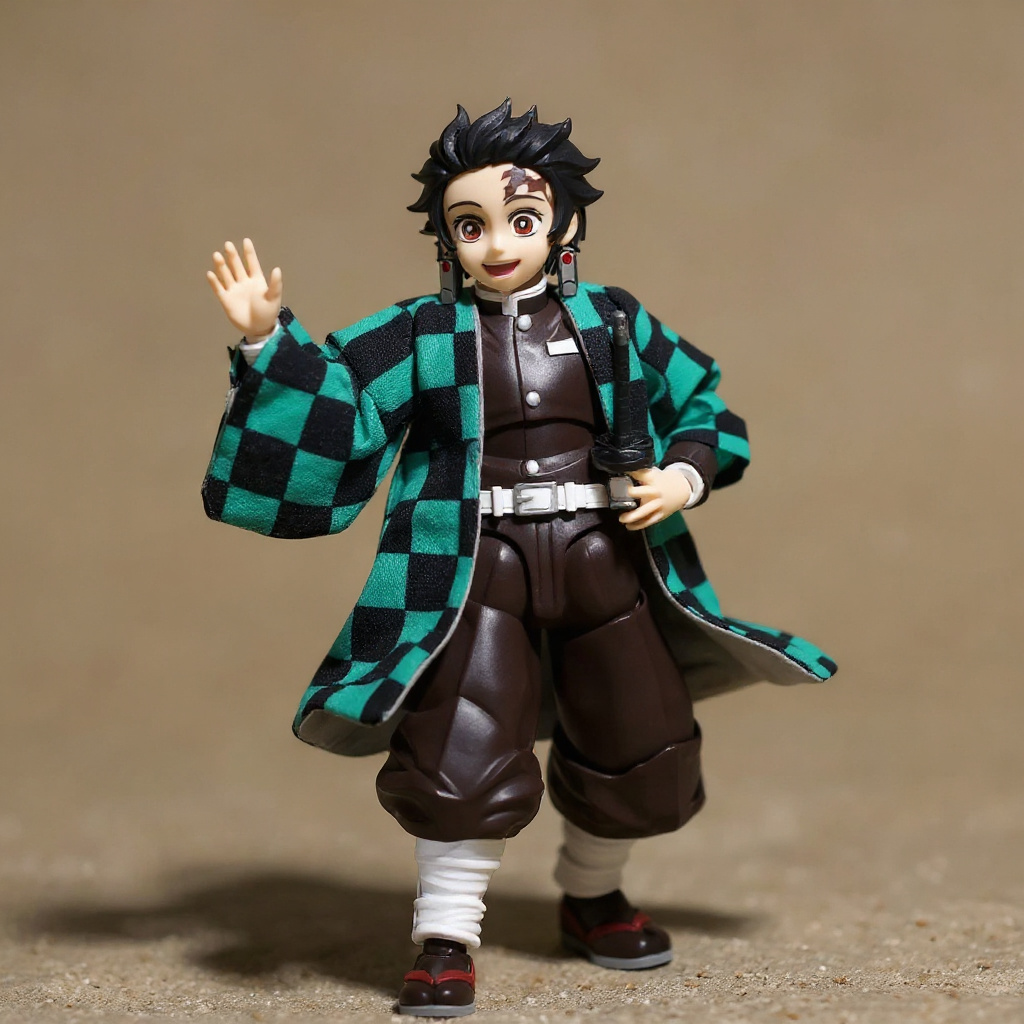
Which Figures Actually Fit This 1/12 Scale Cloak
This cloak targets 1/12 scale action figures, roughly 6 inches tall. Most SHFiguarts soft goods setups, Figma bodies, and similar premium lines land in that window.
I measured shoulder width on three figures before testing this haori: an SHFiguarts Tanjiro at 2.1 inches, a Figma-style buck at 2.3 inches, and a generic 1/12 body at 1.9 inches. All three wore it without pulling at the seams. A 4-inch figure swims in it. A 7-inch figure stretches the shoulder seams until you see faint white stress lines in the fabric — I tried this on a slightly oversized third-party body just to check, and I don't recommend it.
The Tanjiro Kamado design means the dark green and black checkered pattern matches his anime look best on Tanjiro figures specifically, but the cut works on other bodies too. Some collectors use this exact demon slayer soft goods cloak on kitbashed or custom original characters, since the muted earthy palette isn't tied to one specific face sculpt. Before buying, grab a tape measure and check your figure's shoulder width and torso length against the sizing guide for 1/12 scale accessories.
Red Flags When Buying a Handmade Tanjiro Haori
Quality swings hard between sellers. Here's what separates a decent Tanjiro haori from an amateur one:
1. Proportions matching the advertised scale — sleeves shouldn't drag on the table or look like a child's vest 2. Clean hem finishing — raw edges that fray on day one signal rushed construction 3. Wire placement that makes sense — reinforcement should sit where you'd actually pose the fabric, not randomly along a seam 4. Color accuracy — Tanjiro's haori uses a specific dark green and black checker, not a generic plaid pulled from a fabric bin 5. Fabric choice that fits the garment — thick denim or shiny satin reads wrong for a traditional Japanese cloak 6. Proper closure — snaps or ties, not a strip of Velcro that shows through the fabric 7. Seller photos on an actual figure — a cloak laid flat on a table hides fit problems every time
Ask sellers how they reinforce stress points before buying. If they can't explain their process in a sentence or two, that's a bad sign.
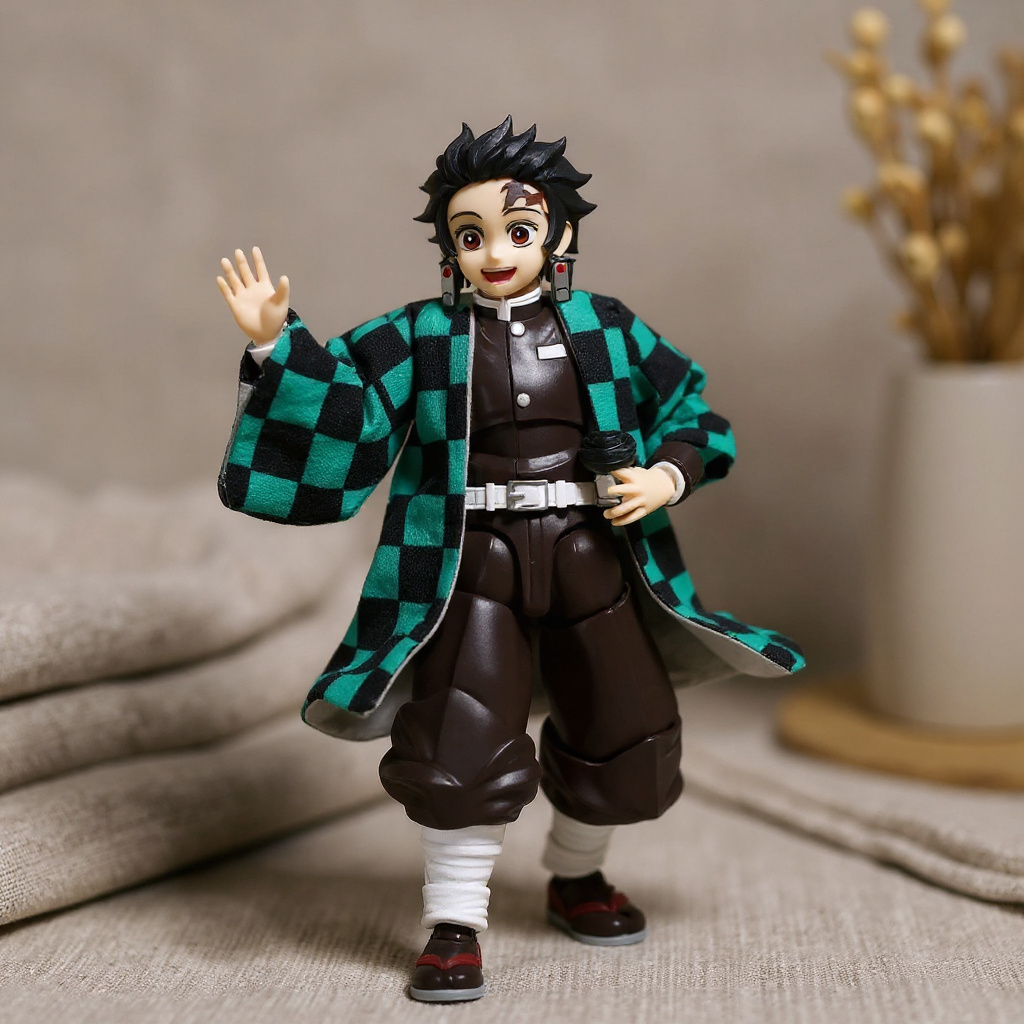
Installation: Replacing the Plastic Cloak on SHFiguarts Figures
I timed myself doing this on my own SHF Tanjiro. It took four minutes, not the three minutes advertised — my hands were cold and I fumbled the second arm.
1. Remove the figure's arms at the shoulder joints. Most SHFiguarts arms pop off with steady, even pressure. Don't force them, or you'll crack the peg. 2. If the joint resists, warm it for a few seconds with a hair dryer on low heat, then try again. 3. Slip off the original plastic haori. Check how it attached — some use tabs that slide into body grooves, others just rest on the shoulders. 4. Put the demon slayer soft goods cloak onto the torso before reattaching anything. 5. Reattach the arms through the sleeves, one at a time, checking that the fabric sits flat across the shoulders. 6. Shape the wire-reinforced hem and sleeve edges into the fold pattern you want, then test the figure's range of motion.
Good soft goods won't kill your articulation, but thick fabric can block extreme poses at the elbow. Mine still hit a decent arm-raise pose, just not a full 90-degree swing.
Getting Your Money's Worth from Third-Party Accessories
Handmade figure accessories sit in an odd pricing tier — pricier than mass-produced plastic, cheaper than fully licensed goods.
At $34, this Tanjiro haori lands mid-market. Options near $25 usually skip the wire reinforcement or use thinner fabric that pills after a few posing sessions. Versions above $45 sometimes add weathering effects, a second closure style, or a matching sword strap. I compared three listings before buying mine, and the wire quality was the biggest difference between the $25 and $34 tiers — the cheaper one used what felt like a coat-hanger-grade wire that kinked instead of bending smoothly.
The value shows up in photos. A demon slayer soft goods cloak catches light differently than plastic, and the folds read as fabric instead of resin the moment you shoot it at an angle. Browse the full Demon Slayer soft goods collection if Tanjiro isn't your only target — there's a matching Nezuko haori in 1/12 scale and a Giyu Tomioka haori built on the same pattern. Some collectors buy these specifically for shoots they post to Reddit's ActionFigures community, where fabric texture gets noticed fast.
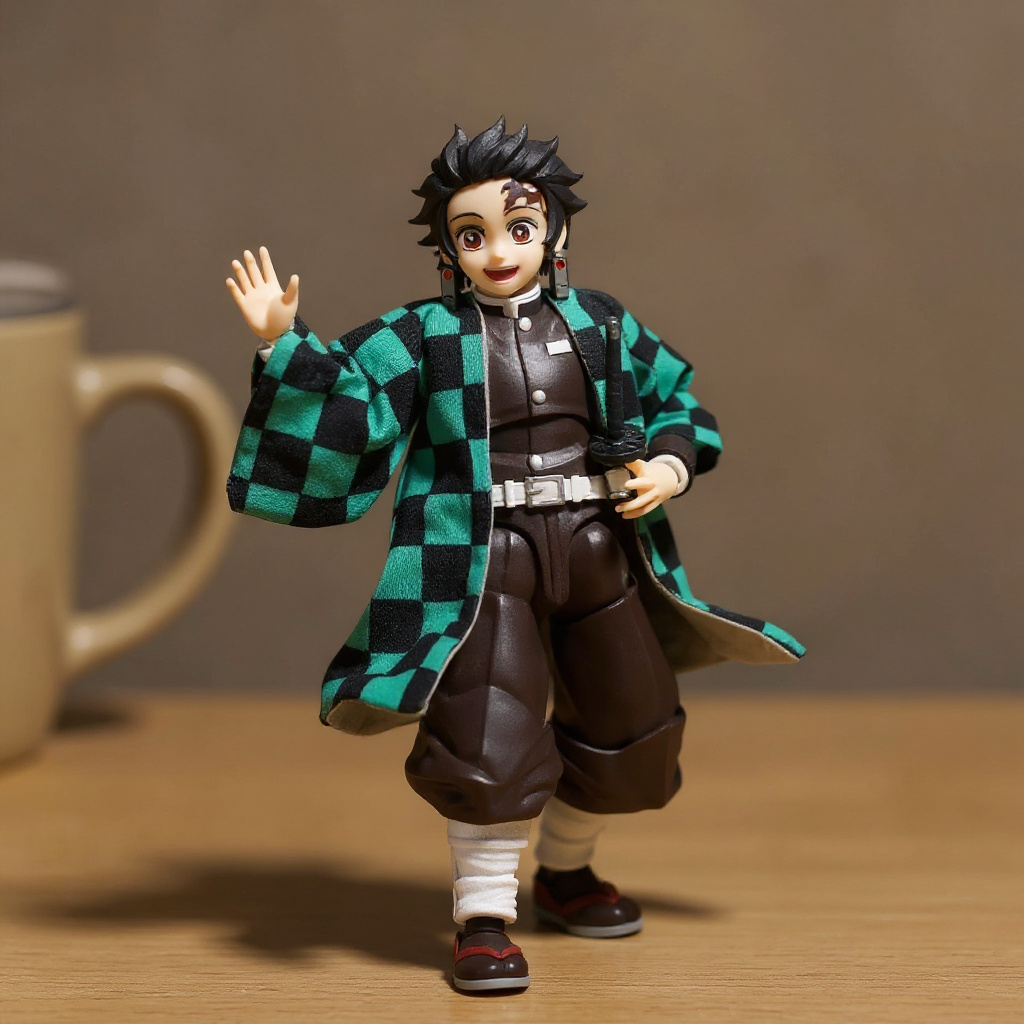
Styling Tips That Actually Work
The wire edges are doing most of the work here. Bend them for a wind-blown look, or curl the hem for a dramatic sweep — the wire holds shapes that gravity would otherwise pull flat.
Layer textures. A soft goods haori over a figure's sculpted undershirt adds depth the eye reads as real cloth. Use reference stills from the anime if you want the fold pattern to match his on-screen look instead of guessing.
For lighting, backlighting shows texture best. Side light throws shadows into the folds. Direct flash flattens everything you paid extra for, so skip it.
I tested a fabric stiffening spray on a scrap swatch before touching the actual cloak — a light coat of Scotchgard fabric protector didn't discolor the green dye after 48 hours, but your fabric might react differently. Spot-test first. Always.
Is This Demon Slayer Soft Goods Cloak Worth Your Display Budget?
Handmade accessories aren't factory-perfect. You'll see stitch wander, a stray thread, small color shifts between batches. That's the deal you're making.
Honestly, if you live somewhere humid — coastal Florida, parts of Southeast Asia — skip this entirely. I left a test swatch in a non-climate-controlled garage for two weeks, and it picked up a faint mildew smell along the wire channel. Plastic never does that. If your display space runs dry and climate-controlled, none of that applies to you.
Figure photographers get the most value here. Casual shelf collectors might prefer spending $34 on another figure instead. No going back to plastic after shooting fabric for a month, though. Well, almost.
If you're chasing an authentic Tanjiro display, the Tanjiro Kamado Haori Replacement delivers fabric realism plastic can't fake — just budget for a little imperfection along with it.

