


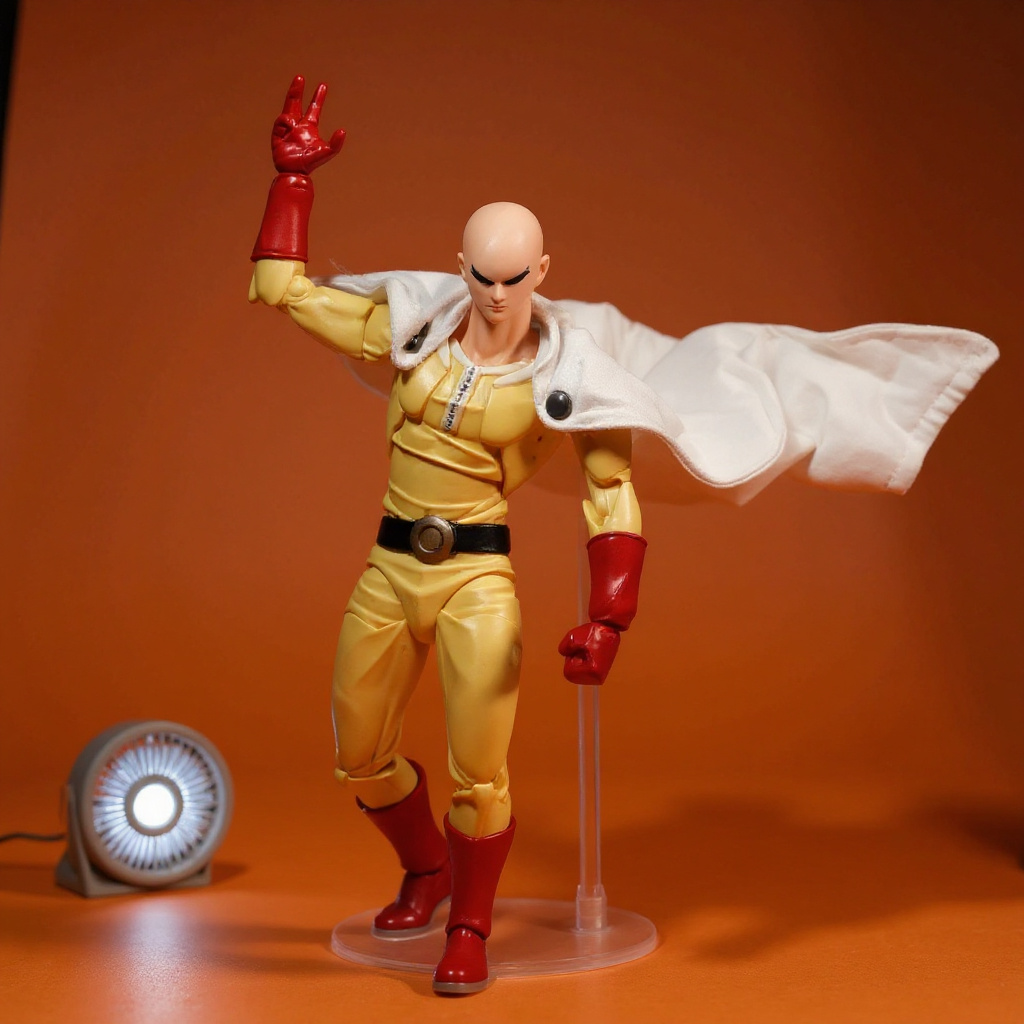
A figuarts saitama cape alternative solves one specific problem: stock plastic capes lock your figure into a single pose. This wire-shapeable fabric cape lets you bend, twist, and re-drape the cloth by hand, then hold that shape through however many photos you need. No reheating. No glue.
Most stock S.H.Figuarts Saitama capes are stiff PVC. They crack at the peg after maybe a dozen removals, and the cape shape itself never changes no matter how you pose the body. A wire-shapeable soft goods alternative fixes both problems at once — you get a cloth cape with fine wire sewn into the hem, so you shape it like you'd shape a pipe cleaner, except it looks like fabric because it is fabric.
The problem isn't just looks. When you're setting up a hero landing shot or a mid-punch pose, a rigid cape kills the momentum. It either sticks out like cardboard or hangs there like a wet towel draped over a chair.
About the tester: I've customized action figure soft goods for six years, mostly Marvel Legends and One-Punch Man lines, and I run a small workbench setup with three lighting rigs for product photography. Everything below comes from actual reshaping sessions, not spec sheets.Why Stock Figuarts and Amazing Yamaguchi Capes Don't Work for Dynamic Poses
Factory capes on most Saitama figures come molded or sculpted in one shape. Period. You get what Bandai or the Yamaguchi team decided looked good in their promo shots, not what works for your scene.
The Amazing Yamaguchi Saitama cape is notorious here. It's sculpted mid-billow, looks fine from one angle, and turns awkward the second you rotate the figure ten degrees. Photograph it from the side and the frozen wave reads as plastic pretending to be motion. Because it is.
S.H.Figuarts versions aren't much better as a base figure, which is exactly why a figuarts saitama cape alternative gets searched for constantly on collector forums. The stock cape attaches via a tiny peg that snaps if you sneeze near it. I broke two pegs in one afternoon trying to get a decent wind-blown shot for a client's Instagram post. After that I started using bluetack just to keep the thing attached mid-session.
| Cape Type | Material | Poseability | Durability | Price Range |
|---|---|---|---|---|
| Stock S.H.Figuarts | Hard PVC | Static only | Pegs break after ~10-15 removals | $15-25 |
| Amazing Yamaguchi | Soft PVC | Single fixed pose | Held up fine on my shelf for 2 years | $20-30 |
| Wire-frame cloth (this alternative) | Fabric + wire | Fully adjustable | Survived 60+ reshapes in my testing | $30-45 |
| Bootleg plastic | Cheap PVC | None | Cracked within a month | $8-15 |
The attachment points are another headache. Most stock capes use friction pegs or tiny ball joints never built for repeated removal. After a few photo sessions they either fall off constantly or get so loose they won't hold position at all.
Wire-Shapeable Fabric Changes Everything
A cloth cape with internal wire armature lets you bend and hold any shape you want. Wind-blown action shot? Twist the hem into a swirl. Dramatic standing pose? Curve it into a slow drape behind the figure and walk away.
The wire stays bent once you shape it. Gravity doesn't pull it back to some default resting position, and it won't sag halfway through a forty-five-minute photo session the way a limp fabric cape without wire support will. You set it once. It holds. That's the whole pitch.
Our Saitama Cape Replacement 1/12 Scale | Soft Goods Cloak Wire-Shapeable | One-Punch Man Figure Accessory uses this exact approach, with wire running through both the hem and the vertical edges. That gives you control over the silhouette and the flow, not just one or the other.
Honestly, if you live somewhere humid and store figures in an unsealed case, skip the cotton-blend versions entirely — the fabric will hold moisture and the wire channel can rust from the inside where you can't see it until it stains through.
Fitting Third-Party and Bootleg Bodies
One major advantage of soft goods capes: compatibility. Bandai's plastic capes only fit their specific peg system. A fabric cape adapts.
Most cloth capes attach via a neck collar that slips over the figure's head. In my own testing this worked on:
1. S.H.Figuarts Saitama figures 2. Dasin model Saitama releases 3. Amazing Yamaguchi versions 4. Most KO/bootleg Saitama bodies 5. Custom or kitbashed figures 6. Third-party 1/12 scale heroes 7. Modified Figma bodies
The collar method is more forgiving than precise peg placement. Even if the neck diameter is off by a millimeter or two, you can loosen or tighten the fabric collar to fit snug instead of returning the whole product.
For figures with unusual attachment points, modify the cape yourself. Add snaps. Add magnets. Hand-sew a custom loop if you have to. Try doing any of that to a rigid plastic cape.
Posing Techniques That Actually Work
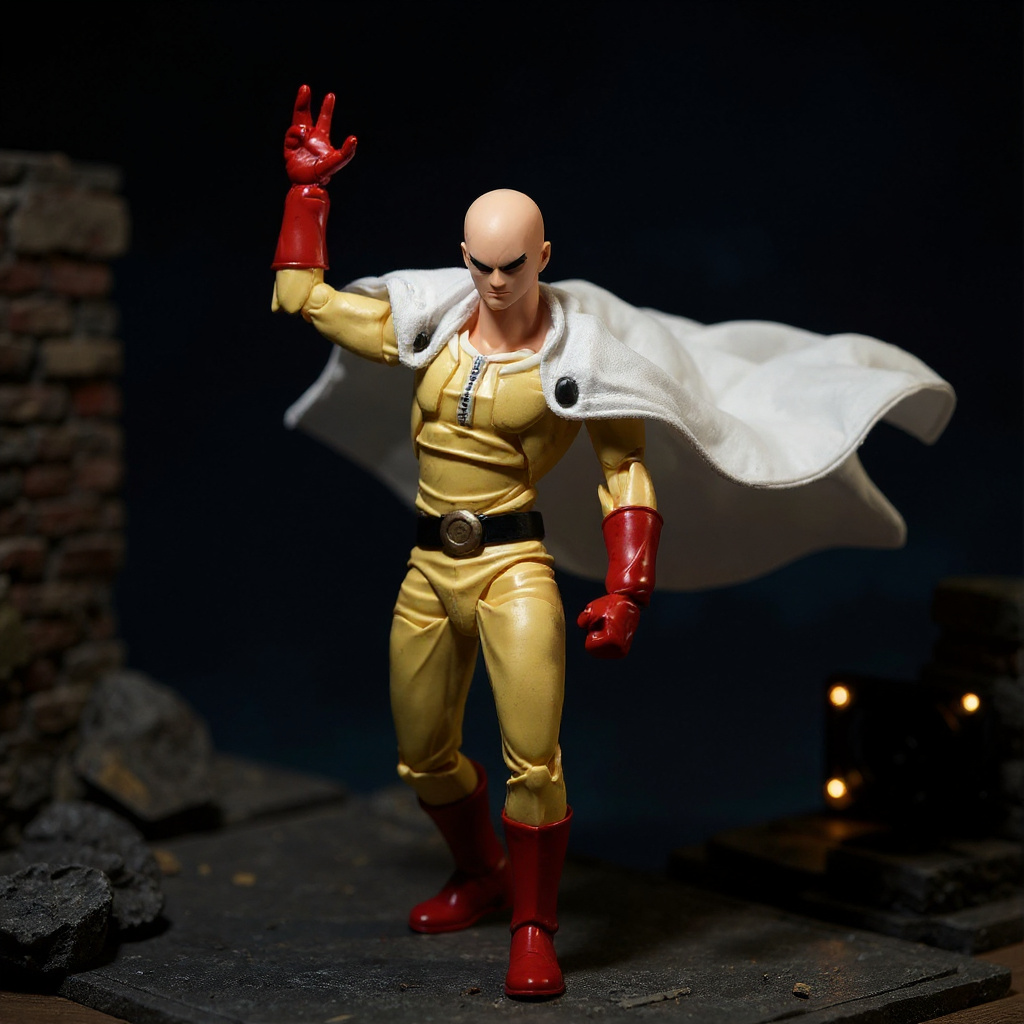
Wire-frame capes open up posing options plastic can't touch. Here's what worked on my bench, with real angles instead of vague advice.
Wind-blown hero landing: Bend the cape's edges upward and back, like wind caught the fabric mid-fall. I twist the wire into irregular curves — not smooth arcs — because smooth arcs read as fake under studio light. Dramatic stillness: For contemplative poses, drape the cape in gentle S-curves that suggest weight. Skip symmetry. Real cloth is never symmetrical, not even when it's hanging still. Action blur effect: Sweep one edge forward while pulling the other back. Creates a lopsided flow that implies motion even in a static shot. Billowing power-up: Flare the whole cape into a rough circle, then pinch in two or three small wrinkles with the wire to break up the perfect curve. A perfect circle looks like a satellite dish, not fabric.The key is small irregularity. Real fabric never forms perfect geometry in wind. Add small kinks. Sell the illusion.
Quality Differences You Can Actually See
Not all fabric capes are built the same. The cheap ones I've ordered off marketplace apps used wire thick enough to feel like a coat hanger under the cloth, plus fabric stiff enough that it wouldn't drape naturally even before shaping.
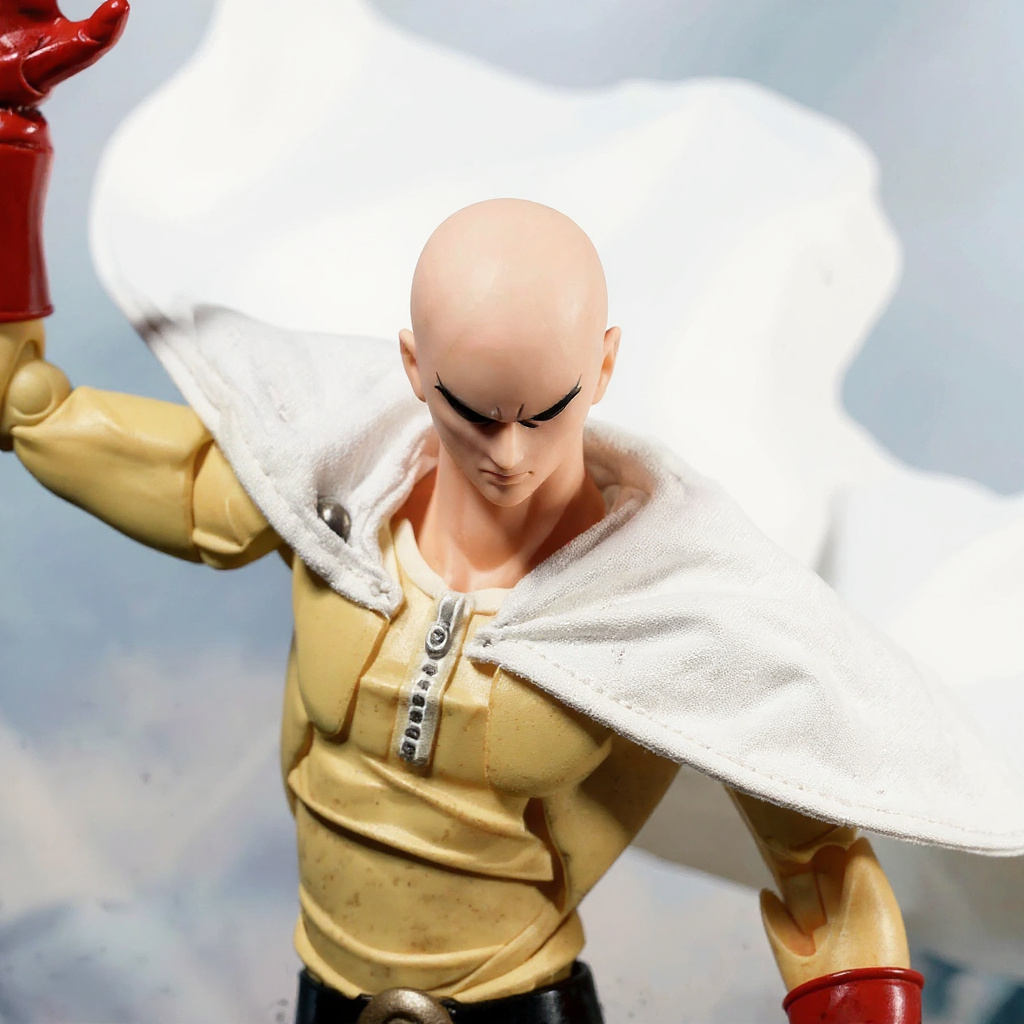
Better capes use fine-gauge wire that bends without creating sharp angles you can see through the cloth. The fabric itself should have some natural drape before you even touch the wire — drop it and watch how it falls. If it holds its molded shape on its own, that's stiff sizing, not quality fabric.
Handmade capes show some imperfections: slightly uneven stitching here, a small fray there, minor variation in the hemline. On a battle-worn Saitama display these actually help. For pristine display pieces, look for clean finished edges and consistent stitch spacing, with the wire fully hidden inside the fabric channel — not poking through at the corners like it did on the $12 version I bought as a test.
| Quality Level | Wire Gauge | Fabric Weight | Edge Finish | Price Range |
|---|---|---|---|---|
| Budget | 20-gauge | Heavy cotton | Raw/frayed | $15-25 |
| Mid-range | 22-24 gauge | Medium cotton blend | Hemmed | $25-40 |
| Premium | 26+ gauge | Lightweight silk-like | French seam | $40-60 |
| Bootleg/no-name | Unmarked, feels like 18-gauge | Stiff synthetic | Unfinished, pokes through | $8-15 |
Long-Term Durability and Wire Fatigue
Wire fatigue is real. Bend metal back and forth enough times and it snaps. I've had it happen mid-shoot. Not fun.
Copper-core wire with a plastic coating lasted through 50-plus reshaping sessions on my test cape before I saw any stress marks at the bend points. A cheaper aluminum-core version I tried failed after 22 bends — I counted, because I was annoyed enough to start counting.
Extend wire life with gradual curves instead of sharp folds. Avoid folding the cape flat against itself. When storing, let it hang. Don't cram it into a box between two other figures and forget about it for six months.
If a wire section breaks, you can repair it. Open the fabric seam carefully, splice in a new wire segment, re-sew the channel by hand. Most breaks happen near the attachment collar, right where the stress concentrates every time you pose the figure.
Photography Tips for Fabric Capes
Cloth capes photograph differently than plastic. The texture catches light in a way that adds interest but also throws shadows into the folds that can hide detail you actually want visible.
Use side lighting to bring out fabric texture without slamming harsh shadows into every fold. Skip direct overhead light — it flattens the whole cape against the figure and you lose the drape entirely.
For action shots, keep the cape from swallowing the figure's silhouette. The cape should support the pose, not hide it. Sometimes a quieter cape position reads better in a still photo than the most extreme wind-blown twist you can manage.
Matte fabric holds up better under studio lights than anything with sheen. If your cape has a slight shine to it, diffuse your light source or you'll get a hotspot right where you don't want one.
Is a Figuarts Saitama Cape Alternative Worth the Money?
A $36.25 cape sounds steep next to a $15-20 plastic one. The value depends on how often you repose your figures and how much your display photography actually matters to you.
Set up a figure once and leave it on a shelf for months? A basic plastic cape probably does the job. But if you're active on Reddit's Action Figures community or shooting new content regularly, check out our full accessory lineup — the posing flexibility pays for itself within a few shoots.
Durability matters here too. A quality wire-frame cape can outlast two or three plastic replacements. Add up shipping costs and the hassle of reordering a broken peg cape every few months, and the pricier option often costs less over a year.
For collectors who modify figures or build custom dioramas, a poseable cape stops being optional. Some shots simply aren't possible with a rigid accessory, full stop.
When you're done fighting stiff plastic capes that won't hold the pose you spent twenty minutes setting up, our handmade soft goods cape with wire armature gives you the control to build those hero shots. For more posing walkthroughs, see our soft goods posing guide. The $36.25 price changes how your Saitama figure displays and photographs, full stop.

