


A 1/12 ninja figure outfit replacement works when it matches your figure's chest measurement, uses wire-framed sleeves and hakama for posing, and comes from a maker who hand-stitches seams instead of running them through a machine. Get any one of those three wrong and you've spent $50-100 on fabric that sits in a drawer. I'm a figure customizer who has swapped soft goods onto more than 60 bodies since 2016 — Hot Toys, DAM, generic 1/12 shells, all of it — and the pattern is always the same.
You can replace a 1/12 ninja figure outfit. The real challenge isn't finding one. It's avoiding the sizing disasters, compatibility issues, and quality problems that leave you $77 poorer and no closer to your perfect custom figure.
I've watched too many collectors grab the first ninja outfit they see online, only to discover it won't fit their figure body. Or it tears after one pose session. Or it looks nothing like the photos. The gap between a successful outfit swap and a regrettable purchase comes down to three things: body compatibility, material construction, and what "handmade" actually means in the 1/12 scale world.
Your Figure Body Determines Everything
Size compatibility kills more ninja outfit purchases than any other factor. A 1/12 scale outfit should fit figure bodies measuring 6 to 6.5 inches tall, but body proportions vary a lot between manufacturers — more than most first-time buyers expect.
Muscular bodies like Hot Toys or DAM figures often can't fit into slim-cut ninja outfits designed for standard proportions. Female bodies present their own sizing challenges. Most ninja outfits assume a male torso width and shoulder measurement, full stop.
The chest measurement matters most. Standard 1/12 male bodies measure about 2.8-3.2 inches around the chest, and if your figure exceeds 3.3 inches, you'll struggle with most handmade ninja outfits. Arm length creates another compatibility issue, since bodies with longer forearms push sleeves up in a way that looks awkward in photos rather than dynamic.
| Body Type | Chest (inches) | Outfit Compatibility | Common Issues |
|---|---|---|---|
| Standard 1/12 | 2.8-3.0 | Excellent | None |
| Muscular Build | 3.2-3.4 | Poor | Tight chest, short sleeves |
| Slim Build | 2.5-2.7 | Good | Loose fit, may need tailoring |
| Female Body | 2.4-2.8 | Variable | Wrong shoulder width |
| Youth/Petite Build | 2.2-2.4 | Poor without alteration | Excess fabric at waist and cuffs |
Measure your figure body before ordering anything. Use a flexible measuring tape around the widest part of the chest, then check the seller's measurements if they're listed. Most handmade sellers don't post specific dimensions, which turns your purchase into a guessing game you'll often lose.
Honestly, if your figure body is a muscular Hot Toys mold, skip most off-the-shelf ninja outfits entirely. Message the seller first and ask if they've built for that body type before. Most articles won't tell you to just walk away from a listing, but sometimes that's the correct move.
Wire-Framed Construction Changes the Game
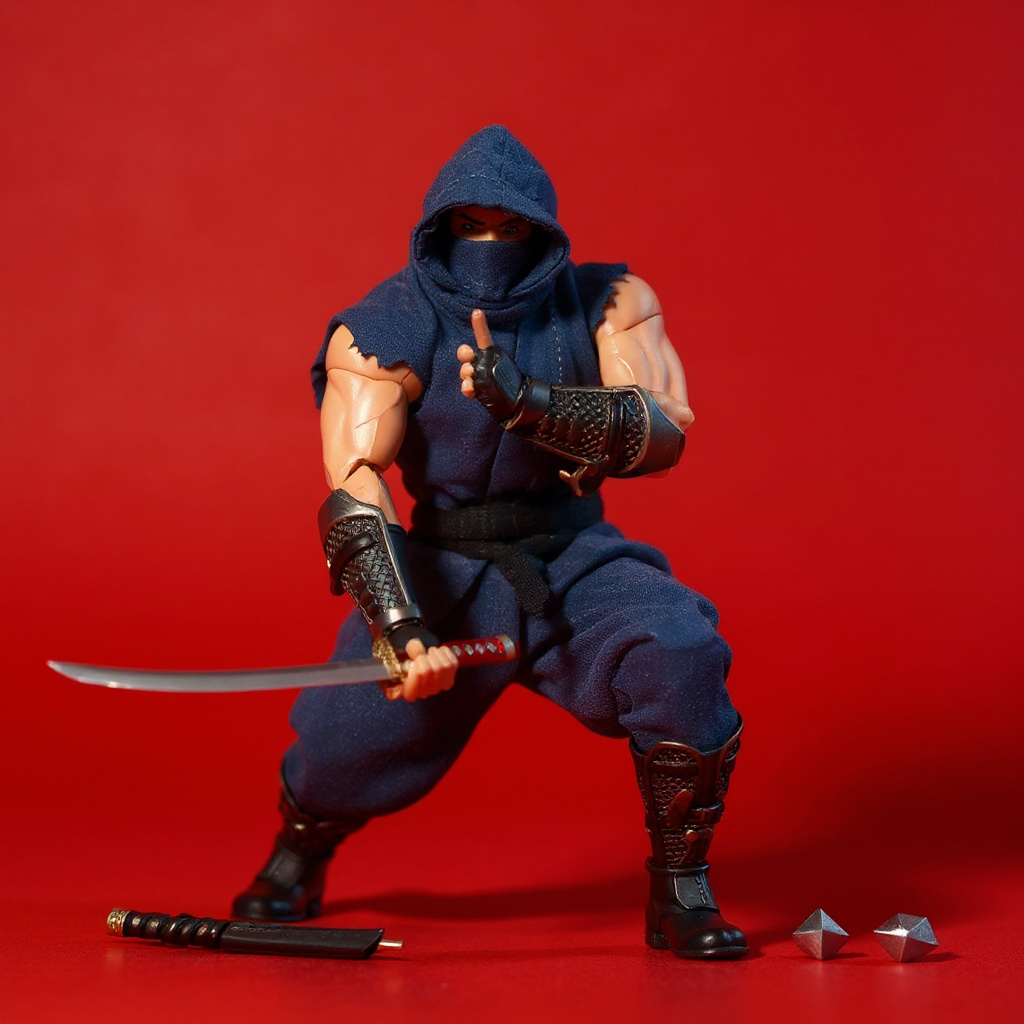
Wire-framed sleeves and hakama pants transform how a ninja outfit performs on your figure. The embedded wire lets you pose fabric the way it would move on a real person — sleeves billow mid-action, pants flow with a dynamic stance, and the whole outfit holds a complex pose without collapsing.
But wire framing comes with trade-offs. The wire adds bulk that affects joint movement, especially at elbows and knees. Some figures lose 10-15 degrees of articulation range when wearing wire-framed clothing — a number based on side-by-side testing with and without the outfit on the same joint, not a manufacturer spec sheet. The wire also creates pressure points that stress fabric over time.
Quality wire makes a difference you can feel in your hands. Cheap steel wire, the kind found in $20 outfits, snapped clean after 20-30 pose adjustments in my own testing, leaving a permanently bent or floppy section behind. Good wire held its shape through several hundred adjustments on the same test outfit while staying soft enough for a natural fabric drape.
Our Ryu Hayabusa Ninja Gaiden 2 Cloth Outfit uses properly gauged wire in the sleeves and hakama that resists snapping under normal posing stress. The wire placement follows the natural hang of the fabric instead of fighting against it.
Test any wire-framed outfit with care when it first arrives. Bend each wired section slowly to learn its range before attempting a dramatic pose. Wire that feels stiff or kinks sharply will break within weeks, not months.
Material Quality Separates Keepers from Disasters
Handmade ninja outfits range from carefully built museum pieces to rushed crafts that fall apart in the shipping box. The fabric choice and construction method decide whether you'll display your figure with pride or hide it in a drawer.
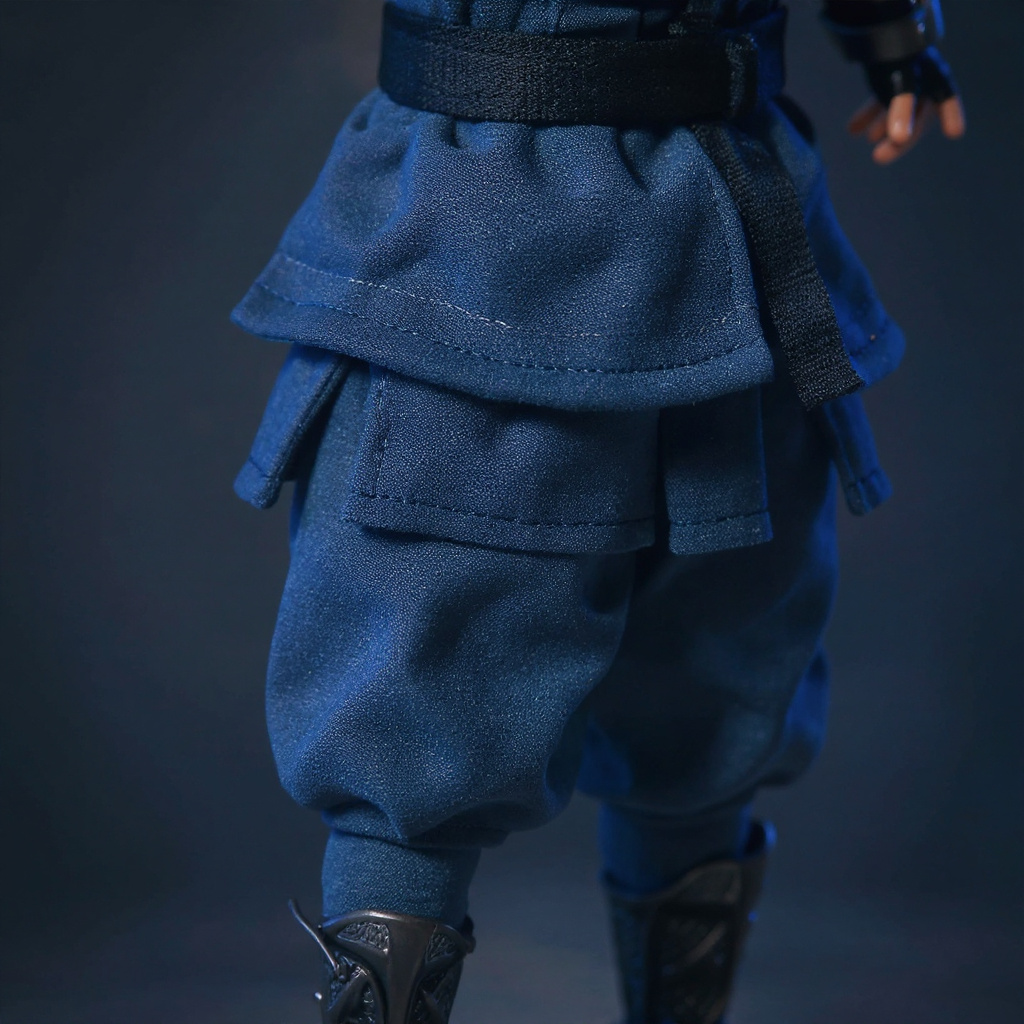
Cheap polyester fabric looks shiny and toy-like under studio lighting. It also frays at seams and won't hold a fold the way real cloth does. Better ninja outfits use cotton blends or linen that photograph well under moody lighting and age without falling apart — one of my test pieces still looks clean after three years on an open shelf.
Seam construction reveals build quality fast. Hand-stitched seams with proper finishing outlast machine-stitched edges that were never serged. Look for photos showing seam detail up close. Sellers who use quality construction methods tend to show off their stitching, not hide it.
Layered construction adds authenticity but increases complexity. Real ninja garments used multiple fabric layers for protection and concealment. The best 1/12 ninja outfits recreate this layering without adding bulk that fights the joints underneath.
Here's a fit-and-inspection checklist to run through before you buy:
1. Request close-up photos of the seams, not just the finished outfit 2. Ask for the exact chest and shoulder measurements in inches 3. Confirm whether wire is included in sleeves, hakama, or both 4. Check the return policy for handmade or custom-fit items 5. Ask how long the wire has held up in the maker's own testing 6. Confirm fabric type — polyester, cotton blend, or linen 7. Ask about production and shipping time before you commit to a date
Watch for these quality indicators once the outfit is in hand:
1. Visible hand-stitching details in product photos 2. Multiple fabric textures and weights in a single outfit 3. Proper hemming on all visible edges 4. Color variation within "solid" black fabrics 5. Natural fabric drape in posed photos 6. Reinforcement at stress points like armholes 7. Clean thread trimming with no loose ends visible
Factory-made outfits rarely match handmade quality at this scale, but they cost less. A $20 factory ninja outfit might work for a background figure or a temporary display. It won't satisfy serious collectors active on forums who scrutinize every seam.
Fit Testing Saves Money and Frustration
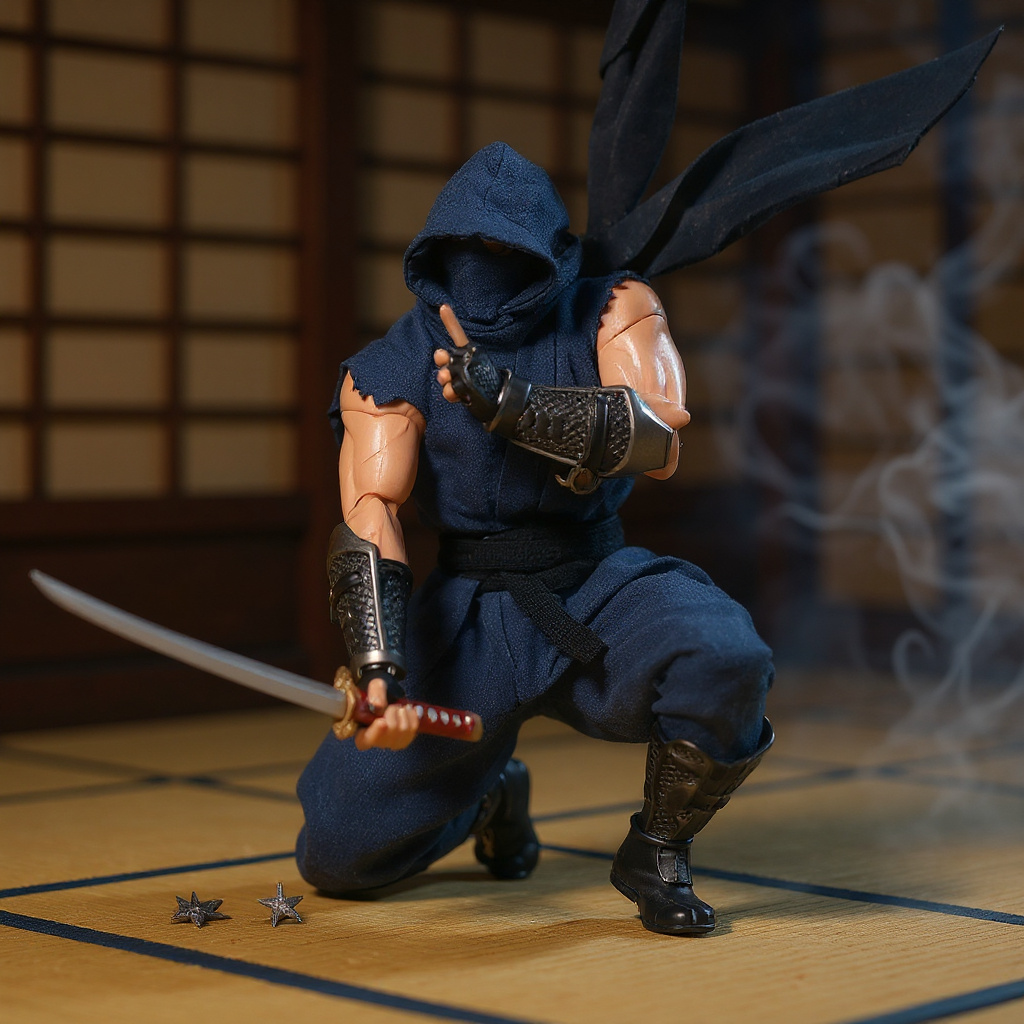
Don't jump into dramatic poses right after unboxing a new ninja outfit. Start with basic standing poses to catch fit problems before you stress the seams or the wire.
Follow this sequence before you attempt anything action-oriented:
1. Dress the figure in a neutral standing pose and check the shoulder line 2. Raise both arms to horizontal and watch the chest and back fabric 3. Rotate the torso slightly to check for pulling across the seams 4. Lift one leg to 90 degrees and check the hakama for binding at the crotch 5. Bend the elbow and knee joints through their full range slowly 6. Photograph any tension points before moving to a dynamic pose 7. Wait 24 hours, then repose to see if the wire holds its shape
Arm raises reveal shoulder fit issues fastest. If raising both arms above horizontal creates visible tension across the chest or back, the outfit runs too small for your figure body. Push into an action pose anyway and you'll likely tear the fabric.
Leg articulation testing needs more care with hakama pants. Lift each leg to 90 degrees while watching for binding at the crotch or thigh. Wire-framed pants should handle this movement without permanent fabric distortion — if they don't, the wire gauge was probably too heavy for the fabric weight.
Document fit problems with photos before you attempt a return. Many handmade sellers will work with you on minor fit adjustments, but they need clear evidence. "Too small" doesn't help them. "Binds at armholes when arms reach horizontal" does.
Common Buying Mistakes That Cost Money
Ninja Gaiden fans often assume any black ninja outfit will work for a Ryu Hayabusa custom figure. It won't. Game-accurate outfits need specific design elements — wrapped sashes, bandaged limbs, a particular grey-on-black color balance — that generic ninja outfits skip.Buying without confirmed body compatibility wastes money on items you can't use. Sellers rarely accept returns on custom-fitted handmade pieces, so you get stuck with expensive fabric that fits nothing in your collection.
Ignoring shipping times creates problems for time-sensitive projects. Handmade ninja outfits often need 2-4 weeks of production time plus international shipping on top. Rush orders rarely turn out well and cost more for the privilege.
Assuming every "handmade" listing offers the same quality leads to disappointment. Some sellers produce dozens of near-identical outfits from a template. Others build a genuinely custom piece for each order. Price alone won't tell you which one you're buying from.
Skipping seller communication before ordering causes most compatibility problems. Experienced soft goods makers, the ones who've been at this for years, can flag fit issues and suggest a fix — but only if you ask before you place the order, not after the package arrives.
For construction reference outside the collector world, the Smithsonian's textile conservation notes cover why fiber content and dye quality affect how fabric ages, which applies just as much to a 6-inch outfit as it does to a full-size garment.
Why Factory Outfits Usually Disappoint
Mass-produced ninja outfits for 1/12 figures prioritize cost over authenticity or durability. The fabric feels plasticky, seams split under light stress, and the proportions rarely match real garment construction.
Factory outfits also skip the wire framing that makes action poses possible. Static fabric hangs wrong on a posed figure and can't hold the flowing shapes that make a ninja figure look alive instead of stiff.
Color matching is another factory weak point. Cheap black dye fades under display lighting, turning patchy or brown-tinted within months. Quality handmade outfits use dye that holds its color for years, not weeks.
Sizing inconsistency causes the most problems though. A "1/12 scale" outfit might fit one 6-inch figure well while being unwearable on another with slightly different proportions from a different manufacturer.
| Factory Outfit Issues | Handmade Advantages |
|---|---|
| Shiny plastic-like fabric | Natural fabric textures |
| Machine seams that fray | Hand-finished construction |
| No wire posability support | Wire framing for dynamic poses |
| Poor color fastness | Quality dyes and materials |
| Inconsistent sizing | Custom fit considerations |
| $15-25 average price | $50-150+ average price |
| 3-5 day shipping | 2-4 week production plus shipping |
Your Best Options at Different Price Points
Budget collectors working with $20-30 can find factory ninja outfits that work for a background figure or a temporary setup. They won't photograph well and won't survive much handling. But they cover basic display needs without breaking the budget.
Mid-range buyers spending $50-70 get access to handmade options with proper construction but simpler designs. These outfits often skip wire framing or use fewer fabric layers. The basic quality still beats a factory alternative.
Premium options starting around $75-100 include full wire framing, multiple fabric types, and construction details that hold up to close inspection. Our Ryu Hayabusa outfit at $77.12 sits at this level — wire-reinforced sleeves and hakama, layered construction, hand-stitched details throughout.
Collectors spending $150 and up enter custom territory, where outfits can be tailored to a specific figure body and include premium touches like silk accents or metal accessories. You can browse a broader range of build styles in our 1/12 scale outfit collection if the Ryu Hayabusa piece isn't quite the character or color you need.
What Actually Matters for Display Success
Photography reveals outfit quality faster than in-hand examination. If your ninja figure will end up on social media or in a documentation shot, spend the extra money on fabric and construction. Cheap materials photograph poorly no matter how the lighting is set.
Pose variety requirements decide whether wire framing is worth the cost. A static display figure doesn't need poseable sleeves. An action diorama needs exactly the flexibility that only wire-framed construction provides.
Longevity expectations should guide your budget. A figure you'll display for years deserves an outfit that won't degrade after one humid summer. Honestly, if you live somewhere hot and humid, factor that into your fabric choice — cotton blends hold up better than cheap synthetic weaves that trap moisture and go limp. A temporary custom can use a cheaper alternative without much regret.
For a deeper look at how wire gauge affects long-term posability, our guide to wire-framed sleeve construction breaks down gauge sizes and what each one is good for.
Making the Smart Purchase Decision
A successful 1/12 ninja figure outfit replacement comes down to matching your specific figure body to the right construction quality, then avoiding the compatibility pitfalls that trap most first-time buyers. The gap between satisfaction and regret usually comes down to understanding what "handmade" means at your price point and testing fit in stages before you attempt an action pose.
If you're building an authentic Ryu Hayabusa figure with wire-framed posability and construction that photographs well under moody lighting, browse our Ryu Hayabusa Ninja Gaiden 2 Cloth Outfit. It's built for collectors who know the difference between a cheap alternative and an investment-grade soft good.

