


Quality handmade figure clothing reveals itself in under a minute of handling. Check the fabric drape, bend a wire collar, look at the seam allowance on an armhole. That's it. Everything else is detail.
I've handled roughly 15 handmade 1/12 scale outfits over the past two years — mostly school uniform sets scaled for action figures, the kind with a blazer, shirt, pants or skirt, and tie built from soft cotton with a wire skeleton hidden inside the collar. Some were worth every dollar. A couple weren't worth the shipping box they arrived in. This guide breaks down exactly what separates quality handmade figure clothing from factory pieces wearing a handmade label, and it does it without the marketing fluff.
Check Fabric Weight and Drape for Quality Handmade Figure Clothing
Fabric tells the whole story before you even look at the stitching. Good quality handmade figure clothing uses cotton or a cotton blend that scales correctly to 1/12 size — substantial in the hand, but not thick. Think lightweight dress shirt, not canvas tarp.
Run the fabric between your fingers. Quality pieces have a smooth, even weave with no loose threads, no pilling, nothing catching on your skin. The fabric should fall naturally when you hold up a sleeve or a pants leg; if it stands out stiff like a piece of cardboard, walk away. I once tested a blazer that held a 90-degree angle on its own sleeve. That's not posable clothing. That's a costume for a doll that never moves.
Mass-produced figure clothes lean on synthetic fabric that photographs fine under studio lights but feels cheap the second you pinch it. It either shines too much, screaming "toy," or it's stiff enough that posing becomes a fight instead of a five-second adjustment.
Color consistency matters more than people expect. Quality handmade figure clothing usually comes from a single dye lot, so the navy on the blazer matches the navy on the pants exactly, edge to edge. Factory batches sometimes mix dye runs, and you'll notice the mismatch the moment you photograph the outfit in daylight.
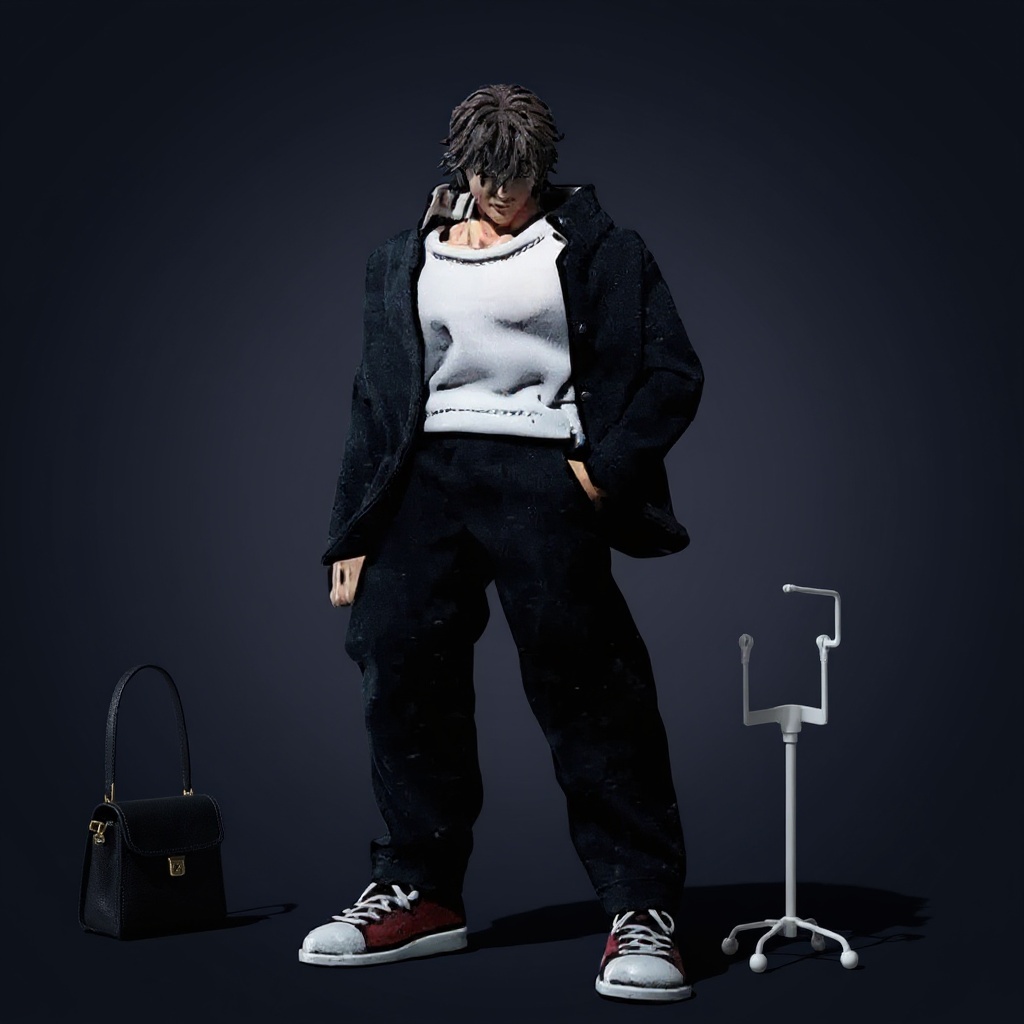
Wire Posability Separates Good From Great
The best quality handmade figure clothing includes shapeable wire buried in specific spots. This isn't a bonus feature. It's the single thing that turns a static shelf outfit into something you can actually pose for photography.
Look for wire in these locations:
1. Jacket collars and lapels 2. Shirt cuffs and the shirt collar 3. The tie, if one is included 4. Trouser cuffs, on some higher-end pieces
The wire needs to bend without much effort but hold its shape once you let go. 24-26 gauge craft wire is the sweet spot for 1/12 scale — thin enough to disappear under fabric, thick enough that you can still feel it holding the line. You should be able to run a finger along a collar and feel the wire without seeing a bump poke through the outer fabric.
Testing this is simple. Bend a collar or cuff into a pose. It should stay there. No springing back. No feeling like it's one bend away from snapping. Our Baki Hanma School Uniform Set uses this exact approach, with wire running through both the collar and the cuffs, which is why it holds dynamic poses through multiple photo sessions instead of drooping after the first one.
Some makers skip the wire to save time and material cost. Those pieces might look sharp laid flat on a table. The second you try to pose the figure wearing them, though, the illusion falls apart.
Honestly? If you only display your figures in a sealed case and never touch them again, skip the wire upgrade. You're paying extra for a feature you'll never use. Save the money for a piece with better fabric instead.
Stitching Quality Reveals the Maker's Skill
| Quality Level | Stitch Type | Seam Allowance | Loose Threads | Price Range |
|---|---|---|---|---|
| Factory Basic | Straight only | 1-2mm | Common | $15-30 |
| Factory Premium | Straight + overlock | 2-3mm | Occasional | $30-50 |
| Handmade Good | French seams | 3-4mm | Rare | $50-70 |
| Handmade Excellent | French + topstitching | 4-5mm | None visible | $70-90+ |
| Handmade, Rushed | Mixed/inconsistent | 1-3mm, uneven | Frequent | $40-60 |
Examine the seams up close, ideally under a desk lamp. Quality handmade figure clothing uses French seams or bound edges that resist fraying for years, not months. The stitching stays straight, and the tension across every seam looks the same from start to finish.
Check the stress points — armholes and crotch seams especially. These take the most abuse during posing, so they need reinforcement. Good makers double-stitch here or switch to a stronger thread. I've had one bargain blazer split at the armhole after four pose changes. Four. That's how fast bad construction shows itself.
Thread color should match the fabric or contrast on purpose. Mismatched thread usually means the maker ran out mid-project and grabbed whatever spool was closest — a small detail, but it tells you everything about their quality control.
Topstitching on collars, cuffs, and pockets should run perfectly parallel to the edge. Wobbly topstitching marks a piece as amateur work immediately, no matter how nice the fabric feels.
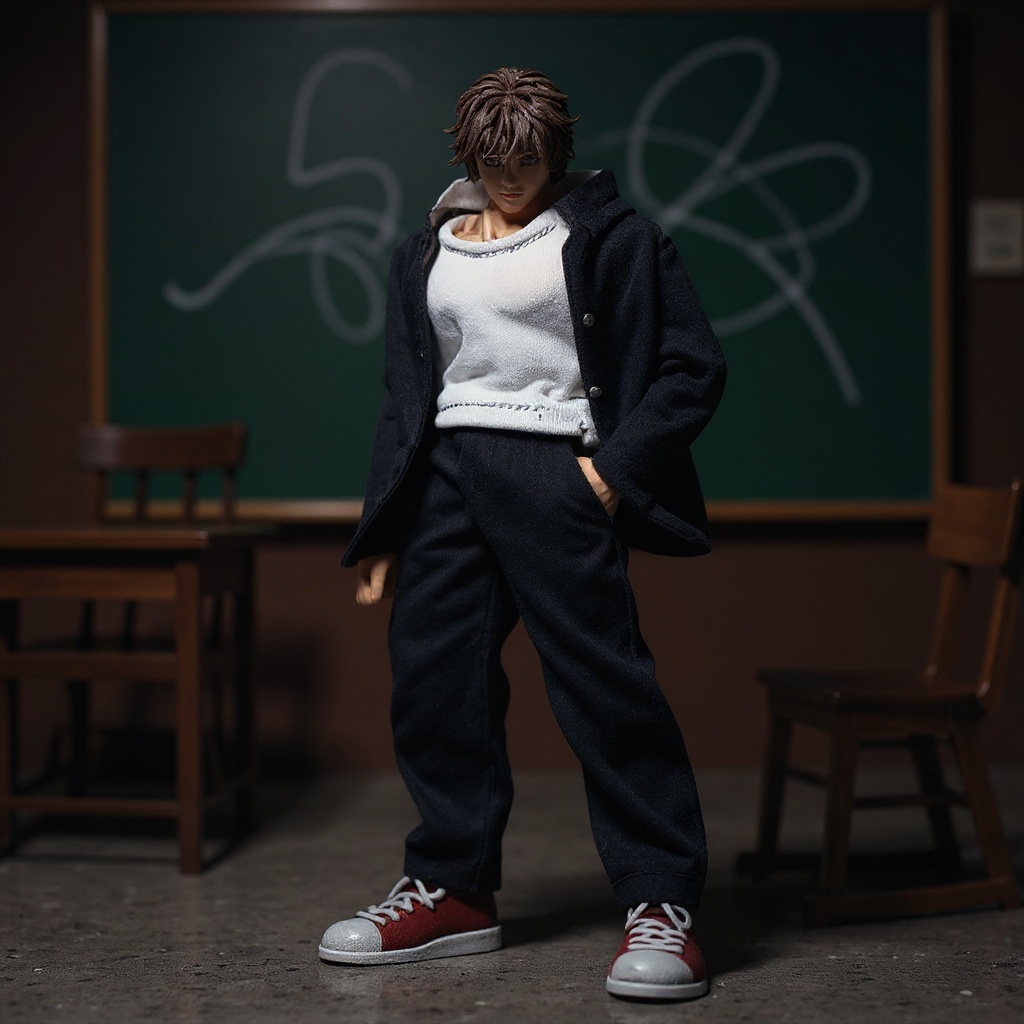
Sizing and Fit Standards for 1/12 Bodies
1/12 scale bodies aren't standardized the way 1/6 scale figures are. A Hot Toys body has different proportions than a Mezco or Storm Collectibles release, sometimes by several millimeters at the shoulder. Good makers plan for that variation instead of guessing.
Quality handmade figure clothing generally targets these measurement ranges:
1. Chest circumference: 80-90mm 2. Waist circumference: 70-80mm 3. Shoulder width: 45-50mm 4. Arm length: 65-70mm 5. Inseam: 65-75mm 6. Neck circumference: 25-30mm
We've put together a full breakdown of these numbers by figure brand in our 1/12 scale body size chart, which is worth checking before you buy anything sized to a specific body.
Some makers publish compatibility lists showing exactly which figure bodies their patterns fit. That transparency means they tested the pattern on a real body instead of eyeballing it from a photo reference.
Adjustability helps close the gap between bodies. Hidden elastic in a waistband, Velcro instead of tiny buttons, slightly oversized armholes — small choices that let one outfit fit a wider range of 1/12 figures. Always confirm whether a piece is cut for a bare figure body or meant to layer over an existing factory outfit. Those are two very different fits.
Price vs Value Analysis
Prices on quality handmade figure clothing reflect three things: material cost, labor time, and the maker's skill level. Here's what actually drives the number you see in the listing.
Material costs for a proper 1/12 outfit run $8-15, covering fabric, thread, interfacing, wire, and closures. Cheap synthetic fabric can cut that to $3-5, and you'll feel the difference the moment the package opens.
Labor time swings hard depending on complexity. A basic t-shirt takes 2-3 hours to pattern, cut, and sew. A full school uniform — blazer, shirt, tie, pants — can eat 8-12 hours of a maker's time, wire installation included.
Skill level shows up in both price and result. Experienced makers charge more because their patterns fit on the first try, their seams hold up over years of handling, and their finishing work — collars, cuffs, hems — looks clean under a macro lens.
The sweet spot for quality handmade figure clothing sits around $60-80 for a complex outfit. Below $50, you're usually looking at factory work or a beginner's early pieces. Above $90, you're paying for premium fabric or a maker's name recognition. Compare that to official figure company soft goods, often priced $40-60 but lacking the fit and wire posability of a properly made handmade set. If you want to see collectors argue about this exact price-to-quality question in real time, the action figure discussion threads on Reddit cover it at length.
Red Flags That Scream Avoid This Seller
After looking through more listings than I'd like to admit, the same warning signs keep showing up. Here's the short list, in order of how often I've seen them:
1. Only flat-lay photos, never shown on an actual figure 2. Obvious color correction that doesn't match the fabric in other shots 3. The exact same stock photo reused across multiple listings 4. "One size fits all 1/12 figures" in the description 5. No mention of what the fabric actually is 6. Shipping estimates over six weeks for something labeled handmade 7. A price sitting well below every comparable listing you can find
Communication tells you almost as much as the photos. A seller who won't answer a direct fit question. Who can't produce one more close-up shot when asked. Who gives you a copy-pasted answer that doesn't match your actual question. Any one of these on its own might be nothing. Two or three together, and you're probably not buying from the person who made the piece.
Watch for identical items listed under different maker names across multiple platforms. That pattern almost always means dropshipping from a factory source, not an actual handmade shop.
What Anime Collectors Actually Care About
Photography drives most purchases in this space. Collectors want outfits that hold up under different lighting and pose naturally without fifteen minutes of fussing beforehand.
Accuracy matters less than most sellers claim. A school uniform that nails the right silhouette will satisfy most Baki series fans even if the button count is off from the manga panel someone's comparing it to.
Durability expectations shift depending on how you use the piece. Photography-first buyers will tolerate a delicate construction if the final shot looks right. Display collectors need something that survives repeated handling without the seams giving out.
Customization adds real value here too. Plenty of collectors want to weather or modify clothing for a specific scene, and simpler construction methods make that easier to pull off later. Storage matters as well — soft goods take less shelf space than plastic accessories, though they need careful folding to avoid permanent creases.
Making Smart Buying Decisions
Start with what you actually need the outfit for. Photography, permanent display, or frequent re-posing each point toward different priorities.
For photography: prioritize drape, color accuracy, and wire posability. Small construction flaws disappear in a photo if the overall silhouette reads right.
For display: focus on construction quality and long-term durability. The outfit has to hold its look for months, maybe years, without much handling at all.
For frequent re-dressing: look for reinforced stress points and some fit flexibility. Clothes that survive repeated dressing and undressing without fraying at the armhole.
Budget with intention. One $75 outfit that fits and poses correctly beats three $25 pieces that fight you every time. For care instructions that actually extend the life of a piece like this, our guide to caring for handmade figure clothing covers washing, storage, and wire maintenance in more depth than we can fit here.
Timing matters too. Independent makers often work part-time, and a 4-6 week turnaround during busy seasons isn't unusual. Plan ahead if you've got a shoot or a gift deadline.
Worth the Premium Price Tag?
The jump from factory to quality handmade figure clothing is real, and so is the price gap. Factory pieces are fine for basic display. They simply can't match the fit, wire posability, or finishing detail of a properly made handmade set — not because factories can't do it, but because the math doesn't work at scale.
For collectors who photograph figures often, the extra cost pays for itself in fewer wasted shots and less fighting with fabric that won't hold a pose. Casual collectors might never need to make the jump, and that's fine too. But once you've handled a piece with real wire posability and a proper seam allowance, going back to stiff factory fabric feels like a downgrade you can't unsee.
If you want to see what this looks like in practice, our handmade Baki Hanma School Uniform Set and the rest of our handmade collection use the same fabric and wire standards covered throughout this guide.

