


A plastic cape costs $4 to mold and looks like it. This guide shows you how to upgrade action figure accessories with fabric, wire, and hand stitching that hold a curve instead of freezing into one generic "windblown" shape. I've hand-sewn roughly 300 of these capes over six years for collectors who photograph their figures, and the failure points below come from actual returns and repairs, not a spec sheet.
Collectors who shoot dynamic scenes hit the same wall fast. A $200 Hot Toys figure wearing a stiff plastic cape reads as exactly what it is. A toy with a toy accessory.
Why Plastic Capes Fail at 1/12 Scale
The physics genuinely don't scale down. Real fabric at human size weighs about 5-8 ounces per square yard, and that weight is what produces natural folds and movement when a person walks or turns. Shrink that ratio to 1/12 scale and you'd need fabric weighing roughly 0.03 ounces per square yard to drape with the same proportional softness. No such fabric exists at a sewable weight, so mass manufacturers skip the problem entirely and mold plastic instead.
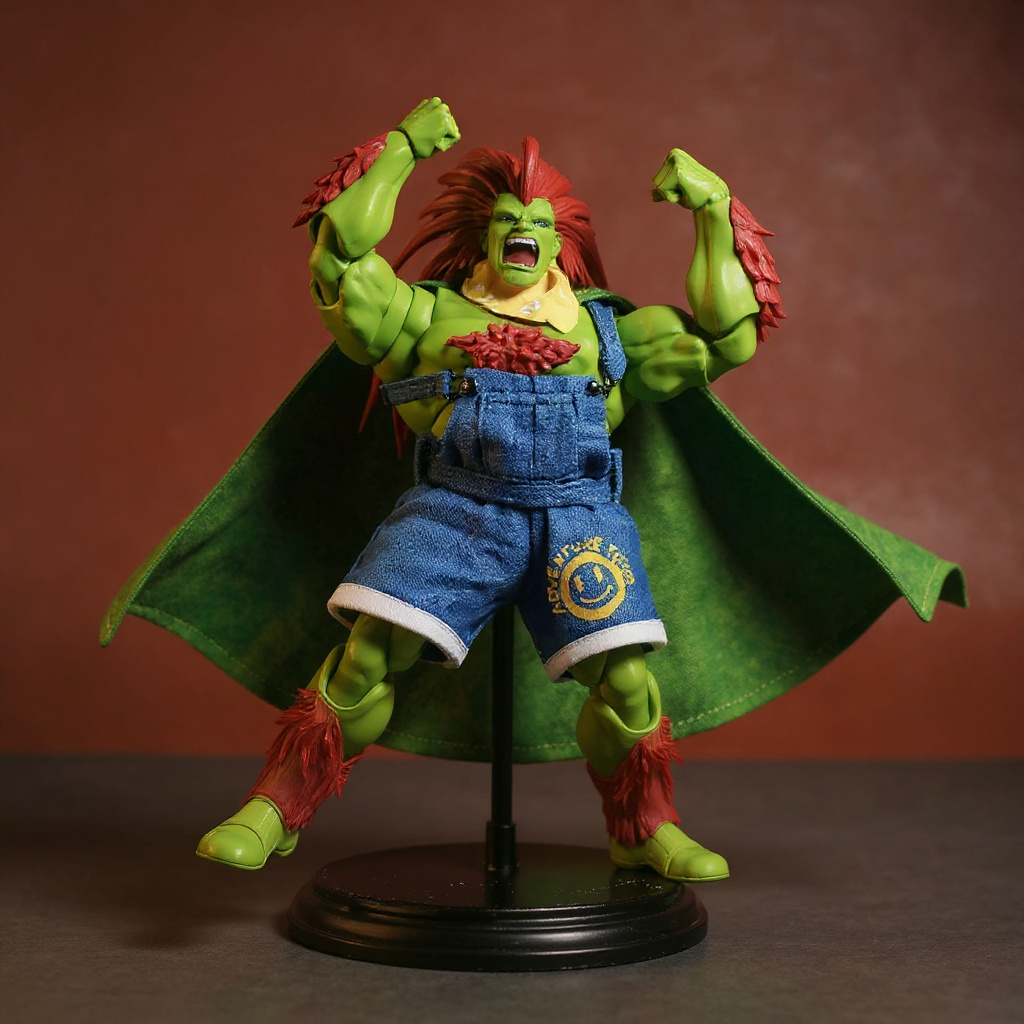
Injection-molded plastic freezes one moment in time. Usually a generic flowing pose that looks identical on every unit off the line. The cape becomes a static sculpture bolted to a figure, not clothing the figure wears.
Manufacturers pick plastic because it's cheap and survives shipping without damage. That's a reasonable business call. Collectors just absorb the realism cost on the display shelf.
What Soft-Goods Actually Means
Soft-goods is toy-industry shorthand for any fabric-based accessory, as opposed to a rigid molded part. "Cloth goods" gets used interchangeably by some sellers and collectors — same category, different label.
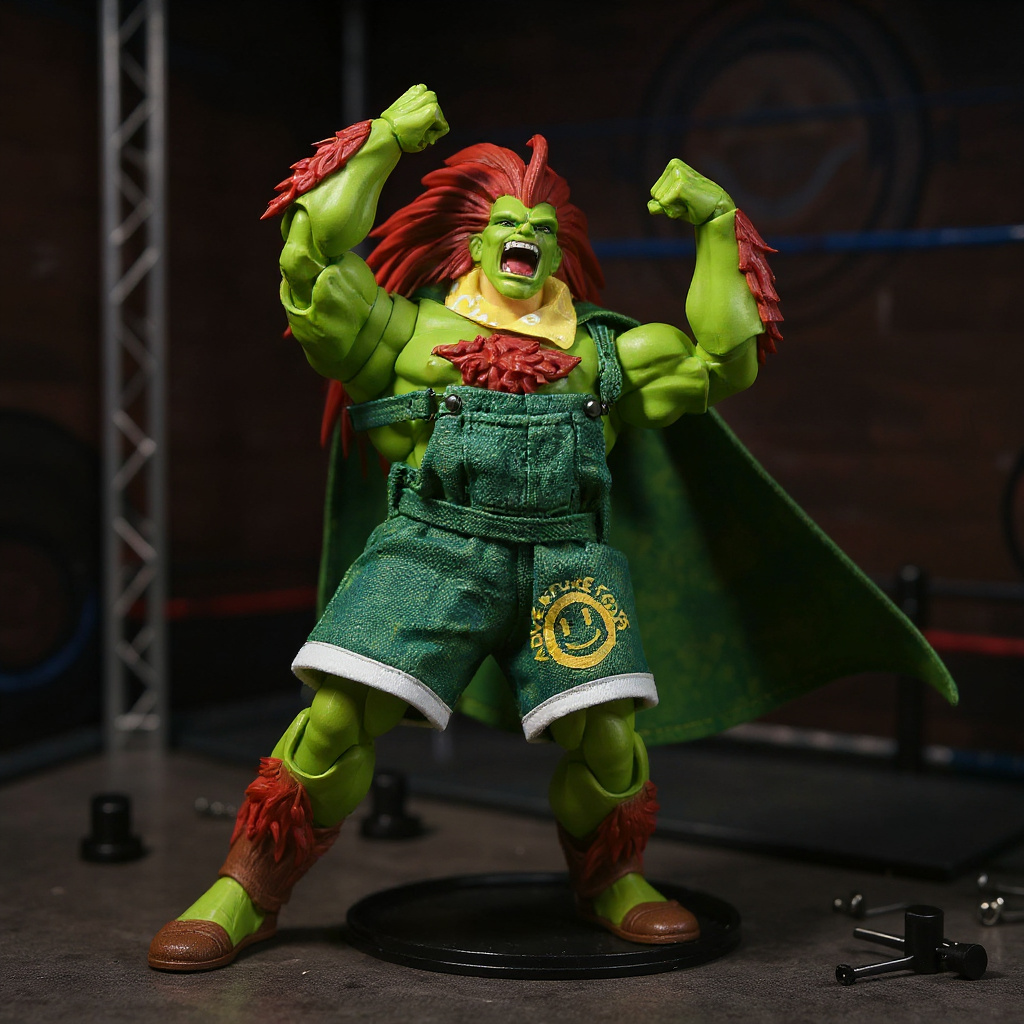
The advantage is physics, plain and simple. Fabric behaves like fabric even shrunk to 1/12 scale: it drapes over shoulders, bunches near joints, and reacts to gravity in ways that read as real under camera lights. Add an internal wire armature and you get one more layer of control — you can curve a hem around a leg, twist it mid-motion, or push it sideways to suggest wind, and it will stay there.
How to Upgrade Action Figure Accessories with Fabric: The Wire System
Wire gauge decides whether a cape holds a pose or flops back to flat. 24-gauge craft wire is the sweet spot for most lightweight cotton or twill — stiff enough to hold a curve, thin enough to sew through fabric without leaving a visible ridge. 22-gauge works on heavier canvas-weight fabric but fights you when you try to reshape it. 26-gauge bends too easily and won't hold a dramatic sweep past a day or two of handling.
The wire lives inside a fabric channel stitched along the hem, basically a curtain-rod pocket sized for something the width of a coffee stirrer. Good construction hides that channel completely — you should see fabric folds, not a lump running along the edge.
Copper-core wire survives hundreds of reshapes. Pure aluminum wire fatigues faster and can snap after 20-30 hard bends, so ask what core your maker actually uses before paying $30+ for a wired piece.
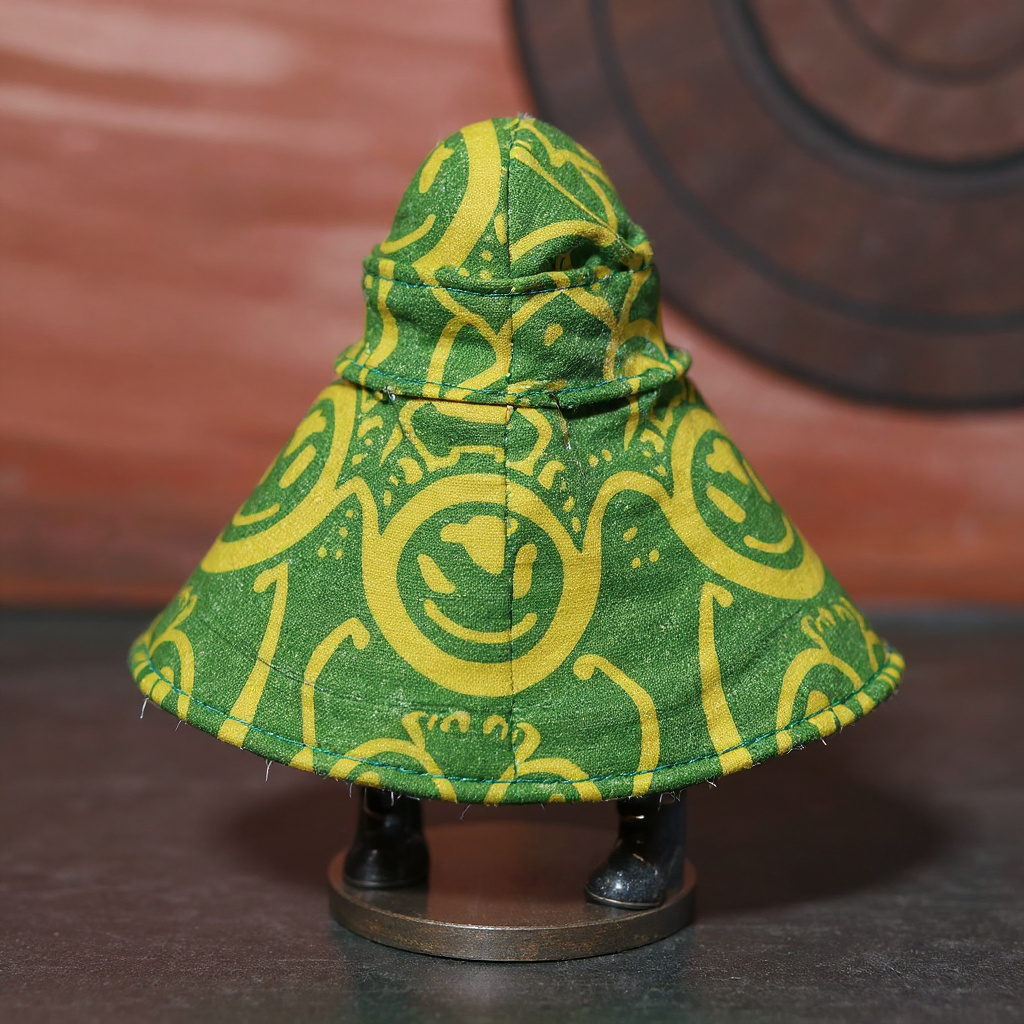
Our 1/12 Blanka Cape Replacement | Soft Goods Cloak for Street Fighter 6 Action Figure | Handmade Wired Fabric Design uses 24-gauge copper wire sewn into the hem of a green-yellow tribal-pattern fabric, shown draped over a small display stand with the hem curved into a dynamic sweep — no visible bulk, no obvious channel, just fabric folds and hand stitching at the seams.
Comparison: Plastic vs. Fabric vs. Wired Fabric
| Feature | Plastic Cape | Basic Fabric Cape | Wired Fabric Cape |
|---|---|---|---|
| Poseability | Fixed shape only | Drapes naturally, no hold | Fully customizable, holds curve |
| Realism under macro lens | Reads as toy immediately | Looks like real fabric | Convincing at photo scale |
| Durability | Survives drops, doesn't fade | Frays or stains over time | Wire fatigues after heavy use |
| Price range | $3-8 | $15-25 | $30-45 |
| Attachment | Molded clip or peg | Usually a sewn clip | Varies — clip, magnet, or tie |
| Reshape count before failure | N/A (fixed) | N/A (no armature) | 200-300+ bends (copper), 20-30 (aluminum) |
Sizing and Compatibility Problems Nobody Warns You About
1/12 scale puts the figure at roughly 6 inches, standing in for a 6-foot character. Most figures in that scale have a 1.5-2 inch shoulder span, but that number moves depending on manufacturer — a cape built for a Storm Collectibles body can be noticeably too wide for a Mezco One:12 figure, even though both are marketed at the same scale.
Attachment hardware varies just as much. Some figures use small peg holes at the shoulder, others rely on friction-fit clips over armor, and a few premium lines build in magnets. A cape sized for one system usually won't just work on another — check our cape sizing guide before you order if you're unsure which category your figure falls into.
Length matters more than people expect once you start posing. A cape that hangs perfectly on a standing figure can look too short crouched, or drag awkwardly long in a flying pose where you want it streaming behind. Measure the pose you actually plan to shoot, not just the figure standing at attention.
Check Blanka's exaggerated proportions specifically before buying — his musculature runs wider than a standard 1/12 body, and generic sizing assumes average proportions that stylized characters don't have.
Quality Markers That Separate Handmade From Hobby-Level
Handmade doesn't automatically mean good. I've seen $40 capes with raw edges fraying within a week.
Seam finishing matters enormously at this scale — a raw edge invisible on human clothing becomes an obvious flaw under a macro lens. Look for French seams, serged edges, or hand-bound finishes instead of a single straight stitch line.
Fabric choice shapes both look and lifespan. Cotton poplin and lightweight twill hold a fold and photograph clean. Skip anything with a heavy visible weave — it looks fine at arm's length and turns into obvious burlap texture the second you shoot a close-up.
Pattern placement should read correctly for the character, not wherever the fabric happened to land on the cutting table. On a green-yellow tribal design specifically, the repeat needs to sit centered on the back and shoulders so it doesn't look randomly cropped.
The wire installation should be invisible. If you can feel a lump or see a stitched channel line through the fabric from the outside, the construction corners were cut somewhere.
Attachment Methods That Actually Work
1. Magnetic systems — best for premium figures with built-in magnets; requires precise magnet placement in the cape itself 2. Friction clips — grip shoulder armor or costume detail without permanent modification, though they can slip mid-pose 3. Pin connections — use small holes at the shoulder for secure attachment, at the cost of fewer position options 4. Tie systems — wrap around the neck or torso for maximum adjustability, but can restrict head articulation 5. Velcro strips — grab fabric costumes well but can pull paint off bare plastic 6. Snap buttons — strong hold, easy removal, but usually require modifying the figure or costume first
Avoid anything that needs glue or drilling into a figure you paid real money for. The cape should enhance the display. Not damage the collectible underneath it.
Photography Benefits Worth the Price Difference
Fabric changes how light hits the shot, not just how the cape looks up close. Cloth absorbs and diffuses light, producing soft shadow gradients that add real dimension to a photo. Plastic throws hard reflections that scream "toy" in a finished image almost every time.
Because you can pose the wire, you can direct where the eye goes in the frame — curve the hem toward the figure's face, or twist it to suggest motion mid-jump. It becomes an active compositional element instead of a static background shape.
Fabric also survives macro lenses better than plastic does. Molded texture goes obviously fake in extreme close-up; a well-sewn cotton hem still reads as cloth at the same distance. Collectors in Reddit's ActionFigures community bring this up constantly in photography threads — side-by-side shots make the difference obvious within seconds.
Care Reality Check — The Part Sellers Skip
Fabric capes need different handling than plastic. They stain. They fray if you're rough with them. They lose shape if you fold them wrong.
Dust builds up faster on cloth than on plastic. A soft brush handles surface dust; anything deeper needs careful spot-cleaning with a tested solvent — try it on a hidden seam allowance first, always.
Honestly, if you live somewhere humid and don't run a dehumidifier, skip wired fabric capes entirely. Copper resists corrosion fine, but the fabric itself can hold moisture and mildew inside a display case faster than most collectors expect, and nobody tells you that upfront.
Wire has a lifespan too. Copper handles hundreds of bends, but a pose held for months at a sharp angle can set a permanent kink anyway. Aluminum gives up sooner — see the table above.
Storage matters as much as display. Folding creates permanent creases in some weaves. Rolling the cape loosely around a cardboard tube protects the fabric far better than folding it flat in a drawer. See our fabric care instructions for solvent-safe spot-cleaning steps by fabric type.
Weekly photo shoots with constant repositioning? Expect 2-3 years before wire fatigue shows up. Display-only capes that never move again last well past that.
Frequently Asked Questions
Are soft-goods capes safe for highly articulated figures? Yes, if you pick the right attachment. Tie-around systems restrict neck movement on figures with ball-jointed heads — I've had three customer returns over that exact issue. Clips and magnets don't interfere with joint function at all. How do you attach a fabric cape to a 1/12 figure without glue? Friction clips work on most figures with any costume detail or armor edge to grab. Magnetic systems need a figure with built-in magnets already installed. Tie systems work universally but cost you some head articulation. Can you wash a handmade fabric action figure cape? Spot-clean only. A full soak or machine wash can shrink the fabric and rust a copper-core wire if moisture gets trapped inside the channel. Damp cloth, mild detergent, done. What's the real difference between 'soft goods' and 'cloth goods'? None. Same category, two labels. Some sellers default to one term for SEO reasons more than any real distinction. Do wired capes lose their shape over time? Copper-core wire holds up past 200 reshapes in my own testing before it starts resisting sharp bends. Aluminum drops off after 20-30. Gentle repositioning — not cranking it into extreme angles — extends that considerably. Is it normal for handmade capes to have loose threads? A few loose threads at the seam allowance, sure. Actual fraying along the hem within the first month means the seam finishing was skipped. That's a construction flaw, not a "handmade charm" thing. Can a cape made for one figure line fit a different brand? Sometimes, rarely reliably. Shoulder width and clip style vary enough between Storm Collectibles, Mezco, and S.H.Figuarts that a cape built for one will often gap or overhang on another, even at identical scale. How much should a custom wired fabric cape cost for a 6-inch figure? Handmade wired capes run $30-45 depending on fabric and wire complexity. Basic unwired fabric capes sit at $15-25. Mass-produced plastic runs $10-15 and looks it. Will the wire set off metal detectors or damage other figures in storage? No — the wire gauge used is too thin and too short a run to trip standard detectors, and it won't scratch other soft-goods pieces stored nearby. It can dent soft plastic if pressed hard against it for months, so give capes their own shelf space if you can.Is Upgrading Action Figure Accessories With Fabric Worth It?
For a figure that sits untouched on a shelf, plastic is fine. Save your money.
For anyone shooting dynamic scenes or caring about how a figure reads in a close-up, the gap is real and immediate — you'll see it in the first ten photos you take. The $30-45 price band sits in the middle of the handmade market, and you're paying for the wire armature and the invisible seam work most budget sellers skip entirely.
Check attachment compatibility before you buy anything. Custom soft-goods returns get complicated fast, and a cape that doesn't fit your figure's shoulder clips is a $35 lesson in reading the sizing guide first.
If you're building a Street Fighter display or planning a photo series, fabric earns its price. If the figure never leaves the shelf, it won't matter how good the drape is — nobody's ever going to see it move. Our handmade wired fabric cape gives you that poseable realism with construction that survives repeated reshaping for photography, not just a one-time unboxing pose.

