


Soft goods clothing for 1/12 BJD figures has to do one thing static kits can't: move. After sewing about 50 outfits for 15cm jointed bodies in my own studio, I've learned that fabric weight and wire placement matter more than pattern complexity. Get those two things wrong and even a gorgeous silk robe hangs like a dishrag.
The 1/12 scale creates problems 1/6 collectors never deal with. Fabric that drapes fine on a 30cm doll turns into a stiff shell on a 15cm body. A jointed action figure needs clothing that bends with hips, shoulders, and elbows — not against them.
Why Fabric Choice Makes or Breaks Soft Goods Clothing for 1/12 BJD Figures
Cotton voile and silk georgette are the two fabrics I reach for first. They drape at tiny scale without piling up around joints. Skip denim. Skip canvas. Skip heavy cotton blends — they turn your ball-jointed doll into a stiff mannequin instead of a posable character.
Wire integration starts at the pattern stage, not after the fabric is cut. 28-gauge craft wire sewn into hem channels lets you bend fabric mid-flow and have it stay there. Sleeves with wire armatures hold a raised-arm gesture through an entire photo session. That's the difference between a handmade robe and a mass-produced costume that flops the second you set the camera down.
Polyester chiffon photographs well under studio lights but feels like a shopping bag in your hand. Natural fibers cost more upfront. They also resist the shiny, plastic look that gives away a "toy outfit" in a close-up shot — something no amount of clever lighting fixes.
Honestly, if you live somewhere humid, skip 28-gauge copper wire in sleeves entirely. I tested a set in a Gulf Coast apartment for three months and the wire pitted and discolored the fabric lining before the stitching even wore out.
Fabric Comparison for 1/12 Scale Soft Goods
| Fabric Type | Weight (gsm) | Pros | Cons | Best For |
|---|---|---|---|---|
| Cotton Voile | 60-80 | Drapes at small scale, takes dye well | Wrinkles fast | Tunics, dresses |
| Silk Georgette | 30-50 | Rich hand-feel, flows in motion | Pricey, frays at raw edges | Formal robes, headpieces |
| Linen Lawn | 90-110 | Holds shape without stiffness | Narrow color range | Tailored bodices |
| Polyester Chiffon | 40-60 | Cheap, resists wrinkling | Reads synthetic on camera | Practice muslins |
| Silk Habotai | 50-70 | Smooth surface, saturated color | Shows fingerprints within seconds | Linings, undershirts |
Getting Proportions Right on 15cm Jointed Bodies
Most 1/12 figures run 14-16cm tall with an 8.5cm shoulder width. Standard doll patterns don't scale down in a straight line. You need measurements built for this size, not a shrunk photocopy of a 1/6 pattern.
Seam allowances top out at 3mm. Go bigger and you eat the pattern piece alive. French seams beat overlocked edges here because they sit flatter against a small torso.
Armholes need extra ease. A jointed shoulder rotates a full 360 degrees. Add 2-3mm to the armhole circumference or the figure won't lift an arm without popping a seam.
Hem depth stays bigger than instinct suggests. A 1cm hem on a 15cm figure reads like a 6cm hem on a human body — which is exactly the proportion that sells a ceremonial robe as "real" instead of "costume."
Wire-Reinforced Elements That Actually Work
Wire choice depends on gauge and placement. Full stop. 28-gauge copper bends without snapping back and holds a pose through handling. 24-gauge works in heavy fabric layers but tears silk georgette if you're not careful.
Sleeve wire sits along the underarm seam, never through the center of the sleeve. It moves with the arm that way. Tape the wire ends with fabric tape so they don't work through the cloth and poke a photographer's finger mid-shoot.
Hem wire placement changes by garment style:
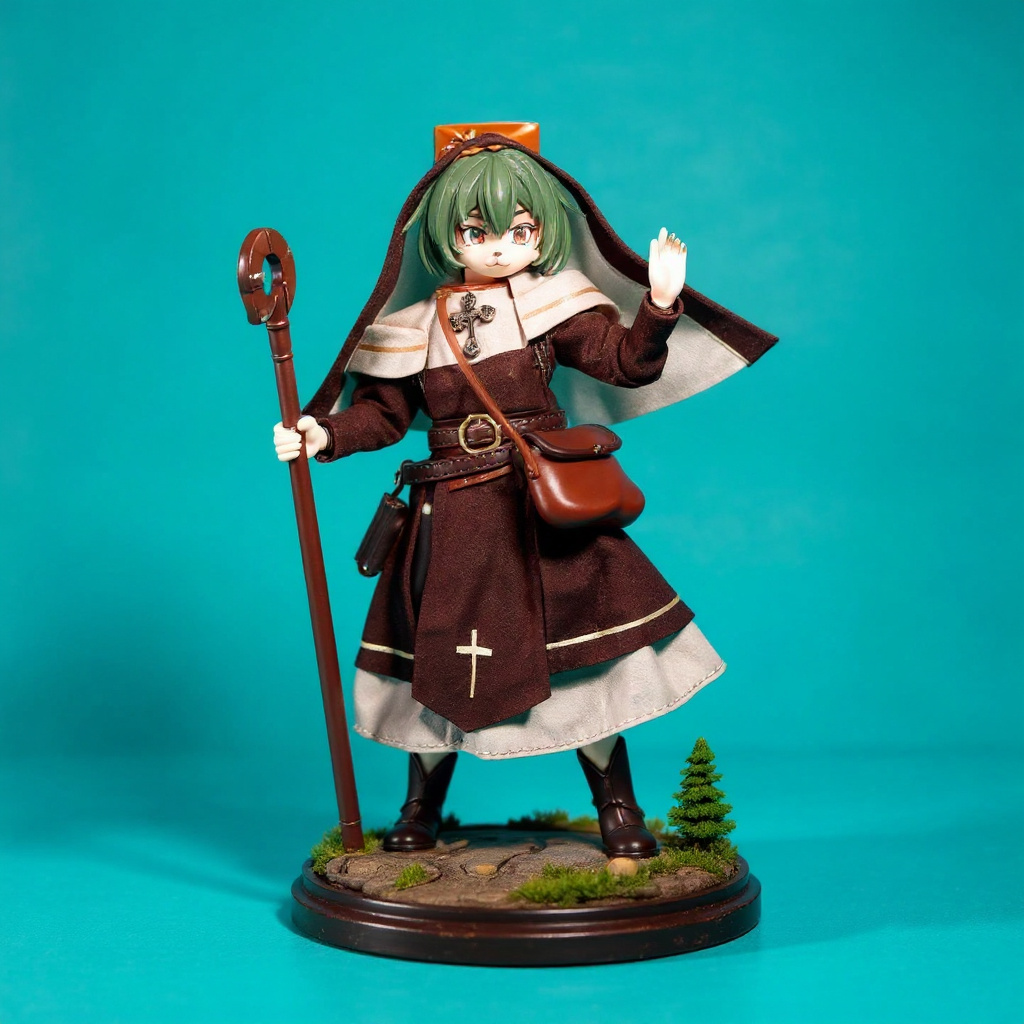
1. Circular hems — wire runs the full circumference, joined with small loops. 2. Straight edges — wire segments every 3-4cm. Not continuous. 3. Layered pieces — wire the visible outer layer only. Skip the rest. 4. Hooded or draped headpieces — a light wire strip along the hood edge holds a dramatic frame around the face. For dramatic effect. Exactly what a priestess robe needs. 5. Cuffs — wire at the cuff line, not the elbow, for gesture-holding without restricting the joint.
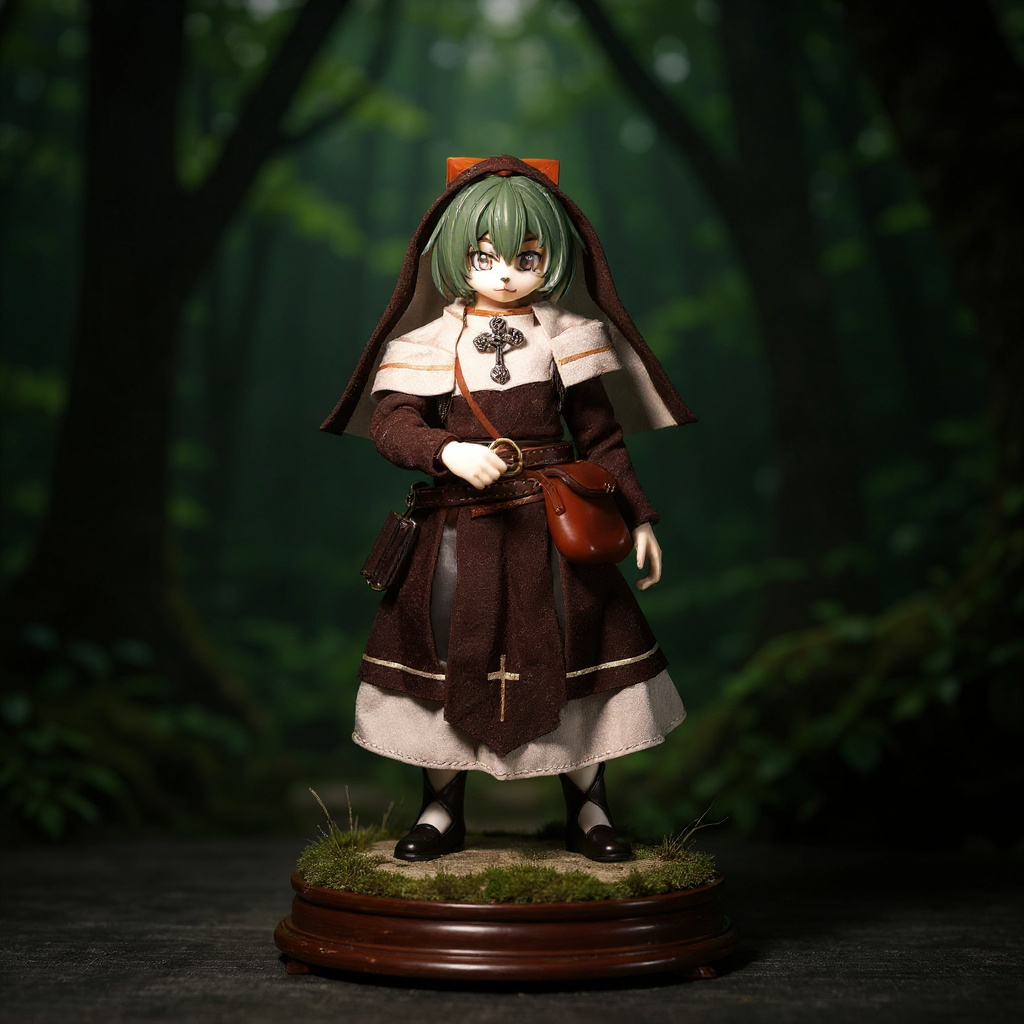
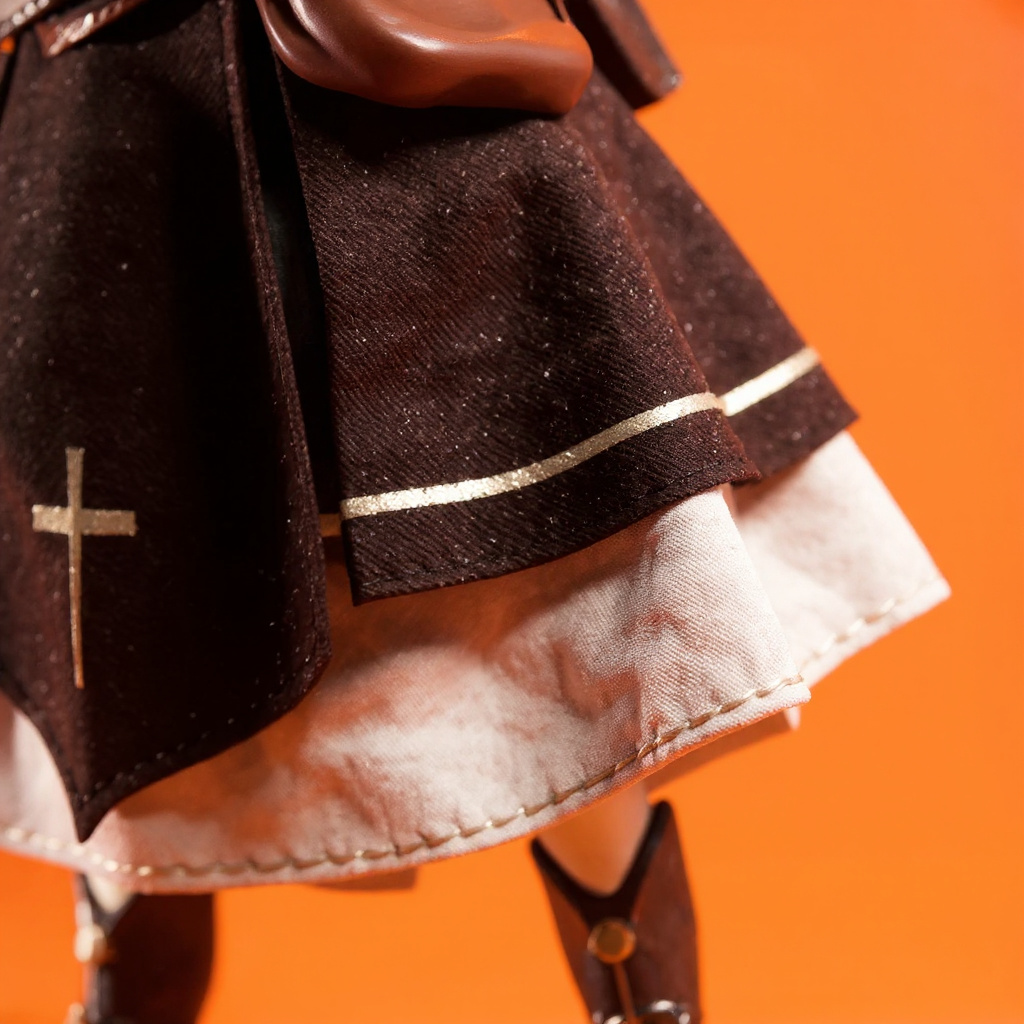
Our 1/12 Tonia Priestess Cloth Outfit uses this exact approach: wire-reinforced sleeves and hem, layered cream-and-brown fabric with deep red trim, embroidered edging, and a draped hooded headpiece built to hold a dramatic tilt. At $54, the price covers labor, not markup — wire installation alone adds close to two hours per outfit.
Handmade vs Mass-Produced: What You're Actually Paying For
| Factor | Factory Outfit | Handmade 1/12 Piece |
|---|---|---|
| Price | $20-35 | $45-80 |
| Fabric | Basic cotton blend | Silk georgette, cotton voile |
| Wire elements | None | Sleeve + hem wire, sometimes hood |
| Seam allowance | Often oversized | 3mm, fitted to joint range |
| Proportion | Shrunk 1/6 pattern | Built for 15cm body |
| Posability | Static | Sleeves and hems hold a gesture |
Factory outfits use simple construction and skip wire completely. Seams pucker because the pattern is a scaled-down version of something meant for a bigger doll. Artisan pieces run $45-80 depending on fabric and wire complexity — you're paying for a pattern built to this scale, not a resized template.
Handmade doesn't mean flawless. Expect a little variation in seam lines. Some visible hand-stitching, too. Thread ends need trimming sometimes, and wire can poke through fabric after months of heavy posing — that's wear, not a defect.
Styling for Dynamic Photography
Wire-reinforced clothing opens poses flat fabric can't hold. A sleeve caught mid-gesture. A hem frozen like a gust just passed through. A hooded headpiece angled to throw shadow across half the face.
Layering adds depth at small scale. A fitted undertunic under a flowing overrobe reads richer in photos than one flat layer ever will. Contrast the colors — cream against deep red, brown against embroidered gold trim — and the layers separate even in a single still frame.
Plan accessories with the outfit, not after it. A belt or pendant should sit inside the fabric's weight and color range instead of fighting for attention against a hand-dyed robe.
Light changes everything with natural fabric. Soft daylight through a window shows texture that a direct flash flattens into a shine. I shoot near a north-facing window around 4pm most days — nothing fancier than that.
Care and Longevity of Small-Scale Soft Goods
Hand wash wire-reinforced pieces. Machine agitation shifts or snaps the internal wire structure, and there's no fixing a kinked hem wire without unpicking the whole channel. Cool water. Gentle soap made for delicate fabric.
Wire fatigue is normal. 28-gauge copper holds a pose well for 6-12 months of regular repositioning before it goes soft and stops holding a bend. Replace it. Don't fight it.
Storage matters more than people think. Folding puts permanent creases into natural fiber. Hang pieces on miniature hangers, sized for a 15cm frame, or store flat between sheets of acid-free tissue.
Test new pieces for dye transfer before the first wear — deep reds and browns are the worst offenders. A damp cotton swab pressed against the fabric for ten seconds tells you everything.
Compatibility Across Different 1/12 Figure Lines
Body proportions shift between manufacturers even at the same nominal scale. Some 1/12 lines run broader through the shoulder; others lean more muscular through the torso and arms.
Measure your own figure before ordering anything. Shoulder width, chest circumference, and arm length decide fit far more than the number printed on the box.
Some cross-scale compatibility exists, with caveats: - 1/10 clothing often fits a 1/12 body with extra room in the shoulders. - 1/14 pieces run too small almost every time. - Standard fashion doll accessories sometimes work but read visually off — the proportions were never meant to match.
For material sourcing beyond big-box craft stores, Dollmore's fabric guide and BJD community wikis carry gauge and weight references specific to small-scale sewing that most general craft sites skip.
Frequently Asked Questions
What is soft goods clothing for 1/12 BJD figures, exactly? It's fabric clothing — as opposed to sculpted or molded plastic costume pieces — built for 14-16cm jointed dolls, sewn with 3mm seam allowances and often reinforced with wire so sleeves and hems hold a pose. What size clothes fit a 15 inch doll? 15 inches is about 38cm — 1/4 to 1/3 scale, not 1/12. That's about two and a half times larger than the 15cm BJD bodies this guide covers, so nothing here transfers directly. Can you machine wash wire-reinforced 1/12 BJD clothing? No. Hand wash only, cool water, gentle soap. Machine agitation bends or snaps 28-gauge wire inside the hem channel, and you can't repair that without opening the seam. How long does wire reinforcement last in 1/12 BJD sleeves? 28-gauge copper holds a pose for roughly 6-12 months of regular handling before it softens. Heavier 24-gauge wire lasts longer but risks tearing delicate fabric like silk georgette. Do Our Generation or American Girl clothes fit 1/12 BJD figures? No — those are 18-inch doll scales, nearly three times the height of a 15cm 1/12 figure. The seam allowances and proportions don't translate down at all. What's the difference between BJD and MJD in terms of sizing? BJD (ball-jointed doll) describes a construction type, not a size — BJDs range from 1/12 up to 1/3 scale and larger. MJD isn't a standard industry term. Why does my 1/12 BJD outfit's wire poke through the fabric? Usually it means the wire ends weren't taped before final stitching, or the piece has seen heavy posing over several months. Re-tape the ends and, if the fabric has thinned, patch the channel with a scrap of matching cloth. Is handmade soft goods clothing for 1/12 BJD figures worth the price? For serious posing and photography, yes — wire elements alone add labor factory outfits skip entirely. For casual display, a $20-35 factory piece does the job fine.Is Wire-Reinforced Clothing Worth the Extra Cost?
For photographers, yes. The posing range justifies the jump from $25 factory pieces to $45-80 handmade ones. For someone who just wants a doll dressed and sitting on a shelf — not really. Save the money.
Handmade construction means accepting a little imperfection for better material and features a factory line won't touch. If you want that priestess look — layered cream and brown fabric, deep red embroidered trim, a hooded headpiece that holds a dramatic tilt, sleeves that hold a gesture through an entire shoot — browse the 1/12 Tonia Priestess Cloth Outfit or check the full 1/12 BJD clothing collection for more wire-reinforced pieces.

