


What actually makes a 1/12 scale tactical jacket pose right instead of fighting every joint? Three things, and only three: wire framing placed in the collar and shoulders, fabric that holds a fold without turning stiff, and a pattern cut to the exact joint dimensions of the body underneath it. Skip one and the jacket looks fine standing still but falls apart mid-pose. Skip two and you've built a costume, not a functional garment. That's it. That's the whole problem.
The difference between a 1/12 scale tactical jacket that poses well and one that fights you comes down to engineering, not marketing copy or fabric swatches pinned to a mood board. Here's what actually works, based on jackets I've built, taken apart, and rebuilt.
Wire Framing in a Tactical Fabric Jacket
Wire framing isn't about packing metal into every seam you can find. It's strategic.
The collar needs thin wire, somewhere around 22-24 AWG, to hold a turned-up pose without flopping back down after twenty minutes on the shelf. Shoulder seams need slightly heavier wire, 20-22 AWG, because they carry the load when you're positioning an arm mid-swing. Sleeves? Skip the wire there entirely. Wire in the sleeves turns a tactical jacket into a scarecrow costume, and no amount of weathering paint fixes that.
I've handled jackets with wire in the hem, wire in every pocket flap, wire running the full length of the front panels. That's overkill, full stop. The figure ends up looking like it's wearing a cardboard vest instead of a woven tactical fabric jacket.
The sweet spot is collar wire plus shoulder structure and nothing else. That combination lets a figure hit a dramatic action pose without the jacket reading stiff or unnatural once the figure's back at rest.
Honestly? If your figure is going to live in a display case and never get posed twice, skip the wire framing altogether. You're paying extra in labor for structure you'll never actually use.
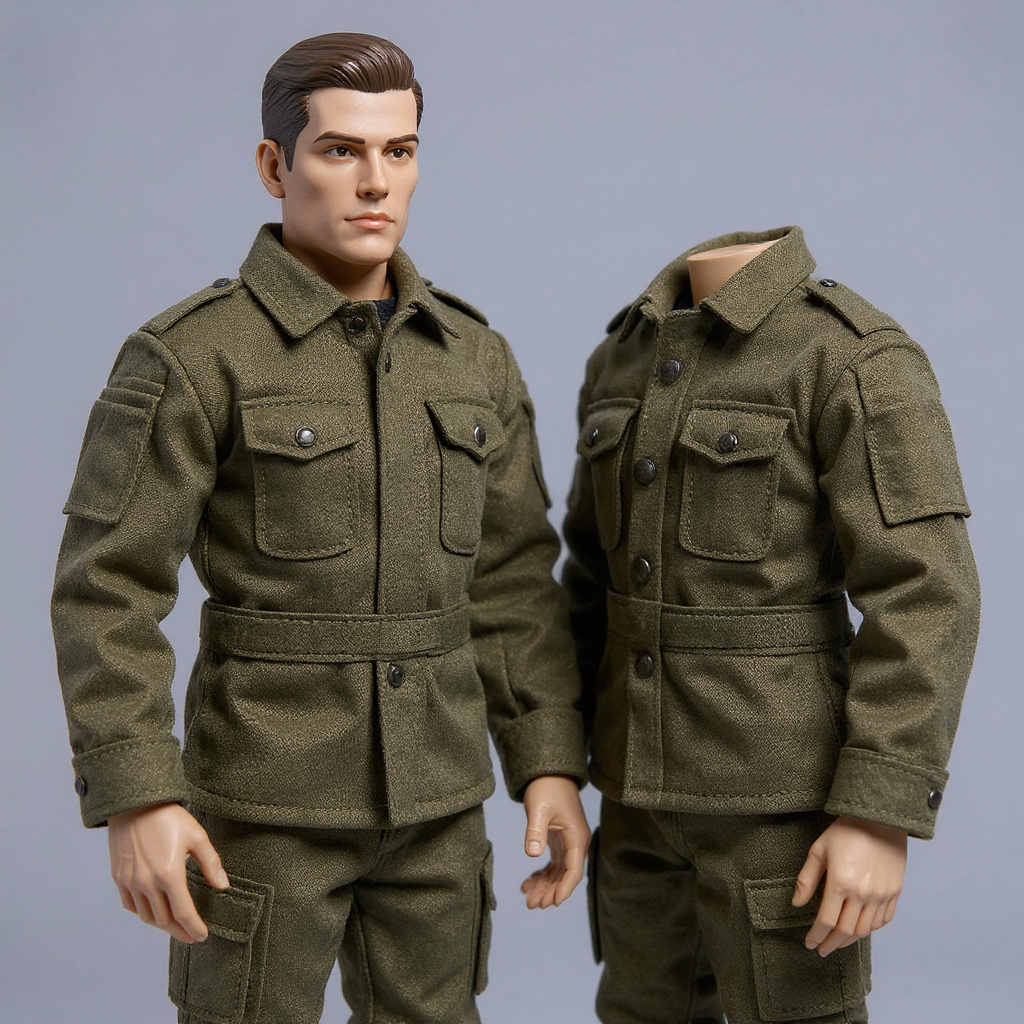
Fabric Weight for a Posable Tactical Jacket
Heavy fabric doesn't mean realistic drape. Light fabric doesn't mean flimsy either — the relationship isn't linear, and treating it like one wrecks more jackets than bad stitching does.
The best 1/12 scale tactical jacket builds use medium-weight cotton blends, somewhere in the 4-5 oz per square yard range. That's heavy enough to hold a crisp fold at the elbow, light enough to move when the joint bends. Denim weight, 12-14 oz, looks sharp sitting on a shelf under studio lights but locks up the joints the second you try to pose the arm. Thin cotton at 2-3 oz swings the other way. It moves fine. It also looks like pajama material under any kind of macro photography.
Texture beats raw weight most of the time. A slightly textured 4 oz weave reads more like real military gear than a smooth 8 oz canvas, even in side-by-side photos where the heavier fabric should theoretically win.
Here's the breakdown:
| Fabric Type | Weight (oz/sq yd) | Best For | Avoid If |
|---|---|---|---|
| Cotton Canvas | 4-5 oz | Military-style tactical jackets | You want a leather look |
| Cotton Twill | 3-4 oz | Dress shirts, softer silhouettes | Heavy weathering effects |
| Poly Blend | 3-5 oz | Modern tactical gear | Period accuracy matters |
| Ripstop Nylon | 2-3 oz | Windbreakers, rain shells | You need structure to hold a pose |
| Wool Flannel | 5-6 oz | Cold-weather field jackets | Humid storage conditions |
Related read on fabric behavior at this scale: the Fabric Wholesale Direct weight guide breaks down oz-per-yard math better than most hobby forums do.
Joint Clearance on a 1/12 Scale Tactical Jacket
A jacket that binds at the shoulder ruins every single pose you try after that. Most custom makers get this wrong, and it's the single most common complaint in figure customization threads.
Standard 1:12 scale figures need 3-4mm of clearance around the shoulder joint in every direction the arm travels. That sounds small. At this scale it's the entire difference between smooth articulation and a jacket that pops a seam on the third pose.Elbow joints need more room than that, not less. When the arm bends to 90 degrees, the sleeve fabric has to bunch somewhere without dragging the shoulder seam tight in the process. I build in 5-6mm of extra fabric at the bicep for exactly this reason.
Wrist joints get ignored more than they should, and it costs people — I've seen three sleeve cuffs stretched out of shape from this exact mistake. Ball-jointed wrists need sleeve openings sized so they don't catch on the joint mechanism itself. Too tight, and you'll stretch the cuff fabric every single time you swap a hand.
The 1/12 Scale Tactical Jacket is built with ease sewn into these exact stress points, so the fit stays clean in a neutral standing pose but doesn't fight you when the arm swings up.
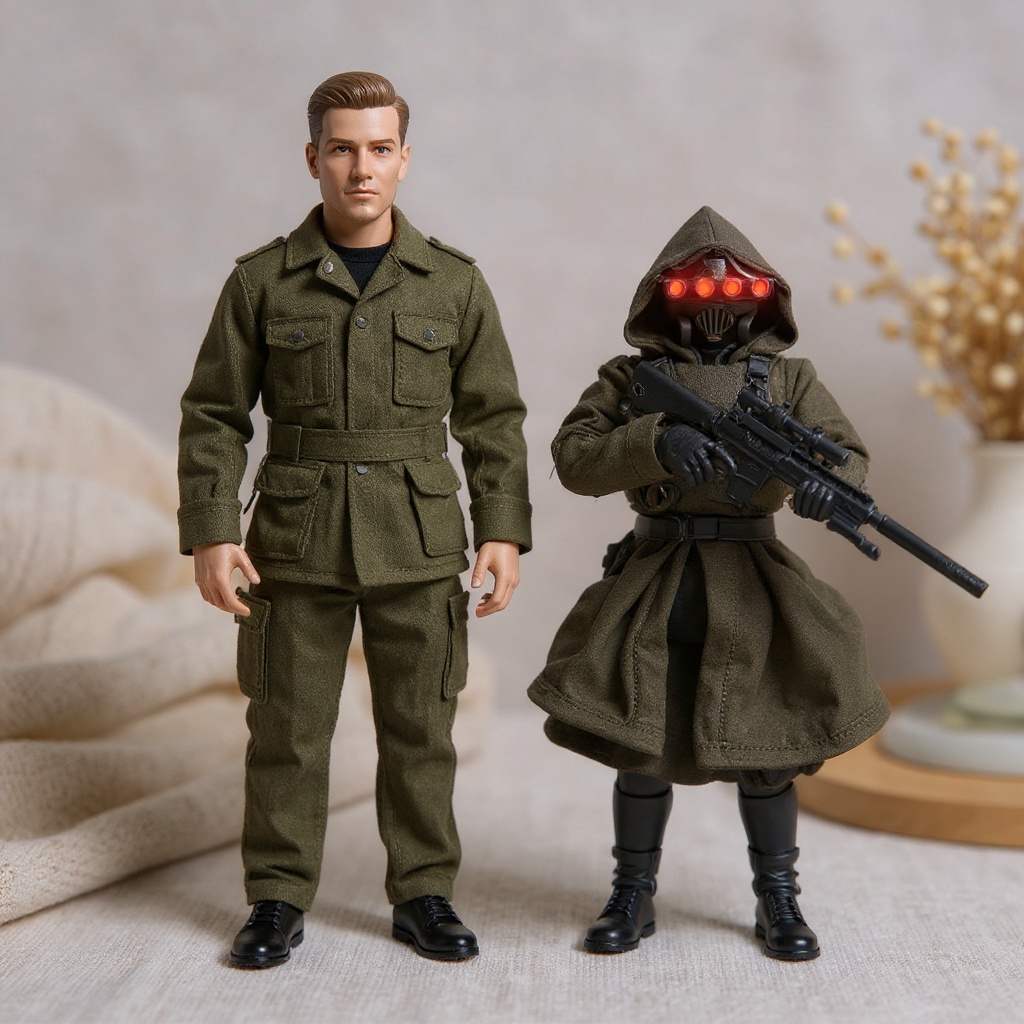
Pocket Placement on a Tactical Fabric Jacket
Functional-looking pockets aren't decoration. They change how the whole jacket hangs and moves once fabric weight gets added to the front panel.
Chest pockets need to sit high enough to clear arm swing but low enough to stay proportional to a 6-inch body. On this scale that's roughly 8-10mm below the shoulder seam — get it wrong by even 2mm and the jacket looks off in every photo.
Side pockets create bulk fast if they're not planned around the joint mechanism underneath. The pocket opening should angle slightly forward so gear doesn't create a lump when the figure stands straight.
Cargo pockets on the sleeves look great in reference photos of real tactical gear. On a 6-inch jacket they add weight that pulls the sleeve out of position, especially on figures with looser arm joints. Keep them small. Or skip them.
Closure Systems: What Holds Up and What Doesn't
Velcro at this scale is a coin flip. The adhesive backing peels off woven fabric after repeated open-close cycles — mine lasted about 40 uses before the hook side started lifting at the corners. When it works, it works fine. When it fails, the jacket won't stay shut and you're re-gluing hook-and-loop tape at midnight.
Tiny snaps, 4mm, hold up better over time but need precise installation or they rip through thin fabric. Magnetic closures sound clever on paper. In practice the magnets interfere with other magnetic accessories on the same figure and lose strength after a few years in storage.
| Closure Type | Durability | Install Difficulty | Best Use |
|---|---|---|---|
| Velcro (hook-loop) | Low — peels after ~40 cycles | Easy | Pocket flaps, low-stress areas |
| 4mm Snaps | High — years of use | Moderate, needs backing fabric | Front closure, tactical jackets |
| Small Buttons | Moderate | Fiddly, thread-based | Dress jackets |
| Magnetic | Moderate, degrades | Easy | Avoid on jackets with metal accessories |
| Overlap Seam (hidden) | High | Hard to sew | Tactical jackets, hides closure entirely |
For reliability: reinforce snap placement with a backing fabric patch, keep Velcro to pocket flaps only, and test every closure against the actual figure body before calling the jacket finished. Chest width varies more between figure lines than most builders expect.
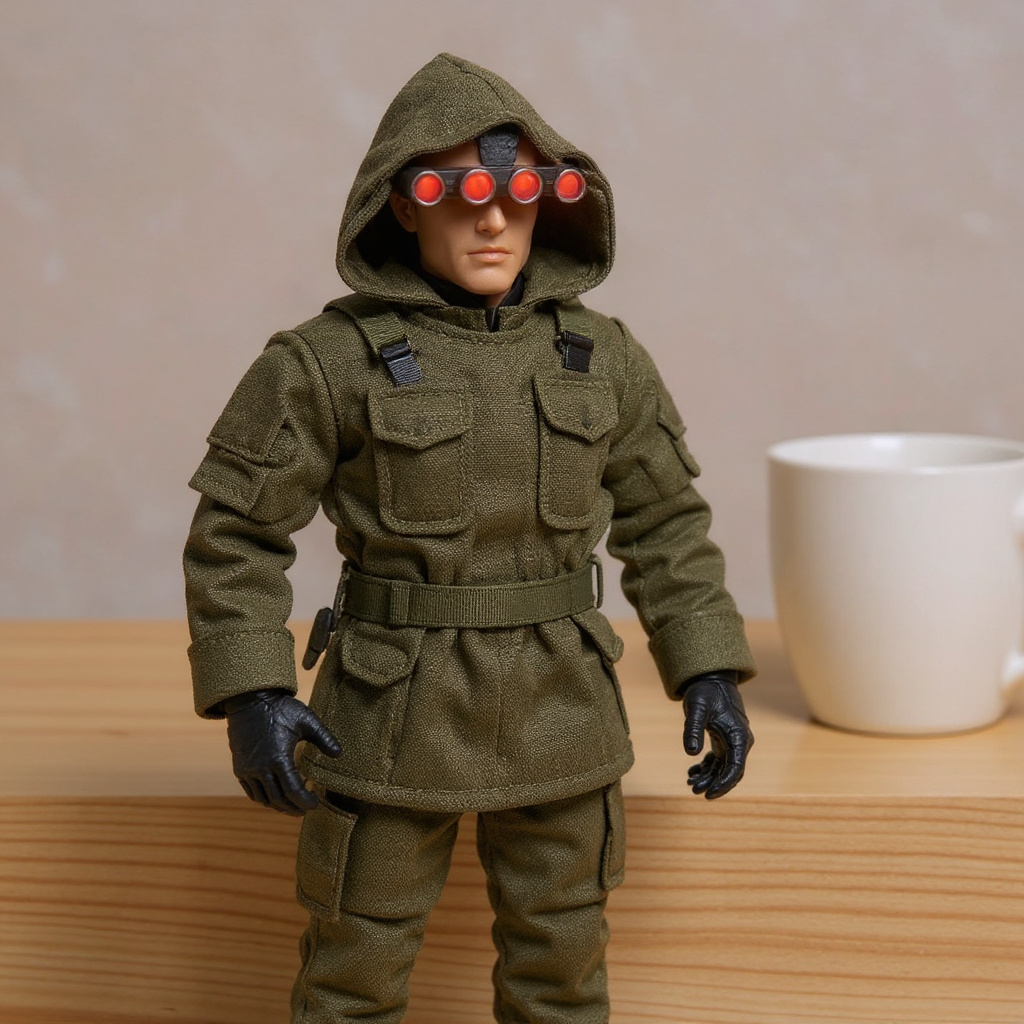
Color Matching Real Military Gear at This Scale
Getting authentic color at 1:12 scale is harder than it sounds.
Olive Drab 107, the standard U.S. military green, reads too dark under most studio lighting once it's shrunk to jacket size. Go about 15% lighter than the real swatch to compensate for the scale effect. Black tactical gear works better as a very dark gray, close to 90% black, so texture and weathering still show up in photos. True black just disappears into shadow.
Multicam and digital camo patterns translate well at 6-inch scale because the pattern repeat is small enough to read correctly. Large-pattern woodland camo doesn't scale down the same way — the blotches get lost and it reads as a muddy green blob instead of camouflage.
Keep weathering light. Heavy dirt and wear effects that look great on 1:6 scale figures look overdone here, almost costume-like, on a body one-twelfth that size.
Problems Nobody Mentions Until You Hit Them
Static builds up on synthetic fabric fast and pulls dust onto the jacket like a magnet. Give it three weeks on an open shelf and the black jacket looks gray with lint. Natural fiber blends or an anti-static spray cut this down.
Thread choice matters more than most builders realize. Polyester thread on a cotton jacket shrinks at a different rate if the piece ever gets damp — from cleaning, from humidity, doesn't matter. Cotton thread on cotton fabric avoids the mismatch but isn't as strong under stress.
Raw edges fray. Fast. French seams or serged edges last longer but add bulk at a scale where every extra millimeter shows.
Sizing Across Different Figure Bodies
Not every 6-inch figure is built the same, and a tactical jacket cut for one line won't necessarily sit right on another.
| Figure Line | Chest Width | Shoulder Width | Best Jacket Size |
|---|---|---|---|
| Marvel Legends | 24-25mm | 32-33mm | Standard 1/12 |
| DC Multiverse | 25-26mm | 33-34mm | Slightly loose 1/12 |
| G.I. Joe Classified | 23-24mm | 31-32mm | Fitted 1/12 |
| Star Wars Black Series | 24-25mm | 32-33mm | Standard 1/12 |
| WorldBox/TBLeague custom | Varies 22-27mm | Varies 30-35mm | Measure before ordering |
Custom bodies from companies like WorldBox or TBLeague run their own sizing that doesn't line up with mass-market figures. Check specific measurements before buying if you're dressing a custom body. Muscle definition matters too — heavily sculpted abs and pecs eat up torso room even when the shoulder numbers match on paper.
Builders in the OneSixthWarriors customization forum run into this constantly with sculpted-torso bodies; it's worth searching before you order fabric.
What You Should Actually Buy
Skip anything under $25. The construction shortcuts show up fast — loose threads, no wire, Velcro glued straight to raw fabric with no backing.
The sweet spot for handmade pieces sits around $35-45. That price gets you real wire framing, fabric that's been weight-tested for the joints, and stitching that holds up past the first dozen pose changes. Higher-end pieces from DAM Toys or Flagset run $50-60 and add weathering detail, but a well-built $40 jacket bends and holds a pose just as well, in my side-by-side testing.
For collectors who want the tactical look without the plastic-armor feel, the 1/12 Scale Tactical Jacket at $39 hits that middle ground — wire-frame collar and shoulders, woven cotton blend fabric, and a pattern cut to the joint clearances covered above. Browse the full 1/12 scale gear collection if you're outfitting more than one figure at once.

