


Title tag: 1/12 Figure Clothing Set Cloth Cape: Wire Posing Guide
Meta description: How to choose, size, wire and pose a 1/12 figure clothing set cloth cape. Includes fabric weights, wire gauge results, cape lengths in mm and a dark-fantasy Vyke example.
Written by a Figure Vault soft-goods maker. Disclosure: The Figure Vault sells the Vyke cape discussed below, so weigh that recommendation accordingly. Bench figures in this guide come from my own swatch and bend tests on 6-inch figures. They are small-sample notes, not lab data.A 1/12 figure clothing set cloth cape is a real-fabric cloak, cut at one-twelfth of full size, that hangs from a posable figure about 15-17 cm (6-6.5 inches) tall. Soft goods means any figure clothing made from fabric instead of molded plastic. The formula that works is thin cotton of roughly 40-90 GSM plus 26 AWG (0.40 mm) wire sewn inside the hem. Get those two right and the folds stay where you put them.

Why a Wired Cloth Cape Beats Plastic
Plastic capes are fixed. You get the pose the factory molded, and that is the end of it.
A wired fabric cape can be reshaped every time you move the figure. It can billow behind a lunge, wrap across the body for a guarded stance, or hang flat for a quiet shelf pose. Fabric also reads correctly at 12:1 reduction in a way molded resin often does not, because real cloth has a weave, a nap and a soft edge. Molded capes tend to look thick and glossy next to painted armor.
Honestly, though, if you live somewhere humid, never repose your figures, or keep them in a dusty room with no case, skip cloth entirely. Plastic will outlast it. Cloth collects dust, and the wire fatigues. That is the trade.
The 1/12 cloth capes worth buying accept that trade on purpose.
Choosing Fabric for a 1/12 Cloth Cape
The test I use is a 50 mm square swatch draped over a pencil. If it forms two or more soft folds without standing out stiff, it can work at 1/12. If it hangs flat like paper or sticks out like a board, it cannot. A full-size cloak made from 2.4 mm material becomes 0.2 mm at this scale, so anything much thicker than 0.2 mm looks like carpet.
| Fabric | Typical weight | Approx. thickness | Swatch drape result | Verdict at 1/12 |
|---|---|---|---|---|
| Cotton lawn / voile | 40-70 GSM | 0.10-0.15 mm | 3+ soft folds | Best all-round choice |
| Fine linen-cotton blend | 70-90 GSM | 0.15-0.20 mm | 2-3 folds, slightly crisp | Good for weathered, rough looks |
| Poly-cotton blend | 60-90 GSM | 0.12-0.20 mm | 2-3 folds | Good, and it frays less |
| Silk habotai | 20-35 GSM | 0.05-0.08 mm | 4+ fluid folds | Drapes well but too shiny |
| Denim | 200-350 GSM | 0.5-0.8 mm | 0-1 folds | Too thick |
| Canvas | 250-400 GSM | 0.6-1.0 mm | 0 folds | Too thick, no drape |
Weights are typical published ranges for each fabric type. Drape results are from my own swatch test, so treat them as directional.
The table and the advice agree once you read it this way. Silk drapes best, but its sheen looks like satin pajamas on a dark-fantasy figure. Poly-cotton blends are tougher and fray less, and I rate them nearly as good as cotton. I still reach for plain cotton first because it takes dye and weathering better.
Color matters. Black, charcoal grey and deep red hide seams and sit well beside painted armor. Bright hues look like toys. A little tea staining or dry-brushed grey on the hem sells the age.
Wire Placement in a Fabric Cape for 1/12 Figures
Too much wire and the cape turns into a stiff sail. Too little and it droops. Aim for structure at the edges and softness in the middle.
1. Outer hem wire: sets the silhouette and stops the bottom from hanging limp. 2. Shoulder wire: supports the attachment area and shapes the drape across the collarbones. 3. Center back wire (optional): a single vertical run for capes longer than 110 mm. 4. Fold wires: short segments where you want a permanent crease or a dramatic sweep. 5. Concealed connection point: a small hidden clip, magnet or tuck instead of a bulky clasp.
Gauge results from my bench. I bent each wire 90 degrees and back at the same spot until it cracked, then tried holding a pose in a 60 GSM cotton cape. Gauge numbers follow the American wire gauge standard.- 24 AWG (0.51 mm): survived about 6-7 reshapes. It held a heavy hem well but showed ridges through thin cotton. - 26 AWG (0.40 mm): survived about 8-10 reshapes. It held every pose I tried and stayed invisible under the fabric. This is my default. - 30 AWG (0.25 mm): held a pose only in the lightest silk. It sagged in cotton.
Enclose the wire completely in a folded hem channel. Tacked-on wire snags. It looks cheap. It also scratches paint.
Sizing a 1/12 Cloth Cape by Figure Type
A cape that looks right on a desk can be wrong on the figure. Measure first. Then use this rule: neck-to-hem length equals your figure's height multiplied by 0.65-0.75, which lands between mid-calf and ankle.
| Figure line | Typical height | Neck-to-hem length | Hem width, spread |
|---|---|---|---|
| Marvel Legends (6-inch scale) | 15-18 cm | 105-125 mm | 100-130 mm |
| Mezco One:12 Collective | 16-17 cm | 110-130 mm | 100-130 mm |
| S.H.Figuarts (about 1/12) | 14-15 cm | 95-110 mm | 85-110 mm |
| Figma (varies by release) | 13.5-16 cm | 90-110 mm | 80-105 mm |
Heights are typical ranges and differ between individual releases. Figma is not a strict 1/12 line, so measure your own figure.
Go longer than the ankle and the cape drags on the base and tangles in the legs. Go shorter and you lose the sweeping shapes. Leave enough width for outstretched arms, but not so much that the figure disappears at rest.
Before you order, run through this checklist:
1. Measure your figure's height in mm, then multiply by 0.65 and 0.75 to get your length window. 2. Measure shoulder width and check that the cape's neckline is no wider than that. 3. Confirm the wire is enclosed and 24-26 AWG. 4. Confirm the fabric is under about 90 GSM or 0.2 mm thick. 5. Look for photos of the cape on a real figure, not a render.
For more options, browse the wider 1/12 soft goods range.
Cross-Brand Compatibility
Capes forgive more than fitted clothing does. A cape only needs to sit on the shoulders and clear the arms, so a small difference in build rarely matters.
Marvel Legends have broad shoulders and hold a cape neckline well. S.H.Figuarts and Figma figures are often narrower, so a cape cut for a bulky Western body can sit oversized on them. Custom kit-bashes follow no standard. For those, plan to trim the cape, or make one.
The r/actionfigures community on Reddit is a good place to check fit reports for odd combinations. The general idea of proportional reduction is explained under scale models.
How to Install a Wired Cape on a 1/12 Figure
Joints are small. Wire is fragile. Take your time.
1. Pose the figure in a neutral stance with arms slightly away from the body. 2. Remove the head if it pops off, which opens up the neck and shoulder area. 3. Slip the cape over the torso and seat the neckline against the collarbones. 4. Secure the hidden clip, magnet or tuck. Avoid elastic and ties, which look out of scale. 5. Refit the head and let the cape hang for a minute before touching the wire. 6. Shape the hem wire in wide, gradual curves. Never fold it flat. 7. Add fold wires last, then test the pose by moving the figure a few degrees at a time.
A kink is a break waiting to happen. Curve it.
Care and Long-Term Display
Brush off dust with a soft makeup brush every couple of weeks. Avoid washing. Water can rust steel wire and distort the weathered finish.
Try to limit repositioning. Each reshape uses up some of the wire's life, and my 26 AWG samples failed after 8-10 cycles at the same bend. Move the bend point a few millimetres each time to spread the stress. Keep capes out of direct sun, because UV fades dyes and can make some synthetics brittle. A 1/12 display case solves both dust and light.
If the wire snaps, splice a short length alongside the break and re-stitch the channel. Fixable. Annoying.
A Dark-Fantasy Example: The Vyke Cape
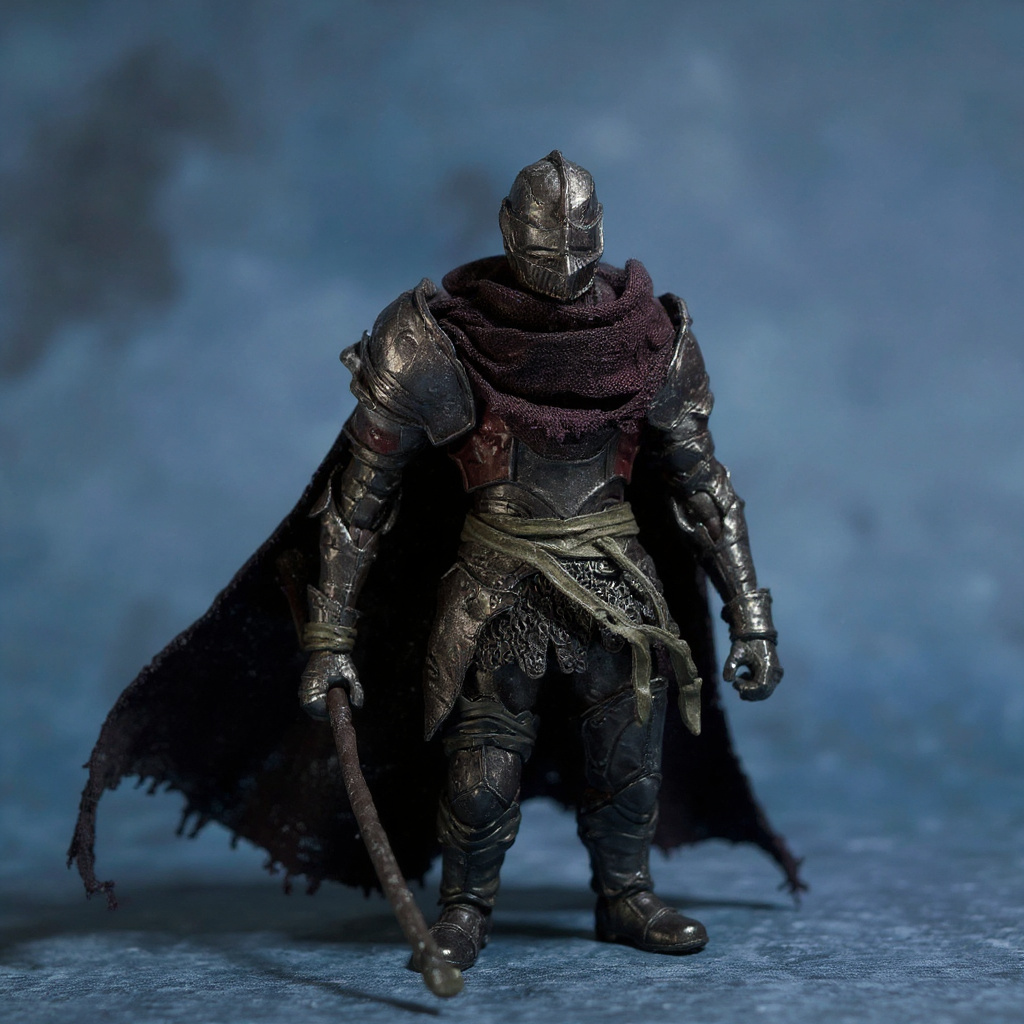
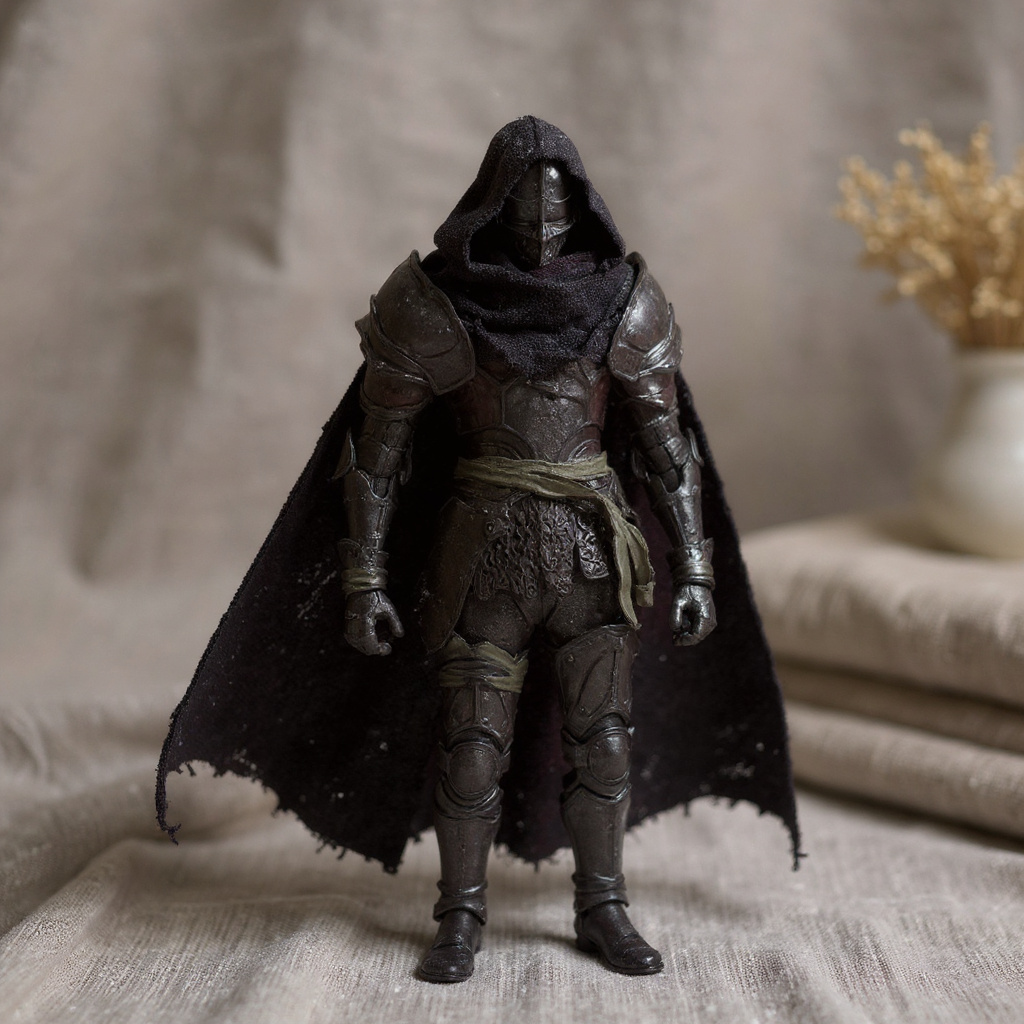
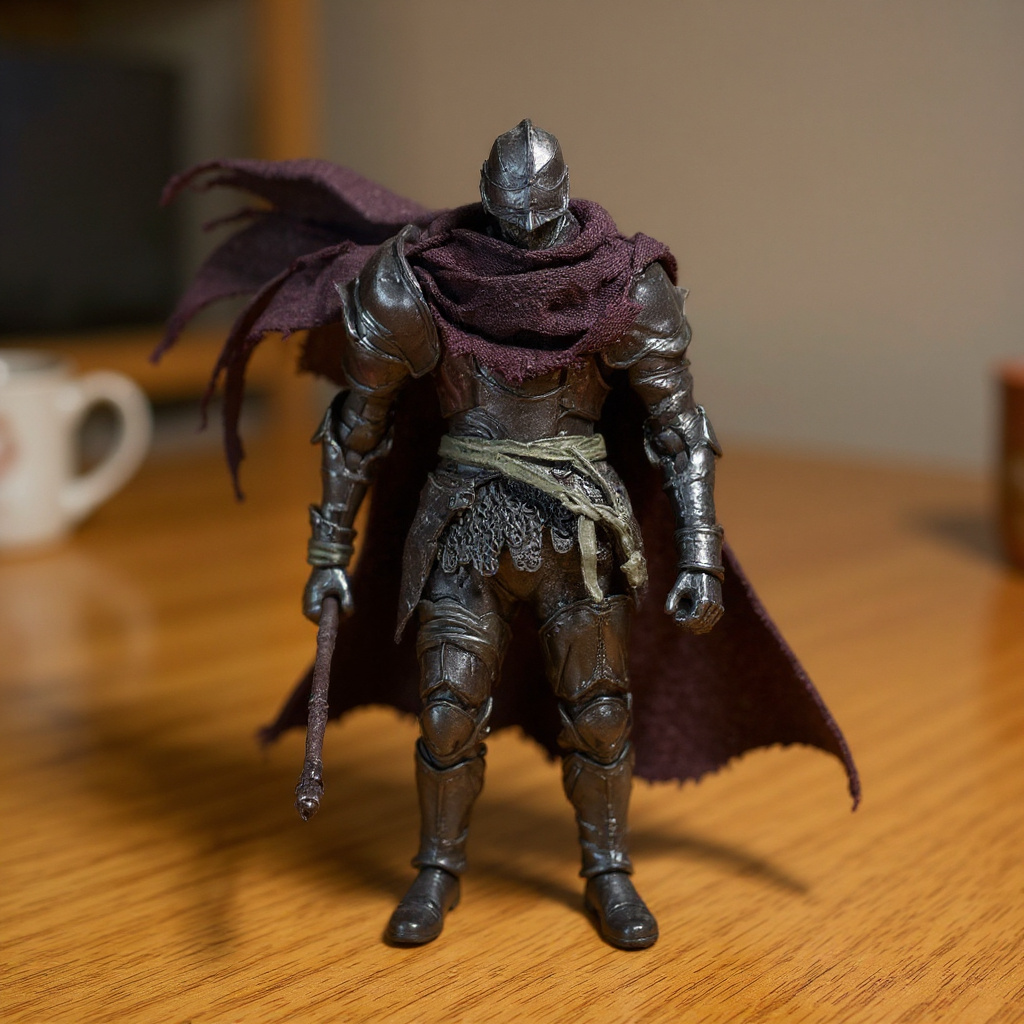
The Vyke Cape Replacement for 1/12 Action Figures is built for the look of Elden Ring's Vyke. It is a weathered, rough-textured fabric cape in muted dark tones with fraying edges and internal wire for posing, priced at $22.50. We sell it, so I am biased. Check the product page for the current length in mm and compare it against your figure's 0.65-0.75 window before buying. If you want more Elden Ring pieces, see the Elden Ring 1/12 accessories collection.
Frequently Asked Questions
What wire gauge is best for a 1/12 cape?
26 AWG (0.40 mm) soft copper is the best default. In my bench notes it held every pose in 60 GSM cotton and survived roughly 8-10 reshapes at the same bend. Use 24 AWG (0.51 mm) only for the hem of a heavy or long cape.
What fabric is best for 1/12 scale capes?
Thin cotton lawn or voile of 40-70 GSM, about 0.10-0.15 mm thick, is the best choice. It folds at scale and takes dye and weathering well. A 70-90 GSM linen-cotton blend also works if you want a rougher, hand-sewn look.
How long should a cape be for a 6-inch figure?
Most 6-inch figures (15-18 cm tall) suit a neck-to-hem length of 105-125 mm. Multiply the figure's height by 0.65-0.75 to find the length for your own. That puts the hem between mid-calf and ankle.
How do you put a wired cloth cape on a 1/12 action figure?
Remove the head if it detaches, slip the cape over the torso and seat the neckline on the collarbones. Secure it with a hidden clip or magnet, then shape the hem wire in gradual curves. Add fold wires last and avoid sharp bends.
Will a cloth cape fit both Marvel Legends and S.H.Figuarts?
Often yes, but not perfectly. Marvel Legends are broader, so a cape cut for them can look oversized on the narrower 14-15 cm S.H.Figuarts bodies. Match the cape's neckline to your figure's shoulder width.
How do you stop fabric from fraying at 1/12 scale?
Seal cut edges with a thin line of diluted PVA glue, or fold a 1-2 mm hem. For a weathered cape you may want some fray, so seal the neckline and leave the hem rough. Poly-cotton blends fray less than pure cotton or linen.
Are cloth capes worth it over plastic?
They are if you repose figures or want dynamic poses. They are not if you display figures untouched in a humid or dusty room. Plastic lasts longer with no care, and cloth gives better posing and a more realistic look.
The bottom line
The right 1/12 figure clothing set cloth cape comes down to three measurable choices: thin cotton at 40-90 GSM, 26 AWG wire in an enclosed hem, and a length of 0.65-0.75 times your figure's height. Get those right and a fabric cape beats plastic for posing. Get them wrong and it looks like a hankie.If you want a dark, weathered, wire-posable option, the Vyke cape is the one we make. Measure your figure first.

