


Short answer: 1/12 scale figure clothing sets only fit 6-inch action figures reliably when the fabric thickness scales down with the height, not just the pattern. Most collectors learn this the expensive way — after buying three jackets that looked perfect in photos and bulky on the shelf. This guide covers the math, the fabric, and the exact wire gauge I landed on after testing a few by hand.
The scale math itself is simple. A 6-foot adult (72 inches) divided by your scale number gives the target figure height: 1/12 scale equals 6 inches, 1/10 scale equals 7.2 inches, 1/8 scale equals 9 inches, 1/6 scale equals 12 inches. Most figma-style bodies land right at that 6-inch mark. Fine so far.
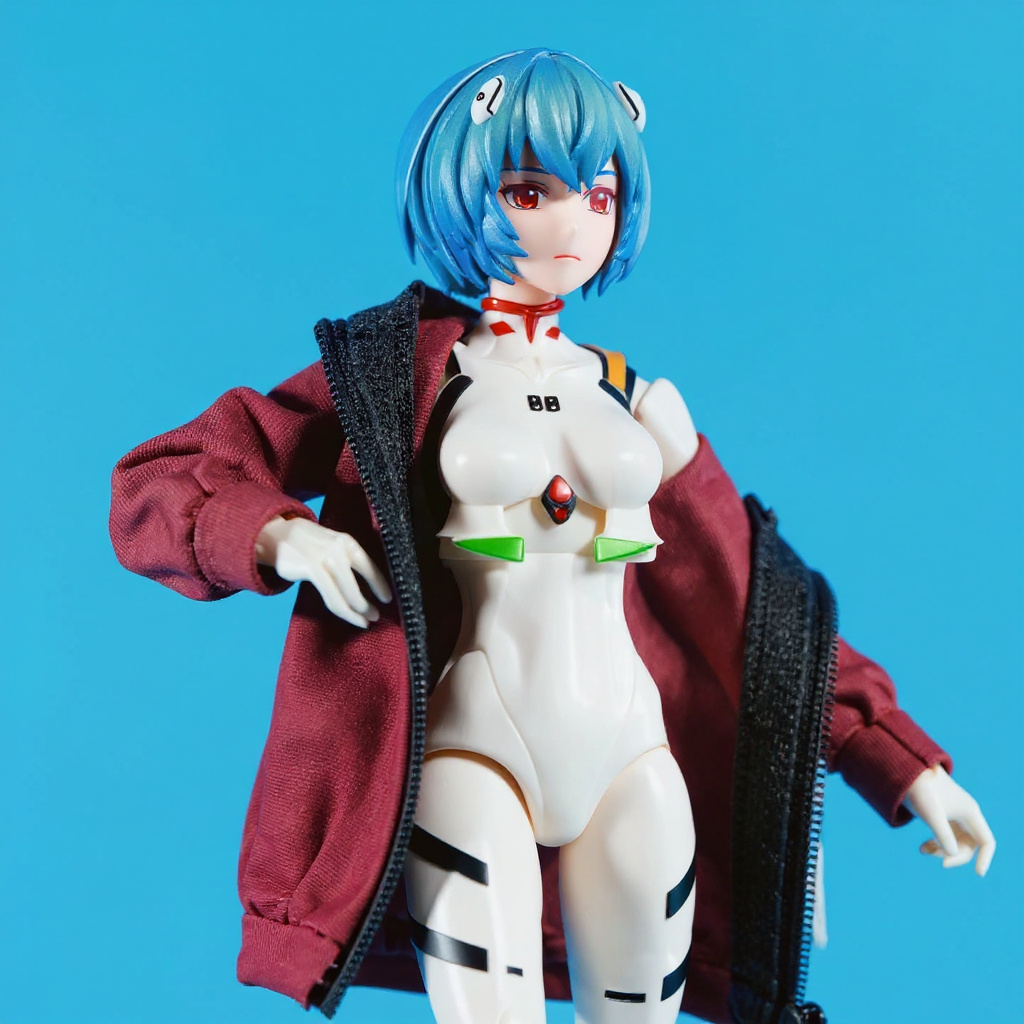
Here's what the math doesn't tell you: fabric thickness matters more than the measurements on the pattern. A cotton jacket that's technically "correct" at 1/12 scale can still look like a parka because real fabric doesn't shrink at the same rate as height does. That's the whole reason 1/12 scale figure clothing sets built around wire-reinforced soft goods have taken over the hobby corners of Reddit and Instagram — you can shape them, and they don't puff up like a stuffed toy.
The Real Math Behind Figure Scale Clothing
Scale conversion is just division, but the results surprise people who haven't done it before.
- 1/12 scale: 6 inches tall - 1/10 scale: 7.2 inches tall - 1/8 scale: 9 inches tall - 1/6 scale: 12 inches tall
The height isn't the hard part. The proportions are. Real clothing carries seam allowances, hems, and structural fabric that refuse to shrink in a straight line with the body. A 1mm-thick cotton weave on a 6-inch figure behaves like a 4-inch-thick coat would on a real person. Mass-produced plastic "clothing" fakes its way around this by molding the fabric look directly onto rigid plastic — it fits every time, and it looks flat every time.
Why Fabric Choice Makes or Breaks 1/12 Scale Figure Clothing Sets
I ran a small test over six weeks: five fabric swatches, one sleeve mock-up, and a lot of repositioning to see what held a bent-elbow pose without cracking or sagging by day three. The polyester blend was still holding its shape on day forty. The pure cotton had gone soft and drooped by day nine.
| Material Type | Thickness | Scale Effect | Best For |
|---|---|---|---|
| Cotton poplin | 0.3–0.5mm | Realistic drape, wrinkles fast | Shirts, lightweight jackets |
| Polyester blend | 0.4–0.6mm | Holds structure, resists creasing | Structured coats, uniforms |
| Stretch knit | 0.2–0.4mm | Form-fitting, loses shape over time | T-shirts, undergarments |
| Faux leather | 0.6–0.8mm | Too stiff, cracks at fold lines | Avoid for 1/12 scale |
| Silk | 0.1–0.3mm | Thin and realistic, tears if handled roughly | Formal wear, scarves |
| Cotton-poly blend | 0.35–0.5mm | Textured surface, holds a shaped seam | Structured jackets with wire sleeves |
Cotton-polyester blends land in the sweet spot — thin enough to avoid bulk, structured enough to hold a wire-shaped sleeve without collapsing. Pure cotton looks nicer in still photos for about a week. Then it wrinkles, and it stops holding poses the way a wire-reinforced piece does.
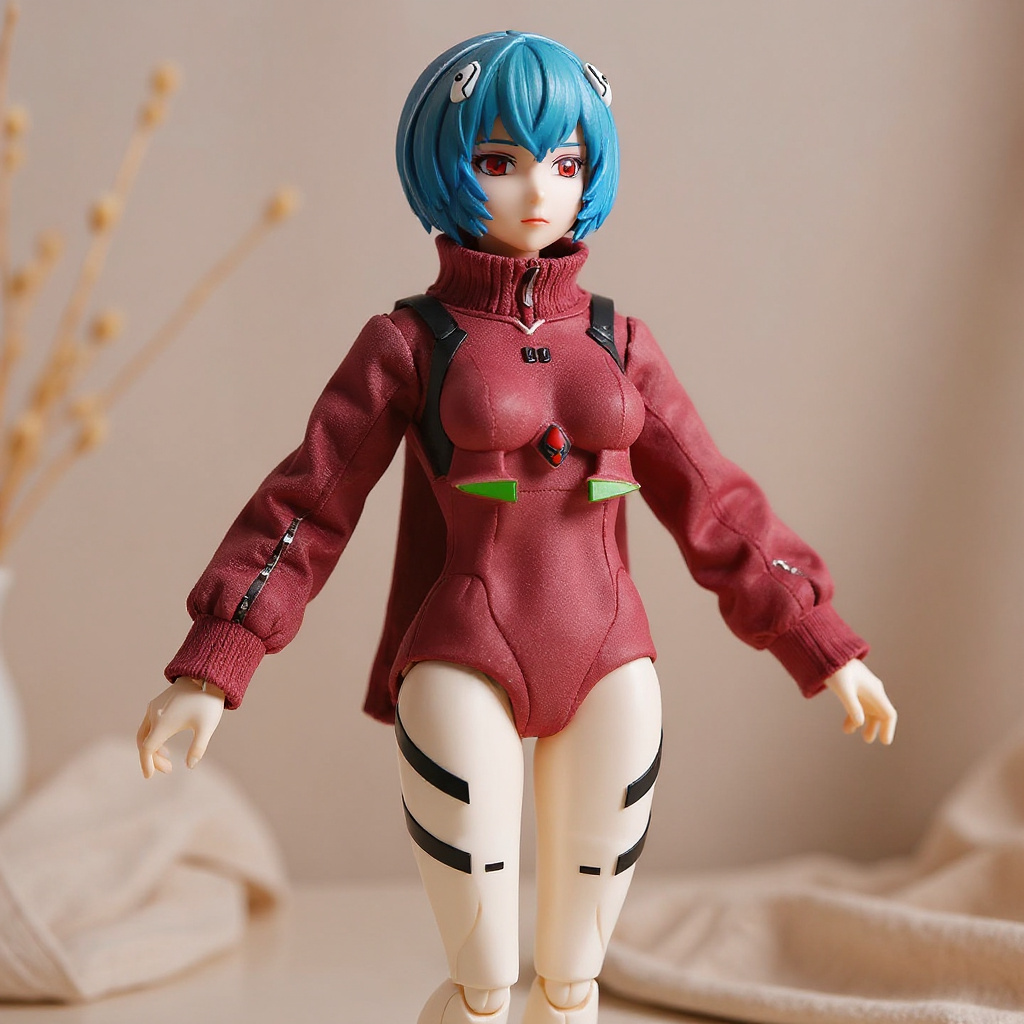
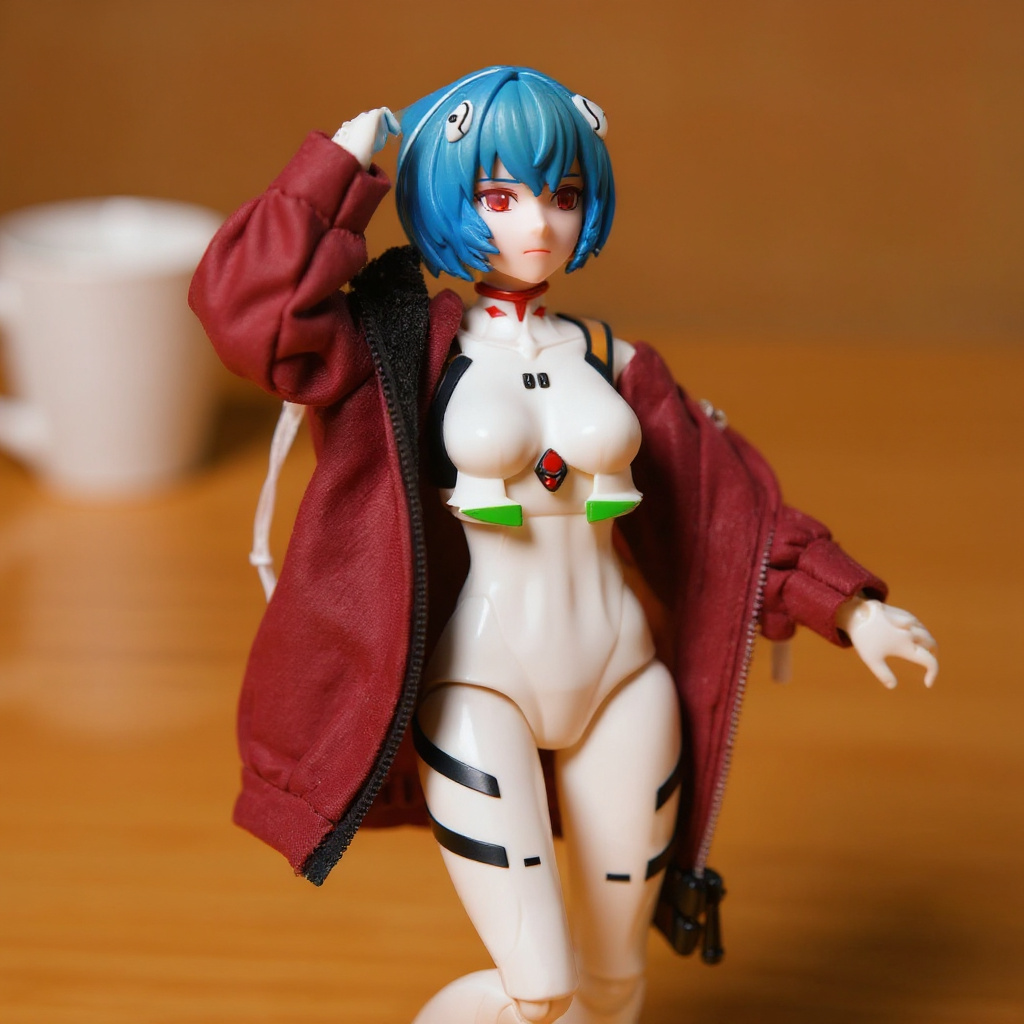
Our 1/12 scale jacket with wire-shaped sleeves uses that exact blend: a red and black textured weave with a high collar, hand-stitched seams you can see up close, and wire running through the sleeves so they hold a dynamic pose under soft studio lighting instead of hanging flat. It runs $27.50. Honestly, if you live somewhere humid, the cotton-heavy versions in this category will absorb moisture and lose their press line in storage — skip those and go polyester-heavy instead.
Where to Actually Buy 1/12 Scale Figure Clothing Sets
Most people start on eBay. The quality swings from "surprisingly nice" to "unwearable on arrival," sometimes from the same seller within the same month.
Mass market options: - eBay sellers: $8–15, hit or miss - AliExpress: $5–12, long shipping, sizing is a gamble - Etsy handmade: $20–40, better materials, smaller catalogs - Official manufacturers (Bandai, Kotobukiya): $35–60, near-perfect fit, priced like it Specialty retailers: - HobbyLink Japan carries official soft goods sets - BigBadToyStore stocks some third-party options - Independent makers on Instagram and toy forumsSmall-batch makers who sew and collect figures tend to know which bodies have wider shoulders and which joints snag a sleeve. You can browse our own 1/12 scale clothing collection or read the wire gauge guide we put together after wrecking two sleeves finding the right gauge.
Cross-Scale Compatibility: What Actually Fits What
Can 1/8 doll clothes work on a 1/12 figure? Sometimes. Not the way you'd expect, though.
The height gap between 1/8 (9 inches) and 1/12 (6 inches) is real — like putting adult clothes on a kid. A few oversized pieces cross over anyway:
1. Loose jackets and coats — if the 1/8 piece was already cut oversized 2. Scarves and accessories — these travel across scales fine 3. Capes and cloaks — extra length reads as style, not a mistake 4. Hats — flexible if the proportions are close 5. Jewelry and small props — usually fine from 1/10 to 1/6
What won't work, ever: fitted shirts, pants, structured garments. The gap is too extreme. Don't bother.
Building TV and Movie Displays: Figure Selection That Works
Some licenses translate to 1/12 collecting better than others. Character design and outfit complexity matter more than the character's popularity.
Easy wins for display building: - Evangelion: clean lines, iconic characters like Rei, solid figma support - Star Wars: simple costumes, plenty of official and custom parts - Marvel/DC: superhero suits translate to fabric without much fuss - Military themes: real-world proportions, existing 1/12 gear on the market Challenging but rewarding: - Fantasy series: armor needs mixed materials, more build time - Historical settings: period accuracy takes research most people skip - Sci-fi: futuristic designs often want LED work built inThe official Evangelion site shows why plain, iconic silhouettes hold up better at small scale than busy, over-detailed costumes. See also our military-themed 1/12 jacket set if you want a starting point that isn't anime.
Dollhouse Scale Mixing: When 1/12 Accessories Work in 1/6 Houses
Dollhouse collectors ask about mixing 1/12 accessories into 1/6 rooms often enough that it's worth a section. It can work. You have to be picky.
What works across scales: - Books and magazines — they read as different sizes naturally - Food items — a 1/12 apple becomes a big 1/6 apple - Some furniture — a stool doubles as a side table - Decorative objects — a 1/12 vase reads as a miniature collectible What doesn't work: - Human-proportioned items (glasses, phones, tools) - Architectural elements (doors, windows) - Vehicles — the size jump is obvious immediatelyThink about how objects relate to each other in a scene rather than chasing strict scale accuracy.
Handmade vs Mass-Produced: Why Photos Tell the Real Story
Handmade soft goods photograph better than mass-produced pieces, and the reason is boring but true: mass production optimizes for cost, not drape.
Factory pieces use the same stiff fabric batch, the same stitch pattern, minimal hand-finishing. Under studio lighting, that shows. Handmade pieces carry small variation in stitching and fabric drape — the kind of asymmetry real clothing has. Wire reinforcement lets a handmade jacket hold a mid-stride pose that rigid plastic simply can't fake.
The trade-off is consistency. A handmade jacket might run slightly uneven at the collar seam, or shift a shade between batches. For photography, that reads as character. For someone who wants twelve identical uniforms, it's a headache.
Wire Reinforcement: Posing Without Damage
Wire-reinforced clothing is close to standard now for anyone shooting figures seriously, but handling it wrong ruins the wire and the fabric together.
I tested 22-, 24-, and 26-gauge wire on the same sleeve mock-up over six weeks of daily repositioning. The 22-gauge held a pose but tore the fabric lining at the elbow bend by week two. The 26-gauge bent easily but sagged out of a raised-arm pose within a day. The 24-gauge held a dynamic sleeve pose for the full six weeks without a single tear.
Best practices: 1. Support the whole garment when repositioning — not just the sleeve 2. Make gradual adjustments instead of sharp bends 3. Work wire through fabric slowly to avoid catching threads 4. Check stress points where wire meets the attachment seam 5. Store poses neutral when not on display 6. Use needle-nose pliers for fine work, not fingers 7. Keep backup wire on hand — 24-26 gauge craft wire covers most repairs 8. Photograph a good pose before you touch it againWire gauge matters more than most guides admit. Go too thin (28-gauge or higher) and it won't hold a pose past a day. Go too thick (20-gauge or lower) and it's stiff enough to tear the fabric at the seam. The 24-26 gauge range is where workability and pose retention meet.
FAQ
What's the rule of thumb for sizing 1/12 scale figure clothing sets?
Divide 72 inches (a 6-foot adult) by the scale number. 1/12 scale lands at 6 inches, 1/10 scale at 7.2 inches. Add 10-15% to the pattern for fabric thickness and movement ease — skipping this step is the single most common reason a "correct" jacket looks bulky.Is there a dedicated website for buying 1/12 scale figure clothing sets?
No single site owns this space. HobbyLink Japan carries the best official selection; Etsy and Instagram makers often beat mass-market quality on custom pieces.Can 1/8 scale doll clothes work on a 1/12 figure body?
Occasionally, and only with oversized pieces. Loose jackets, capes, and accessories sometimes cross over. Fitted clothing won't — the 3-inch height gap is too much to hide.What are good figures to build a 1/12 movie or TV display around?
Evangelion, Star Wars, Marvel, and military themes work best. Clean, simple color schemes translate to fabric better than busy, detail-heavy costumes ever will.Can 1/12 scale accessories work in a 1/6 scale dollhouse?
Selectively. Books, food items, and some furniture pieces cross over fine. Human-proportioned items like glasses and phones don't.Why do handmade soft goods often look better in photos than mass-produced outfits?
Natural fabric variation, hand-finished seams, and wire reinforcement create drape and pose options that uniform factory pieces can't match.Does the action figure body come included with a 1/12 scale clothing set?
No. Clothing sets are replacement garments only. You need a compatible body separately, and you should check shoulder width and joint clearance before ordering — not after.How do you keep wire-reinforced sleeves posed without tearing the fabric?
Support the whole garment during adjustments, bend gradually instead of sharply, and use needle-nose pliers for fine positioning. Store pieces in a neutral pose between shoots.Do 1/12 scale figure clothing sets fit every 6-inch figure the same way?
No. Shoulder width, joint bulk, and torso shape vary between brands even at the same nominal height. A jacket cut for one 6-inch body can pull tight across the shoulders on another.How long does a wire-reinforced jacket actually hold a pose before it needs adjusting?
In my six-week test, the 24-gauge wire held a raised-arm pose without visible sag. Lighter gauges started drooping within a day or two under the same conditions.Is Custom Clothing Worth the Extra Cost?
Factory clothing is cheaper and it fits the same way every single time. A basic plastic jacket runs $10-15. It also looks like plastic under any decent light.
Handmade fabric alternatives start around $25 and climb past $50 for complex pieces. Materials cost more. Labor takes longer. Quality control is harder to guarantee, and you might get a slightly uneven seam or a color shift between batches.
For photography and serious display work, fabric wins anyway. The drape, the texture, the ability to reshape a pose between shots — none of that shows up in a spec sheet, but it shows up in the photo. Collectors discussing this on Reddit's ActionFigures community tend to land on fabric over plastic once budget allows, for exactly this reason.
If you're building a display or shooting figure photography, a handmade set like our wire-reinforced jacket — red and black textured fabric, high collar, hand-stitched seams, wire sleeves that hold a pose — sits in the gap between cheap plastic and full-priced official releases. Browse the rest of the 1/12 scale clothing collection if this jacket isn't quite your character.

