


A 1/12 scale figure headband replacement part fits when the loop clears your figure's neck post by about 0.5-1 mm, which usually means a finished inner diameter of roughly 8-11 mm for the neck post. Use soft, tight-weave cotton in cream or tan, and run a bendable core of 0.4-0.6 mm wire through the full length so it holds a curve. Manufacturers rarely publish neck sizes, so measure your own figure first. The ranges below are starting points, not official specs.
Quick Answer: What Makes a Good Scarf or Headband at 1/12 Scale
- Neck post: about 7-10 mm on most 6-inch figures. Measure yours with calipers. - Finished width: 5-8 mm. Wider reads as a bath towel at this scale. - Wire core: 0.4-0.6 mm soft aluminum or annealed copper, full length. - Fabric: fine cotton broadcloth or lawn, matte, with a tight weave. - Edges: a little fuzz looks hand-sewn and worn. Loose threads longer than 2 mm look careless.
Snapped scarf. Lost headband. Bare neck. It happens to everyone who poses figures hard.
Measure Before You Buy Any Headband Replacement
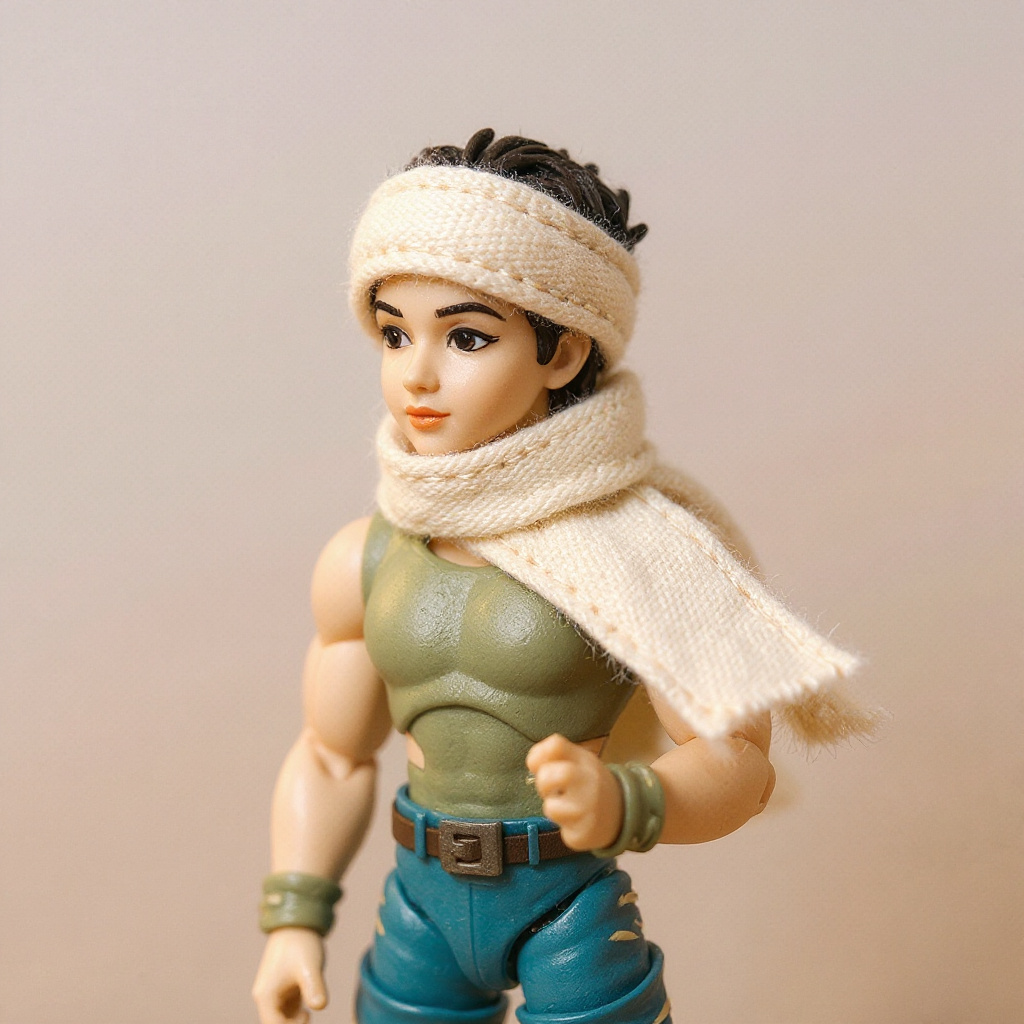
I measure the neck post before I touch fabric, and I do it two ways. Calipers give the diameter. A paper strip wrapped once around the post, marked where it overlaps, and measured flat gives the circumference. Divide the circumference by 3.14 and the two numbers should agree within half a millimeter.
The table shows ballpark ranges collected from hobby measurements and community posts. Treat them as approximate. Neck posts vary between releases, even within one line.
| Figure Line | Approx. Neck Post | Notes |
|---|---|---|
| S.H. Figuarts (about 1/12) | 7-9 mm | Base of the post is often wider than the top |
| Figma (about 1/12) | 8-9 mm | Ball-joint necks can snag fabric |
| Mezco One:12 Collective | 9-10 mm | Cloth-friendly, thicker necks |
| Marvel Legends (6-inch, not strictly 1/12) | 9-11 mm | Often sold as 1/12 but sculpted slightly larger |
This also settles the old confusion about 8-10 mm versus 11 mm. Marvel Legends sits at the top of the range because it is a 6-inch line that only roughly matches 1/12. If you own a mixed shelf, measure each figure separately.
Stretch matters less than people claim. A scarf that wraps and tucks needs no elastic at all. A closed headband loop needs a few percent of give, or a bias-cut fabric, so it can slip over the head or shoulders.
Wire Core: What Holds the Pose
Gauge numbers get confusing, so use millimeters. A scarf only 4-5 mm wide has room for wire of about 0.4-0.6 mm, which is roughly 24-26 AWG. American wire gauge explains how the numbers map to diameters. Thicker wire, around 1 mm, shows as a ridge under the cloth. It also resists bending, so poses fight you.
Soft aluminum bends easily and keeps its shape. Steel wire springs back. Copper work-hardens, so after a dozen sharp bends at the same spot it can crack inside the fabric.
Here is what I look for in a wired piece:
1. The wire runs end to end, not only through the center. 2. Each end is folded back 2 mm or capped with stitching, so no sharp tip pokes out. 3. The scarf holds a 90-degree bend without drooping after a minute. 4. It straightens and rebends without a kink.
Floppy ends. Springy loops. Wire poking through. Each one tells you the maker skipped a step.
Fabric Weight, Texture, and Color
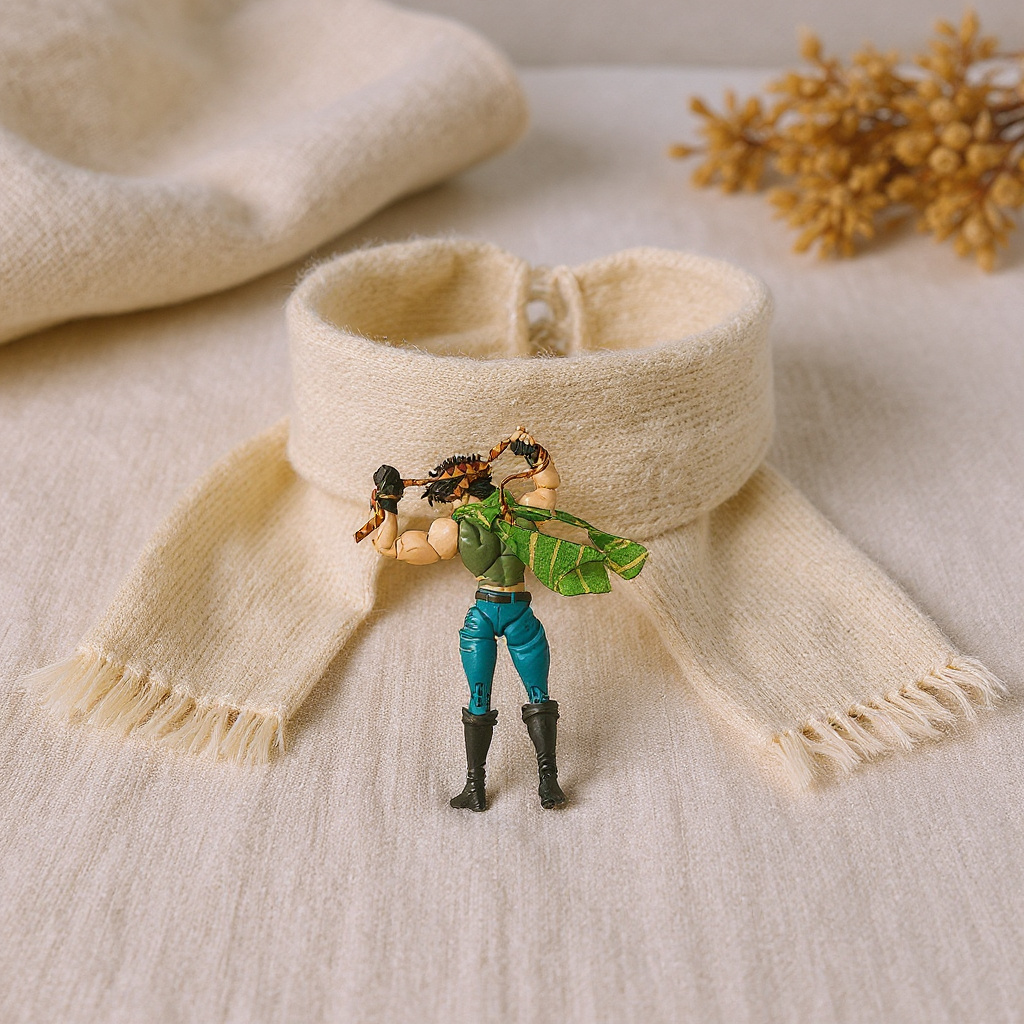
Human-scale fabric looks wrong when shrunk. A canvas weave that looks sturdy on a real jacket turns into chunky mesh at 1/12. Choose fabric where you cannot count individual threads from 30 cm away.
Cotton broadcloth, lawn, and thin cotton-poly blends hold a crisp fold. Satin and anything with a sheen reflects hard light and looks like plastic under photo lamps. Thin voile glows when backlit.
Cream and tan shift with the light source. A fabric that matches under a warm room bulb can read pinkish or gray under a 5000K photo LED. I hold a swatch next to the figure under my shooting light before I cut anything.
Handmade cloth edges often look slightly fuzzy. For a worn adventurer such as Joseph Joestar, that texture helps. For a clean-cut military look, it hurts. Match the edge finish to the character, not to a general rule.
Buy, Commission, or Sew: How the Options Compare
Prices below are typical ranges at the time of writing. Check current listings before you decide.
| Option | Typical Cost | Poseable | Fit Control | Best For |
|---|---|---|---|---|
| Official soft goods from Tamashii Nations | Varies by release; often sold out | Rarely wired | Made for one figure | Exact accuracy on a current figure |
| Wired handmade scarf, such as the 1/12 Scale Joseph Joestar Scarf | $7.50 at listing | Yes, full-length wire | Sized for typical necks | Quick replacement for JoJo-style figures |
| Custom order from a freelance maker | $10-25 | Yes, on request | Made to your measurements | Odd neck sizes or unusual colors |
| DIY from fabric scraps and craft wire | $2-5 in materials | Yes | Total control | Several figures, or characters with no official part |
| Plain ribbon or felt strip, no wire | Under $2 | No | Limited | Static shelf display |
Honestly, if your figure never leaves its stand, you do not need a wired scarf. A strip of cloth glued in a fixed drape costs less, survives longer, and has no metal to fatigue. Wire is for people who repose, and who photograph.
Factory pieces have tighter stitching and exact color matching. Handmade pieces can have a wobbly seam or slight color variation between batches. Neither is better in every case. The factory piece wins on consistency, the handmade piece on availability and price. Which matters more depends on whether the part is still sold.
Creators who sell their work often post builds in r/ActionFigures. Search for soft goods or custom accessories there to see real examples before you order.
Fitting the Scarf Without Breaking Anything
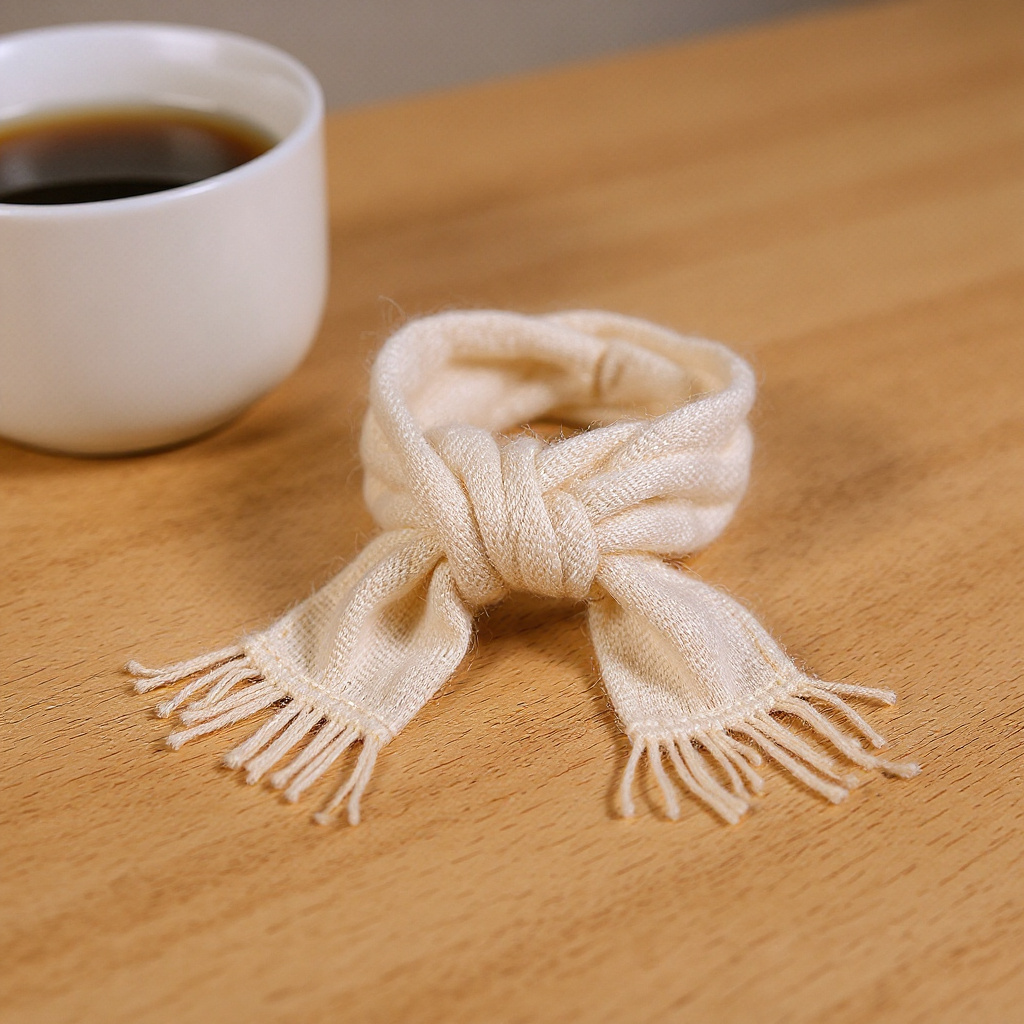
1. Pop off the head. On stuck heads, warm the neck joint with a hair dryer on low for about 20 seconds. 2. Slide the scarf or headband loop over the neck post from above or below, whichever side has the narrower opening. 3. Position it at the height you want before the head goes back on. 4. Reattach the head and check that it still rotates through its full range. 5. Shape the wire in small moves. Bend once, check, then adjust again. 6. Move the shoulders and arms through a few poses to check for snagging.
Some posts are wider at the base than the top. A loop that clears the top can jam halfway down. Test the whole neck assembly before you commit.
Joints with sharp seam lines snag cloth. A pass with 600-grit sandpaper on a mold line takes seconds and saves a torn edge.
1/12 Scale Figure Headband Replacement Part: Make Your Own
Some figures never got official soft goods. Others got them in a limited run that sold out years ago. Making your own sounds harder than it is.
You need cotton fabric, 0.5 mm soft wire, matching thread, a needle, and small scissors.
1. Wrap a paper strip around the neck or head and mark where it overlaps. This is your finished loop length. 2. Add 15% to the length for tucks and wrapping. A scarf that drapes and trails may need 150-200 mm total. 3. Cut a fabric strip 12 mm wide. Folded lengthwise, this leaves a finished tube of about 5-6 mm after a 2 mm seam. 4. Fold the strip right sides together and sew along the long edge with small, even stitches. 5. Turn the tube right side out. A blunt needle or tweezers helps push it through. 6. Cut the wire 10 mm shorter than the tube. Thread it through, leaving 5 mm of cloth at each end. 7. Fold each end inward 3 mm and stitch it closed, trapping the wire. 8. Shape, check the fit, and trim any fuzz longer than 2 mm.
Expect the first one to look rough. Mine did. The second is better, and by the fourth you will be matching colors by eye.
What Actually Works for Photography
Studio light shows every flaw. A loose thread you never noticed at arm's length shows up as a bright hair in a macro shot.
Wire memory decides how long a pose lasts. You set up a perfect wind-blown drape, shoot 20 frames, and then see the scarf has sagged by frame 12. Cheaper wire does this. Soft aluminum with a snug fabric tube holds longer, because the cloth adds friction.
Backlighting makes thin cotton see-through. Line the scarf with a second layer, or choose a heavier weave if you shoot with rim lights.
Check your pose after moving the figure, too. Even a nudge on the shelf can shift a delicate bend.
Buying Checklist
1. Does the stated size match your measured neck post, within 1 mm? 2. Is the wire full length, with the ends sealed? 3. Is the fabric matte, and does the color match under your own lights? 4. Can the seller show close photos of the stitching and edges? 5. Is the price a fair match for the work, compared with the options above?
For JoJo's Bizarre Adventure figures, fans notice proportion errors. Joseph's scarf has a specific length and drape, so check reference art from the JoJo's Bizarre Adventure series. Details on the character are on the Joseph Joestar page. More soft goods and accessories are on The Figure Vault. For broader background on the hobby, see the action figure overview.

