


Plastic outfits look stiff. Cloth moves.
Why Cloth Beats Molded Plastic for Dynamic Poses
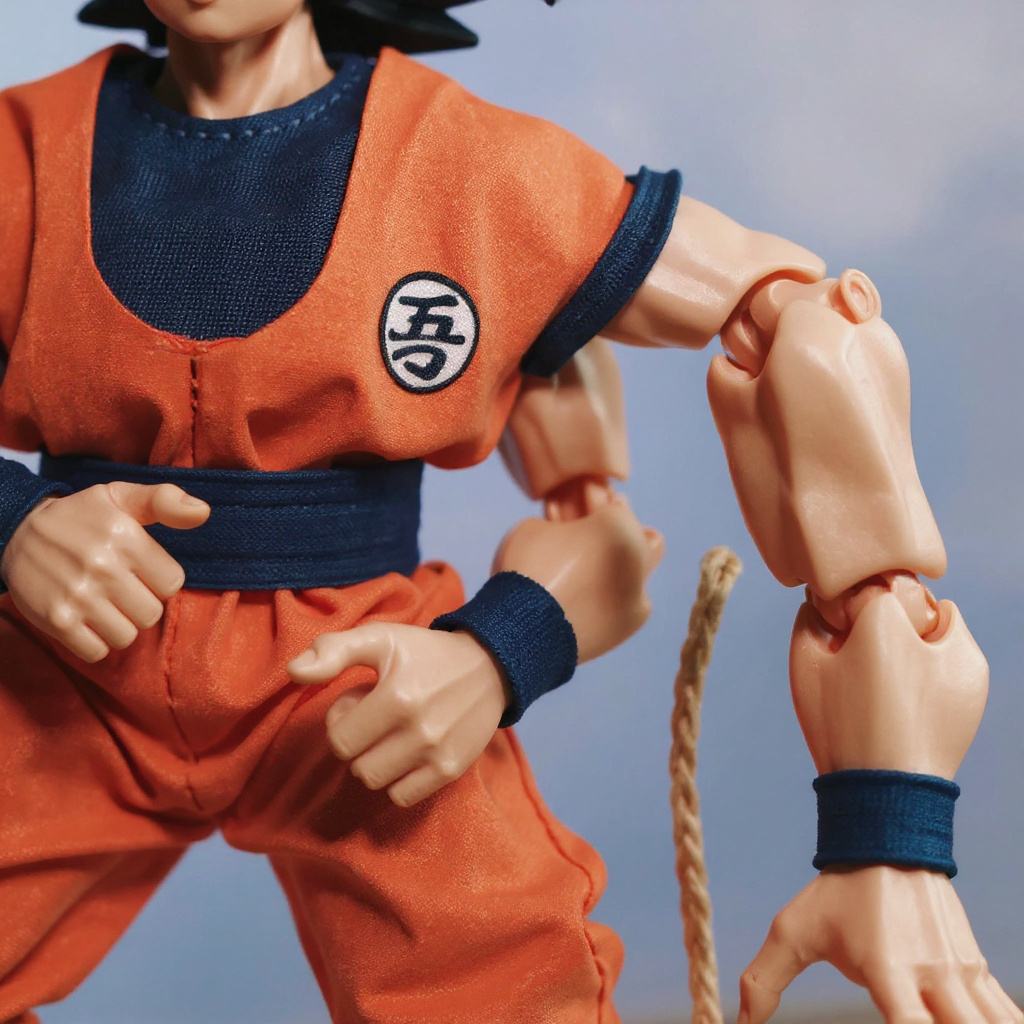
A molded plastic gi is fixed at the factory. Raise the arm for a punch and the sleeve stays where it was sculpted, so the pose looks wrong and the plastic can crack at the joint. A cloth gi top folds at the elbow, creases across the chest, and shows the weave of the cotton under studio light. It looks like something a person wore.
The trade-off is real. Handmade cloth costs more, it frays, and it needs gentle handling. Loose threads at the hem are normal on handmade goods, and at 1/12 scale they read as worn-in gi edges rather than flaws. If you want factory-perfect edges, you will be disappointed.
Honestly, if you pose a figure once and leave it on a shelf in a humid room, buy the plastic version. Cotton takes up moisture, and a basement display with no airflow can leave you with musty fabric and faded dye within a season or two. Cloth only pays off if you pose and photograph your figures.
Fabric Weight at 1/12 Scale: What Works and What Doesn't
Scale shrinks the figure but not the thread. A fabric that is 1 mm thick on a 6-inch figure is the equivalent of 12 mm cloth on a real person, which is a rug. That is why the weave has to be fine enough that single threads do not dominate the surface.
The thickness numbers below are typical ranges for each fabric class, not measurements from one supplier.
| Fabric | Typical thickness | Result at 1/12 scale | Best use |
|---|---|---|---|
| Cotton lawn | 0.15-0.2 mm | Sharp creases, light drape | Undershirts, collars |
| Fine cotton poplin | 0.2-0.3 mm | Holds folds, visible small weave | Gi tops, jackets |
| Cotton voile | 0.1-0.15 mm | Floats and flows | Capes, scarves |
| Quilting cotton | 0.3-0.4 mm | Bunches at elbows | Avoid for fitted tops |
| Felt | 1-3 mm | Looks like a sleeping bag | Avoid |
| Denim | 0.6-1.0 mm | Wrong scale | Avoid |
One rule resolves most confusion: stay under 0.3 mm for tops. Cotton poplin and lawn are fine. Pure cotton is not too stiff at this thickness, and cotton blends are only useful when you need extra drape or wrinkle resistance. Anything at quilting-cotton weight or above is out.
Seven Fabrics Worth Buying
1. Cotton lawn: the thinnest cotton that still takes a crisp crease. 2. Fine cotton poplin: the best all-rounder for an orange gi top. 3. Cotton batiste: soft and light, good for a blue undershirt layer. 4. Cotton voile: best for capes and sashes. 5. Linen-cotton blend: natural texture for work clothes, but it frays fast. 6. Silk habotai: drapes well, but it is glossy, so it suits robes more than martial arts wear. 7. Micro-modal: a smooth synthetic for fluid garments.
How an Orange Gi Top Should Be Built
A convincing 1/12 gi has six parts, and each one affects the finished look.
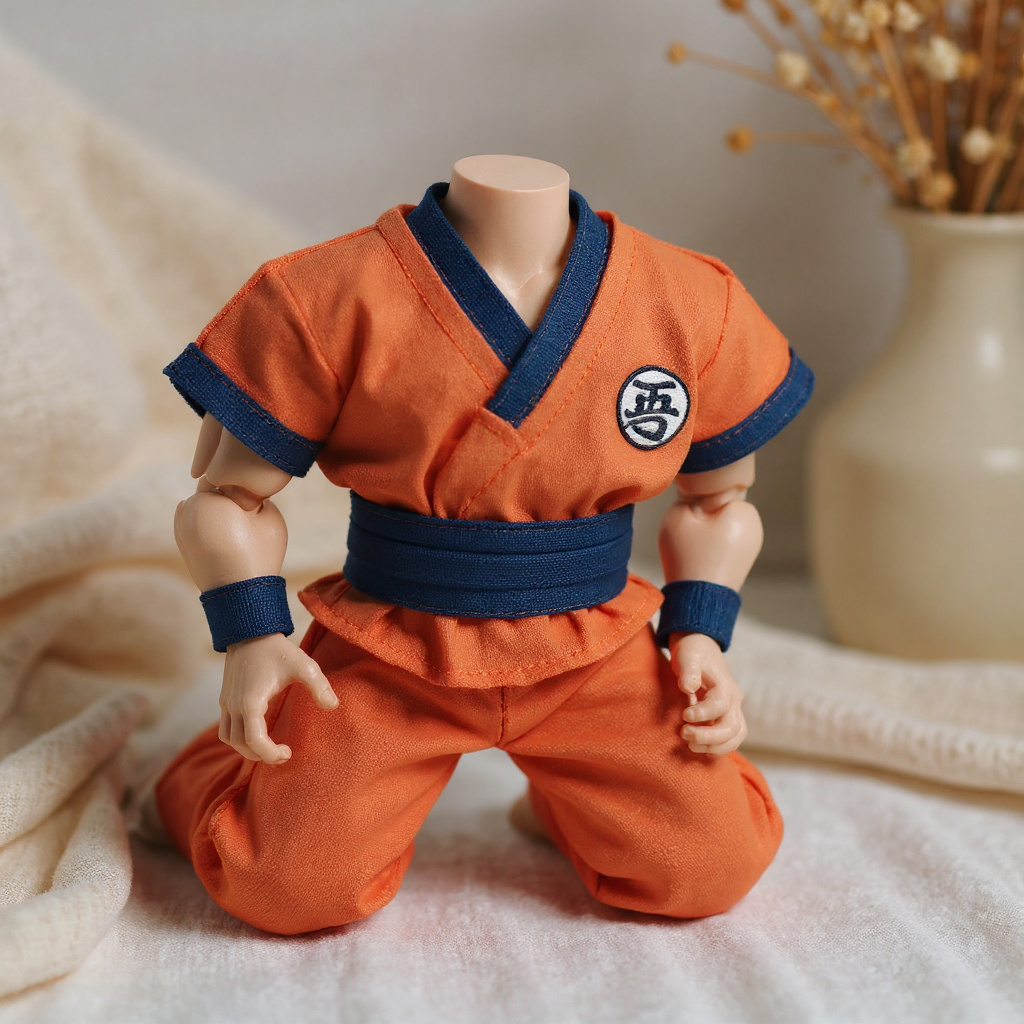
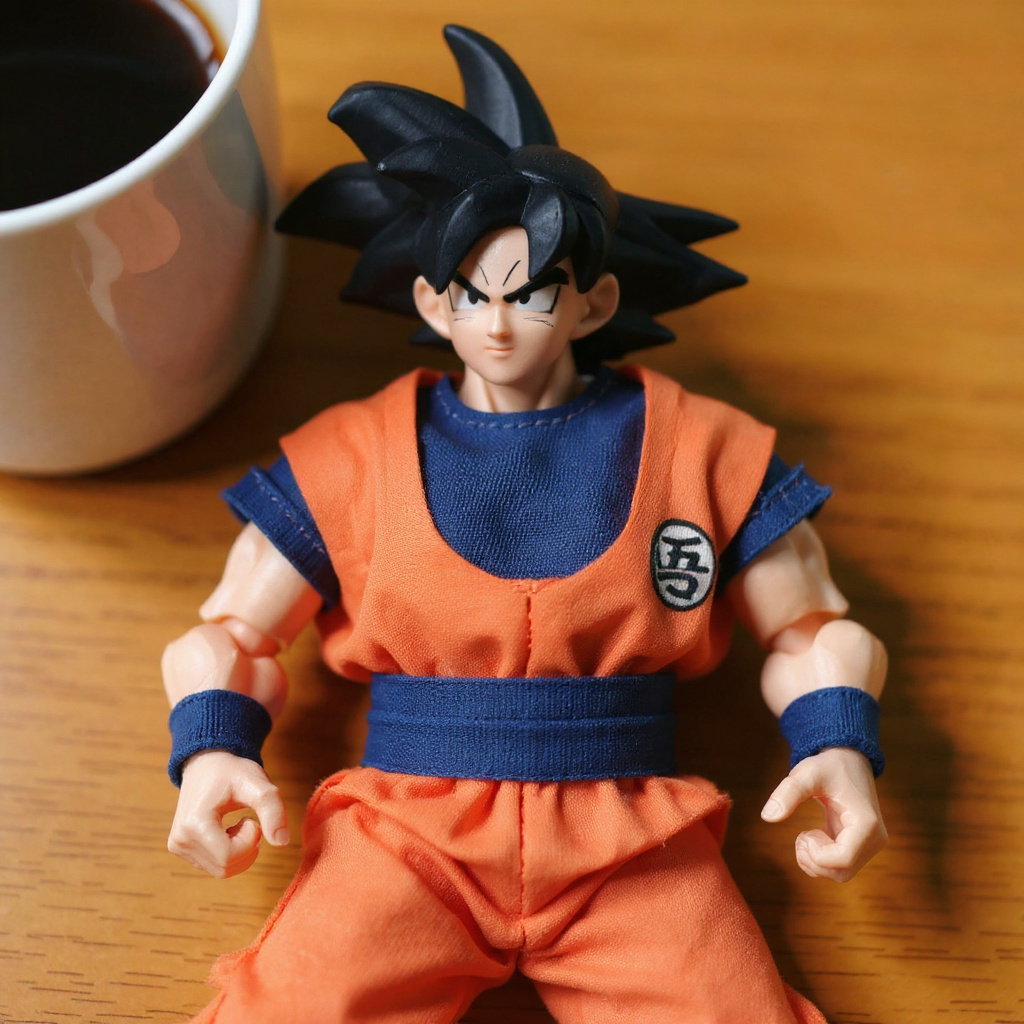
- Orange top: cotton-textured weave with a visible grain, cut loose enough to fold at the elbow and shoulder. - Blue undershirt: a separate layer at the collar and neckline, so the figure reads as dressed in two garments, not one. - Blue wristbands: cloth loops, not paint, which gives hands and wrists a believable edge. - Blue belt: a cloth belt wrapped at the waist that holds the top closed and adds shadow lines. - Small blue Kanji patch: stitched on the chest. Even a few millimeters of contrast stitching makes the gi look authentic. - Hem edges: slightly loose threads, which show it was made by hand.
The Goku Gi Replacement Cloth for 1/12 Action Figure follows this layout and includes shapeable wire in the sleeves, so a raised arm keeps its fold. It costs $46. I would not call that cheap for a gi top. It is mid-range for wire-enhanced handmade soft goods, though, and far below what a custom commission often costs.
For character references, check the official Dragon Ball artwork to match the shade of orange. A "close enough" orange stands out in photographs next to reference images, and no pose can save a wrong color. See also the Goku character overview for design variations across series.
Wire: The Hidden Feature That Makes Cloth Poseable
Without wire, a sleeve falls into a limp tube. With 28-30 AWG wire (roughly 0.25-0.32 mm in diameter, per the standard American Wire Gauge table) sewn into the sleeve edge, you can bend a cuff outward, add a wrinkle at the elbow, and keep the shape through repeated posing. Thinner wire kinks. Thicker wire shows through the cotton.
Wire does have limits. Bend it back and forth more than a few dozen times in the same spot and it work-hardens and snaps. Pose with small adjustments, not big ones.
Cloth vs. Plastic vs. Custom: Price and Poseability
Price ranges are typical public listing ranges as of this update, and individual sellers vary.
| Option | Typical price | Poseability | Fabric realism | Fit across brands |
|---|---|---|---|---|
| Molded plastic accessory | $10-20 | Low | Low | Brand-specific |
| Mass-market cloth (no wire) | $15-30 | Medium | Medium | Hit or miss |
| Handmade cloth with wire | $35-60 | High | High | Varies by maker |
| Full custom commission | $60-120 | Very high | Very high | Made to your figure |
| DIY (materials only) | $5-15 | High, if you sew well | High | Made to your figure |
Brand Compatibility: What Fits What
1/12 is a scale, not a body standard. Two "6-inch" figures from different companies can differ by several millimeters across the shoulders.
| Brand line | Body type | Fit notes | Transfer rating |
|---|---|---|---|
| S.H.Figuarts | Slim torso, long arms | Most aftermarket tops fit with small tweaks | Good |
| Marvel Legends | Varies by character and year | Hulk-type and Spider-Man-type bucks need different patterns | Poor to fair |
| Figma / Revoltech | Anime proportions, bigger heads | Standard tops look oversized | Fair |
| Mezco One:12 | Own proportions, often taller | Included soft goods rarely transfer | Poor |
| Hot Toys (1/6, for contrast) | Different scale | Does not fit 1/12 | None |
The safest approach is to buy clothing made for your line. Wristbands and belts transfer best. A fitted top does not.
Common Mistakes That Ruin the Look
Thick seams. A standard sewing seam allowance would be rope-thick at this size. Cut with a 2 mm allowance, sew, then trim to a 1 mm finished seam or use French seams. That is the only seam rule in this article, and the numbers below follow it. Wrong closures. Full-size snaps and buttons look cartoonish. Use a hidden thread loop, a tiny snap, or a wrapped belt (as on a gi) to hold the top shut. Bulky layers. A top plus an undershirt doubles the fabric at the collar. Use batiste or lawn for the undershirt. Over-ironing. Press the creases you want, then stop. Flat cloth looks lifeless.Make Your Own: Measurements and Steps
All measurements below are derived by dividing average adult-male dimensions by 12. They are our scale math, not a manufacturer specification, and real figures can differ by about 0.3 in.
| Dimension | Real adult male | 1/12 target |
|---|---|---|
| Chest | 40 in | about 3.3 in |
| Waist | 34 in | about 2.8 in |
| Shoulder width | 18 in | about 1.5 in |
| Arm length | 25 in | about 2.1 in |
| Inseam | 32 in | about 2.7 in |
Measure your own figure with a strip of paper first. Then follow these steps:
1. Trace the torso and sleeves onto paper, adding 1-2 mm total ease. 2. Cut fine cotton poplin with a 2 mm seam allowance. 3. Sandwich 28-30 AWG wire into the sleeve hem before closing it. 4. Sew the shoulder and side seams by hand, then trim to 1 mm. 5. Layer a batiste undershirt at the collar. 6. Stitch a small contrast-color patch on the chest. 7. Add the belt and wristbands as separate cloth loops. 8. Leave a few loose threads at the hem. Do not trim them all.
Where to Shop
Start with the Figure Vault home page and the full product collection for handmade soft goods. Official accessories come from Bandai and Tamashii Web. Custom makers sell on Etsy. Look for close-up photos of the garment on a real figure body, not a flat layout, since flat shots hide seam bulk.
For seller feedback, read r/Shfiguarts and r/actionfigures. Group buys show up there too.
Frequently Asked Questions
How big is a 1/12 scale figure?
A 1/12 figure is about 6 inches (152 mm) tall, because 1 inch stands for 1 foot. A 6-foot character becomes 6 inches, and a 5.5-foot character lands near 5.5 inches. Manufacturers round, so real figures run 5.5-6.5 inches. Measure your own figure before ordering any clothing.What is the rule of thumb for clothes for 1/12 and 1/10 figures?
Divide the real-world measurement by 12 for 1/12 or by 10 for 1/10, then check the seller's size chart. A 40-inch chest becomes about 3.3 inches at 1/12 and 4 inches at 1/10. Brand proportions still differ, so a chart beats scale math every time.What fabric works best for a 1/12 gi top?
Fine cotton lawn or poplin, roughly 0.2-0.3 mm thick, with a small but visible weave. Thicker quilting cotton bunches at the elbows. A gi needs some grain, so skip silky synthetics that look glossy and will not hold a crease.Why do soft goods look bad on some Marvel Legends figures?
Marvel Legends bodies vary by character and release year, and a Hulk-type buck is far broader than a Spider-Man buck. Soft goods cut for a standard 6-inch frame bunch at the shoulders or gape at the chest. Match the body type the seller lists, or expect to alter the pattern.Where can I buy clothing for 1/12 scale action figures?
Try The Figure Vault, Etsy makers, Tamashii Web for official accessories, and collector forums like r/Shfiguarts. Handmade cloth tops commonly run $30-60. Ask for close-up photos of the garment on a real figure body, which show seam bulk and loose-thread quality before you pay.Are clothes compatible across different 1/12 figure brands?
Rarely without adjustment. S.H.Figuarts, Figma, Marvel Legends and Mezco One:12 each use different shoulder widths, torso lengths and joint styles. A top built for one often bunches or gaps on another. Wristbands and belts transfer best because they are simple loops with adjustable fit.How do I make clothes for a toy figure, and what measurements do I need?
Measure chest, waist, shoulder width, arm length and inseam with a flexible paper strip. For a standard 6-inch male figure, expect about a 3.3-inch chest, 2.8-inch waist, 1.5-inch shoulder and 2.1-inch arm. Add 1-2 mm total ease and cut a 2 mm seam allowance.What to Buy
Choose cloth if you pose and photograph your figures. Choose plastic if you display them once and leave them. For anyone building an orange gi look with the blue undershirt, wristbands, belt and chest patch, the Goku Gi Replacement Cloth for 1/12 Action Figure at $46 is a sensible place to start. Not a miracle. A good, honest piece of handmade cloth, loose threads and all.

