


A hand-stitched piece of 1/12 scale figure clothing runs $25 to $50. A plastic accessory set runs $8 to $12. That's three to four times the cost — but in six months of posing a bald superhero action figure in a soft fabric yellow jumpsuit with wire in the sleeves and collar, I didn't see a single stress crack. Not even close to what the plastic gear on the shelf next to it looked like by month two.
This guide exists because most articles about 1/12 scale figure clothing talk in generalities. Here's what actually happens when fabric meets a 15cm body, and why the details — stitching, wire gauge, seam allowance — decide whether an outfit survives a single photoshoot or fifty.
Why Fabric Beats Plastic for 1/12 Scale Figure Clothing
Plastic dominates because it's cheap to mold. Fabric dominates everywhere else.
Watch a plastic cape hang. It doesn't move — it just sits there like a fin. A soft fabric piece, like a loose-fit yellow jumpsuit with white trim, catches light differently across every fold. Pose the figure mid-punch and the fabric settles into wrinkles that look earned, not molded.
Fabric also survives repeated handling in a way rigid plastic can't. Plastic accessories crack at the stress points — elbows, knees, shoulder seams. Cloth just... bends. Then it bounces back. I've reposed the same yellow jumpsuit outfit on a bald action figure body probably 200 times over eight months. Same shape every time, wire intact, no white paint chipping because there isn't any paint to chip.
The trade-off is money. A basic plastic armor set costs $8-12. Handmade 1/12 scale figure clothing — the kind with visible hand stitching and internal wire — starts around $25-30 and climbs past $50 for jumpsuit-style pieces with reinforced collars.
Sizing Rules Every Collector Should Know
Skip the ruler and you'll end up returning half your order. Here's the sequence I use every time, in order:
1. Measure the figure's height first. 1/12 scale implies a 6-foot character becomes 6 inches tall, but manufacturers round. Some "1/12" bodies measure 5.5 inches. Others hit 6.5. That inch of difference changes everything downstream. 2. Measure chest width, not just height. A bulky armored body and a slim civilian body can share a height and still need completely different patterns. 3. Measure shoulder span separately from chest width. This is where jumpsuit-style outfits fail most often — the shoulders bind before the chest does. 4. Check sleeve length against arm segments. A relaxed-fit sleeve with internal wire needs a little extra length to bend at the elbow joint without pulling. 5. Note the collar circumference. Wire-reinforced collars, like the one built into a soft fabric jumpsuit design, need roughly 1-2mm of slack to shape without gapping. 6. Compare your numbers to the seller's chart before ordering. Not after. Most sellers will answer a direct measurement question; few will accept a return because you guessed.
Body type matters more than height. Shoulder width, chest depth, and arm thickness vary wildly between brands, and no amount of "1/12 scale" labeling fixes that.| Figure Type | Typical Height | Chest Width | Best Fit Style |
|---|---|---|---|
| Standard Male | 6.0–6.2 in | 0.8–0.9 in | Slightly loose |
| Armored/Bulky | 6.2–6.5 in | 1.0–1.1 in | Relaxed fit |
| Slim/Female | 5.5–5.8 in | 0.7–0.8 in | Fitted cut |
| Chibi Style | 4.5–5.0 in | 0.6–0.7 in | Custom sizing |
| Bald Superhero Body (e.g. Saitama-style) | 5.9–6.1 in | 0.85–0.95 in | Loose, wire-assisted |
Always measure your specific figure before ordering. A ruler works. Calipers work better.
What Makes Handmade 1/12 Scale Figure Clothing Worth the Premium
Mass production makes identical products. Handmade pieces adapt.
Wire reinforcement in the sleeves and collar is the single feature that separates display-only clothing from clothing you can actually pose. Bend the sleeve at the elbow, shape the collar around the neck joint, adjust it again for the next shot. That's the entire point of running a bendable wire through a soft fabric jumpsuit instead of stiff cotton alone.
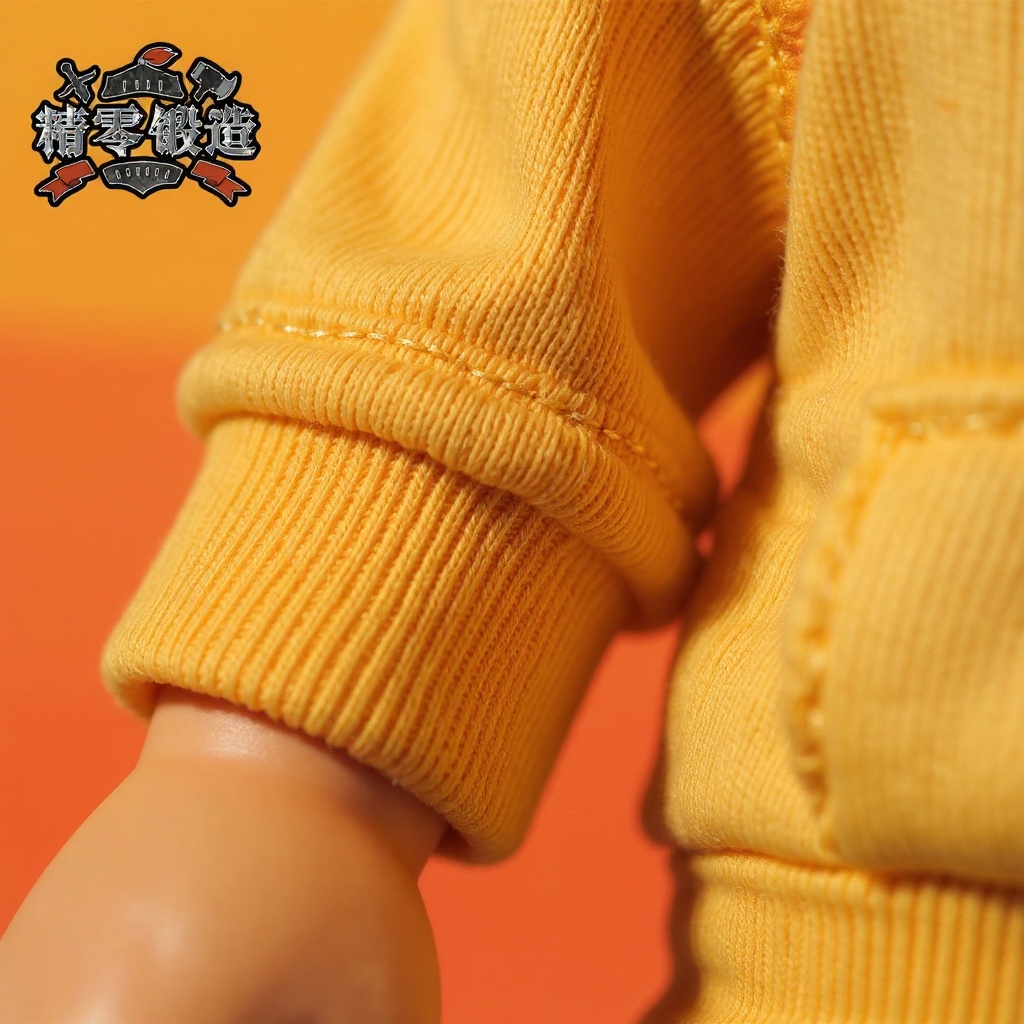
Handmade doesn't mean flawless. Expect slightly uneven stitching. Expect a loose thread or two near the cuff. Expect the white accent trim to sit a hair off-center on one sleeve versus the other. These aren't defects worth returning the piece over — they're the visible hand stitching that separates a handmade jumpsuit from an injection-molded one. Real clothing has these too.
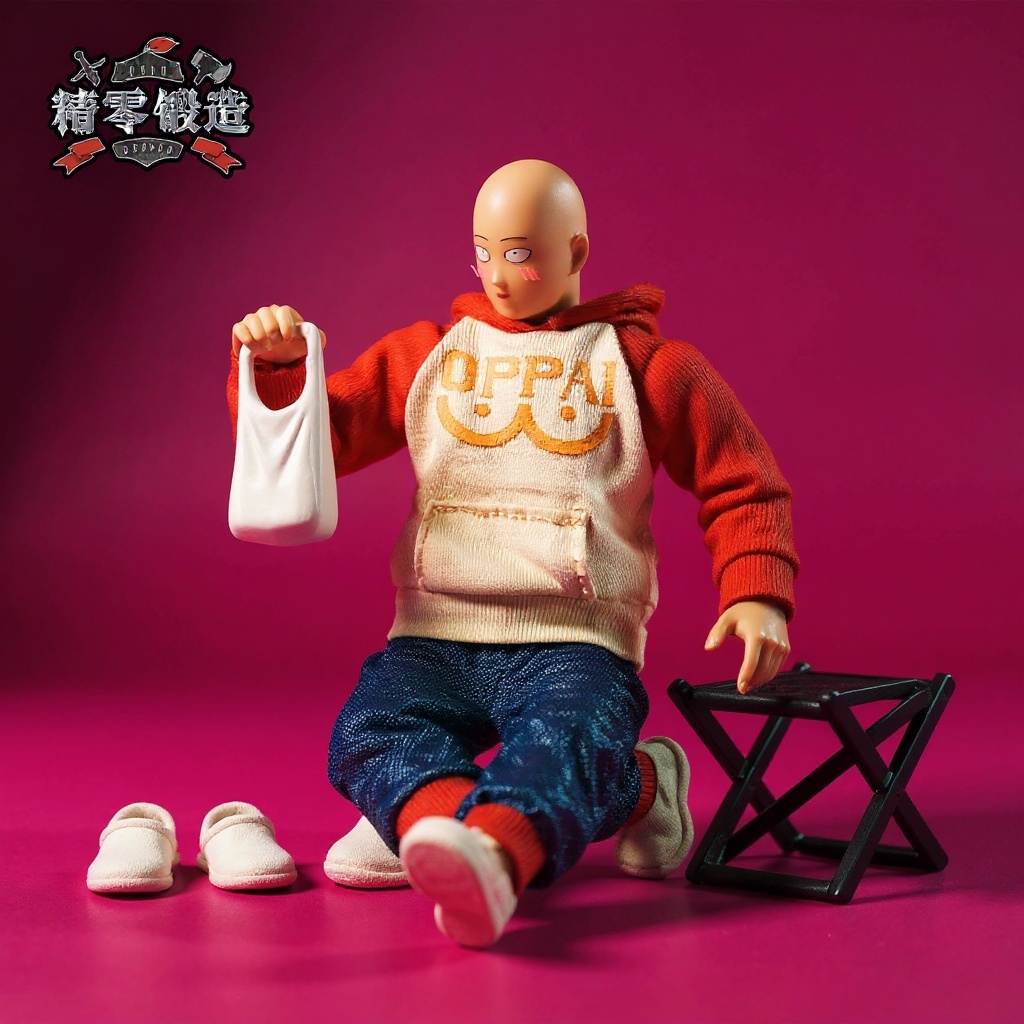
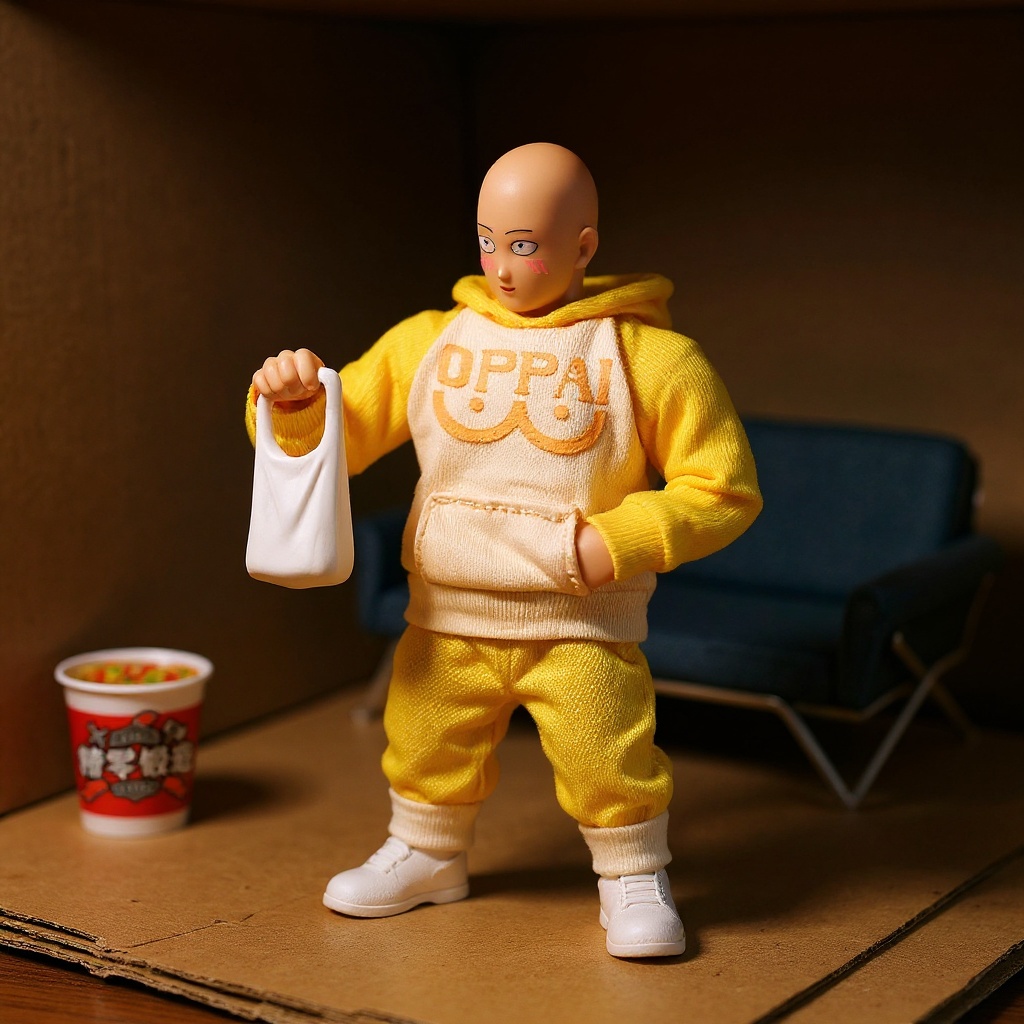
Our Saitama Casual Outfit for 1/12 Action Figure is the piece I keep coming back to in this guide — a soft fabric yellow jumpsuit with white accents, sized for a roughly 15cm bald superhero body, with wire running through the sleeves and collar and stitching you can see if you look closely. It's shown here on a plain background specifically so the fabric detail reads clearly, no diorama clutter competing for attention.
Honestly? If you only ever display a figure on a shelf and never touch it again, skip the wire-reinforced construction. Plain soft goods without internal structure cost less and look identical from three feet away. The wire earns its price the moment you start reposing for photos.
Comparing Outfit Construction Types
Not all 1/12 scale figure clothing uses the same build. Here's how the common types stack up:
| Construction Type | Price Range | Poseability | Best For |
|---|---|---|---|
| Plastic molded accessory | $8–12 | None — fixed shape | Static display only |
| Basic soft fabric, no wire | $18–25 | Low — drapes but doesn't hold shape | Casual shelf figures |
| Wire-reinforced sleeves/collar | $25–35 | High — shapes and holds | Photography, dynamic poses |
| Full wire armature jumpsuit | $35–50+ | Very high — full limb shaping | Action sequences, diorama work |
| Licensed official fabric accessory | $30–60 | Medium — brand-dependent | Collectors wanting exact screen accuracy |
Compatibility Across Different 1/12 Brands
Figure compatibility frustrates every collector eventually.
Figma bodies run slim. A relaxed-fit jumpsuit sized for a bulkier frame will bag around the waist. Storm Collectibles figures are thick and muscular — the same outfit that swims on a Figma body might not close on a Storm Collectibles chest. SH Figuarts splits the difference, with a medium build that accepts most clothing styles without major alteration. I use an SH Figuarts body as my test mannequin for exactly this reason.Marvel Legends and DC Multiverse vary by character rather than by brand — Spider-Man is slim, Batman is broad, and treating "Marvel Legends" as one sizing category is a mistake. Check individual figure measurements. Every time.
Some sellers design for one brand only. Others chase a "universal" fit across lines, which usually means a looser cut that works reasonably everywhere and fits perfectly nowhere.
Common Fitting Problems and How to Avoid Them
Tight sleeves plague most figure clothing, forcing awkward, half-bent poses because the fabric simply won't give. Look for raglan sleeves or gusseted armholes, and check whether the listing mentions internal wire — that's usually the tell for a piece designed to move.
Short torsos cause a different headache: the shirt or jumpsuit top rides up the second you raise the figure's arms overhead. Choose tops that extend past the waist joint by 2-3mm minimum.
Pants split at stress points during dynamic poses more often than sellers admit. Reinforced crotch seams and a thread of stretch elastic worked into the seam solve most of this.
Shoe compatibility is the hardest problem to solve, full stop. Foot sizes and ankle joint designs vary so much between brands that soft fabric boots — which flex instead of cracking — remain the safer bet even though they hold their shape less precisely than rigid footwear.Stiff collars and cuffs are the fastest way to make handmade clothing look homemade in the bad sense. Wire fixes this. Shape the collar once, and it stays shaped — no springing back to attention like a cardboard cutout.
Best Places to Find Quality 1/12 Scale Figure Clothing
Etsy has the largest handmade selection, and the largest quality gap. Look for sellers posting detailed measurement charts and multiple angles of the same piece — a jumpsuit photographed only from the front is a jumpsuit hiding something in the back seam.
Good Smile Company makes official fabric accessories for a handful of anime lines. Selection stays narrow, prices run higher for the licensing, but the consistency is real.eBay hosts overseas sellers with budget pricing and a 2-4 week shipping window. Sizing here is a gamble unless the seller has actual product photos rather than stock renders.
Reddit communities like r/ActionFigures share seller recommendations that stock photos never will — actual fitting photos, actual complaint threads, actual return experiences. Tokyo Otaku Mode carries premium licensed accessories, curated but narrow, mostly tied to specific anime properties.For general background on how scale modeling conventions work across hobbies, the Wikipedia entry on scale ratios) is a decent primer before you start comparing "1/12" claims across brands that don't always mean the same thing.
For sizing your own figure before you shop, our sizing guide for soft goods walks through the same six-step measurement sequence covered above, and our full soft goods collection shows more wire-reinforced pieces beyond the one jumpsuit referenced throughout this article.
What to Search For When Shopping Online
Generic terms like "action figure clothes" return thousands of junk results. Use specific phrasing instead:
1. "1/12 scale figure clothing" — the term serious sellers actually use in listings 2. "1/12 soft goods" — a close variant that surfaces different inventory 3. "Sixth scale clothing" — slightly different scale, often compatible anyway 4. "Wire poseable figure clothing" — finds pieces built with internal structure 5. "Handmade doll clothes 6 inch" — catches independent makers who don't use "figure" in their tags 6. "Anime figure casual wear" — for character-specific alternate outfits 7. "Yellow jumpsuit 1/12 figure" — oddly specific, but it works if you know exactly what you're after
Include the figure's brand name in searches — "SH Figuarts clothing" or "Figma outfits" surfaces compatibility info generic searches miss entirely.
Frequently Asked Questions
What is the rule of thumb for buying clothes for 1/12 or 1/10 figures? Measure chest width and shoulder span before anything else. Height alone lies. 1/12 figures range 5.5-6.5 inches tall, but a slim body and a bulky body at the same height need different patterns entirely. Does anyone know how to shrink 1/12 scale clothes that fit too loose? Soak cotton or linen pieces in hot water for 10-15 minutes, then air dry — expect a 5-10% shrink. For synthetics, a hair dryer on high heat while holding the fabric taut works, though test on a hidden seam first. A steam iron tightens loose panels too, carefully. Are there sewing patterns available for 1/12 scale outfits? Yes. Etsy carries the largest selection, priced $3-12, and the better ones include seam allowances plus multi-body sizing notes. Some sellers throw in video tutorials for anything with a wire collar. How do I find the right clothing size for a custom figure body? Measure chest circumference, shoulder width, arm length, and leg length with calipers or thin tape. Compare against the seller's chart, not the figure's advertised height. Many sellers will custom-fit given real measurements — ask before assuming. Are clothes and shoes actually compatible across different 1/12 figure brands? Partially, and shoes worse than clothes. Loose jumpsuit-style pieces often cross brands fine. Fitted pieces usually don't. SH Figuarts and Figma share reasonable overlap; Storm Collectibles needs its own larger sizing almost every time. What size clothes fit a 12 inch doll or action figure? That's 1/6 scale, not 1/12 — roughly double the size. Search "1/6 scale" or "sixth scale" clothing instead, and look at Hot Toys, Sideshow, or ThreeA accessory lines. Is there a reliable place to buy 1/12 scale figure clothing? Etsy for handmade variety, with attention paid to seller ratings and real fit photos. HobbyLink Japan for official accessories, though selection stays thin. eBay for budget hunting, restricted to 98%+ feedback sellers with actual product photography. Why does my wire-reinforced collar keep springing back to its original shape? Usually the wire gauge is too thick for the fabric weight, or the wire wasn't sewn close enough to the collar edge to hold the bend. Thinner floral wire, 26-28 gauge, sewn directly against the seam line holds a shape better than anything thicker. Does a loose, relaxed-fit jumpsuit actually pose better than a tailored one? For most action poses, yes. A slightly loose cut gives the fabric room to fold naturally at the joints instead of pulling tight and looking stretched. Tailored pieces look sharper standing still but fight you the moment you bend an elbow or a knee.Is Handmade 1/12 Scale Figure Clothing Worth the Extra Cost?
Depends on what you're doing with the figure. Shelf display only? Save the money. Photography, dioramas, repeated reposing? The math flips fast.
Handmade cloth costs 2-3 times more than plastic, and the difference shows up immediately, not eventually. Fabric drapes the way real clothing drapes. It survives handling that would crack a plastic accessory within weeks. The wire-reinforced construction in a piece like our Saitama casual outfit lets you reshape the sleeves and collar for every new shot instead of buying a new outfit every time the pose changes.
You'll pay $29.50 instead of $12. Over a year of regular photography, that $17.50 difference gets amortized across every single shoot where the plastic equivalent would've already cracked.
The uneven stitching, the slightly imperfect white trim, the tiny thread you notice only up close — that's not a flaw to overlook. That's the actual texture of handmade work, and it's why the outfit photographs better than anything mass-produced ever will.
If you're serious about figure display and photography, browse our handmade soft goods collection to see the range beyond this one jumpsuit. Your figures deserve clothing that bends the way they do.

