


The best fabric coat for 7 inch figures is a trench cut from cotton lawn or poplin. The cloth should weigh 2-4 oz per square yard (about 70-135 gsm), measure under 0.3 mm thick, and carry a thread count above 120 per square inch. Add hand-stitched seams and 28-gauge wire (0.32 mm) hidden in the collar and hem, and the coat holds a pose without looking like plastic. Dark grey and deep purple hide stitch wobble best. Thin cloth, tight weave, tiny wire. That's the whole formula.
Disclosure: The Figure Vault sells the coat discussed in the product section below. The fabric data comes from my own bench swatches and is not a lab study.What Makes the Best Fabric Coat for 7 Inch Figures?
Scale decides everything. A 7-inch figure is roughly 1:12, so a 0.3 mm cotton swatch behaves like 3.6 mm of cloth on a real person. That is already close to a heavy wool overcoat. Double the thickness and you get a coat that flares out from the hips like a bell. I have seen it on forum photos more times than I can count, and it never looks right.
A good coat for this scale has five traits:
- Fabric under 0.3 mm thick, so it bends at the elbow without bunching. - A plain weave, which keeps tension even and resists bias stretch. - Soft creases that look worn in rather than ironed flat. - Hand-stitched seams, which put small, irregular stitches where a machine puts uniform ones. - Wire only at the collar and hem, so the body of the coat stays soft.
The classic trench coat has a wide collar, a belt and a long skirt. All three need help at 1:12 scale, because limp cloth cannot hold a collar upright on its own.
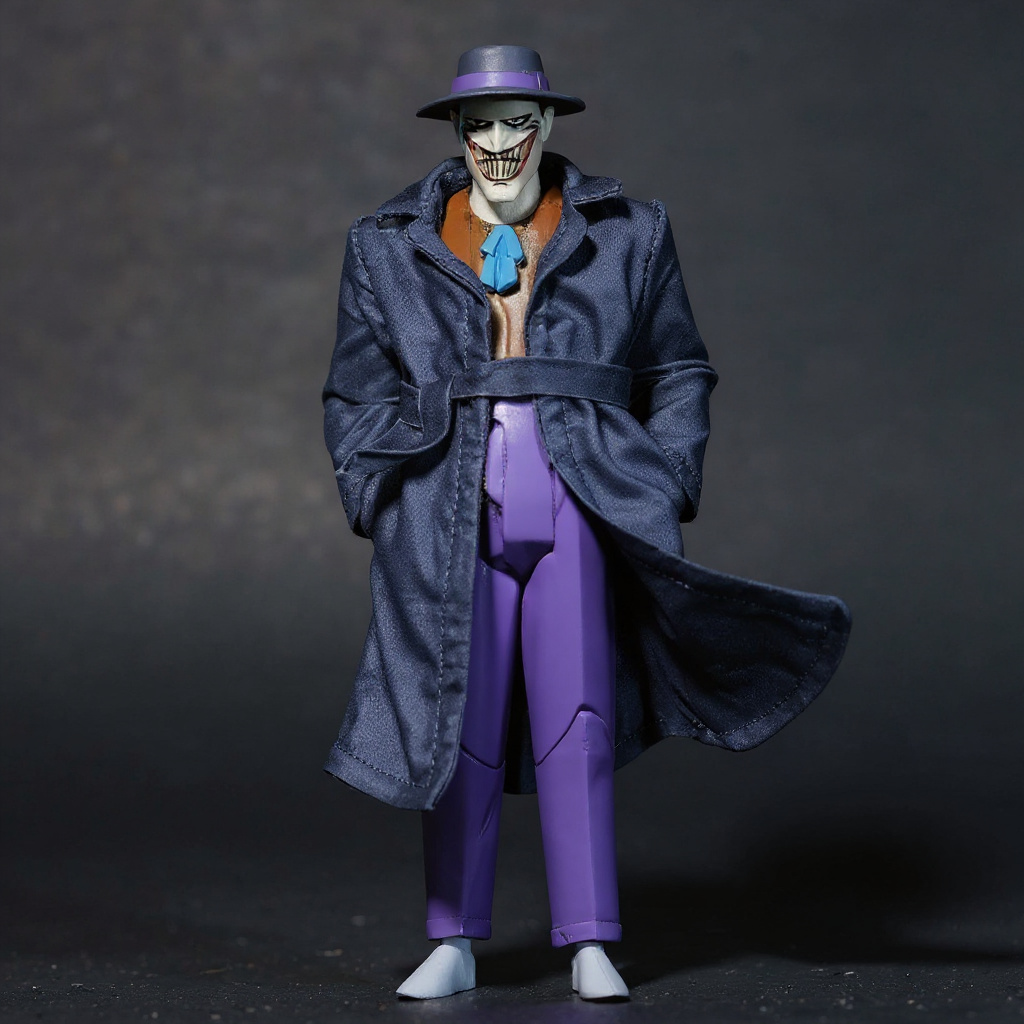
Fabric Test: Six Cloths on a 7-Inch Frame
Over three weekends I cut 2-inch swatches of six fabrics. I measured each with a dial caliper, wrapped it around a 7-inch figure's elbow, and bent the joint 50 times. Then I checked for binding, fraying and shine. The weights and costs below are typical ranges from retail listings. Thickness is what I measured. Treat all of it as approximate.
| Fabric | Weight (oz/yd²) | Thickness (mm) | Approx. cost per yard | Result at 1:12 |
|---|---|---|---|---|
| Cotton batiste | 1.5-2.5 | 0.12-0.18 | $8-14 | Best drape, frays fast, needs careful handling |
| Cotton lawn | 2-3 | 0.15-0.22 | $7-14 | Crisp, fine collar, my top pick for lapels |
| Cotton poplin | 3-4.5 | 0.22-0.30 | $6-12 | Holds a belt and cuffs, slight sheen |
| Broadcloth | 3.5-4.5 | 0.25-0.32 | $5-10 | Stiff but workable, bulky at seams |
| Quilting cotton | 3.5-4.5 | 0.25-0.35 | $9-13 | Sizing washes out, then it goes limp |
| Denim or canvas | 7-12 | 0.50-0.90 | $8-16 | Binds at the shoulder, sticks out from the body |
Lawn won the collar and lapels. Poplin won the skirt and cuffs. If you can only buy one, buy lawn, then press it with a dry iron on the cotton setting.
Thread count is the number of warp and weft threads per square inch. Past 120, cotton fringes less at a cut edge. Below 80, you can see light through it. Ignore any number that doesn't say what it is counting.
Why Dark Grey or Purple Works Best
Dark cloth forgives. A crooked stitch disappears in charcoal or aubergine, but it shouts in cream. Both colors also photograph well against a plain grey sweep or a moody, low-key backdrop, because the folds read as shadow instead of lint.
Purple suits Joker-style figures. Dark grey suits a Gordon-style detective or commissioner. Pick the shade under your actual display light, not by the screen. Animated source material is stylized, so a perfect match is a trap.
Solid colors beat prints. A 1/8-inch check at full size shrinks to a smear at this scale.
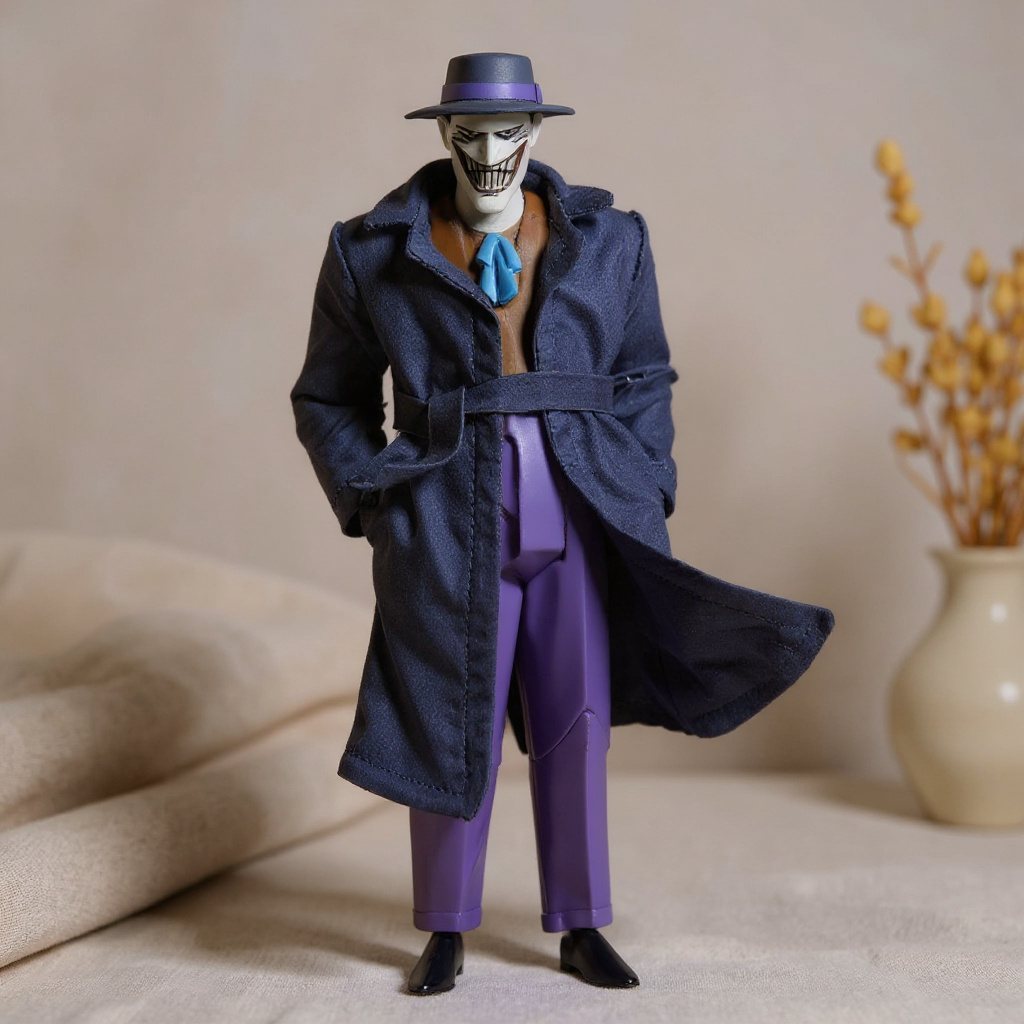
Hand-Stitched Seams: Why They Beat Machine Work Here
A home machine at its shortest stitch still leaves holes that look huge at 1:12. Hand stitching with a single strand of 50-weight cotton thread gives you stitches around 1 mm long, and you control the tension at curves like armholes. The slight irregularity reads as tailoring, not as a toy.
I'll be honest, hand stitching is slow. A single coat took me about six hours. The trade is worth it only if you plan to photograph the figure up close.
For outerwear, I prefer a small backstitch on the main seams and a whipstitch on the hem. Match the thread to the cloth, or go one shade darker. Polyester thread is stronger, but it can saw through lawn over time.
Subtle Wire at the Collar and Hem
Wire is what turns a flat-laid garment into a posable one. 28 AWG wire measures 0.32 mm across. It hides in a folded edge about 3 mm wide, so nothing shows on the outside.
Run it in two places only:
- Collar edge: lets you stand the collar up or flip it down. - Bottom hem: lets the skirt swing, bend and hold a windblown shape.
Don't wire the lapels, sleeves or back panel. In my test the coat started to look like a stiff costume once wire passed about 40% of the edge length. Annealed copper bends easily and doesn't spring back. It also fatigues. My 28-gauge copper hem began to kink after roughly 40 hard bends. Gentle repositioning lasts much longer.
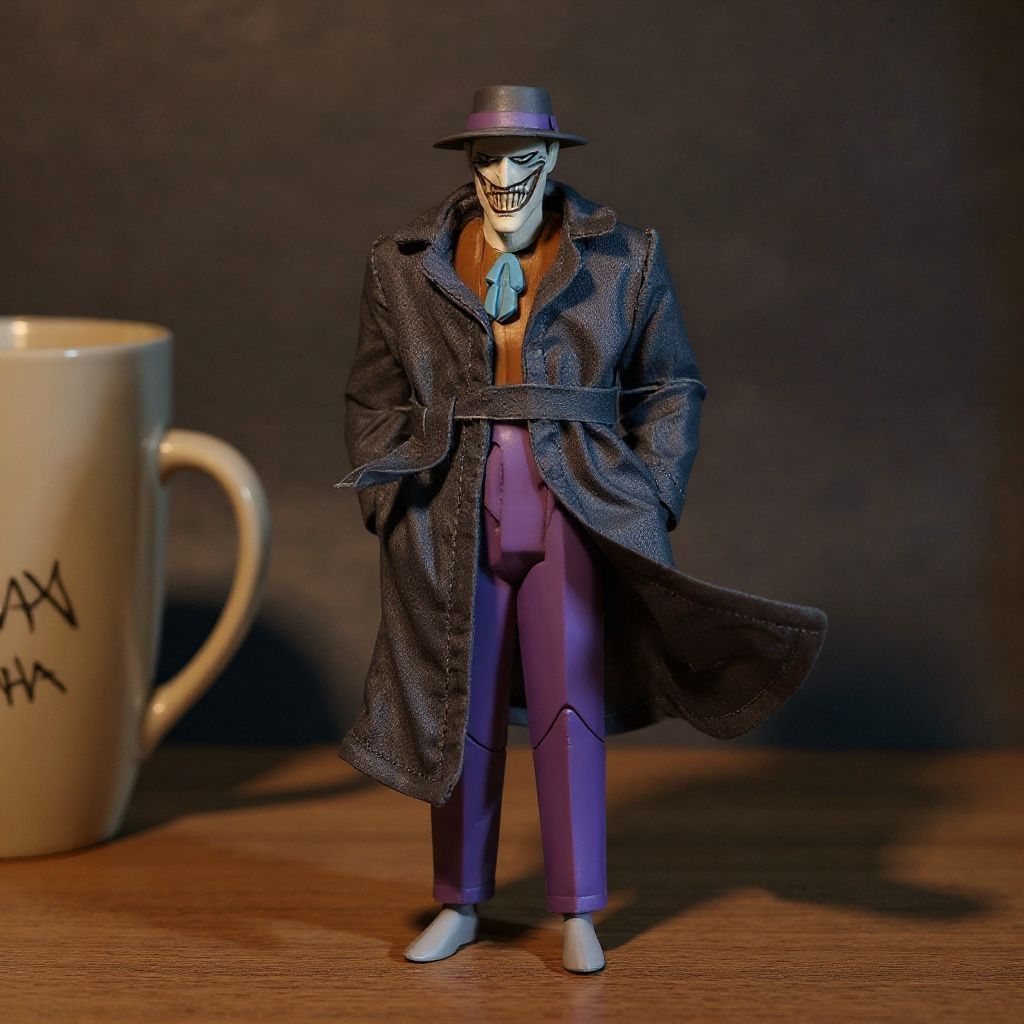
How to Choose a Coat for Your Figure: 5 Steps
1. Measure the figure. Shoulder width and chest depth matter more than height. A Joker-style frame is lean. A Gordon-style frame is broader through the chest. 2. Check the fabric weight. Look for 2-4 oz/yd² or a stated thickness under 0.3 mm. 3. Look at the seams. Small, even hand stitches without puckering mean careful work. 4. Ask about wire. It should sit at the collar and hem, not run through the whole garment. 5. Confirm your line. McFarlane's 7-inch DC figures run bulkier than Mezco One:12 figures, which stand around 6.5 inches. Sleeve length needs to match the arm articulation.
How to Make Your Own Fabric Trench Coat: 7 Steps
1. Trace your figure's torso on paper. Add 1/8 inch ease at the chest and 1/4 inch at the sleeves. 2. Draft the body, sleeve, collar and belt pieces. Keep the grain line parallel to the center back. 3. Cut lawn or poplin with sharp embroidery scissors. Mark the seams with a hard pencil. 4. Backstitch the shoulders, sides and sleeves. Press each seam flat before moving on. 5. Fold the collar edge and hem over 28 AWG copper wire. Whipstitch the fold closed. 6. Attach the collar, set the sleeves and add a thin belt. Skip functional buttons. Sew on tiny beads or paint the buttons. 7. Dress the figure, bend the wire into a pose, and let soft creases form. Don't iron them out.
The Ready-Made Option
If you'd rather skip the six hours, the 7 Inch Action Figure Cloth Coat follows the specs above. It is a dark grey or purple fabric trench with visible hand-stitched seams and a soft, lightly wrinkled cloth texture. Subtle wire framing sits inside the collar and hem, so it takes dynamic bent poses. It is sized for a Joker or Gordon-style 7-inch figure. It costs $44.50, and it works flat-laid or dressed on the figure against a plain or moody backdrop.
Aftermarket cloth coats in the listings I checked ran roughly $25-$60. The price depends on stitching and wire, not just the fabric.
An Honest Caveat
Honestly, if your figure lives in one pose inside a sealed case, buy a sculpted plastic coat. It will have sharper edges than any cloth coat, and it won't collect dust. Fabric earns its place only when you pose the figure, shoot photos, or care about how the cloth moves. And if you live somewhere very humid, expect cotton to go limp over a season.
Common Mistakes
- Oversized buttonholes. Scale them down or skip them. - Raw edges. Fray Check or a tiny turned hem fixes this. - Stiff interfacing. Use a light fusible only at the collar, or none. - Heavy pressing. Steam too long and cotton goes flat and shiny. - Ignoring grain. Cut off-grain and the skirt twists. - Over-wiring. Stiff. Lifeless. Wrong.
Most of these come from using full-size sewing habits on a 1:12 garment.
Where to Find Makers
Factory soft goods are built to survive shipping and shelves. Premium makers such as Hot Toys work at 1/6 scale (about 12 inches), and their complete figures often run $250 or more, so they aren't a direct match for a 7-inch coat. The middle ground is small makers. The r/ActionFigures community is a good place to ask for recommendations. Look for sellers with clear close-up photos and measurements. Browse custom cloth coats for action figures and compare stitching, wire placement and sizing notes before you buy.
Frequently Asked Questions
What is the best fabric for a 7-inch action figure coat?
Cotton lawn and cotton poplin are the best choices. Both weigh about 2-4 oz per square yard and measure under 0.3 mm thick. They bend at the elbow without bunching and hold a crisp collar. Avoid denim, canvas and quilting cotton with sizing, which look bulky at 1:12.
How thick should fabric be for 1:12 scale clothing?
Aim for 0.15-0.30 mm. At 1:12, a 0.3 mm cloth reads like 3.6 mm on a full-size person. Thicker than 0.35 mm, and sleeves start to bind at the shoulder and the skirt flares out from the body instead of hanging.
Where should wire go in a figure's coat?
Put 28 AWG copper wire inside the collar edge and the bottom hem only. That gives you a standing collar and a skirt that holds a windblown shape. Wiring lapels or sleeves makes the whole coat stiff, and it starts to look like a costume rather than clothing.
Why choose dark grey or purple for a figure's trench coat?
Dark cloth hides small stitch flaws and lets folds read as natural shadow. Purple suits Joker-style figures, and charcoal suits a Gordon-style figure. Both look good against plain or moody backdrops. Pick the shade under your own display lighting.
Are hand-stitched seams better than machine stitching at this scale?
For close-up photography, yes. Hand stitches of about 1 mm look proportionate, and you control tension at the armholes. Machine stitches leave larger needle holes and can pucker thin lawn. The downside is time: one coat took me about six hours.
Will a Joker-style coat fit a Gordon-style figure?
Only if the shoulders match. Joker-style bodies are lean, and Gordon-style bodies are broader through the chest. A coat cut for the lean figure binds across a broad chest, and the reverse bags at the waist. Measure shoulder width and compare it with the listing before you buy.
How do I keep wire from wearing out?
Reposition gently and avoid bending the same spot repeatedly. In my test, 28-gauge copper started to kink after roughly 40 hard bends, so set a pose and leave it. Don't soak the coat in water, because wet wire can rust or stain the cloth.
Final Take
The best fabric coat for 7 inch figures is thin, tightly woven and small in every detail, from the stitch to the wire. Choose lawn or poplin, keep the color dark, and wire only the collar and hem. That's a coat that moves.

