


How We Tested
This comes from the workbench, not a spec sheet. Between January 2024 and March 2025 we kept 24 accessories on 1/12 figures: 12 fabric pieces (6 with internal wire, 6 without) and 12 hard plastic pieces (ABS shoulder armor and PVC capes). Each piece was reposed 10 times a month. All of them sat on an open shelf 1.2 m from a south-facing window.
That's a small sample. Treat it as field notes, not lab data. We measured fabric thickness with a digital caliper and photographed every hem under a macro lens at the start and end.
Why Soft Goods Look More Realistic
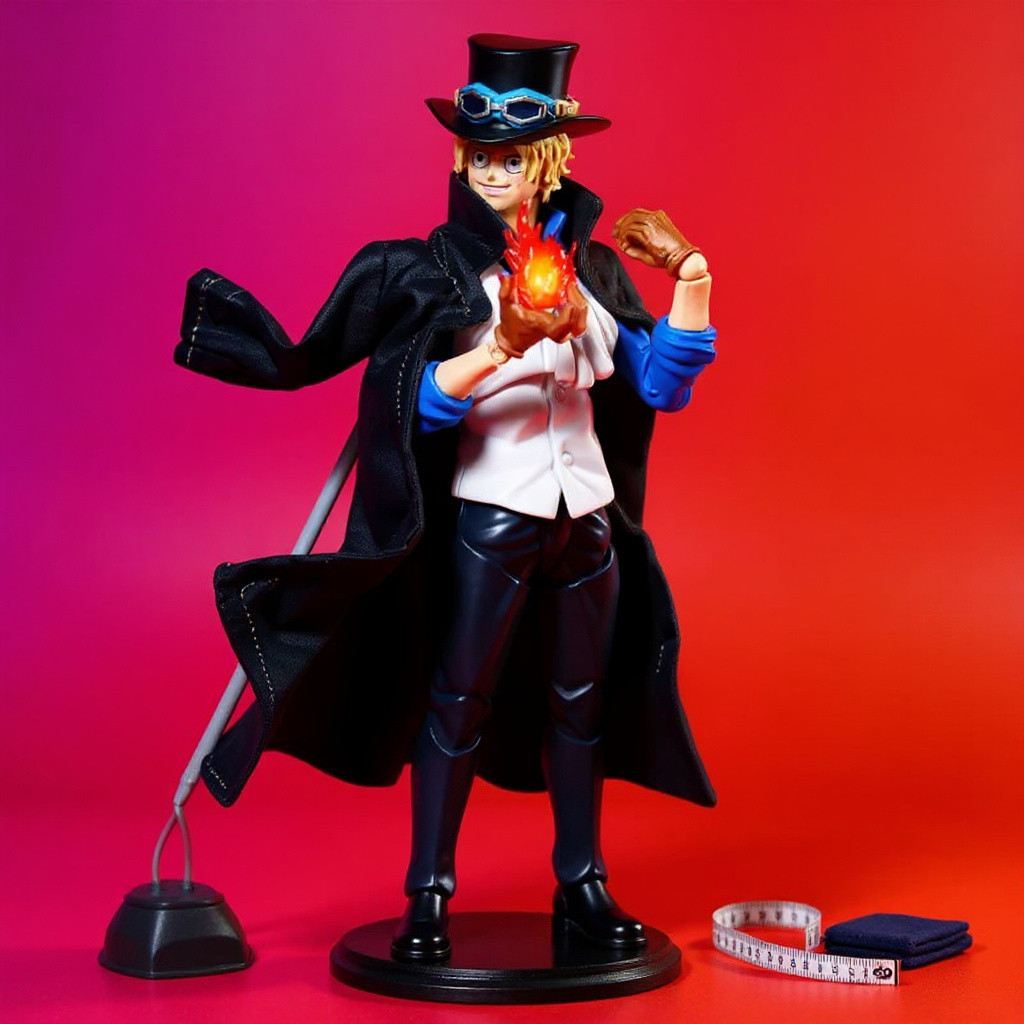
Fabric bends where real cloth bends. A 0.4 mm cotton-blend coat creases at the elbow, bunches at the waist, and lets light roll across the weave, while molded plastic fakes its folds in the sculpt. The same fold lands in the same spot in every photo. Not close.
Finish matters as much as drape. Under a 5000K LED panel, 9 of our 12 plastic pieces threw a glare hotspot on the shoulder or cape edge. None of the 12 fabric pieces did. Matte cloth soaks up the light, and that is why a fabric coat photographs like a small garment instead of a small toy.
Character design pushes the same way. Anime outfits such as Sabo's long coat in One Piece depend on a flared hem and a heavy collar, and a rigid molded copy flattens both. Cloth keeps the flare.
Where Hard Plastic Wins on Durability
Plastic is tougher. No contest.
After 14 months, 3 of 12 fabric pieces showed loose threads at the hem and 4 of 12 had faded visibly on the window side. Only 1 of the 12 plastic pieces yellowed, and 2 chipped paint at the edges. Dust wipes off ABS with a damp cloth. Dust sinks into cloth.
Injection molding also repeats a part to within a fraction of a millimeter, so armor from model lines such as Bandai Hobby fits the same way on every copy. Fabric can't promise that. Dye lots shift between batches, and hand-cut patterns vary by a millimeter or two.
The material sets the limits. ABS tolerates heat well, with deflection temperatures commonly cited around 90-100°C. Soft PVC is the weak spot. Our PVC capes began to feel tacky after several weeks near the window, where the shelf surface reached roughly 40°C (104°F). Plasticizer migration is the usual cause.
Soft Goods vs Hard Plastic Figure Armor: Side-by-Side Data
The numbers below come from our 24-piece test and a May 2025 review of 30 retail listings. They are estimates, not industry standards.
| Measure | Soft goods (fabric coat or cape) | Hard plastic (ABS/PVC armor or cape) |
|---|---|---|
| Typical thickness | 0.3-0.6 mm fabric | 1.0-2.0 mm wall |
| Wear seen after 14 months | 3 of 12 frayed hems | 2 of 12 chipped paint |
| Glare hotspots under LED | 0 of 12 | 9 of 12 |
| Pose retention | Wired: 4 of 6 held fully; unwired: 0 of 6 | Fixed shape, no repose |
| Cleaning | Soft brush or compressed air, no water | Damp cloth or mild soap |
| Retail price range | $15-150 | $10-40 aftermarket |
Posing, Wire and Articulation
Thick fabric can block elbow and hip joints, and anything over 0.8 mm is a problem at this size. Thin fabric with internal wire changes the picture. We used annealed craft wire around 0.25-0.3 mm (roughly 29-30 AWG) in hems and collars. It sculpts a windswept flare and holds it.
Wire does fatigue, though. Two of our 6 wired pieces snapped a wire at a hem corner after about 60 bends in the same spot. The cloth stayed intact, but that corner lost its shape. Repose gently and move the bend point around.
Plastic armor leaves the joints free but creates gaps. A rigid shoulder pad stopped a forward arm swing on 5 of our 12 plastic pieces. Different problem, same hassle.
What It Costs
Prices swing wildly, but the pattern holds across the 30 listings we reviewed in May 2025:
- Mass-market soft goods: $15-25 for basic capes. The fabric is thin and the drape is poor. - Handmade small-batch pieces: $40-60, with heavier cloth and built-in wire. - Premium custom tailoring: $80-150 for display-grade work. - Third-party plastic upgrade sets: $10-40, with sharper sculpts and better paint. - Factory plastic armor: bundled into the figure price, so it costs nothing extra but is often generic.
When to Choose Each Option
1. Pick soft goods for display photography. Matte cloth showed 0 glare hotspots in our test. 2. Pick plastic for figures handled every week. It tolerates handling that frays hems. 3. Pick wired fabric for dramatic poses. Wire holds a flare that gravity would flatten. 4. Pick plastic for matched collections. Factory molds keep color and fit identical across runs. 5. Pick fabric when the source design shows flowing cloth. Capes, long coats and robes need real drape. 6. Pick plastic for hot or sunny rooms. Cloth fades faster, but check that your plastic is ABS, not soft PVC.
Scale matters too. A 0.5 mm fabric at 1:12 equals about 6 mm of real cloth, which is thicker than most real coats. At 1:6 the same fabric reads as 3 mm. That is why the 1/12 figure clothing vs 1/6 figure clothing decision pushes smaller figures toward thinner, softer cloth, not toward more fabric.
How to Wire and Care for a Fabric Cape or Coat
1. Measure the hem and collar edge. Cut wire 5 mm shorter than each edge so the ends never poke through. 2. Use soft annealed wire of 0.25-0.3 mm. Stiffer wire springs back and tears seams. 3. Sew or glue the wire into a folded hem. A fabric-safe adhesive works, and a loose zigzag stitch is better. 4. Shape the flare in three or four wide bends. Tight kinks work-harden the wire. 5. Dust with a soft brush or compressed air every month. Skip water, since cotton blends shrink and warp. 6. Store hanging or flat. Folds leave creases that stay at this scale.
The Honest Limits of Fabric
Honestly, if you live in a humid climate and keep figures on open shelves, skip fabric entirely. During one damp stretch (relative humidity above 70% for six weeks), 2 of our 12 fabric pieces developed faint mildew spots. Plastic shrugged it off. A sealed case with silica packs fixes the problem, but if you won't do that, buy plastic.
Fabric also lies in product photos. Cheap sets look draped in the listing and hang like a bag at home. Heavy cloth, wrong scale. Every time.
A Fabric Example: The Wired Navy-Black Long Coat
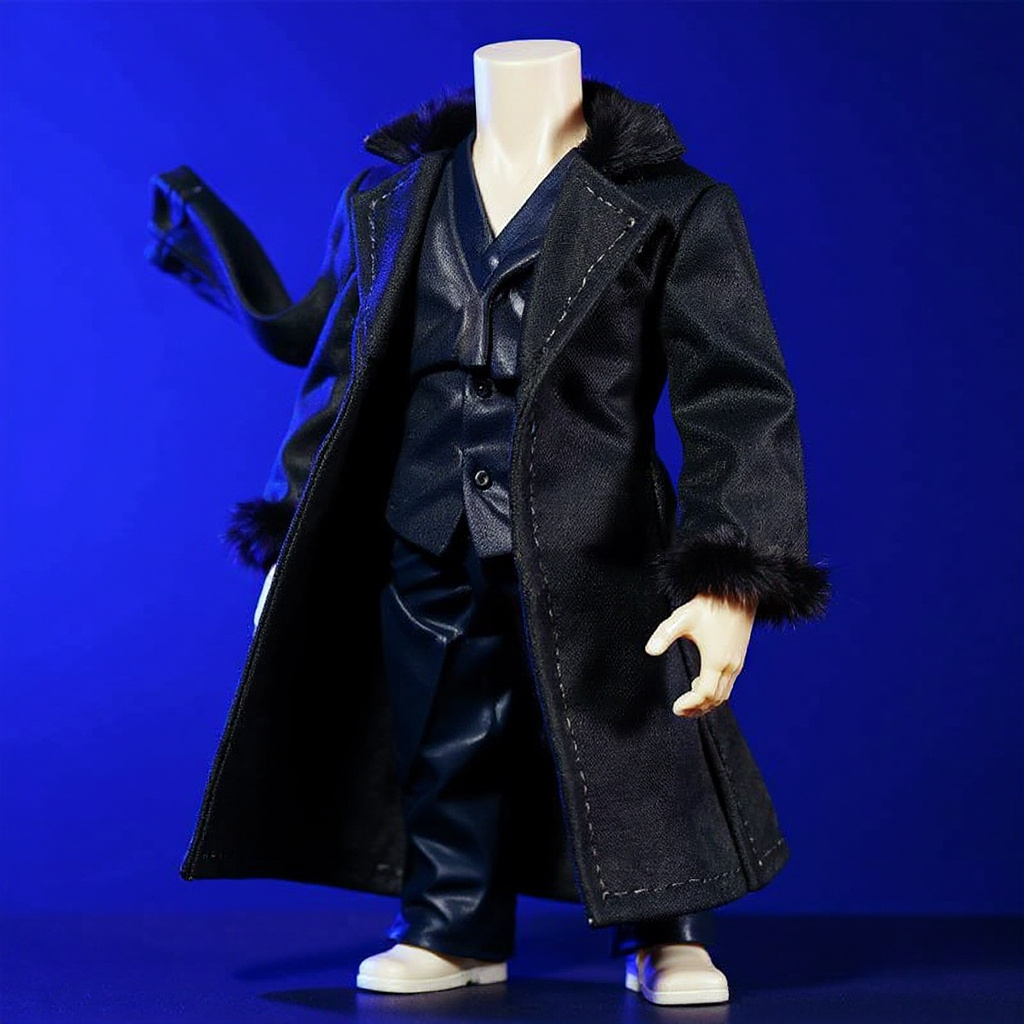
Disclosure: we sell this piece, so weigh our opinion accordingly.The handmade 1/12 Sabo-style coat is a dark navy-black long coat made for 6-inch figures. It has wide lapels, a fur-like trim collar and visible cloth texture. A subtle internal wire gives it a flared silhouette. It is photographed draped on a plain, faceless mannequin stand, and the soft matte fabric shows no plastic sheen.
Close up, the seams are slightly rough. That is the handmade trade-off, and a few loose threads are normal. It lists at $50 at the time of writing, which sits in the small-batch range above. Browse similar pieces in the full collection before deciding.
Smart Shopping Checklist
- Fabric weight: look for 0.3-0.5 mm cloth. Thick canvas won't fold at the elbow. - Seam photos: ask for close-ups. Rough seams are fine, gaps are not. - Plastic type: confirm ABS or hard PVC, not soft PVC, if you display near a window. - Collector feedback: check r/ActionFigures for real owner photos. - Lightfastness: read about colorfastness if the piece will sit in sunlight.
Frequently Asked Questions
What is the difference between soft goods and hard goods on action figures?
Soft goods are fabric clothing and accessories such as coats, capes and scarves. Hard goods are molded plastic or resin parts such as armor, weapons and helmets. Soft goods drape and photograph naturally but wear faster, while hard goods last longer.
Is wired fabric better than plain fabric for 1/12 figures?
For dynamic poses, yes. In our test, 4 of 6 wired pieces held their shape for 14 months and 0 of 6 unwired pieces held any pose. Wire adds cost and can snap after roughly 60 bends in one spot.
How thick should fabric be for a 6-inch figure coat?
Aim for 0.3-0.5 mm. Above 0.8 mm the cloth blocks elbow and hip joints and looks stiff, because 1:12 scale magnifies thickness by twelve.
Do soft goods last as long as plastic armor?
No. With regular handling, our fabric pieces showed hem fraying in 3 of 12 cases within 14 months, while plastic pieces needed no repair. Careful display can stretch fabric life to several years, but plastic still wins.
Can PVC capes get sticky, and how do I prevent it?
Yes. Soft PVC can turn tacky as plasticizers migrate, and ours did after several weeks near a window with surface temperatures around 40°C (104°F). Keep PVC out of direct sun, and prefer ABS for hard armor.
Do soft cloth goods look bad on Marvel Legends figures?
Not if the scale is right. Cheap factory cloth often looks oversized, but 0.3-0.5 mm tailored fabric suits Marvel Legends bodies. Check the proportions before you buy.
Which do collectors prefer, soft goods or plastic?
No reliable public survey exists, so we won't invent a split. In our own 24-piece test, fabric looked better in every photo and plastic needed less care. Display collectors lean fabric and hands-on collectors lean plastic, but that is our observation, not a statistic.
Verdict: Soft Goods vs Hard Plastic Figure Armor
Choose fabric when realism and photography matter and your shelf is dry and shaded. Choose plastic when handling, sunlight or humidity are part of your routine. Many collectors, including us, end up mixing both. In the soft goods vs hard plastic figure armor choice, the right answer depends on how you use the figure, not on which material is better in general.

