


A cream/tan trench-style jacket with visible stitching, a standing collar, and functional buttons is not a beginner project. It needs to drape over a bare 1/12 scale male body without going stiff at the shoulders, hold a collar shape with wire-shaped tips, and catch light with a slight fabric sheen that reads as "quality coat" instead of "costume." Get the fabric wrong and you end up with something that looks like a paper bag taped to an action figure. Get it right and it photographs like a miniature garment, not a toy accessory.
This is the exact build we test in-house for the City Hunter Ryo Saeba jacket, and most of what follows comes directly from failed prototypes. Several of them.
Why a Trench Coat Is the Hardest Garment to Scale Down
A trench coat carries structure on a full-size body — shoulder weight, a belted waist, a collar that stands on its own. Shrink all of that to 6 inches and the structure either disappears or turns into cardboard. There is no in-between on cheap fabric.
Cotton-blend fabric in the 90-100 GSM range is the sweet spot for this specific jacket. Heavy enough to hold the standing collar and the drape of the coat body without stretch fabric bagging at the shoulders. Light enough to fold naturally at the elbow when the figure's arm bends. We land at 95 GSM for the Ryo Saeba build, and it took four fabric swaps to get there.
Contrast that with a lightweight cotton voile shirt pattern, which needs almost no structure at all. A trench needs both drape and backbone at the same time, which is why plain "use lightweight fabric" advice from general 1/12 clothing guides falls apart here.

Fabric Weight Guide for Trench-Style Jackets
For a cream/tan trench with visible stitching and a standing collar, weight ranges break into three practical tiers:
1. 60-90 GSM — too soft alone. Cotton voile (70 GSM) and silk habotai (80 GSM) drape well but won't hold a standing collar without wire support inside the seam. 2. 90-110 GSM — the working range. Cotton-blend twill-weave at 95 GSM, cotton lawn at 90 GSM, and lightweight rayon-cotton blends at 100 GSM hold the coat's shape while still bending at the elbow and shoulder joint. 3. 110-160 GSM — structure heavy, use sparingly. Wool crepe at 120 GSM and cotton poplin at 110 GSM work for the coat body but need to be paired with a lighter lining fabric or the whole piece turns bulky at 1/12 scale.
Anything past 160 GSM — most canvas, most quilting cotton — belongs nowhere near a 1/12 figure. It doesn't drape. It doesn't fold. It sits.
Wire-Shaped Collar Tips: What Actually Works
The standing collar with wire-shaped tips is the single hardest detail on this jacket. Too thick a wire and the collar looks like a coat hanger sewn into fabric. Too thin and it collapses within a week of handling.
1. Use 26-gauge armature wire for collar tips. Anything heavier shows through cream/tan fabric as a visible ridge. 2. Sew the wire inside a folded fabric channel, not against the seam edge. This keeps sharp wire ends from poking through the sheen fabric surface. 3. Shape the collar tips after the jacket is fully assembled, not before. Pre-shaping and then sewing distorts the fold line almost every time. 4. Avoid wire in the button placket. Functional buttons need the fabric to move freely, and wire there just fights the buttonholes.
Honestly, if you're photographing under harsh LED panel lighting, dial back the sheen fabric choice or diffuse hard. That slight fabric sheen the product calls for looks premium in soft light and looks like a plastic raincoat under a bare LED. No amount of post-processing saves that shot.
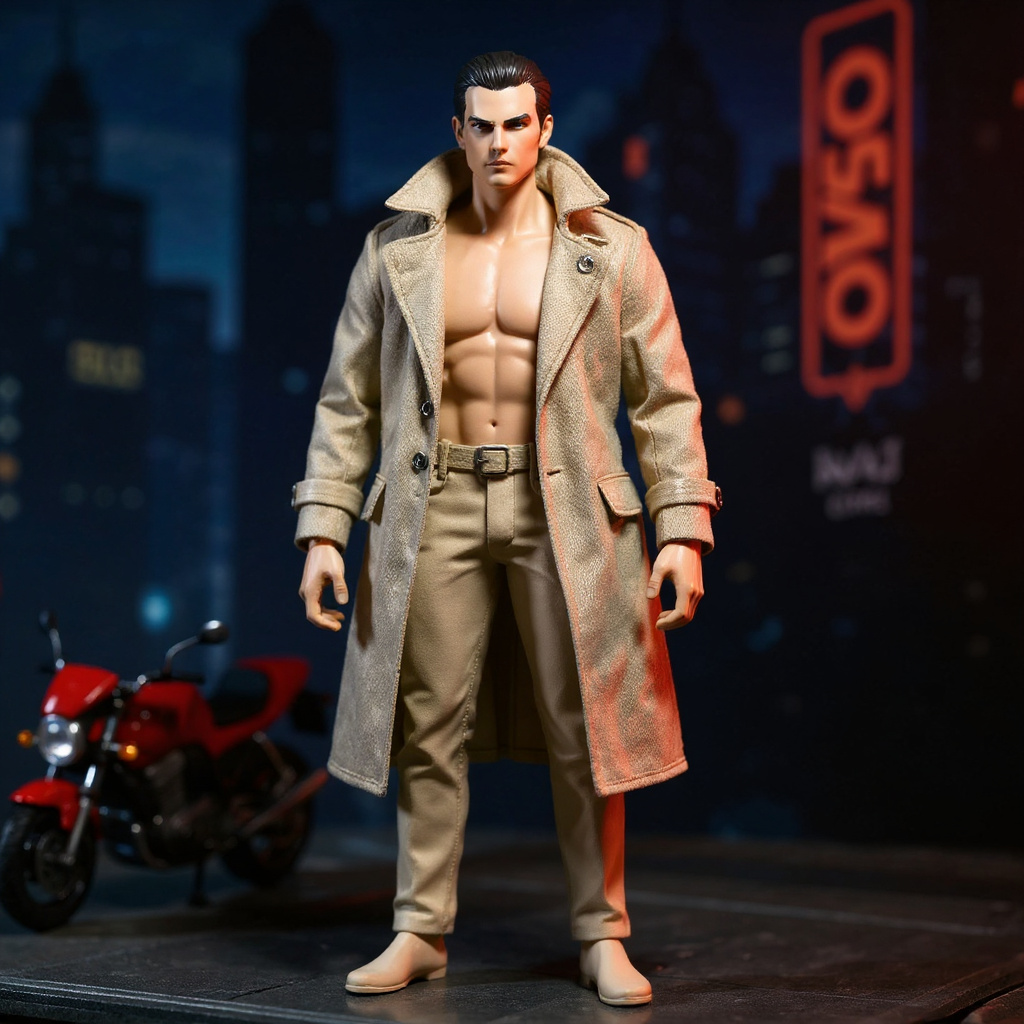
Comparison Table: Fabric Options for a Cream Trench Jacket
| Fabric Type | GSM | Drape on Standing Collar | Wire Compatible | Sheen Level | Best Use on This Jacket |
|---|---|---|---|---|---|
| Cotton-blend twill weave | 90-100 | Good | Yes | Slight, matches product spec | Main coat body |
| Silk-cotton blend | 80-95 | Very good | Yes | Moderate | Lining, cuffs |
| Rayon challis | 85-100 | Very good | Yes | Low | Alternate coat body, softer photos |
| Cotton lawn | 85-95 | Fair | Yes | Low | Belt, minor trim |
| Wool crepe | 110-120 | Fair, bulky | Yes | None | Winter-weight variant only |
| Cotton poplin | 105-115 | Fair | Yes | None | Structured collar underlay |
| Canvas | 200+ | Poor | No | None | Don't. Just don't. |
Pattern and Stitching Scale Guide
Visible stitching is part of the product definition, which means stitch scale matters as much as fabric weight.
| Detail | Human-Scale Reference | 1/12 Scale Target | Notes |
|---|---|---|---|
| Topstitch width | 2-3mm | 0.3-0.5mm | Anything wider reads as a seam error in photos |
| Button diameter | 10-12mm | 1.5-2mm | Functional buttons need working holes at this size |
| Collar tip length | 60-80mm | 6-8mm | Matches wire gauge, not fabric weight |
| Stitch spacing | 2-3mm apart | 0.5mm apart | Denser stitching reads as "visible" at scale, sparser disappears |
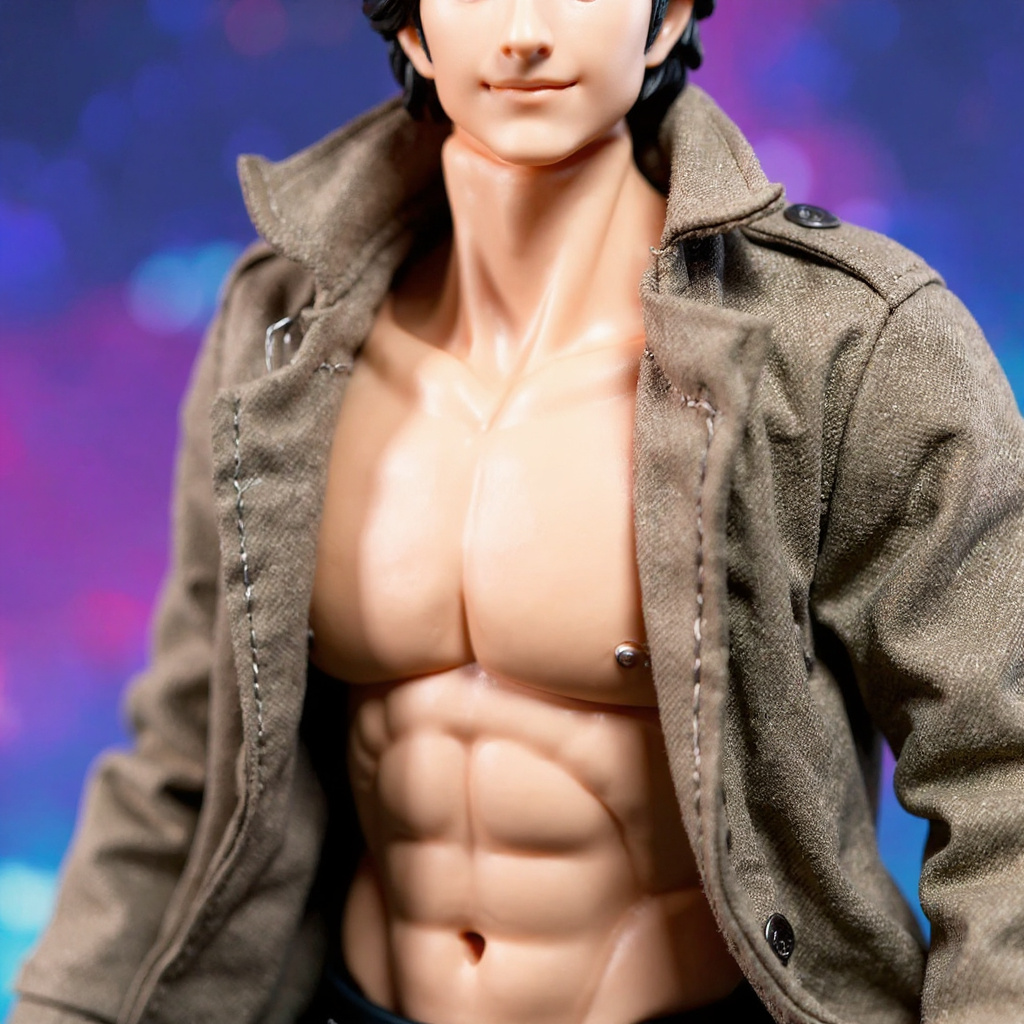
Common Failures on Trench-Style Figure Jackets
Collar collapse. No wire, or wire too thin. The standing collar folds flat within a day of handling. Button gap. Functional buttons sewn too close together pull the front panels crooked when closed. Space them at scale, not by eye. Sheen mismatch. Product photos need a slight sheen. A fabric with zero sheen photographs flat and dull under studio lighting; a fabric with too much sheen looks like a rain poncho. Stiff shoulder seams. Regular cotton broadcloth stiffens at the shoulder and stops the figure from posing with arms down naturally. Swap for the cotton-blend range above.I've handled trench jackets that cost $40 to commission and still looked wrong on camera because the maker used leftover quilting cotton. Fabric choice outweighs sewing skill more often than people expect.
Testing a Trench Fabric Before You Commit
1. Drape a 2-inch square over your finger. It should curve, not fold sharply. 2. Crumple it in your fist and release. Good fabric releases without a hard crease line. 3. Fold it into a mock collar shape by hand. If it won't hold even a rough curve without wire, it's too soft for this jacket. 4. Photograph the swatch under your actual lighting setup. Sheen behaves differently on camera than in hand. 5. Compare it against the Ryo Saeba jacket fabric swatch if you can get a sample — it's the benchmark we built this guide around.
Pre-Made vs Custom for This Specific Jacket Style
Pre-made trench jackets fit generic "slim male" 1/12 bodies and skip the fitting process entirely. Custom work fits your specific figure but costs more and takes weeks.
Our middle ground is a semi-custom build: standard 6.1-inch male body fit, with wire-reinforced collar tips left slightly adjustable so you can reshape them after purchase. That's the approach behind our City Hunter jacket, priced at $55 to cover the fabric testing time, not just the stitching hours.
Frequently Asked Questions
What GSM fabric works best for a 1/12 scale trench coat with a standing collar? Aim for 90-100 GSM cotton-blend. It holds the collar structure without going stiff at the shoulder or elbow. Do I need wire in the collar for a standing-collar jacket at this scale? Yes. Without 26-gauge wire sewn inside the collar seam, a standing collar collapses within days of normal handling. Can functional buttons actually work on a 1/12 scale jacket? Yes, with button diameters around 1.5-2mm and working buttonholes, though they require patience and a fine needle. Expect a learning curve. Why does my fabric look shiny in a bad way instead of the subtle sheen shown in product photos? Most synthetic sheen fabrics reflect too much light under studio setups. Choose a cotton-silk blend with slight sheen instead of pure poly satin, and diffuse your lighting. Where can I find custom makers for 1/12 scale trench-style jackets? Check OSW forums and r/onesixthscale on Reddit. Expect 6-8 week lead times and $60-120 pricing for coat-level complexity. How do I keep the coat from looking bulky over an already-clothed figure? Dress the figure in minimal underlayers, if any, since the product spec calls for the jacket over a bare body. Bulk under a trench compounds fast at this scale. What's the biggest mistake people make buying a trench jacket for a 1/12 figure? Picking fabric by color match alone. A screen-accurate cream tone in the wrong GSM range still looks wrong once it's draped and photographed. Will a wire-collar trench jacket survive frequent reposing? Not well. Wire collars are built for display poses, not constant handling. Reshape gently by hand rather than forcing the fold each time.Is a Handmade Trench Jacket Worth It for a 1/12 Figure?
For display pieces, yes. The difference between a rigid plastic coat accessory and a properly draped cream/tan trench with a working collar and real stitching shows up immediately in photos. For figures you handle constantly, though, skip the wire collar entirely and go with a soft, unstructured version — the standing collar just won't survive daily reposing, and that's a trade-off worth admitting up front.
The Ryo Saeba jacket we build sits in that display-piece category on purpose. It's built to be photographed on a City Hunter figure standing still under good light, not wrestled through action poses. Know which one you're buying for before you commit.

