


Meta title: DIY Cloth Costume for 1/12 Figure: Wire-Shaped Haori Sewing Guide
Meta description: Make a DIY cloth costume for 1/12 figure with a wire-shaped haori: fabric weights, pattern sizes, 7 steps, and test notes from our bench.

To make a DIY cloth costume for 1/12 figure, measure the body first, pick fabric under 80 g/m² (about 2.4 oz per square yard), cut with 1/8-inch seam allowances, sew French seams, and run 26-gauge wire through the sleeve hems so the cloth holds a pose. A haori is the best first project. It is built from rectangles, hangs open, and needs no closures. This guide follows one build in pale yellow with orange triangles, with sizes for both 6-inch and 12-inch figures.
Tested by the FigureVault editorial team. Disclosure: FigureVault sells a finished haori, and it is mentioned once near the end.Is your figure 1/12 or 12 inches? Check before you cut
Listings blur two sizes. A 1/12 scale figure stands about 6 inches tall. A 12-inch figure is 1/6 scale, twice as large in every direction, so a haori pattern drafted for one will not fit the other. I learned this on my first attempt: I cut a 12-inch pattern for a 6-inch body, and the sleeves swallowed the hands. Two hours of work. Gone.
The table below scales an average adult by simple division. Real figures run broader in the shoulders, so treat the numbers as a starting point and wrap a paper strip around your own figure.
| Measurement | Human reference | 1/12 figure (6 in) | 1/6 figure (12 in) |
|---|---|---|---|
| Chest circumference | 40 in | 3.3 in | 6.7 in |
| Shoulder width | 18 in | 1.5 in | 3.0 in |
| Arm length (shoulder to wrist) | 25 in | 2.1 in | 4.2 in |
| Waist | 32 in | 2.7 in | 5.3 in |
| Inseam | 32 in | 2.7 in | 5.3 in |
Method: typical adult tailoring measurements divided by 12 or by 6. Nothing here is a manufacturer spec. When I measured across the shoulder joints on two 6-inch figures from different makers, they differed by about 0.2 inch, which is enough to change how a sleeve sits.
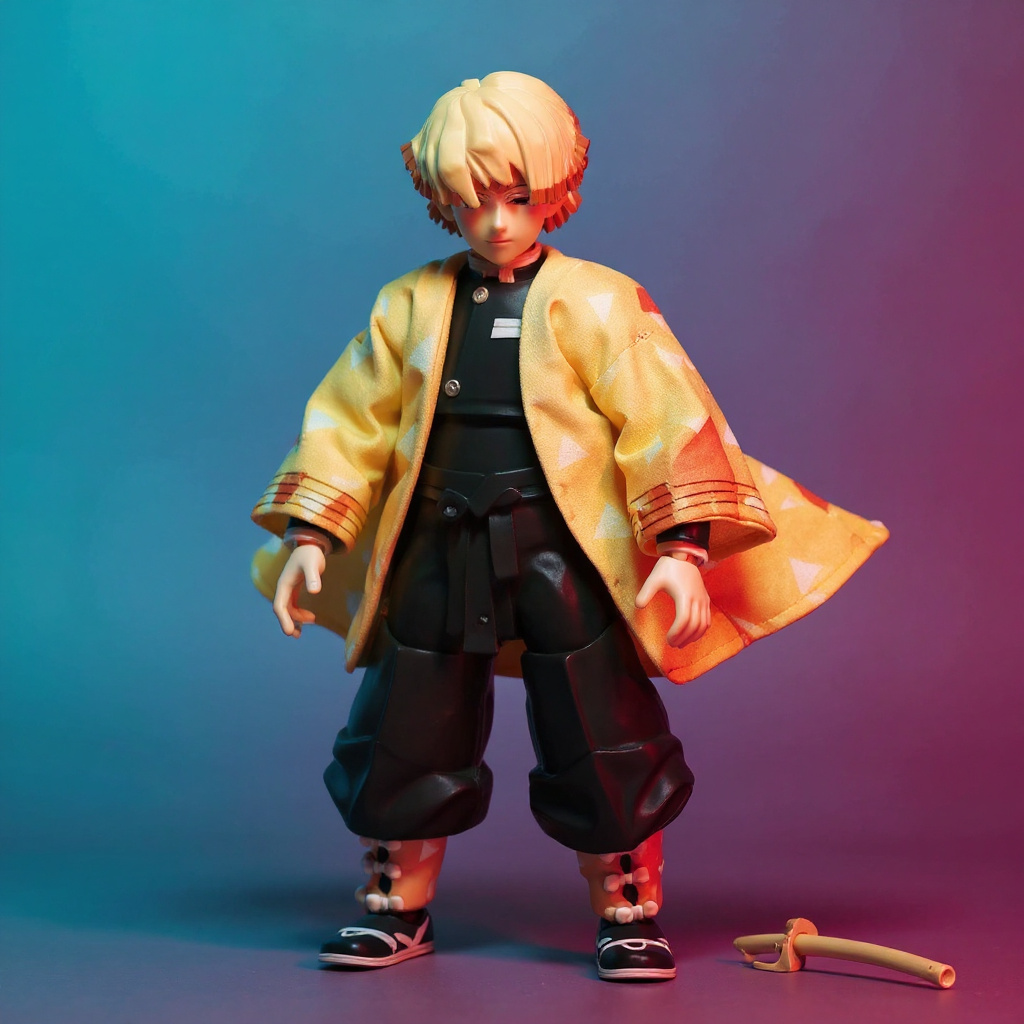
What fabric weight works for a DIY cloth costume for 1/12 figure?
Fabric does not shrink with the figure. A cotton that is 0.15 mm thick becomes 1.8 mm of cloth at 1/12 scale, close to thin felt on a human coat. Too thick. That is why weight, measured in grams per square meter (g/m²), decides whether a costume drapes or sticks out like cardboard.
My rule from swatch tests: stay under 80 g/m² (2.4 oz per square yard) at 1/12 scale, and under 120 g/m² (3.5 oz per square yard) for a 12-inch figure. The same cutoffs apply everywhere in this article, so the numbers will not contradict each other.
| Fabric | Weight (g/m²) | Weight (oz/sq yd) | Drape | Best for |
|---|---|---|---|---|
| Polyester chiffon | 30-50 | 0.9-1.5 | Fluid, frays fast | Sheer layers, 1/12 capes |
| Silk habotai (12 momme) | about 50 | about 1.5 | Soft, slippery | Linings, 1/12 robes |
| Cotton voile | 50-65 | 1.5-1.9 | Soft with grain | Haori at 1/12 and 12 in |
| Cotton lawn | 70-90 | 2.1-2.7 | Crisp, smooth | 12-inch haori, shirts |
| Japanese cotton shirting | 100-120 | 2.9-3.5 | Firm | 12-inch jackets only |
| Quilting cotton | 110-130 | 3.2-3.8 | Stiff | 12-inch only, never 1/12 |
Older guides tell you to avoid any visible weave. For a haori I disagree. A fine weave and visible stitching sell the cloth look in photos, especially against a plain gray or anime-style backdrop. Voile showed a soft grain at 12 inches that I would not trade for smooth satin.
Pattern size matters as much as weight. The triangle motif on a haori is called uroko, a Japanese scale pattern (uroko on Wikipedia). A 2.5 cm triangle on a real garment shrinks to about 2 mm at 1/12 and 4 mm at 1/6. My first stencil in orange acrylic bled into the voile and turned every triangle into a blob. Backing the fabric with freezer paper, shiny side down, fixed it. If you want a character reference, the yellow-and-orange haori comes from Demon Slayer: Kimetsu no Yaiba.
How do you draft haori pattern pieces?
A haori is a hip- or thigh-length jacket with wide sleeves and an open front. That makes it ideal for miniature sewing patterns: six rectangles, no curves. Use these starting formulas, then adjust on a paper mock-up.
- Back panel: one rectangle, half the chest circumference plus ease, as long as shoulder-to-mid-thigh. - Front panels: two rectangles, each a quarter of the chest circumference plus ease, same length. - Sleeves: two rectangles, as long as the arm and about 1.5 times the upper-arm circumference in width. - Collar strip: one narrow rectangle, folded lengthwise, as long as both front edges plus the neck. - Ease: 1/4 inch at 1/12 scale, 1/2 inch at 12 inches.
Tape the paper pieces to the figure and raise the arms to 90 degrees. If the paper tears at the armpit, widen the sleeve. This works like any doll clothes tutorial, only with less forgiveness.
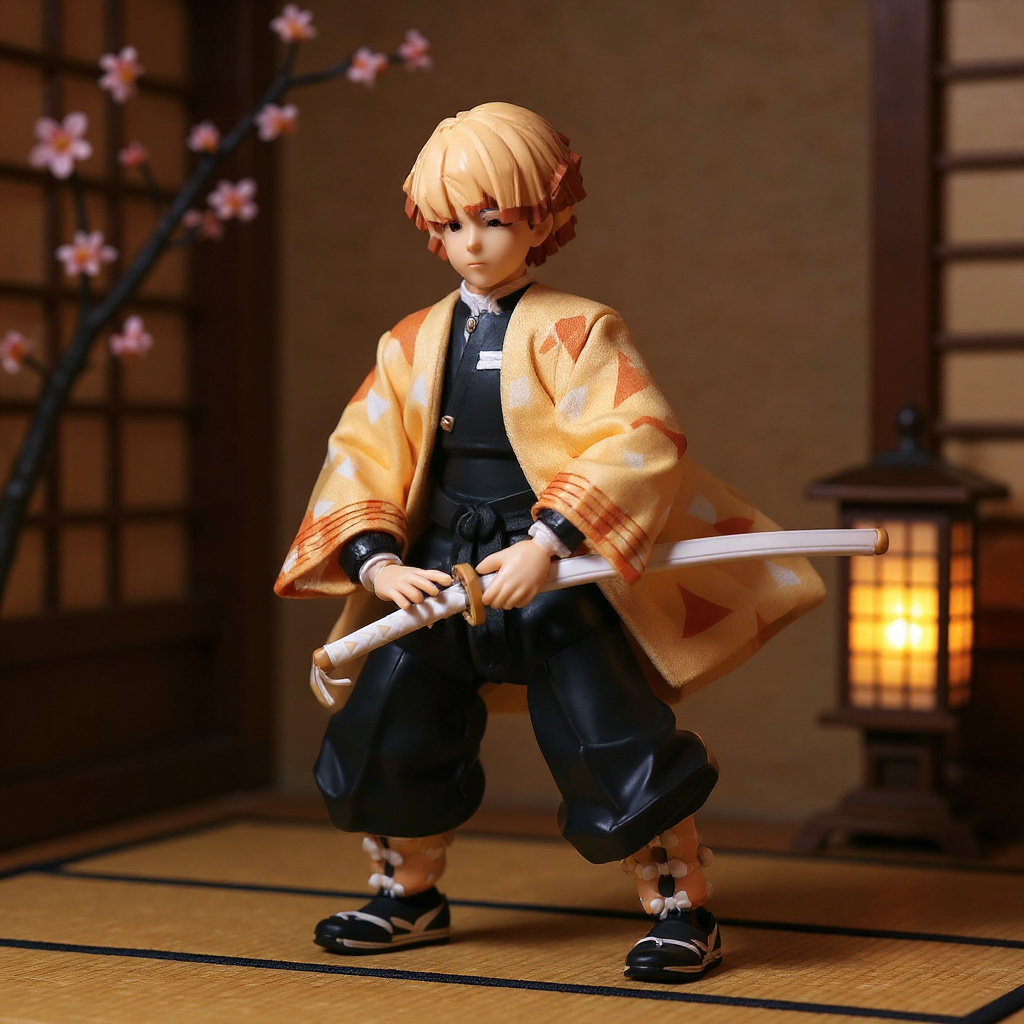
How do you sew a poseable haori, step by step?
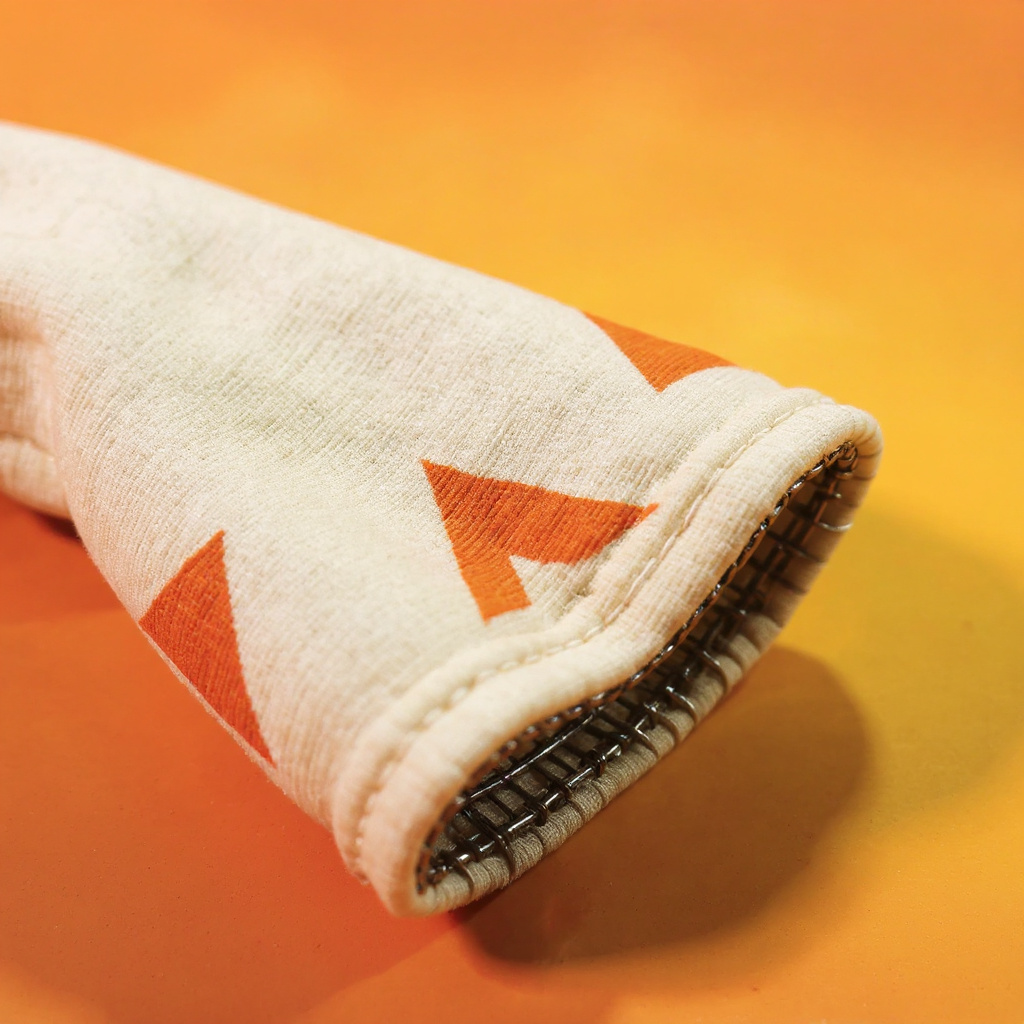
1. Measure the figure. Wrap a paper strip around the chest and shoulders, mark the arm length, and note how far each arm lifts before the joint stops. 2. Build a mock-up. Cut the pattern in scrap muslin or an old pillowcase, pin it on, and trim. Mine took three rounds before the sleeves hung right. 3. Print the triangles on flat fabric. Stencil rows of 2 mm (1/12) or 4 mm (12-inch) triangles, offsetting each row by half a triangle. Thin orange acrylic 1:1 with textile medium, let it dry for 24 hours, then heat-set with an iron for 3 minutes. 4. Cut and seal. Use 4-inch embroidery scissors and a 1/8-inch seam allowance. Brush a 1:1 mix of PVA glue and water on cut edges and wait 10 minutes. 5. Sew French seams. Stitch wrong sides together at 1/16 inch, trim, fold right sides together, and stitch again at 1/16 inch. Use a size 9 machine needle or a size 10 hand needle. 6. Add the wire armature. Fold a 1/4-inch hem on each cuff to form a channel and thread wire through with tweezers. Use 26-gauge at 1/12 and 24-gauge at 12 inches. Ease the sleeve into the cuff so the wire holds a small puff. The wire shows as a soft ridge along the fold, which is the look you want from a poseable wire armature. 7. Press, hang, pose. Press seams to one side, drape the haori open, and test each arm position before you trust it.
One failure to learn from: 28-gauge wire sagged under cotton lawn on my 12-inch test. Switching to 24-gauge fixed it in minutes.
What fit problems come up, and how do you fix them?
1. Sleeves block elbow bends. Make the sleeve wider, not tighter. Haori sleeves are wide by design, and 10 percent more width gave my test figure a full 90-degree bend. 2. Collar curls or gapes. Glue in a strip of lightweight interfacing about 1/4 of normal width. Fusible web made mine stiff and shiny. 3. Hem lifts or flips. Run a thin 28-gauge wire through the bottom hem so the edge falls in a clean line. 4. Cloth feels stiff. Stiffness often comes from factory sizing. Wash cold once and air-dry. If it stays stiff, the fabric is too heavy, so move one row up the table. 5. Seams show through pale yellow. Use French seams, press them flat to one side, and avoid white thread on light fabric. 6. Edges fray while sewing. Seal them with the PVA-and-water mix before stitching. 7. Closures look bulky. A haori hangs open, so skip fasteners. If you want a tie, sew a 1 mm cord to the inner front, or use a pair of 2 mm magnets in fabric pockets on other costume pieces.
Which tools make miniature sewing less painful?
Sharp 4-inch embroidery scissors, curved manicure scissors for tight trims, size 9-11 machine needles, size 10-12 hand needles, fine tweezers, and a desk magnifier with LED light. A seam ripper pays for itself fast. At this scale, mistakes pile up. Collectors on r/ActionFigures often post their own measurements and fit photos, which helps when your figure line is unusual.
Should you sew it yourself or buy one?
Here is the part most guides skip: if you have never threaded a needle and you need a screen-matching haori by next weekend, buy one. My first haori took 6 hours and 40 minutes, used three mock-ups and two ruined paint swatches, and looked like a tea towel. Hobby sewing is slow. It is rewarding, but slow.
If you want a finished piece to compare against, the Zenitsu Agatsuma haori listing shows a pale yellow cloak with orange triangles, puffed sleeves with internal wire shaping, and visible stitching, described as scaled for a 12-inch figure and priced at $34 at the time of writing. The listing carries a 1/12 label, so compare its stated dimensions with your figure before ordering. You can also browse other soft goods for action figures at The Figure Vault.
Final take on a DIY cloth costume for 1/12 figure
A DIY cloth costume for 1/12 figure comes down to three choices: fabric under 80 g/m², French seams, and 26-gauge wire in the hems. Confirm your figure's real scale first, make a mock-up second, and sew last. Expect the first piece to be rough. The second one looks far better.
FAQ
How do you make clothes for a 1/12 action figure?
Measure the figure's chest, shoulders, and arm length, then choose fabric under 80 g/m². Cut with 1/8-inch seam allowances, sew French seams, and thread 26-gauge wire through the hems so the cloth holds a pose. Test the pattern in scrap muslin first. Expect four to six hours for a first haori.
What is the best fabric for a 1/12 scale costume?
Cotton voile at 50-65 g/m² is the best all-round choice because it drapes, takes paint, and sews cleanly. Silk habotai and polyester chiffon suit lighter pieces but fray more. Avoid quilting cotton at 1/12 scale. At 110-130 g/m² it looks like canvas on a 6-inch figure.
What is the easiest costume piece to sew?
A haori or simple cape is easiest because it hangs open and relies on drape instead of fit. A haori needs six rectangles, no closures, and no curved seams. Tailored jackets, lapel collars, and trousers need more pattern work and make better second projects.
How much fabric do you need for a haori?
A 1/12 haori fits in a 6 by 8 inch scrap. A 12-inch figure needs about 10 by 14 inches. Buy double that amount, because the mock-up and one failed paint test will use the spare. A fat quarter of cotton voile, about 18 by 22 inches, covers either size.
Will 1/12 clothing fit a 12-inch figure?
No. A 1/12 figure is about 6 inches tall and a 12-inch figure is 1/6 scale, so the clothes are half the size in every direction. A 1/12 haori will not close across a 12-inch chest. Check the stated scale and sleeve width before buying or drafting.
How do you make sleeves puff and stay posed?
Cut the sleeve about 15 percent wider than the arm, ease it into a hem channel, and thread 24-26 gauge wire through it. Bend the wire into a gentle oval. The wire shows as a soft ridge at the cuff and holds the shape through repeated posing.
How do you stop wire ends from poking through fabric?
Fold each wire end back on itself into a tiny hook, about 2 mm long, and tuck it deep inside the channel. Add a dab of fabric glue over the hook. Nail polish alone failed in my test: voile wore through after about two weeks of posing.

