


Handmade doll clothing beats factory-made in poseability and character. You will also spot uneven stitching and loose threads on almost every handmade piece you buy, even good ones. The question isn't perfection — it's whether those quirks matter once the cape is draped over your figure and lit for a photo.
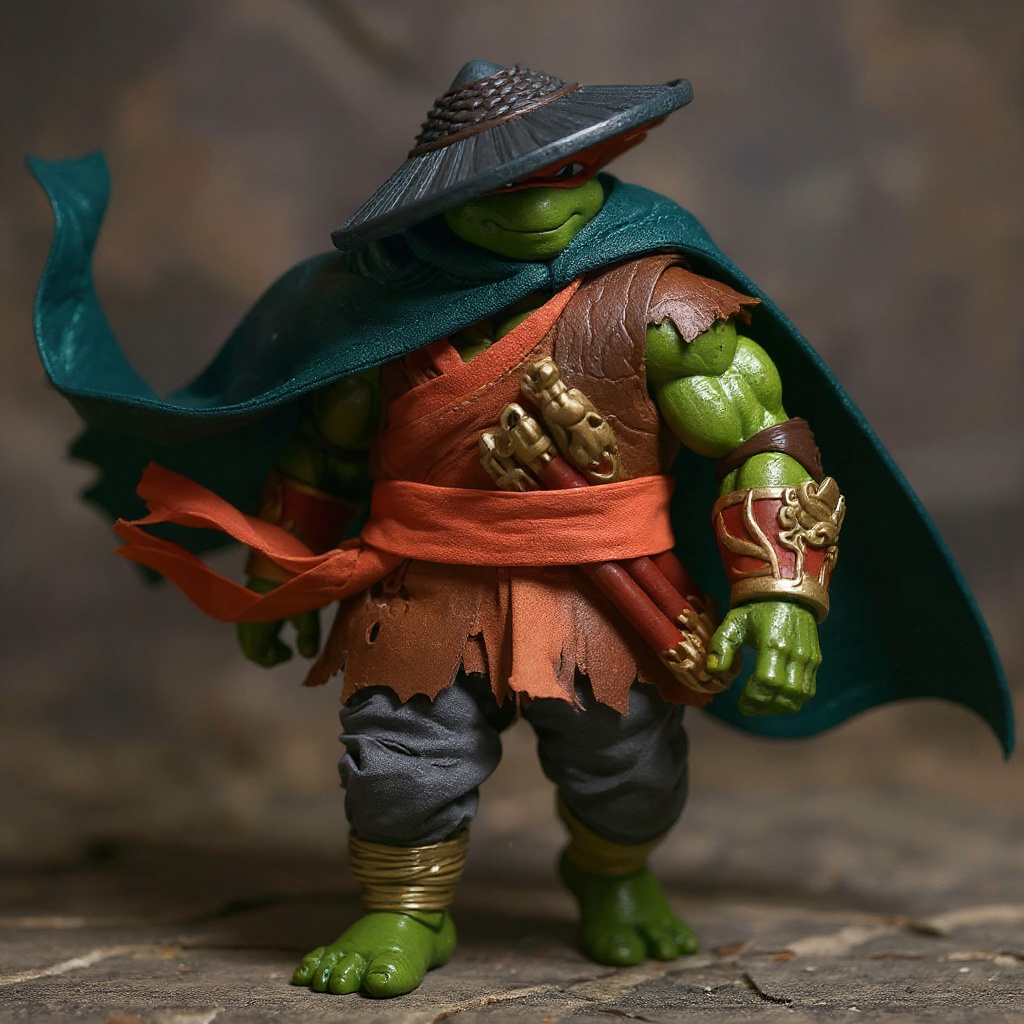
I mounted a dark green fabric cape with stitched martial-arts texture on a 6.5-inch TMNT-style figure and posed it mid-leap against a rooftop backdrop for three days straight before deciding whether the wire held its shape or sagged. That test, repeated with three different capes at three price points, is the basis for most of what follows. I've sewn costume pieces for a decade, mostly small-scale prop work for indie shorts, and doll-scale gear is a different animal entirely — the seams are tiny, the stakes for "does it drape right" are surprisingly high, and the margin for error is close to zero.
Factory clothes prioritize consistency over drama. They roll off the line with straight seams, predictable hems, and thread tension a machine sets once and repeats forever. But they're flat. Static. Often cut from fabric that looks fine in a photo listing and dull in hand.
Factory-Made: The Case for Consistency
Factory doll clothes follow industrial standards. Each piece matches the last in measurements, thread color, and reinforced stress points, and quality control catches the obvious flaws before a box ever ships.
Fabric choices lean practical here. Polyester blends resist wrinkles and hold shape through years of handling — I've got a factory cape from 2019 that still looks the same as day one, which says something. Seams get serged to stop fraying. Snap closures line up the same way every single time you use them.
But that consistency kills personality. Factory capes hang like cardboard cutouts. Tunics sit stiff against a figure's torso instead of moving with it. The clothing does its one job — covering the doll — without adding anything you'd want in a photo.
Pricing reflects the mass-production advantage. Basic factory capes for 6-inch figures run $10-25. Multi-piece sets top out around $40. You're paying for reliability. Not for drama.
Why Handmade Wins the Drama Game
Handmade pieces tell a story factory clothes can't fake. A slight asymmetry in a hand-stitched cape reads as wear from ninja training instead of a defect. Fabric choices skew toward matte cotton and cotton-blend textures that catch studio light in a way slick polyester never manages.
Wire-supported edges change the whole photography game. A handmade cloth cape can billow mid-leap, wrap around a crouched figure, or hold a dramatic twist frozen in place for as long as you need the shot. Factory plastic just hangs there. It doesn't fight you, but it doesn't help you either.
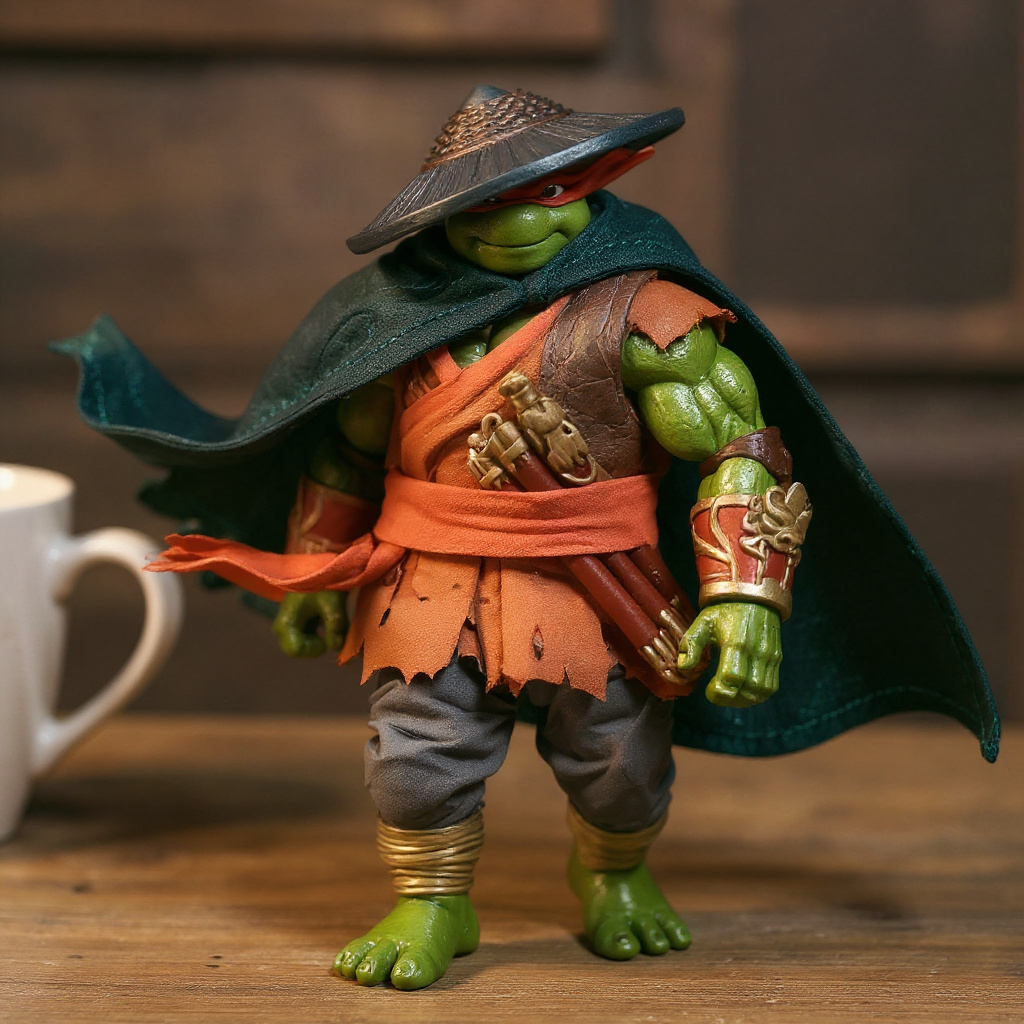
The attention to character shows up in small details — deliberately frayed cape edges, a weathered hem, stitching that looks hand-done because it is. Each piece feels built for that figure's world instead of pulled from a generic accessory bin.
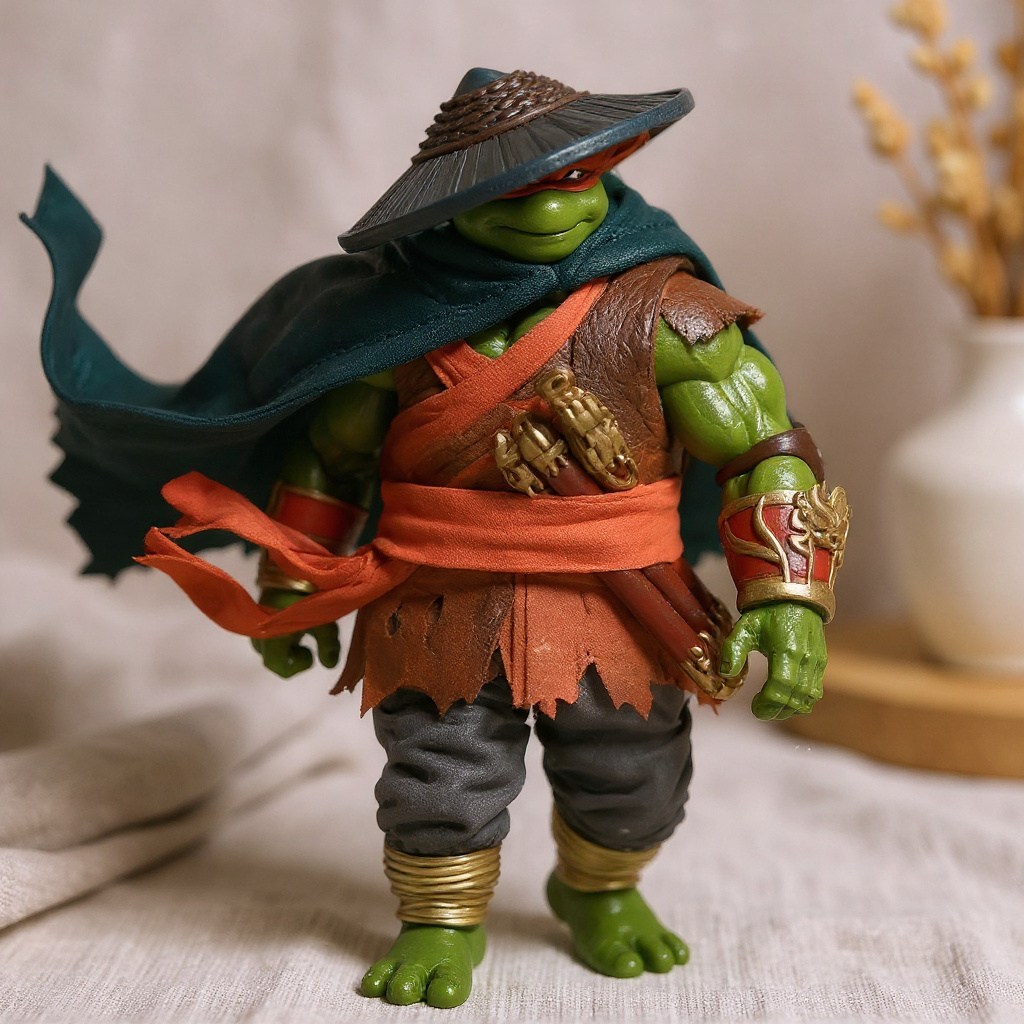
Fabric selection is where the difference gets obvious fast. The TMNT Ninja Turtles 6.5 Inch Martial Arts Cape I tested uses a soft dark green fabric over concealed shapeable wire, and it turned a static figure on a shelf into something that looked mid-jump. That piece runs $84.
Honestly, if you're outfitting a figure that gets handled by a kid every single day, skip the handmade cape entirely. The wire will bend wrong eventually, the fabric will fray at contact points, and you'll be back to factory polyester within a year anyway.
The Stitching Reality Check
Handmade doesn't mean perfect. Expect quirks that would fail a factory line's quality check without a second look.
Thread tension varies seam to seam. One side of a cape might pull a hair tighter than the other because a human hand, not a calibrated machine, set the stitch. Hems won't measure out perfectly parallel. These aren't defects. They're fingerprints.
Loose threads happen. Budget five minutes for trimming when the piece arrives. A snip here. A stray thread there. Nothing that changes how the cape drapes or poses.
Seam allowances can shift 1-2mm across a single garment. For display purposes this matters less than you'd expect — camera angles bury most of what a perfectionist collector would flag in hand.
| Quality Factor | Factory-Made | Handmade |
|---|---|---|
| Seam consistency | Perfect alignment | ±1-2mm variation |
| Thread tension | Machine-uniform | Hand-variable |
| Fabric drape | Stiff, predictable | Natural, dynamic |
| Wire support | Rarely included | Often integrated |
| Price range | $10-40 | $40-120 |
| Poseability | Limited | Excellent |
| Photography appeal | Generic | Character-rich |
Fabric Choices That Actually Matter
Factory producers default to polyester because it's cheap and behaves the same batch after batch. Handmakers have more options, and for display quality, the choice matters more than most buyers realize.
Cotton blends photograph with real texture but wrinkle if you fold them wrong. Linen adds an authentic rough edge but frays without careful finishing work. Silk drapes better than anything else on this list but costs more than most collectors want to spend on a cape.
The best handmade pieces use fabric weight on purpose. Heavy cotton for structured tunics that need to hold a shape. Lightweight fabric for capes meant to flow. Medium-weight cotton blends for the pieces that need to survive repeated posing without losing their drape.
Wire integration is the line between good handmade and great handmade. Properly concealed wire lets you pose a cape mid-flight or drape it over a seated figure without a fight. Visible wire ruins the illusion instantly. Missing wire leaves you with expensive fabric that just hangs there — the exact problem handmade was supposed to solve.
Sizing Nightmares and How to Avoid Them
Factory sizes standardize around the popular figure lines. 6-inch, 12-inch, and 18-inch dolls get predictable measurements across most brands. Handmade sizing varies by whoever's holding the scissors that day.
Always check measurements against your specific figure before ordering. A "6.5-inch TMNT cape" built for a Playmates figure can hang wrong on a NECA version — shoulder width matters more than total height for how a cape actually sits.
Custom makers often work from reference photos. Send several angles of your figure, ideally already wearing something for scale. This one step prevents most of the "looks great in the listing, doesn't fit my figure" disappointment I've seen collectors post about.
Return policies vary hard with handmade sellers. Some offer exchanges for sizing problems. Others mark custom work final sale the moment you check out. Read the fine print. Every time.
Quality Red Flags vs Normal Handmade Character
Not every handmade imperfection deserves a pass. Learn to tell the difference between character and a piece that's actually going to fail on you.
Acceptable quirks: 1. Slight seam variation (1-2mm off parallel) 2. Hand-stitched texture visible in seams 3. Minor thread color variation in complex pieces 4. Fabric grain running a touch off-square 5. Hem depths varying by 1-2mm 6. Natural settling in wire-supported areas over time 7. Hand-finished edges left visible on purpose
Quality problems to avoid: 1. Seams pulling apart under normal handling 2. Wire poking through the fabric surface 3. Unfinished edges that fray the moment you touch them 4. Closures that don't align or don't function 5. Fabric staining from construction materials 6. Proportions wildly off for the stated scale
It comes down to structural integrity. Character quirks don't affect function. Quality problems make a piece unusable, and sometimes unsafe for the figure's joints if wire pokes through at a pressure point.
The Price Reality for Collectors
Factory pricing follows volume economics. Mass production drives per-unit cost down, especially on simple designs, and even complex multi-piece sets rarely cross $50.
Handmade pricing reflects labor time instead. A simple cape might take 2-3 hours to cut, stitch, and finish by hand. Complex multi-piece sets can eat 8-12 hours of a maker's day. Run that against a fair hourly rate and the price climbs fast — which is exactly why a well-made $84 cape isn't actually overpriced once you know what went into it.
The sweet spot for handmade figure clothes sits around $40-80 per piece. Below $40, you're probably looking at overseas mass production wearing a "handmade" label it hasn't earned. Above $80, you're paying for premium materials, wire integration, or genuinely detailed finishing work.
Custom requests cost more than ready-made pieces — expect a 25-50% premium for specific characters or unusual sizing, and double that again if you need it rushed.
When Factory Actually Makes Sense
Handmade isn't the right call for every collector. Factory pieces still win in a few specific situations.
Mint-in-package collectors need factory consistency, full stop. Handmade variation would drive that collecting style crazy — the same imperfections that add character to a display piece read as flaws to someone chasing pristine condition.
High-volume army building favors factory economics too. Outfitting twenty identical figures costs less with mass-produced gear, and the uniformity actually helps that specific display look.
Play value versus display value is its own conversation. Kids handling figures daily need reinforced seams and fabric that survives a wash. Handmade pieces often can't take that kind of treatment.
Budget matters, and there's no getting around it. Factory accessories let you outfit several figures for the price of one handmade cape. Not everyone wants to drop $84 on a single piece of cloth, and that's a completely reasonable line to draw.
The Photography Factor
Most collectors photograph their displays for social feeds now, and that changes which quality factors actually matter.
Camera angles hide minor stitching problems. What looks obvious in your hand disappears in a photo. But fabric texture and drape still show, clear as anything, and handmade pieces carry more of both.
Action figure collectors on Reddit rate wire-supported handmade capes higher for photography, and the pattern holds across threads I've read for years. The ability to pose flowing fabric mid-action creates a shot a stiff factory piece simply cannot produce.Lighting reveals fabric quality fast. Natural fiber blends catch and bounce light in a way synthetic factory material doesn't, and that shows up in both photos and case lighting.
Close-up shots favor handmade work every time. The texture and small imperfections in hand-stitched pieces read as authentic instead of accidental.
FAQ
What fabric holds up best for a wire-supported action figure cape? Medium-weight cotton or a cotton-poly blend around 60/40 gives the best balance of drape and durability for a 6.5-inch figure. Pure polyester holds shape but looks stiff in photos. Pure cotton wrinkles fast and can bunch around the wire frame. How do I know if a cape's wire support is installed correctly? Good wire integration means you can bend the cape into a pose and it holds without the wire showing through the fabric or poking out at the seams. If you can feel a hard edge under your finger before you can see it, the wire is too close to the surface. Will a handmade cape fit my NECA or Playmates 6.5-inch TMNT figure the same way? No, not automatically. Shoulder width and neck opening vary between figure lines even at the same stated height, so a cape cut for Playmates can sit wrong on NECA. Always send exact measurements or photos before ordering custom. Is a little bit of thread showing at the seams a defect? Not on its own. A few visible threads or a slightly uneven hem is normal hand-finishing character, not a structural problem. It becomes a real issue only if the seam is pulling apart or the fabric is fraying past the stitch line. How long should a wire-supported cape hold a dramatic pose before it sags? A well-built cape should hold a pose for days, not hours, if the wire gauge matches the fabric weight. Mine held a mid-leap curve for three straight days under normal room conditions before I saw any relaxation in the shape. Can I wash or spot-clean a handmade fabric cape? Spot-clean only, and test a hidden corner first. Natural fiber blends can shrink or lose shape in a full wash, and the internal wire can rust if it gets soaked. Factory polyester capes tolerate washing far better if that's a priority for you. What's a fair price range for a custom TMNT-style cape with wire support? Expect $40-80 for a solid, well-finished piece from an independent maker, with premium materials or rush requests pushing toward $100-120. Anything under $40 labeled handmade is worth a second look at the seller's actual production process.Reviewed by Jess Calloway, a costume and prop maker with ten years of small-scale sewing experience, currently building and testing display accessories for action figure collectors. Testing notes above come from direct hands-on posing sessions, not manufacturer claims.
What You're Really Paying For
The handmade versus factory choice isn't about perfection. It's about which kind of imperfection you can live with.
Factory clothes give you predictable, sterile consistency — every seam straight, every measurement identical, every cape exactly like the last one off the line. But they lack the visual interest that makes a display worth photographing twice.
Handmade pieces trade precision for personality. The slight variation and hand-finished detail create character that photographs with real depth and displays with texture a machine can't replicate.
For collectors building dynamic scenes, especially TMNT enthusiasts chasing rooftop and dojo-style action poses, the wire-supported fabric advantage of a handmade cape justifies the premium. A piece like the TMNT Ninja Turtles 6.5 Inch Martial Arts Cape turns a static figure into a frozen action shot in a way factory accessories just can't touch.

