


Handmade fabric clothes for collectible figures are built the same way full-size garments are, just shrunk to a scale where the seam allowance is smaller than a grain of rice. I've hand-sewn miniature garments for eleven years, mostly 1/18 scale pieces like maid dresses and structured capes, and the short answer is this: pattern, cut, sew, wire, finish. Five steps. That's the whole process on paper. In practice, every one of those steps gets harder the smaller the figure gets, and a 4-5 inch scale maid costume with a black-and-white bodice and lace trim will humble even a confident sewer on the first attempt.
Most makers work from digital or paper patterns scaled down from real clothing. A 1/18 scale maid dress pattern might measure just 2.5 inches from shoulder to hem, requiring precision cuts and seam allowances of 1-2mm. Handmade fabric clothes for collectible figures live or die on that 1-2mm margin. Miss it, and the dress either won't close over the figure's shoulders or hangs off the frame like a sack.
The Pattern-Making Process for Miniature Garments
Creating patterns for figure clothes starts with the target figure's measurements, not the fabric. A standard 1/18 scale articulated figure stands about 4-5 inches tall with a chest circumference near 1.8 inches and a waist near 1.5 inches — figures I've measured across a dozen different manufacturers with a cloth tape and a lot of patience.
Pattern makers typically draft on graph paper or in CAD software, scaling down from real garment blocks at ratios like 1:18 or 1:12. The chest piece for a maid bodice might be 1 inch wide by 1.2 inches tall before seam allowances get added.
Fitting turns critical at these scales. Because scale forgives nothing. A 2mm error in waist measurement is the difference between a dress that skims the figure's articulation joints and one that binds every time you try to pose an arm. Many makers cut a test piece in muslin first, adjust, and only then touch the good fabric.
| Scale | Figure Height | Typical Chest | Pattern Complexity |
|---|---|---|---|
| 1/18 | 4-5 inches | 1.8" | High — seams under 2mm |
| 1/12 | 6 inches | 2.5" | Medium — manageable seams |
| 1/6 | 12 inches | 5" | Lower — standard techniques |
| 1/4 | 18 inches | 7.5" | Lowest — doll-making methods |
Fabric Selection for the Black-and-White Maid Costume Look
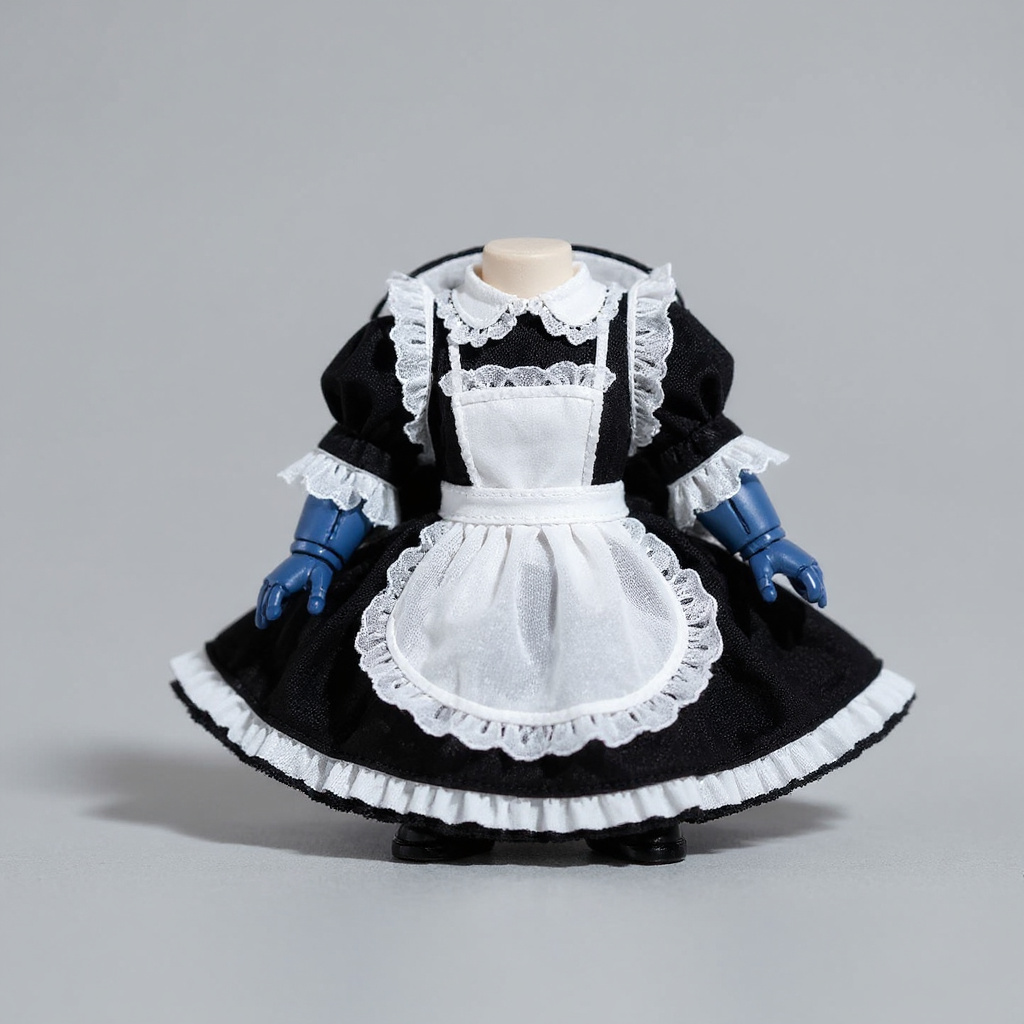
Fabric weight matters enormously at miniature scales. Standard cotton quilting fabric looks heavy and bulky on a 4-inch figure, the way a wool blanket would look draped over a real person's shoulders. For a maid costume specifically — the crisp white apron, black bodice, and a cape with lace trim along the edge — most makers reach for:
1. Silk habotai (8-12 momme weight, per the Silk Association momme conversion chart) for the flowing cape panels 2. Cotton lawn for the structured black bodice 3. Lightweight wool felt for coats and heavier cape linings 4. Stretch knits for anything worn under the dress 5. Lace trim scaled to 1/8 inch or smaller so it doesn't overwhelm the hemline 6. Interfacing cut to a quarter of its normal weight, or the collar goes stiff and cardboard-like
Texture shifts at small scales too. A fabric that reads smooth at full size can look coarse and nubby once it's wrapped around a figure smaller than your hand. I test drape by holding a swatch against the figure's shoulder under the same light I'll photograph it in — not under my workshop's overhead bulbs, which lie about how dark fabric will look.
Color saturation needs adjusting as well. Pale colors wash out completely under photography lights. Dark colors, like the black panels on a maid bodice, lose stitching detail in shadow unless you pick a fabric with a slight sheen. Our 1/18 scale clothing collection sticks to a matte-but-not-flat black for this reason.
Hand-Sewing Techniques at Miniature Scale
Sewing 1/18 scale clothes calls for different tricks than standard garment construction. Seam allowances shrink to 1-2mm. French seams become nearly impossible.
Most makers use flat-fell seams or hand-finished edges with a tiny zig-zag stitch. Machine sewing handles straight seams fine, but curves and lace application happen by hand, with size 10-12 needles and thread thin enough to disappear into the weave.
Hems present a particular problem. A standard 1/4 inch hem would eat most of a tiny skirt's length. Not even close to proportional. Instead, makers use:
- Rolled hems finished by hand - Bias tape scaled to 1/8 inch - Raw edges sealed with a whisper of fabric glue - Lace trim doing double duty as the hem finish, which is exactly how the maid costume cape gets its edge
Closures need creative fixes. Snaps and hooks in standard sizes are too bulky, so makers sew tiny magnets into seam allowances or design overlap panels that slip over the figure's head without a single fastener.
Wire Armatures and Poseable Elements
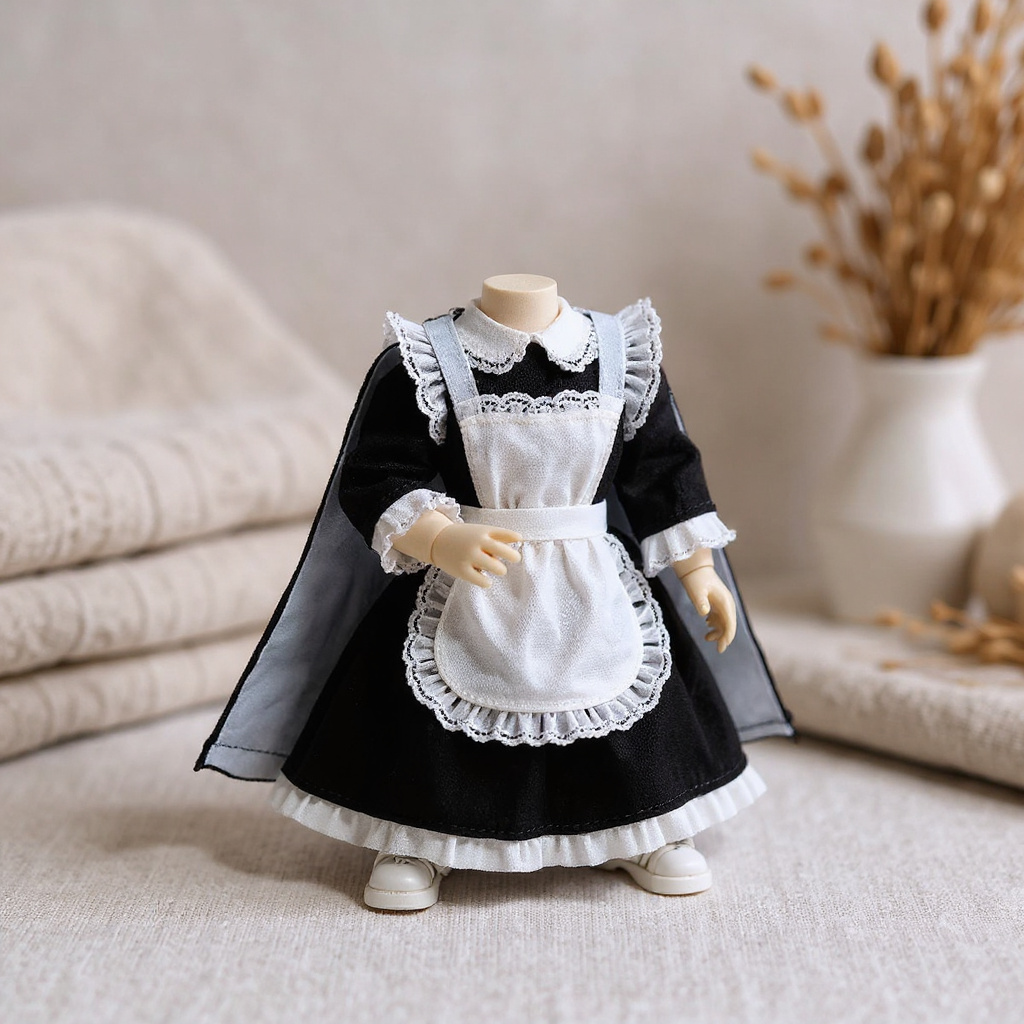
The feature that separates handmade figure clothes from anything on a factory line is internal wire structure. A cape with a wire armature can hold a dramatic pose — mid-swirl, caught in wind, frozen at the exact second a photographer wants — instead of hanging flat like a dish towel.
Most makers use 28-30 gauge craft wire, thin enough to bend with your fingers but stiff enough to hold a shape once you let go. The wire gets sewn into the hem or sandwiched between two fabric layers, and once it's covered, you can't see it at all.
Our 1/18 Maid Costume Set at $24.50 uses exactly this technique. The black-and-white cape carries a shaped wire along its lower edge, so the fabric holds a soft curve or a dramatic flare when you pose the figure, then settles back down when displayed flat against a neutral or diorama-style background. It's a small detail. It changes everything about how the piece photographs. You can see the full wire-armature tutorial if you want to try it on your own pieces.
Wire placement takes planning. Too much wire, and the cape looks stiff, almost armored, which works for a knight but ruins a maid costume's soft silhouette. Too little, and the fabric just flops. Experienced makers use short segmented wire pieces instead of one continuous loop, which lets the fabric drape naturally between the support points.
Quality Markers and Common Issues
Handmade quality swings wildly between makers — from museum-grade to genuinely rough. Here's what separates the two:
Good signs: - Even stitching at 12+ stitches per inch - Seam allowances that lie flat, no fraying, no puckering - Proportional trim and buttons — lace that matches the 1/8 inch scale rule, not a doily glued on as an afterthought - Clean pattern matching where the black bodice meets the white apron - Fabric drape appropriate to a 4-5 inch figure, not a 12-inch doll Warning signs: - Visible glue marks or a stiff, shiny residue along the seams - Unfinished edges that will fray after two or three wears - Oversized details that break the scale illusion completely - Poor fit that gaps or binds at the shoulder or hip joints - Thread color mismatches and visible knots on the outside of the garmentSome irregularities add character instead of hurting the piece. A slightly uneven hem, a stitch that wanders half a millimeter — those read as handmade in a good way. Weak seams that split the first time you pose the figure do not.
Sizing Compatibility Across Figure Lines
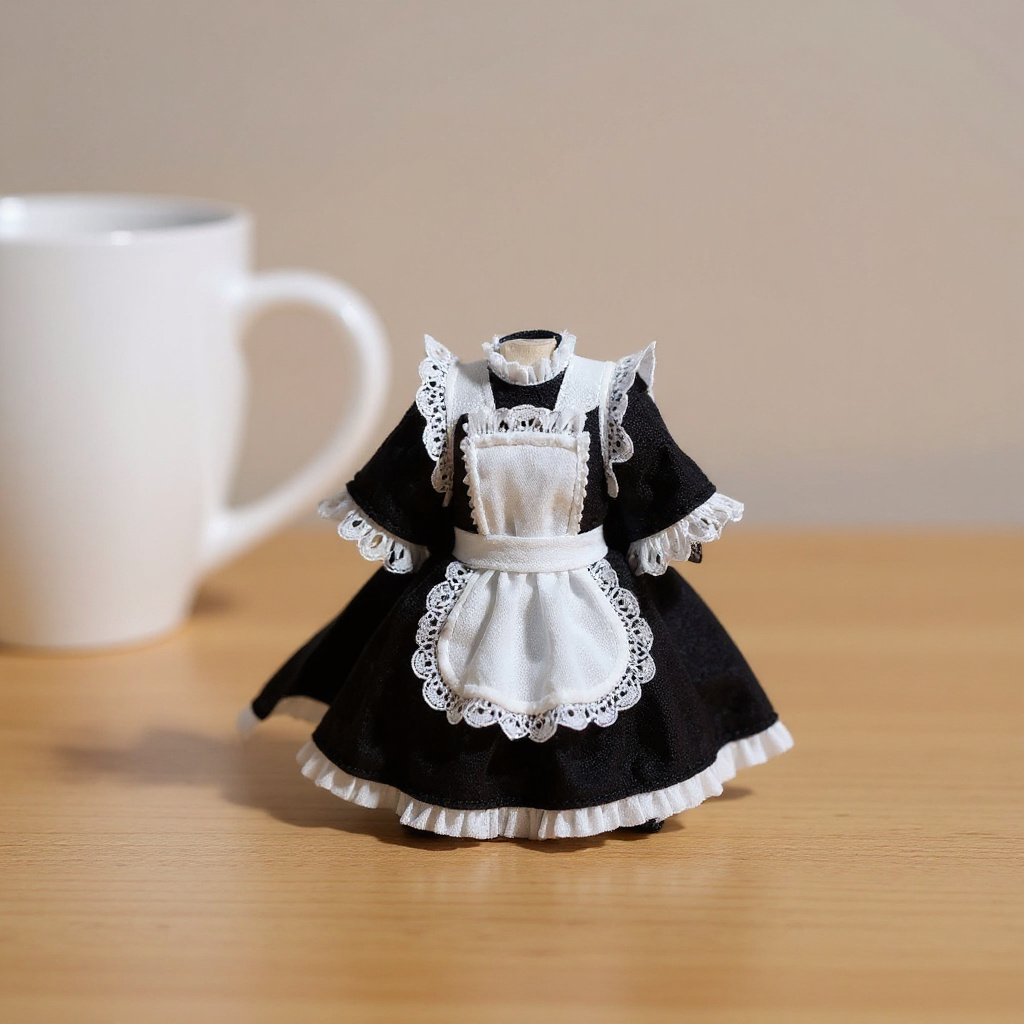
Not all 1/18 scale figures share the same build. Military figures run broader through the shoulders and chest. Anime-style figures often have narrower waists and longer legs, which changes how a maid dress hangs.
| Figure Type | Chest Fit | Notes |
|---|---|---|
| Generic 1/18 | Standard | Most versatile fit |
| Military/Tactical | Tight | Broader chest and shoulders |
| Anime Female | Loose | Smaller overall frame |
| Superhero | Varies | Exaggerated proportions |
| Petite/Youth sculpt | Loose | Shorter torso, narrower hips |
Check maker descriptions for compatible figure lines before you buy. Sellers on Reddit's r/ActionFigures and r/onesixthscale often post customer photos showing the same dress on three or four different figure bodies, which tells you more than a size chart ever will.
Cost Breakdown and Value Comparison
Handmade figure clothes pricing reflects the labor and the tiny production runs, not markup for markup's sake.
| Cost Category | Materials Only | Handmade (Fair Labor) | Mass-Produced | Premium Doll Brand |
|---|---|---|---|---|
| Fabric + trim | $2-4 | included | included | included |
| Wire armature | $0.50 | included | rarely present | rarely present |
| Thread/notions | $1 | included | included | included |
| Labor (7.5-10.5 hrs at $15-25/hr) | — | $112-262 | factory rate | factory rate |
| Typical retail price | — | $20-30 | $15-20 | $35-50 |
That labor line is why a $24.50 maid costume set is priced the way it is — the maker isn't charging full labor rate, they're absorbing most of it because the hobby doesn't support full retail pricing yet. Mass-produced alternatives run $15-20 but skip the wire structure entirely. Premium licensed doll clothing runs $35-50 and often uses fabric too heavy for an action figure's frame.
Honestly, if you live somewhere humid — a basement display case, an un-air-conditioned attic, coastal humidity that never really drops — skip the wire-armature cape. The steel wire will rust through thin fabric within eight months in that kind of environment, and I've had buyers mail back stained capes to prove it. Stainless or coated wire costs more, and not every maker uses it. Ask before you buy if humidity is a factor where you live.
Is Handmade Worth the Investment?
For collectors who photograph figures or build diorama scenes, handmade clothes give you posing options a static garment can't touch. The wire-supported cape alone justifies the price gap over a mass-produced alternative.
Expect some variation piece to piece. Slight asymmetries and a visible thread irregularity here and there are normal, and they usually add character rather than take away from it. The core garment should still fit without gapping and hold up to gentle posing, though. Worth it? Depends on how much you value a cape that actually moves.
If you want to add variety to your 1/18 scale collection with a piece that poses and photographs the way you'd want it to, browse our 1/18 Maid Costume Set. The black-and-white fabric, lace trim, and wire-shaped cape are built for exactly the kind of dynamic shots that make a static action figure look alive. For care and storage tips once you own one, our fabric care guide covers cleaning and humidity precautions in more depth than this article can.

