


A DIY cloth clothing set for Warhammer figures is a hand-sewn cape or cloak — cut from real fabric, shaped with hidden wire, and weathered to match a specific legion — built to drape over a 12-inch action figure or a mannequin torso display stand without looking like a toy accessory. That's the short answer. The long answer took me eleven attempts to get right.
I build these for 1/18 scale Iron Warriors figures, mostly capes that end up draped over display stands rather than the figures themselves — it photographs better and doesn't strain the joints. Four of my eleven capes turned out the way I wanted. The other seven taught me things this guide covers so you skip the failures.
What a DIY Cloth Clothing Set for Warhammer Figures Actually Needs
You need decent fabric, wire for structure, a needle, and patience longer than you expect. Not glued. Stitched. That's the first rule, and it's non-negotiable if you want something that survives repositioning.
Materials list, no fluff: - Cotton or linen blend fabric, dark grey or black for Iron Warriors color schemes - 22-gauge floral wire - Hand-sewing needles and matching thread - Small metal grommets or eyelets (for a shoulder clasp or trim detail) - Fabric scissors and a seam ripper - Tea or coffee for staining, sandpaper for wear
A DIY cloth clothing set for Warhammer figures lives or dies on the fabric choice, so start there.
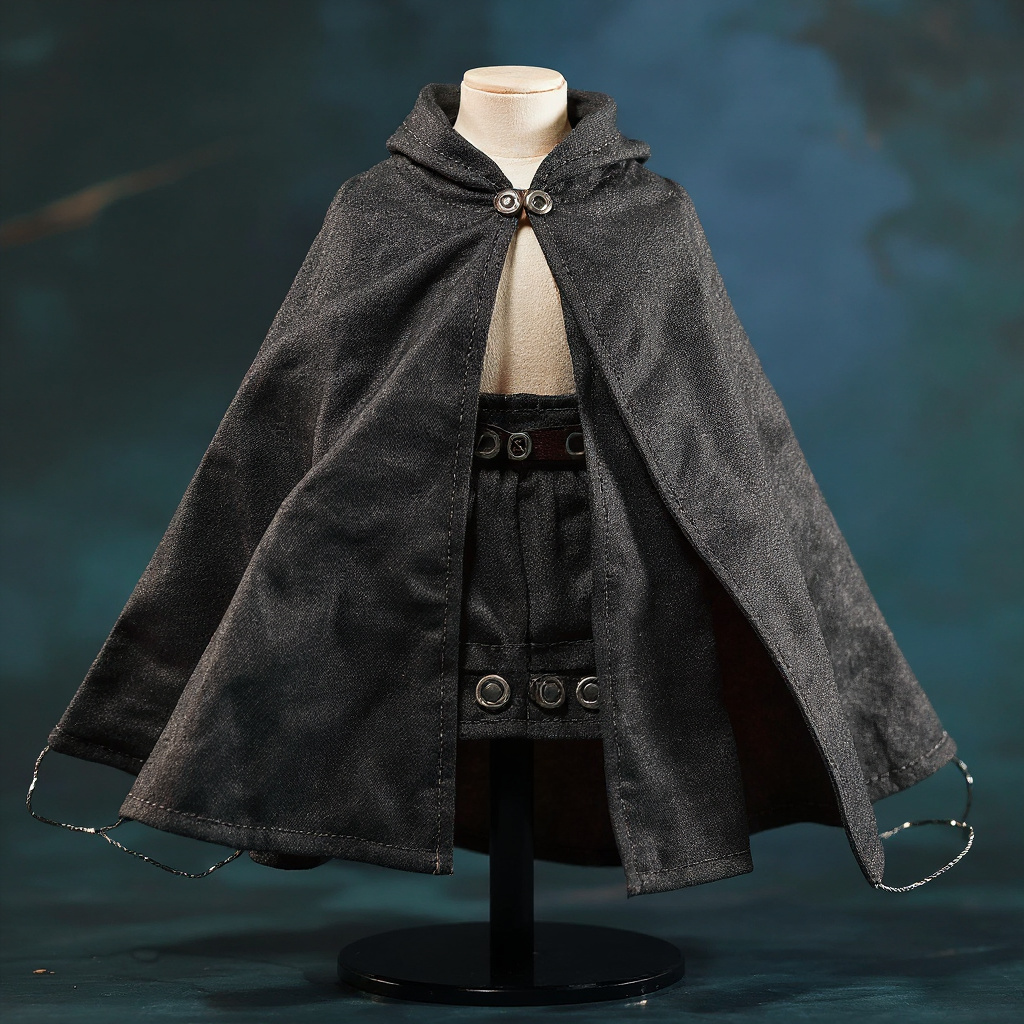
Why Fabric Beats Plastic Every Time
Plastic capes look like toys. They catch light wrong. Cloth drapes over a mannequin torso form in folds that shift with the light, the way real fabric does at any scale.
The difference shows up in close-up photography immediately — not because plastic is bad, but because it reflects light in one flat plane while cloth scatters it across threads and seams. That's what sells the "miniature soldier" illusion instead of the "toy accessory" one.
Cloth also ages the way real gear ages. A plastic cape that cracks is ruined, full stop. Fabric that frays or picks up a small tear? That's weathering. That's the same story you'd get from a marine's actual cloak after a campaign.
Choosing Your Base Fabric
Cotton canvas works for heavy military cloaks. Linen gives that worn, campaign look — slightly rougher, slightly less uniform, which reads well under paint. Muslin is cheap for testing patterns but too flimsy for a final piece; it'll tear the first time you bend the wire hem.
Avoid stretch fabric entirely. Spandex blends won't hold shape once you bend the wire frame, and within a week the cape sags back to flat. Stick to woven fabric, not knits.
Fabric weight matters more at 1/18 scale than most guides admit. Regular quilting cotton, around 4.5 oz per square yard, scales down close to correctly. Heavier canvas looks bulky on a 12-inch frame. Lighter cotton lawn just disappears under the lens.
| Fabric Type | Weight (oz/sq yd) | Best For | Cost per yard |
|---|---|---|---|
| Cotton canvas | 8-10 | Heavy military cloaks | $8-12 |
| Quilting cotton | 4-5 | Standard capes, tunics | $6-9 |
| Linen | 3-6 | Weathered robes | $12-18 |
| Cotton lawn | 2-3 | Light scarves only | $5-8 |
| Muslin | 3-4 | Pattern testing | $3-5 |
| Poly-cotton blend | 4-6 | Budget capes, less texture | $4-7 |
For general fabric weight benchmarking outside the hobby space, JOANN's fabric weight guide is a solid reference if you're unsure what you're buying.
Color choice depends on your legion. Iron Warriors need that industrial grey-black, dark enough to read as armor plating from three feet away. Warhammer 40,000 lore specifies canon color schemes, but weathering shifts any base tone toward grime anyway, so don't obsess over an exact paint-chip match.
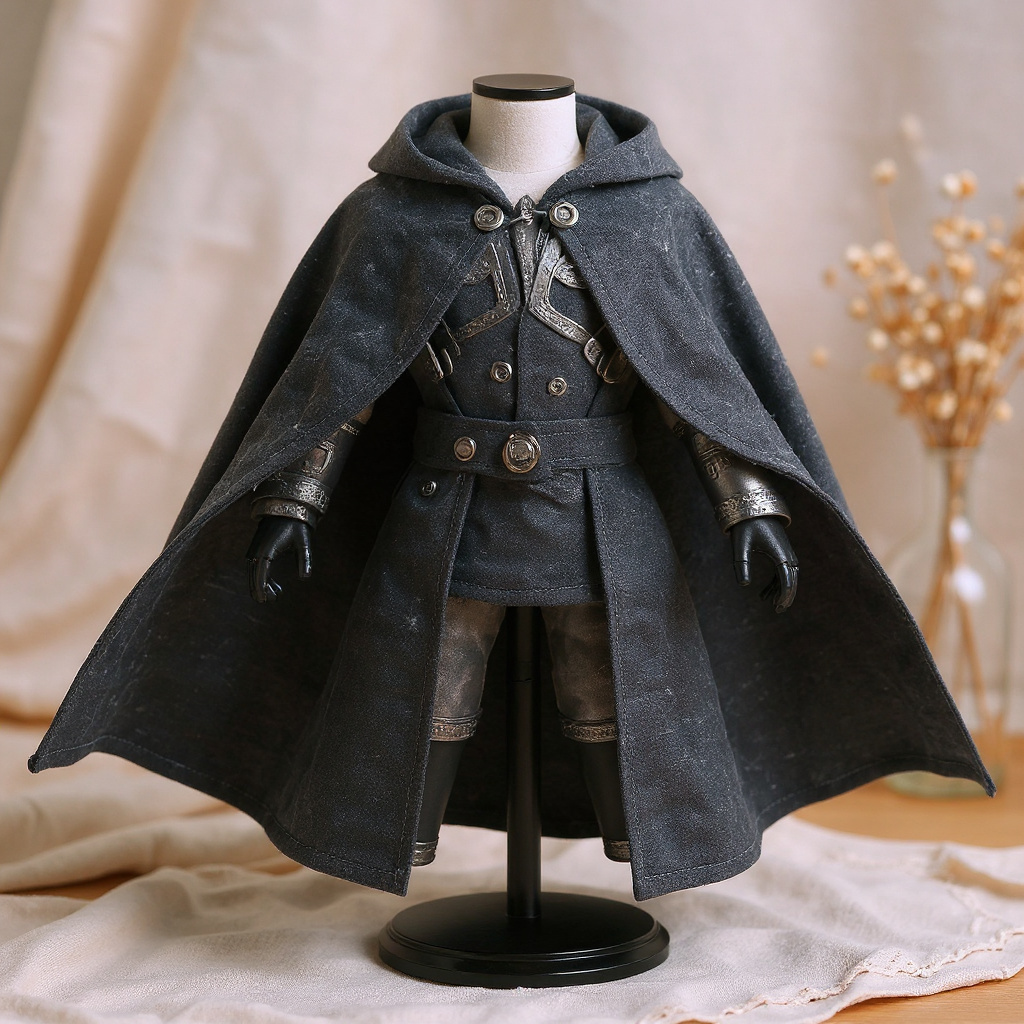
Wire Framework That Actually Stays Put
22-gauge floral wire gives the right balance of flex and hold. Thicker wire, 18 to 20 gauge, fights back too hard when you try to pose it. Thinner wire, 24-gauge or up, won't support fabric weight past a few days of display.
Run the wire along the cape's outer edge, not through the center. Stitch it inside a folded hem so it disappears but stays accessible for adjustment. Leave 2-3 inches of extra wire at each corner — you'll bend these into the flowing, wind-caught edges that make a static display stand look like it's mid-battle.
Don't wire the whole cape. Just the edges that need to hold a pose. Too much internal wire turns fabric into cardboard.
If your cape sits on a display stand or mannequin torso rather than the figure itself, add a small metal grommet or eyelet near the collar. It's a period-appropriate detail — subtle metallic trim reads as functional hardware, not decoration — and it gives you a clean point to loop wire or a display hook through without stitching directly into visible fabric.
The Perturabo Iron Warriors Cape uses this exact approach: wire-edged for posing, natural drape through the body, grommet detail at the collar.
Scaling Patterns Down to 1/18
A 6-foot person scales to a 4-inch figure. A 60-inch cape becomes a 10-inch cape. Simple math. The proportions are where it gets tricky.
Fabric thickness doesn't scale down with the pattern. Your scaled seam allowances — 1/8 inch instead of 5/8 inch — will look massive if you're not careful. French seams work better here because they lie flatter and hide the raw edge without adding bulk.
Test your pattern in cheap muslin first. Cut oversized, then trim down. Going too small on the first cut means starting the whole pattern over, and I've done that three times.
1. Measure your figure's shoulder width 2. Add 1/4 inch ease on each side 3. Draft your cape from that measurement 4. Cut pattern pieces 1/4 inch larger than final size 5. Test fit before final sewing 6. Trim excess after confirming fit 7. Add wire framework last
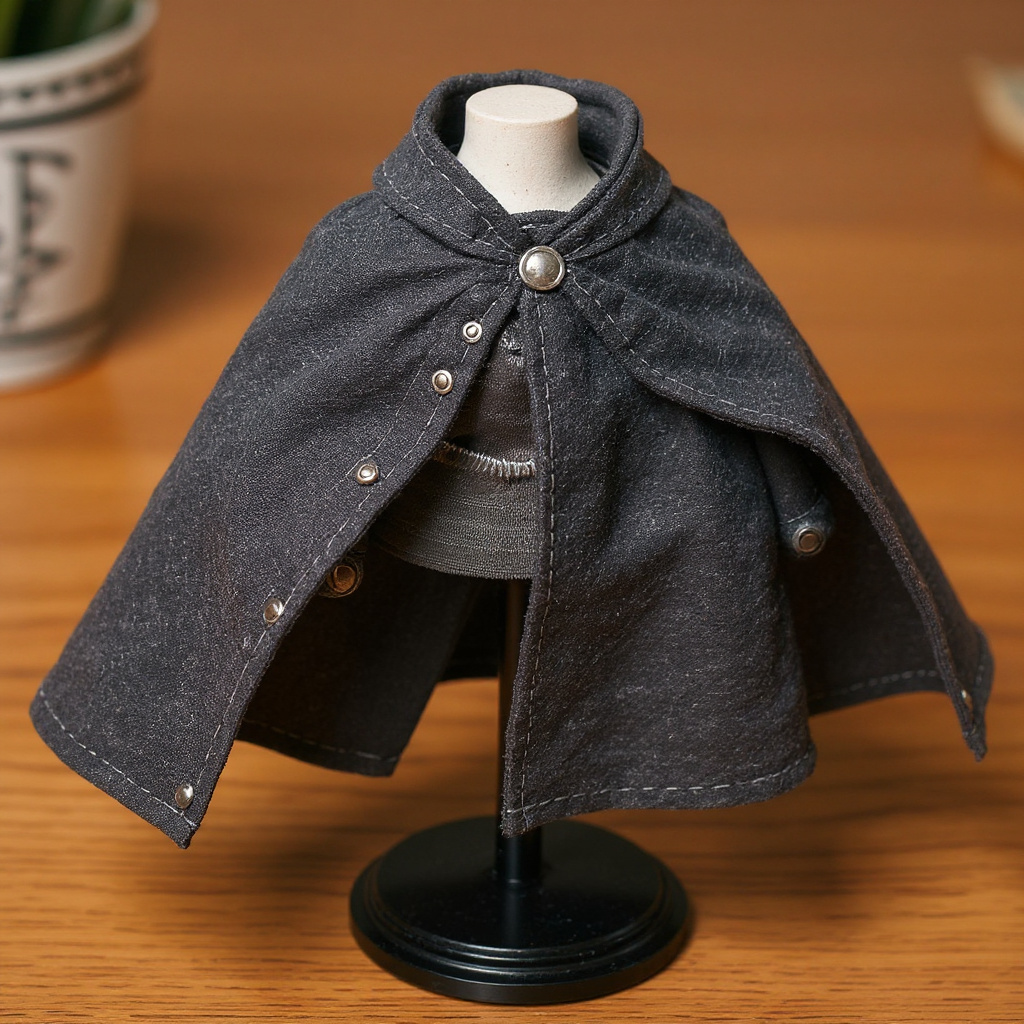
Weathering Without Destroying Your Work
Dry brushing with acrylic paint works, but go light. Heavy-handed weathering looks like you spilled paint on fabric, not like combat wear.
Tea and coffee staining gives real aging without dye that fades in six months. Brew strong black tea, soak the fabric 20-30 minutes, then air dry flat. Coffee adds a brown undertone instead of the grey tea leaves.
Honestly, if you live somewhere humid, skip the tea staining. It never fully dries right in a damp room, and I had one cape grow a faint mold smell after three days on a covered porch in July. Use pre-dyed fabric or a diluted acrylic wash instead.
A basic weathering order that's worked for me, in this sequence: - Base color dry brush, one light pass - Tea or coffee stain, spot-applied to hems and folds - Sandpaper on shoulder points and hem corners only - Small frayed cuts at 2-3 stress points, not more - Lighter-singed edge, done slow, only if the piece calls for plasma damage - Final dry brush highlight, edges only
The trick is knowing when to stop. Real cloth wears gradually, not all at once.
Common Mistakes That Ruin Everything
Using fabric glue instead of proper stitching tops the list. Glue creates stiff spots that crack and yellow within a season. It also bleeds through thin fabric and shows as a dark patch.
Making the cape too long is a close second. A floor-length cape on a 4-inch figure drags and tangles around the base. Scale it to just brush the ground when the figure stands upright, nothing more.
Ignoring grain direction. Fabric stretches differently along the grain than across it, and cutting against grain means your cape twists after the first pose change. Cut main pieces with the grain running vertically.
Overcomplicating the pattern is the mistake I made most. Simple rectangles and half-circles outperform multi-piece designs at this scale — fewer seams, fewer chances for bulk. The custom action figure community on Reddit shares plenty of clean, simple patterns that photograph well, and it's worth an afternoon scrolling through before you cut fabric.
When to Buy Instead of Build a DIY Cloth Clothing Set for Warhammer Figures
Making one cape costs $8-12 in materials plus 3-4 hours of work, assuming nothing goes wrong. Something usually goes wrong. If you need multiple capes or don't enjoy detailed sewing, buying makes more sense than a fourth failed attempt.
Handmade capes from experienced makers already include proper wire frameworks and scaled proportions — they've solved the fit and draping problems before you even open the package. Mass-produced plastic alternatives run $10-18 but lack the pose-ability of cloth, and they photograph flat under studio light. Custom handmade fabric pieces, like the Perturabo Iron Warriors Cape at $34, split the difference: real fabric construction without the three failed attempts first.
If you want to browse more display options before committing, The Figure Vault's cape collection and their wire armature notes cover different legion color schemes and construction approaches side by side.
Frequently Asked Questions
What fabric works best for a DIY cloth clothing set for Warhammer figures? Quilting cotton in dark grey or black. It holds wire shaping, weathers with tea staining, and doesn't bulk up a 12-inch frame the way canvas can. How much wire do I actually need for one cape? About 18-24 inches of 22-gauge floral wire for a standard cape, plus 2-3 inches extra at each corner for the bent, flowing edge detail. Can I skip the wire and just let the fabric hang naturally? Yes, for a robe or tunic. For a cape meant to hold a dramatic pose on a display stand, skipping wire means it goes flat within a day. How do I attach the cape to a mannequin torso or display stand without stitching visible marks? Use a small grommet or eyelet at the collar and loop it over a display hook or pin. It's the same subtle-hardware approach used on the Perturabo Iron Warriors Cape. How do you weather cloth without ruining the fabric underneath? Start subtle and build slowly. Tea staining is mostly reversible with a rinse. Dry-brushed paint isn't. Test every technique on a scrap first, and focus weathering on edges and stress points, where real wear actually happens. Should I switch fabrics if my first cape fails? Depends on what failed. A pattern problem stays a pattern problem no matter the fabric. If the material was too stiff or too flimsy, though — yes, try cotton canvas or quilting cotton instead of whatever you started with. How do I keep a homemade cape from losing its shape over time? Wire the edges properly the first time, and don't over-handle the piece afterward. Store the figure or stand upright so the cape doesn't get crushed in a box. Light steam, not direct contact, relaxes wrinkles back into shape. Is linen or cotton better for a weathered Iron Warriors look? Linen gives a rougher, more irregular texture that reads as "worn" even before you weather it. Cotton is more uniform and easier to sew cleanly. I use linen for outer cloaks and cotton for anything underneath.So Is a DIY Cloth Clothing Set for Warhammer Figures Worth Building?
Making your own teaches you exactly how fabric behaves at scale and which attachment methods actually hold. You'll understand why some commercial capes cost $30+ and others sell for $12 — it's the wire work and the seam count, mostly.
But DIY isn't always the smart move. Three tries. Then it clicked, for me — but that's three afternoons plus fabric costs I didn't need to spend if a display centerpiece was the only goal. If you need one perfect cape now, buying from someone who's already solved the wire-and-drape problem makes more sense. The Perturabo Iron Warriors Cape includes proper wire shaping and Iron Warriors-appropriate weathering that took me several attempts to get close to.
For hobbyists who like the process and want several custom pieces, DIY gives full control over color, weathering, and fit. Worth it? Debatable, some weeks. But when a cape finally drapes right over the mannequin torso and catches light like real cloth, it's hard to go back to plastic.

