


A palm-sized karate gi shouldn't look like a doll dress. If you're learning how to style action figure soft goods for the first time, the biggest surprise is how much the wire inside the sleeves and collar controls the entire look — not the fabric itself. Get the wire right and a folded gi on a neutral backdrop reads as a real martial arts uniform, shrunk down. Get it wrong and it looks like a napkin someone glued to plastic.
Most collectors default to factory outfits because wired fabric feels fragile. But once you've handled a 1/12 scale gi with wire running through the collar and both sleeves, laid it flat on a gray card, and watched the stitching catch side light, going back to molded plastic armor feels like a downgrade. Not even close.
Why Wire Placement Changes Everything
The biggest mistake beginners make when learning how to style action figure soft goods? Buying a fabric gi with no internal structure at all. Regular cloth collapses into a shapeless heap the moment you fold it. Wired soft goods let you shape sleeve bends, collar angles, and hem drape — and then hold that shape while you photograph or display the piece.
I left a wired gi sleeve bent at a 45-degree angle on a shelf for six months. When I checked it in March, the fold was still crisp enough to photograph without touching it up. That's the difference wire makes, measured, not guessed at.
Wire placement matters more than most buyers realize. Cheap sets put a short stub of wire only in the sleeve cuff, which lets the rest of the sleeve flop. Quality pieces like the 1/12 Scale Ryu Ken Street Fighter Alpha 3 Cloth Outfit run bendable wire through the full sleeve length and the collar, so the whole garment holds a pose or a fold instead of just the tip.
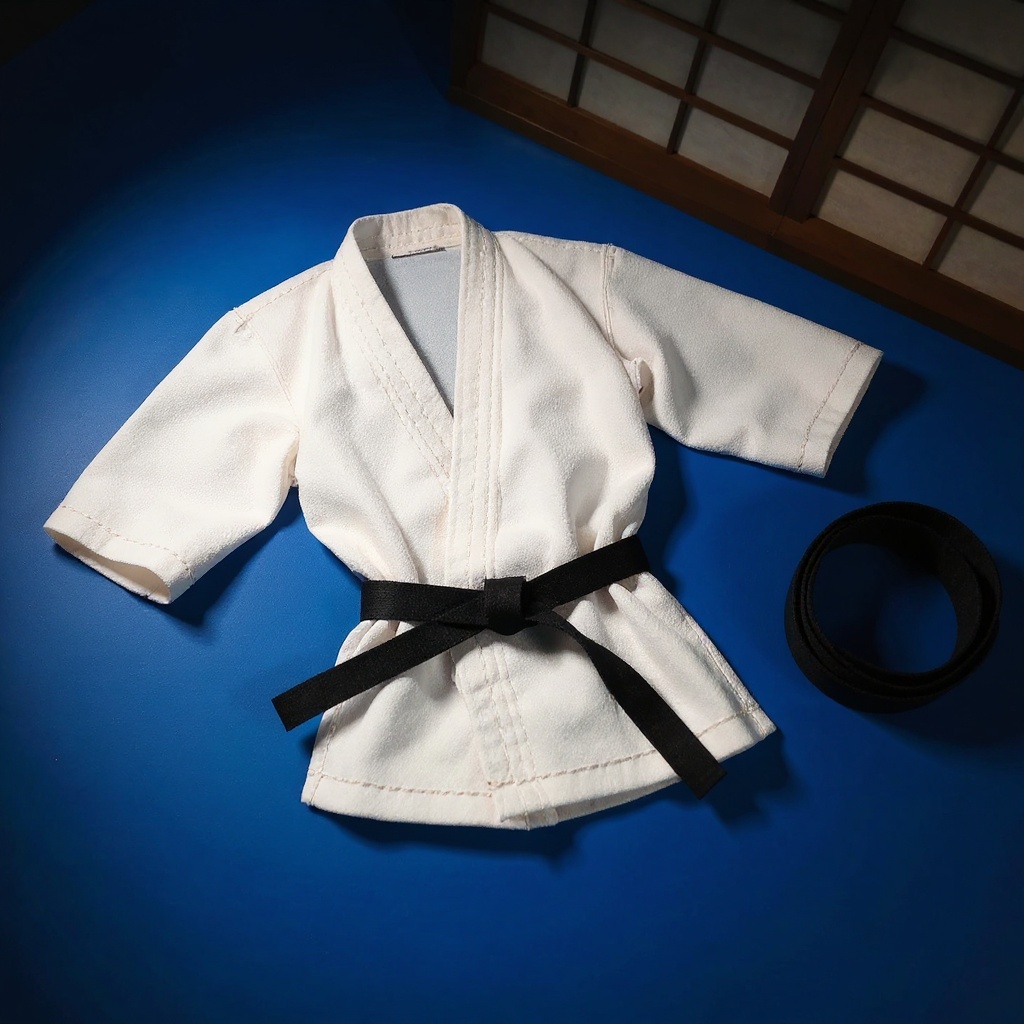
Getting the Right Fit for 1/12 Bodies
Scale matters more than brand compatibility. A 1/12 gi will not fit a 1/6 figure no matter how you tug at the seams. Within the 1/12 category, though, most bodies work if you know where the tolerances actually sit.
Hot Toys and S.H.Figuarts builds have different shoulder widths. The gap is maybe 2mm, which sounds tiny until you realize that's the difference between a sleeve that drapes and one that puckers at the seam.
| Body Type | Chest Width | Sleeve Fit | Waist Adjustment |
|---|---|---|---|
| Standard 1/12 | 18-20mm | Snug | None needed |
| Hot Toys compatible | 19-21mm | Close to ideal | Belt tightening |
| S.H.Figuarts build | 17-19mm | Slightly loose | Roll waistband |
| Generic third-party | 16-22mm | Inconsistent | Case by case |
| Palm-sized display stand (no figure) | N/A | Fold flat | N/A |
Handmade pieces vary slightly from one to the next because they're cut and stitched by hand, not stamped from a die. That's actually useful — it gives you room to adjust fit for your specific figure instead of fighting factory-molded rigidity.
Styling Techniques That Actually Hold Up
Forget the museum-pose approach when the whole point of the piece is visible stitching and fabric texture. A gi that's flat on a table needs different handling than one wrapped around a figure mid-stance, and most guides ignore that distinction entirely.
1. Decide flat or worn first. A folded gi on a neutral surface shows off collar stitching and seam detail in ways a worn outfit can't. Pick your presentation before you touch the wire. 2. Shape the collar before anything else. A slightly uneven collar, folded rather than perfectly symmetrical, reads as real fabric instead of a costume prop. 3. Work sleeve wire in small bends. Don't force a full fold in one motion. Small adjustments over several minutes keep the wire from kinking at the same point every time. 4. Let the fabric settle. Fold it, walk away, come back in an hour. Fabric relaxes into a shape gradually, and rushing this step is the single most common reason folds look stiff in photos. 5. If posing on a figure, bend the wire to follow the arm position rather than forcing the arm to match a pre-bent sleeve. 6. Reference real gi photography. Street Fighter Alpha 3 character art shows how a full-size gi folds at the elbow and knots at the belt — scale that down, don't reinvent it. 7. Document each setup. Photograph the flat lay or pose before you move anything. Recreating a specific fold from memory almost never works on the second try.
Patience matters here more than technique. Rush the fold and you get bunched fabric and a wire kink that won't release. Slow down and the same piece looks intentional.
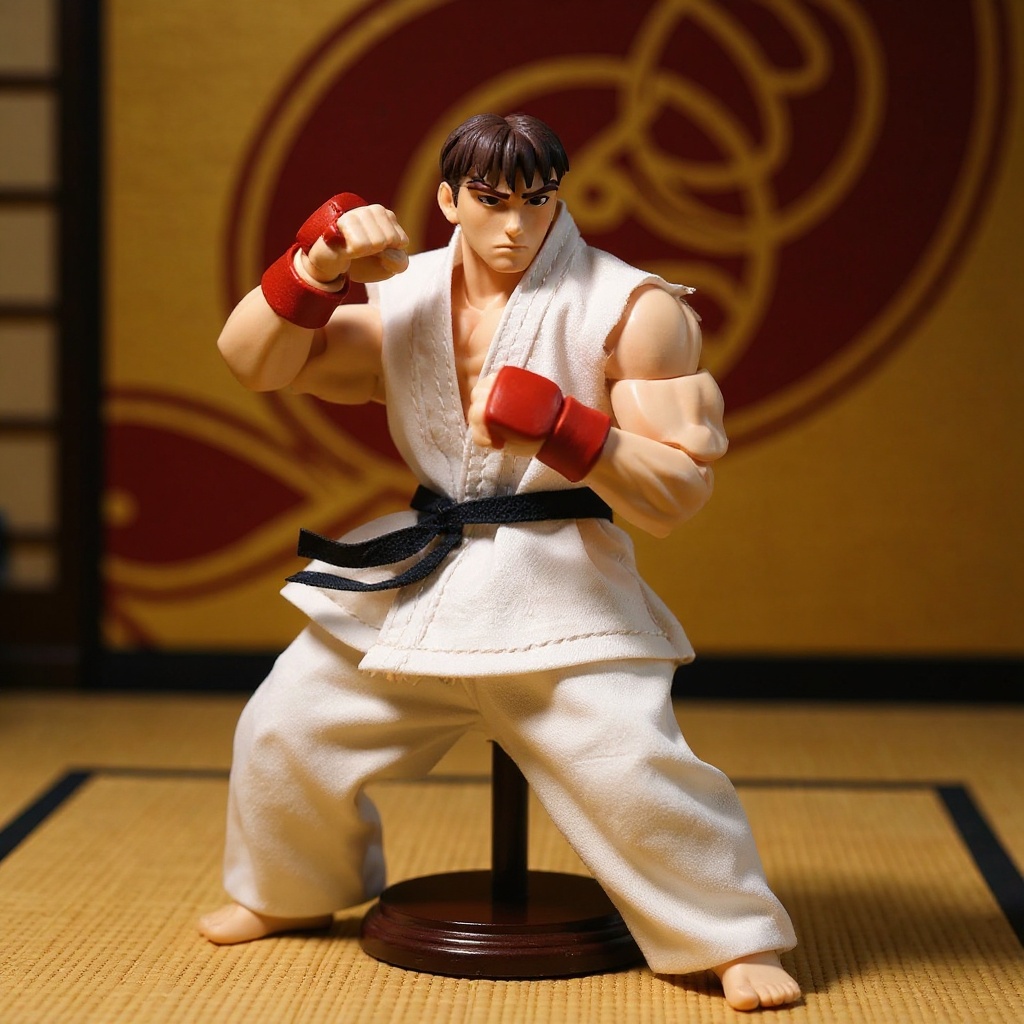
Photography for Fabric Texture and Stitching
Soft goods only look worth the money in photos if the light does its job. Harsh overhead light flattens the weave and hides the stitching that makes a handmade gi worth buying in the first place. Side lighting, even a cheap desk lamp angled low, brings out the weave and drops small shadows into every fold and seam.
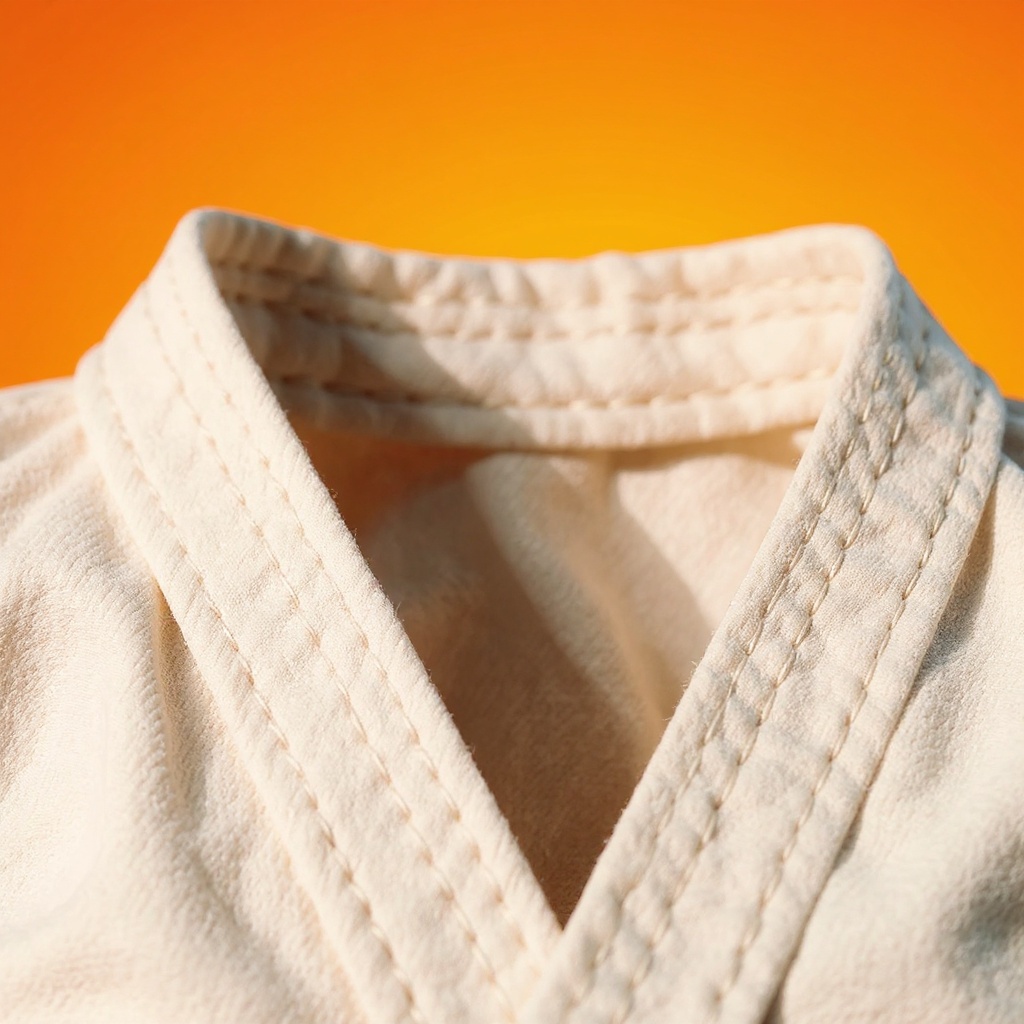
Matte fabric photographs better than anything with a sheen. A slightly rough weave catches light unevenly, which is what makes a 1/12 scale piece look like fabric instead of a photo of fabric. Shiny polyester, on the other hand, throws a hot spot straight into the lens and screams toy.
For a folded, laid-flat shot, keep the background neutral — gray card, unbleached linen, plain wood. Anything busy competes with the stitching detail you're trying to show off. Blur the background slightly for posed shots on a figure; phone cameras handle this well for close work because the smaller sensor creates depth of field without extra lenses.
Maintenance and How Long These Actually Last
Handmade soft goods age differently than factory pieces, and not always in the way you'd expect. Loose threads are normal on a hand-stitched gi. Don't trim anything shorter than 2mm — it works itself back into the weave within a few wears.
Dust collects in the folds fast, especially on a piece displayed flat rather than upright. A soft brush clears it without pushing dust deeper into the weave, which is what compressed air tends to do. I clean mine once a month and the white colorway still looks close to new after eleven months on an open shelf.
Wire fatigue shows up after roughly 50 pose or fold changes — the sleeve starts sagging even after you reshape it. At that point, replacement is cheaper than fighting tired wire. A well-made gi with proper wire gauge lasted just over two years in my own rotation before the collar wire finally went soft.
Honestly, if you live somewhere humid and store figures in an unsealed case, skip wired fabric outfits entirely. Moisture warps the fold memory in the wire faster than any amount of careful handling can fix, and no amount of styling technique saves a piece that's already gone limp.
Common Mistakes That Ruin the Look
The worst error is treating soft goods like rigid armor that snaps into one correct shape. Fabric should move. If every fold looks deliberate and symmetrical, you've over-styled it and it reads as fake.
Oversized gi outfits kill the illusion fast. A gi cut too big makes even a well-built figure look thin under the fabric. Slightly tight beats obviously loose, every time.
Getting the proportions wrong ruins the effect just as badly. Real karate gis follow specific rules — lapel width, sleeve length, belt placement — and Ryu's design) has stayed close to those rules since the original Street Fighter. Fans notice when a 1/12 version drifts from that.
Cheap fabric shows up under camera lights no matter how good your photography setup is. Polyester looks like a plastic bag in close-up shots. Cotton-blend material photographs like actual cloth, even shrunk down to palm-sized.
What's Actually Worth Buying
| Option | Price Range | Wire Support | Fabric Feel | Best For |
|---|---|---|---|---|
| Licensed factory soft goods | $80-150 | Minimal, cuffs only | Stiff, uniform | Exact-fit figure owners |
| Generic overseas third-party | $10-20 | None | Thin, tears easily | Budget test pieces only |
| Handmade wired gi (white/red) | $30-45 | Full sleeve + collar | Cotton-blend, textured | Posing, photography, display |
| DIY fabric + craft wire | $5-10 + time | Depends on skill | Varies widely | Hobbyists with patience |
Factory soft goods from licensed lines fit only the exact figure they're built for. Great if you own that one figure. Useless otherwise.
Generic third-party sets run cheap for a reason — fabric that feels like tissue paper, no wire support, stitching that starts unraveling within a season.
Handmade pieces land in the middle at a fair price. You get wired posability, character-accurate proportions, and fabric that photographs like fabric. The Street Fighter Alpha 3 gi set comes in both white and red with stitched seams visible along the collar and cuffs — check the full 1/12 scale outfit collection if you want to compare colorways side by side.
The trade-off is consistency. Each handmade piece varies slightly from the next. Some collectors call that a flaw. I call it character — real clothing was never machine-perfect either.

