


A soft goods robe for 7-inch figure builds is real fabric clothing, sewn to fit 1/12 scale action figure bodies. Not painted plastic. Not a printed texture wrap. Actual cloth, cut and stitched at a scale most manufacturers avoid because it's fiddly and slow. If you've handled both versions side by side, you already know why the fabric one wins. If you haven't, here's the short version: a soft goods robe for 7-inch figure use catches light like real clothing because it is real clothing.
The market for quality 1/12 scale clothing is thinner than most people expect. Most manufacturers chase 1/6 scale (12-inch figures) because the margins are friendlier. Finding a convincing historical robe at 7-inch scale? That's where the search gets expensive fast, and where a lot of buyers give up and settle for painted-on details.
Why Soft Goods Beat Painted Fabric Every Time
Soft goods means sewn fabric, not printed plastic. The difference shows up the moment you pose the figure.
Real fabric drapes. It catches light differently depending on the angle, the fold, the way you've bent the arm. When you move a figure's shoulder, the sleeve follows with wrinkles that look like they happened by accident — because in a sense, they did. Painted clothing stays flat no matter what you do to the pose. It looks the same from every angle, which is the opposite of what you want.
Construction quality matters more at 1/12 scale than it does at 12 inches. A poorly made robe on a 7-inch figure reads as a doll outfit, full stop. Fabric thickness that looks fine on a foot-tall figure turns bulky and stiff on a body one-twelfth the size of a person.
Wired fabric solves part of this. Internal wire in sleeves and hems lets you shape the garment and hold a pose instead of watching gravity flatten everything into a straight drop. Without wire, your Confucius figure ends up looking like he's wearing a potato sack. With it, you get the sleeve curve that actually reads as "scholar in mid-gesture" rather than "figure standing near some cloth."
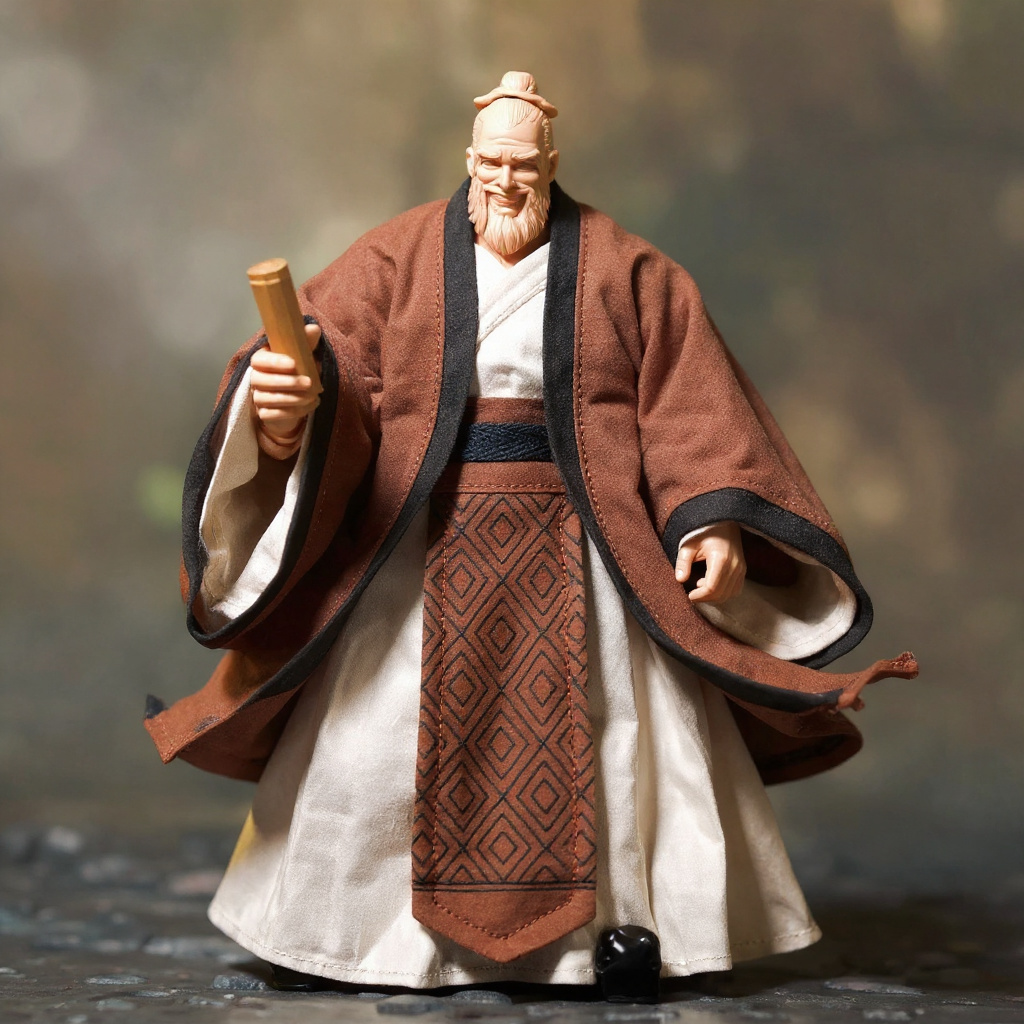
Our 1/12 Scale Confucius Robe Outfit includes shapeable wire in both sleeves and hem edges for exactly this reason.
Big Guy Bodies Need Plus-Size Patterns
Standard 1/12 figure bodies run lean. Big Guy bodies are built broader through the chest and shoulders on purpose, for characters who need physical presence rather than a runner's frame.
This creates a fit problem most sellers pretend doesn't exist. A robe cut for a standard 7-inch body will pull tight across a Big Guy's shoulders. The cross-collar closure won't sit right. The sleeves bunch instead of falling.
Plus-size patterns solve this without making the garment look oversized — the proportions stay correct for the wider frame, so you get proper sleeve length and a hem that sits where it should.
| Body Type | Chest Width | Shoulder Width | Robe Fit Issues |
|---|---|---|---|
| Standard 1/12 | 2.1 inches | 2.8 inches | Standard robes fit well |
| Big Guy | 2.4 inches | 3.1 inches | Standard robes pull tight |
| COOMODEL | 2.3 inches | 3.0 inches | Borderline fit, check measurements |
| Custom Muscular | 2.5+ inches | 3.2+ inches | Needs true plus-size patterns |
Most eBay sellers use one pattern for everything and slap "fits all 1/12 bodies" on the listing. You'll find out otherwise the first time you try to close the collar.
Compatibility Checklist Before You Buy
1. Measure your figure's chest width and shoulder width in inches, not "looks about right" 2. Compare those numbers against the seller's stated pattern size 3. Check whether the listing names specific compatible bodies (Big Guy, COOMODEL, generic 1/12) 4. Ask about sleeve length if your figure has longer arms than standard 5. Confirm return policy before buying — most soft goods sellers won't take returns on custom pieces 6. If nothing is listed, message the seller. A five-minute question beats a robe that doesn't close.
Spotting Quality Construction vs. Mass Production
Handmade soft goods show their quality in specific details. Look for these when shopping:
1. Finished seams — overlocked or French seams, not raw edges that fray 2. Proper interfacing — collars and lapels hold their shape instead of flopping 3. Scaled stitching — thread gauge matched to garment size, not full-size clothing thread 4. Layered construction — traditional robes use multiple fabric layers, not single-piece shortcuts 5. Hardware details — buttons, clasps, or ties sized for 1/12 scale, not oversized costume jewelry 6. Internal finishing — hidden seams are clean too, not just the visible ones 7. Fabric weight — drapes at scale, neither stiff-thick nor tissue-thin
Mass-produced pieces skip most of this. Cheapest fabric available, standard thread, no internal finishing. It's fast to make and it looks it.
The price gap reflects that gap in labor. Generic overseas robes run $20–35. Handmade pieces with real construction run $55 to $90+, depending on complexity — our own Confucius set lands at $64, right in the middle of that range, not outside it.
Dealing with Loose Threads on Handmade Pieces
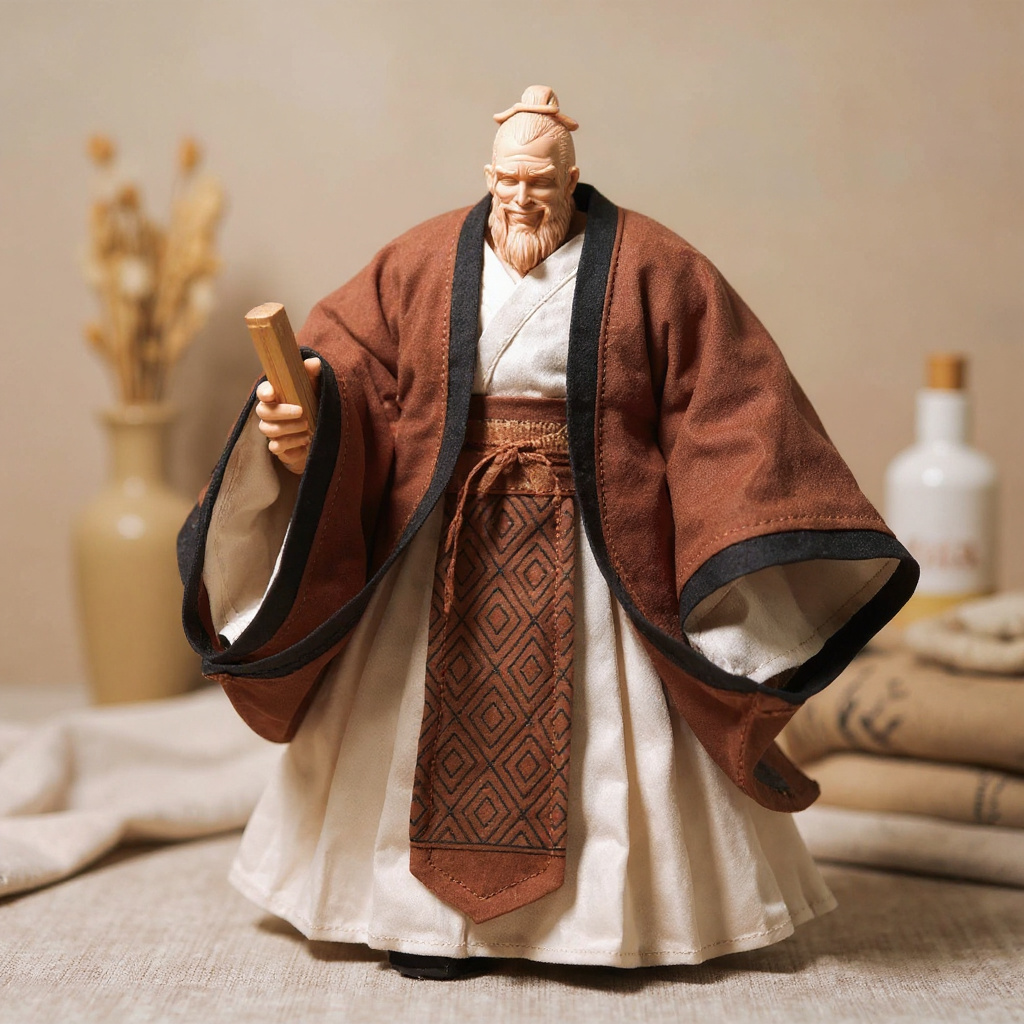
Handmade soft goods will have loose threads. It's not a defect. It's what happens when you sew fabric this small under this much tension.
Every stitch at 1/12 scale is under stress the moment the fabric flexes, especially around armholes and sleeve openings where the figure moves most. Some fraying is inevitable.
The real question: structural or cosmetic? Structural threads hold seams together — if those are loosening, you have an actual problem and should contact the seller. Cosmetic threads are just finishing touches. Trimming them changes nothing structurally.
I keep a pair of small fabric scissors in the same drawer as my head sculpt tools, because I've learned the hard way that hunting for scissors after noticing a stray thread means the thread grows before I find them. On my first Confucius build, I pulled a loose thread instead of cutting it and opened up two inches of sleeve seam. Lesson learned. Cut close to the fabric. Don't pull. Ever.
Some collectors add a drop of fabric glue to high-stress seams after purchase. Not required. Cheap insurance if you pose the figure often.
Scale-Accurate Historical Details Matter
Collectors obsess over historical accuracy because it's what separates a custom figure from a dressed-up toy. Getting it right at 1/12 scale is harder than at 1/6, not easier — smaller fabric hides fewer mistakes.
Traditional Chinese scholar robes carry specific construction elements: the cross-collar wrap that creates the signature neckline, wide sleeves built for contemplative gestures, a sash belt positioned at a precise height relative to torso length. These proportions were worked out for full-size human bodies centuries ago. Shrinking them to 7 inches while keeping the visual weight intact takes real pattern-making, not guesswork.
Thick fabric that reads correctly at 1/6 scale turns bulky and stiff at 1/12. Muted, scholarly colors that look right on a 12-inch figure can wash out on a smaller body under the same light. Even the stitching thread becomes part of the visible texture once you're viewing the piece up close, which most collectors do.
Confucius lived in a period when clothing signaled social rank and intellectual standing. Get the collar wrong, get the sash height wrong, and the illusion breaks before anyone even notices the face sculpt.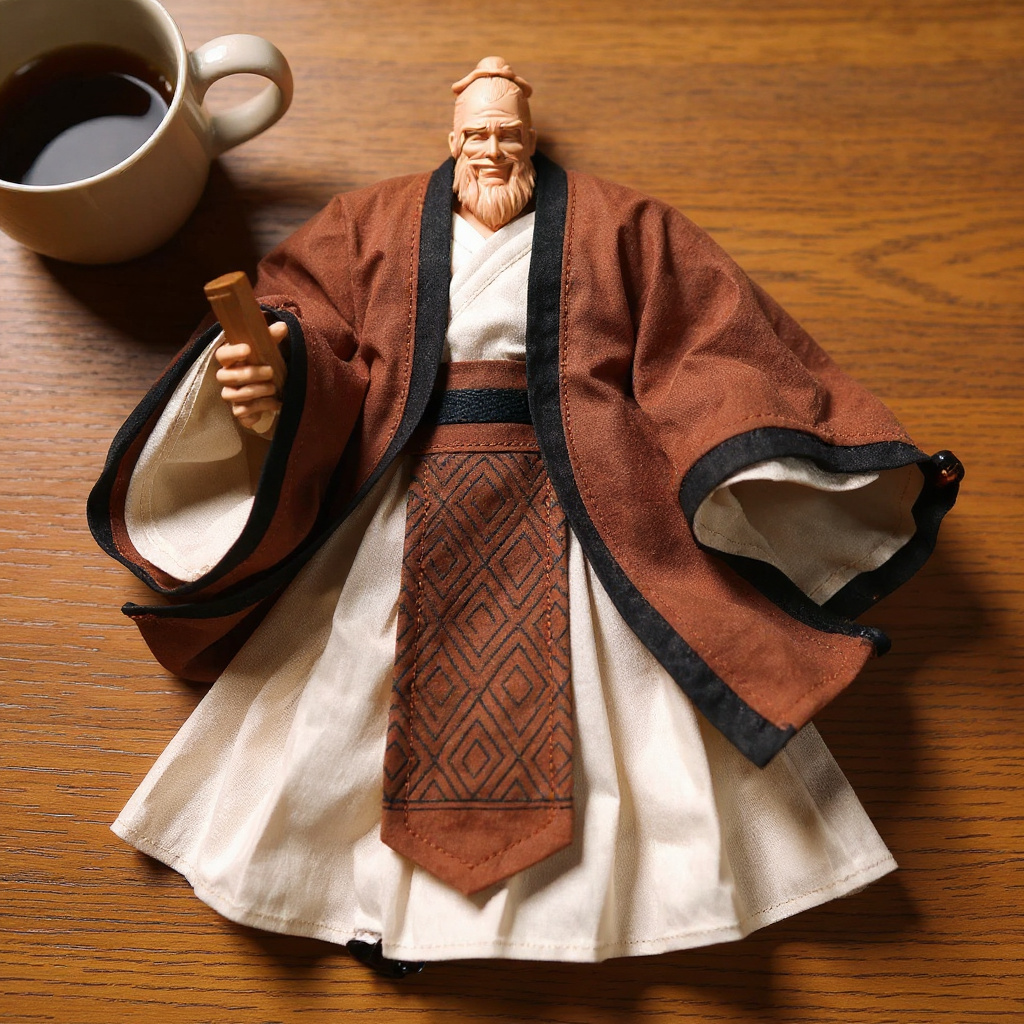
Buying Clothing Separately vs. Complete Figures
Most 1/12 scale soft goods sell separately from figure bodies. New collectors expecting a boxed action figure experience find this confusing at first.
The separation makes sense economically. Bodies are expensive to produce and have limited reuse across different characters. Clothing has broader appeal — a well-made robe works on multiple head sculpts.
It also gives customizers flexibility. The same Confucius robe suits other Chinese philosophers, scholars, or historical figures from a similar period without any resewing.
But buying separately means checking compatibility before you order. Body manufacturers use slightly different proportions even at nominally the same scale — a robe cut for Big Guy bodies may not fit a COOMODEL figure cleanly. Check the seller's compatibility list. If there isn't one, ask before buying. Returns on custom soft goods are rare to nonexistent.
Building Your Historical Scholar Figure
A convincing Confucius or similar historical build needs more than the robe.
Start with the right base body. Big Guy proportions suit dignified elder figures — the broader frame reads as gravitas rather than action-pose energy.
Head sculpt selection makes or breaks the project. Generic sculpts look toy-like. You want laugh lines, a thoughtful expression, some sense of age in the face.
Accessories finish the impression. A scroll, a writing brush, a small book scaled to 1/12 — these cost extra but they're what separates a custom build from a dressed-up action figure.
Posing matters more than people expect. Scholars don't stand in action poses. A slight forward lean, a contemplative hand position, eyes toward the middle distance — small choices, big payoff.
Display context reinforces the setting. A simple wooden desk or scroll rack goes a long way. The community discussions on r/onesixthscale turn up display ideas worth borrowing, and builders there have measured Big Guy shoulder widths independently and landed within a few millimeters of the numbers in our table above — which is reassuring if you're skeptical of manufacturer specs (you should be, a little).
What You're Actually Paying For
At $64, our Confucius set sits inside the $55–$90+ range typical for handmade 1/12 soft goods — not above it, not an outlier. Here's roughly where that money goes.
| Cost Category | Approx. Share | What It Covers |
|---|---|---|
| Fabric selection | 20% | Specialty materials that drape correctly at small scale |
| Construction time | 50% | Hand-sewing detail work machines can't replicate |
| Pattern development | 15% | Plus-size fitting tests for Big Guy bodies |
| Materials & margin | 15% | Thread, interfacing, wire, hardware, profit |
Fabric selection is a small slice but a picky one. Regular cotton is too thick at this scale. Silk alternatives cost more and behave properly, which is the whole point.
Construction time is the real expense. Hand-sewing garments this small takes patience most machines can't fake, and most sellers can't shortcut without it showing.
Pattern development is the piece most competitors skip. Fitting tests for Big Guy proportions take real iteration, not a single mockup.
Compare all this to mass-produced alternatives at $20–35. They skip pattern development, use cheaper fabric, and rely on machine construction wherever possible. The difference is visible from across the room, not just up close.
Honestly? If you're building a background character that'll sit on a shelf and never get posed or photographed close-up, the $20–35 version is fine. Save the $64 soft goods robe for 7-inch figure builds you actually plan to display as centerpieces.
FAQ: Soft Goods Robe for 7-Inch Figure Builds
What does 'soft goods' mean in action figure customizing? Soft goods means actual fabric clothing sewn for action figures, as opposed to painted or molded plastic clothing details. It includes real textiles — cotton, silk blends, synthetics — cut and sewn to fit specific figure body types. Why do some companies downgrade soft goods to printed fabric instead of real cloth? Cost and speed. Printed fabric on plastic costs roughly 80% less to produce and scales up for mass manufacturing. Real soft goods need individual sewing, which doesn't scale the same way. Why is wired fabric preferred over unwired robes for posing figures? Internal wire lets you shape sleeves and hems into a held pose. Without wire, fabric hangs straight down from gravity, which limits display options and makes dramatic gestures look flat. What's the difference between plus-size and standard robe patterns for Big Guy bodies? Plus-size patterns account for the broader chest and shoulders. Standard patterns pull tight across the torso and bind at the armholes. Sleeve proportions get adjusted too, not just the body width. How do custom builders deal with loose threads on handmade soft goods? Trim cosmetic threads with small fabric scissors — don't pull them. For structural threads affecting a seam, contact the seller. Some builders add a drop of fabric glue to high-stress areas as cheap insurance. Why do collectors care about scale-accurate details on scholar robes specifically? Accurate proportions separate a custom figure from a toy. Getting fabric weight, color saturation, and cross-collar construction right at 1/12 scale creates a believable historical character instead of a costume. Is 1/12 scale soft goods clothing sold separately from the figure body? Almost always, yes. This gives customizers flexibility to use one quality robe across different head sculpts. But you need to verify body compatibility before ordering — returns on custom clothing are rare. How do you build a custom historical scholar figure like Confucius? Start with an appropriate base body (Big Guy works well for elder characters), add a head sculpt with real character in the face, dress in period-accurate soft goods, and add scaled accessories like a scroll or brush. Posing and display context do the rest. Will a soft goods robe fit any 1/12 figure body, or just Big Guy? Just Big Guy, or bodies with equivalent chest and shoulder measurements. A robe pattern built for one body type will bind or gap on another — check the measurement table above before assuming compatibility. How long does a handmade soft goods robe actually last with regular posing? Expect years, not months, if you trim threads occasionally and avoid yanking the fabric during pose changes. Mine has survived roughly three years of repositioning without a seam failure, though the sleeve wire has loosened slightly from repeated bending.Is the Investment Worth It?
For builders working on historical or character-specific figures, quality soft goods separate amateur results from professional ones. That gap is visible in photos, not just in hand.
The $64 price point puts our Confucius robe set in the middle tier of the 1/12 soft goods market — handmade construction, plus-size patterning for Big Guy bodies, internal wire for posing. Nothing exotic. Just done properly.
Cheaper alternatives exist. They usually compromise on fit, fabric, or construction — pick one, sometimes all three. More expensive options chase museum-grade accuracy and price out casual collectors entirely.
If you're building one definitive Confucius figure meant for long-term display, the investment holds up. The clothing will outlast at least one body upgrade, maybe two.
For collectors who want an authentic-looking historical figure without hunting down separate components, browse our 1/12 Scale Confucius Robe Outfit built specifically for Big Guy body compatibility.

