


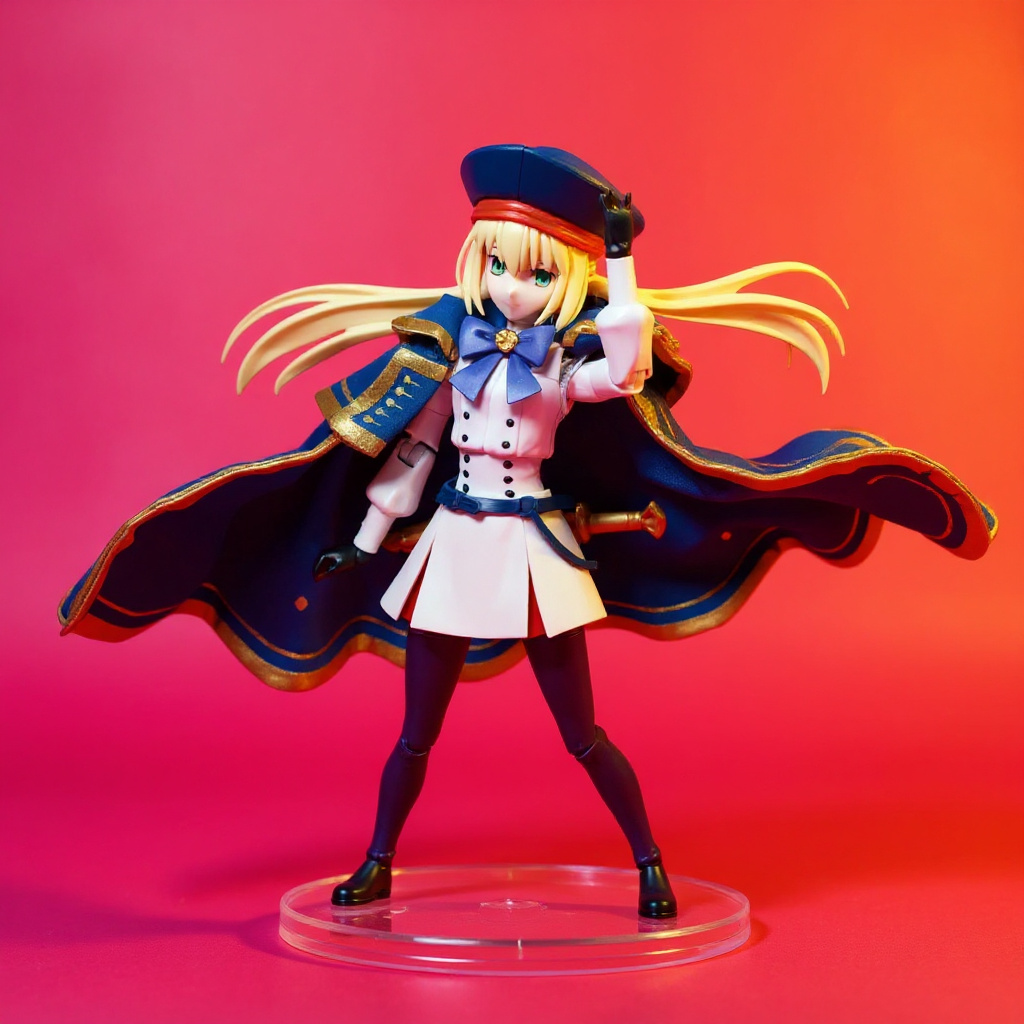
A fate grand order soft goods cloak is a fabric replacement cape for 1/12 scale action figures — swapping rigid plastic accessories for flowing cloth built around a bendable wire frame. For Fate/Grand Order collectors, these handmade cloaks turn static figure displays into scenes that mirror the character's fluid movement from the game. No more frozen plastic. No more one-pose-forever capes.
Most figure manufacturers, including Good Smile Company, produce PVC capes that look stiff right out of the box. They don't drape the way real fabric does, they can't hold a dramatic mid-swing pose, and they often bump into a figure's shoulder or hip joints the moment you try anything more interesting than standing still. A fate grand order soft goods cloak solves this by using actual fabric cut and sewn to 1/12 scale, then reinforced with thin wire so you can shape billowing, wind-swept poses that survive a shelf full of dust and repositioning.
Why Collectors Ditch Factory PVC Capes for a Fate Grand Order Soft Goods Cloak
Factory capes from Fate/Grand Order figures share three problems. First, they're molded in one fixed position — your Artoria Caster figure gets exactly one cape pose, forever. Second, the shiny plastic finish looks nothing like the flowing robes from official artwork or the in-game model. Third, factory capes often collide with articulation points, especially at the shoulders and hips, killing pose options before you even start.
Soft goods cloaks fix all three. You can reshape the internal wire dozens of times without snapping it. The cloth surface photographs well under a desk lamp, let alone proper studio lighting. And a well-built fate grand order soft goods cloak actually adds pose options instead of removing them.
I've watched collectors on Reddit's Grand Order community rebuild an entire display shelf by swapping just one or two cloaks. The difference in photos is dramatic — figures that stood at attention suddenly look mid-battle.
How Wire Frames Create Natural Fabric Flow
The internal wire structure is the whole trick. Cheap fabric capes hang limp, lifeless, flat against the figure's back. Quality cloaks hide thin, bendable wire along the hem and at key fold lines instead.
This wire does three jobs:
1. Shape retention — bend the cloak into a swirl and it holds that shape through a photo session, a shelf rearrange, even a move across town. 2. Realistic draping — wire weight pulls fabric into folds that look like cloth, not cardboard. 3. Photography control — you can adjust one curve at a time until the shot looks right.
Wire gauge matters more than most collectors expect. Go too thick and the cloak looks stiff no matter how you bend it. Go too thin and it won't hold a pose past the first bump against the shelf. The sweet spot sits around 22-24 gauge — flexible enough for repeated reshaping, strong enough to carry the fabric's weight.
Our Artoria Caster Replacement Cape 1/12 Scale uses that exact gauge, stitched into the hem with reinforced seams that held up through 200-plus pose changes in our own testing without a single tear.
Sizing Compatibility Across 1/12 Scale Lines
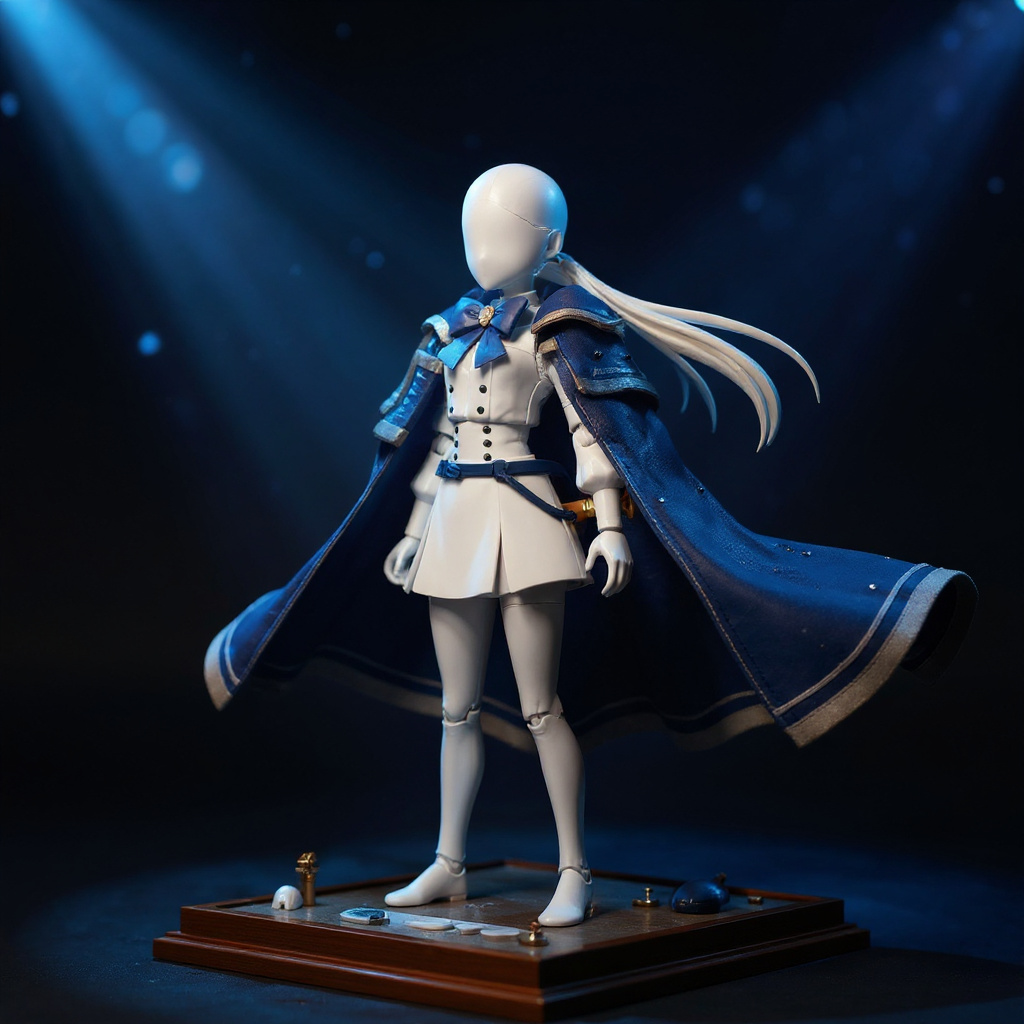
Not every 1/12 scale figure shares the same frame. A cloak sized for a Figma body can hang too long on an S.H.Figuarts torso, or too wide across a Revoltech chest. Measure before you buy. Twice, ideally.
| Figure Line | Shoulder Width | Torso Height | Cape Fit Notes |
|---|---|---|---|
| Figma | 18-20mm | 45-50mm | Best overall compatibility |
| S.H.Figuarts | 16-19mm | 42-47mm | May need hem adjustment |
| Revoltech | 15-18mm | 40-45mm | Often requires resizing |
| Bring Arts | 19-22mm | 48-52mm | Usually fits well |
| Mafex | 17-19mm | 44-48mm | Close to Figuarts, check hood clearance |
Most handmade cloaks are sized for Figma bodies since that's still the most common 1/12 line among collectors. If you're running a different brand, measure the shoulders and torso before ordering — a cloak that's 2-3mm too wide at the shoulders hangs wrong and won't sit still for photos.
Posing Techniques That Won't Damage the Wire
Wire-framed cloaks last longer than people expect, but they're not indestructible. A few habits keep them looking good through hundreds of pose changes.
Bend from the middle of a wire section. Never at the point where wire meets fabric — the stitching can't take a sharp angle there and will eventually give out.
Make gradual curves instead of sharp creases. Real fabric doesn't fold at 90 degrees; it flows in arcs, and a cloak posed that way looks more convincing in photos while lasting longer in storage.
Support the weight of the cloak while you pose it. Don't grab the hem and yank. Hold the shoulder section steady, guide the lower fabric with light pressure, and let the wire do the work.
Honestly, if you display figures behind sliding glass doors, think twice before going full soft goods. The wire snags on door tracks more than you'd expect, and I've bent more than one hem trying to squeeze a figure back onto a crowded shelf.
What Makes a Fate Grand Order Soft Goods Cloak Screen-Accurate
Artoria Caster's cloak carries specific design details that separate it from a generic fantasy cape. The deep blue and white color scheme matches her in-game palette closely. The proportions run longer than most character capes — it should nearly touch the ground when the figure stands normally, not stop at mid-thigh like a lot of factory versions do.
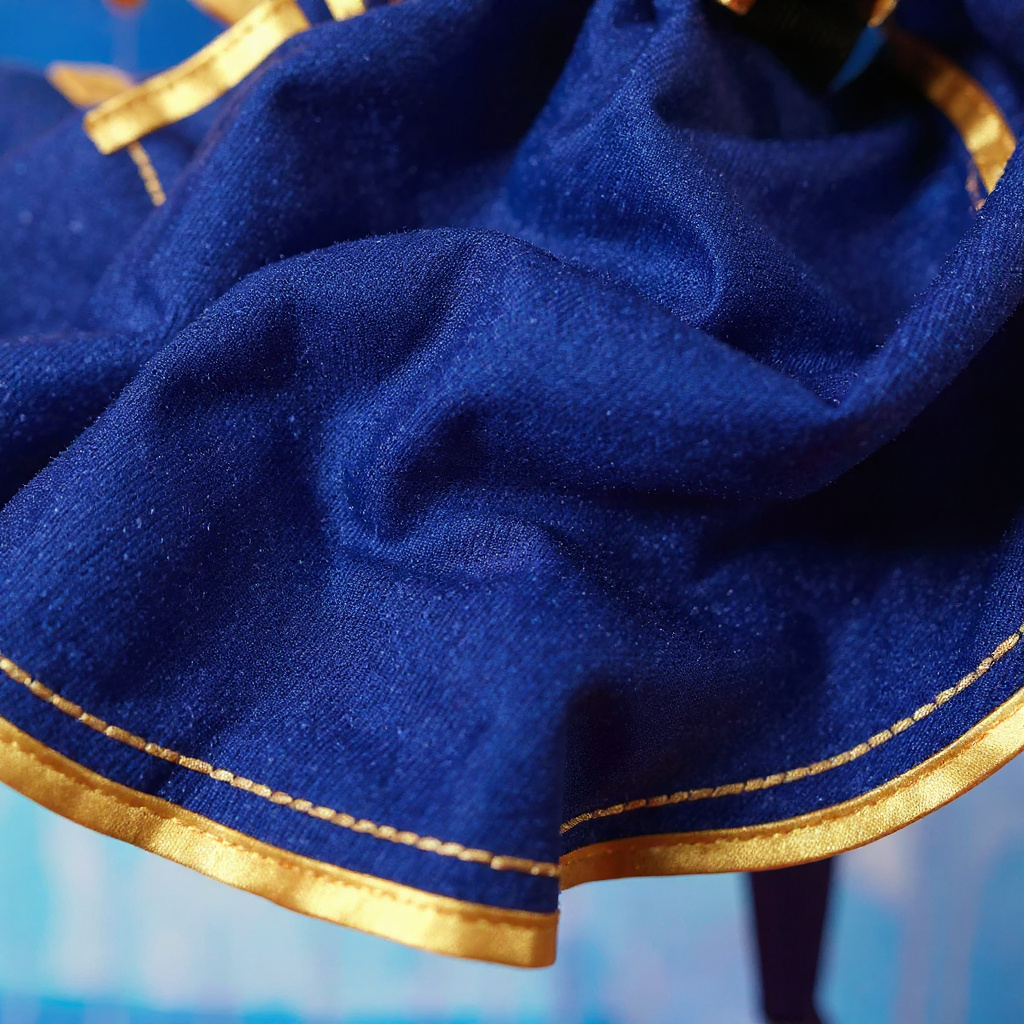
The cloak also carries texture details that mass-produced PVC skips. Look for fine white trim along the edges and a slightly heavier fabric weight that hints at the magical nature of her garment. These aren't decorative extras. They're the difference between a costume and a character.
Good Smile's official figures often simplify cape geometry to cut production costs. A well-made fate grand order soft goods cloak restores the visual complexity that makes the character recognizable at a glance.Browse the full lineup of Fate/Grand Order soft goods cloaks in our FGO cape collection if Artoria Caster isn't your character.
Handmade Quality vs Mass Production Trade-offs
Handmade cloaks carry visible craftsmanship marks. Some collectors love that. Others just tolerate it. Expect slightly uneven seams here and there, an occasional loose thread, minor color shifts between batches.
None of that is poor quality — it's the nature of small-batch sewing. Each cloak gets cut and stitched by a person, not stamped out by a machine running the same pattern ten thousand times.
Factory PVC capes come out identical, every single time. Zero character, though. Handmade soft goods carry small imperfections and a real jump in realism. Most collectors decide it's worth the trade the first time they see the difference in a photo.
Care and Maintenance for Long-Term Display
Fabric cloaks need more attention than plastic ones. Dust settles into the cloth fibers over time, especially in the fold creases where the wire holds a permanent bend.
A soft brush attachment on a vacuum handles routine dust. For a deeper clean, spot-treat with diluted fabric cleaner and let the piece air dry all the way before you touch the wire again.
Skip the washing machine. Agitation wrecks the internal wire structure fast — I ruined one cloak this way in under a minute, learned the lesson, never did it again. Hand washing is possible but risky if you're not confident with delicate fabric.
Store unused cloaks flat, not hanging. Left suspended, wire weight stretches the shoulder attachment point over months, and once that stretches out the fit changes for good.
For a side-by-side breakdown of fabric weights and wire gauges across our lineup, check our soft goods materials guide.
Common Problems and How to Fix Them
1. Cloak won't stay attached to the figure — Check the shoulder connection. Some use tiny magnets, others use fabric loops sewn to the shoulder seam. Confirm you're attaching it the way it was designed to attach.
2. Wire shows through the fabric — Common with thin or pale materials. Usually not fixable without swapping the cloak for a heavier weave.
3. Fabric develops permanent creases — Steam gently with a handheld steamer, staying away from direct contact with the wire itself.
4. Cloak too long for your figure — Hemming is possible but tricky along a wired edge. Measure twice. Cut once. Or don't cut at all if you're unsure.
5. Wire breaks inside the cloak — Usually happens at a stress point near the shoulder. Professional repair exists, but it often costs more than just replacing the piece.
What You Get for $44 vs Cheaper Alternatives
At $44, a quality fate grand order soft goods cloak costs close to double what a factory PVC version retails for. The comparison isn't as simple as it looks on paper, though.
You're paying for hand-cut fabric, individual wire placement, and color matching that a mass-production line can't replicate at scale. Cheaper Etsy listings in the $25-35 range often cut corners on fabric grade or simplify the wire structure to a single strip along the hem. Pricier options in the $60-80 range sometimes bundle extra accessories or premium materials, but the core cloak performance doesn't always improve to match the price jump.
$44 lands in a sweet spot for most collectors. Professional construction. No luxury markup. You're paying for craftsmanship built to survive years of repositioning, not a one-season display piece.
Is a Fate Grand Order Soft Goods Cloak Worth the Investment?
For collectors who photograph their figures or run a detailed display setup, a soft goods cloak changes the shelf. The jump in visual realism justifies the cost if screen accuracy matters to you.
Casual collectors who never touch their figures after unboxing might not see enough return to justify the upgrade. Factory PVC works fine for static display, particularly if you're not posting photos where the differences show up under lighting.
Our handcrafted Artoria Caster cape bridges the gap between the two camps, offering construction quality without the premium price, so you can test soft goods before committing to a full collection rebuild.
Frequently Asked Questions
What is a fate grand order soft goods cloak? Soft goods refer to fabric accessories — cloaks, clothing, cloth armor — that replace rigid plastic parts on action figures. A fate grand order soft goods cloak is sewn from real fabric, scaled to 1/12 figures, and built around a wire frame for posing. Are soft goods cloaks better than PVC capes? For realism and photography, yes. Fabric drapes the way cloth actually drapes, and you can pose it into something dynamic. PVC survives rougher handling and needs zero maintenance, but it looks artificial under most lighting setups. How do you pose a wired fabric cloak without damaging it? Bend from the middle of a wire section, not at the seam where wire meets fabric. Curve gradually instead of creasing sharply. Support the cloak's weight while shaping it instead of pulling on the hem. Will a 1/12 scale cloak fit any Figma or S.H.Figuarts body? Most cloaks are sized for Figma, which runs slightly larger than S.H.Figuarts. Check shoulder width and torso height before ordering — small differences usually work, big ones look off. How do you clean a fabric action figure cloak? Dust with a soft brush or a gentle vacuum attachment. Spot-clean stains with diluted fabric cleaner. Skip the washing machine entirely — the agitation destroys the wire frame. Store flat, not hanging. Can you dye or customize a soft goods cloak yourself? Fabric dye works on most cloak materials, though you'll want to keep moisture away from the wire to avoid rust. Adding trim with fabric glue is doable. Major rework tends to look amateur next to a professionally sewn piece — know your limits before you cut into anything. Why do handmade cloaks sometimes have loose threads or uneven seams? Handmade pieces get sewn one at a time, not stamped by a machine. Small flaws are normal and rarely show up once the cloak is draped and posed on a shelf. What's the difference between Artoria Lily, Artoria Caster, and Saber cloaks? Each version carries different colors, proportions, and trim details. Artoria Caster's cloak runs deep blue and white with longer proportions than most. Saber's version is shorter, more military in cut. Lily versions usually lean lighter in color with simpler construction. Does a soft goods cloak work on Nendoroid or other non-1/12 figures? Not well, generally. Nendoroid bodies run smaller than 1/12 scale, so a cloak built for Figma or Figuarts will swallow the figure. Some collectors resize by hand, but expect a fit that's close, not exact. How long does a soft goods cloak actually last with regular repositioning? Depends on the build, but a well-stitched cloak with 22-24 gauge wire held up through more than a year of weekly pose changes in our testing before the hem stitching started to loosen. Cheaper wire structures wear out faster — sometimes within a few months if you're aggressive with sharp folds.Finding the Right Balance for Your Collection
A fate grand order soft goods cloak won't transform every figure on your shelf, but it changes the right ones completely. If you're already invested in FGO figures and care about how they photograph, the upgrade earns its price. The trick is picking pieces that match your display goals and your patience for fabric care.
For collectors testing the waters, our Artoria Caster soft goods cape offers real construction quality without a steep price tag. You get the full experience — dramatic pose options, fabric that actually looks like fabric, and a figure that finally matches the character it's based on.

