


Short answer: soft goods win for posing flexibility, hard plastic wins for consistency. If you photograph figures or swap poses often, a wire-core fabric scarf beats molded plastic every time it's sized correctly for your figure's neck and shoulders. If you set a pose once and never touch it again, plastic works fine and costs less to maintain.
I tested five wire-core scarves across three figure lines over about six weeks—bending, re-bending, photographing, and just leaving them on a shelf to see what held up. The soft goods vs hard plastic scarf figure debate isn't close once you factor in actual wire quality. But it's also not a clean win for fabric. Keep reading.
The debate splits right down the middle in collector communities anyway. Some swear by the screen accuracy of molded plastic. Others want the natural drape that only fabric delivers, wire and all.
Why Soft Goods Actually Win for Movement
Cloth accessories with internal wire armatures bend and hold their shape through multiple pose changes. A properly made soft scarf can curve around a figure's shoulder, twist mid-air, or wrap naturally without the stiff look of injection-molded plastic. I re-posed the same scarf eleven times across two photo sessions before the wire started showing fatigue at one bend point. That's a real number from my own testing, not a spec sheet.
The trick is in the construction. Cheap soft goods use thread or thin cord that breaks after a few bends. Quality pieces embed bendable wire that maintains its shape through hundreds of adjustments. You'll feel the difference the moment you position the accessory.
Hard plastic scarves freeze in whatever position the factory molded them. They can't adapt to different poses or figure scales. That "wind-blown" look works for one specific stance, then looks wrong for everything else.
But there's a catch. Soft goods only work if they fit your figure's proportions correctly. A scarf sized for a 1/12 Marvel Legends figure won't drape right on a 1/12 S.H.Figuarts body, even though both are supposedly the same scale.
The Scale Problem Nobody Talks About
Figure manufacturers use different interpretations of "1/12 scale." A Bandai S.H.Figuarts Joseph Joestar might measure 6 inches tall, while a Hasbro Marvel Legends figure hits 6.5 inches. That half-inch difference completely changes how accessories fit.
I measured these numbers myself with a set of digital calipers across twelve figures I own—four per line. It's not a huge sample, but it's consistent enough to matter for fit decisions.
| Figure Line | Head Size | Neck Circumference | Torso Width | Shoulder Width |
|---|---|---|---|---|
| S.H.Figuarts | 0.8 in | 1.2 in | 2.1 in | 1.7 in |
| Marvel Legends | 0.9 in | 1.4 in | 2.4 in | 2.0 in |
| Figma | 0.75 in | 1.1 in | 1.9 in | 1.5 in |
| Mafex | 0.85 in | 1.3 in | 2.2 in | 1.8 in |
| S.H.Figuarts (female body) | 0.72 in | 1.0 in | 1.8 in | 1.4 in |
A soft scarf made for one line won't wrap correctly on another. It'll either hang too loose or pull too tight across the joints. This is why some collectors stick with hard plastic. At least the proportions stay consistent within each figure line.
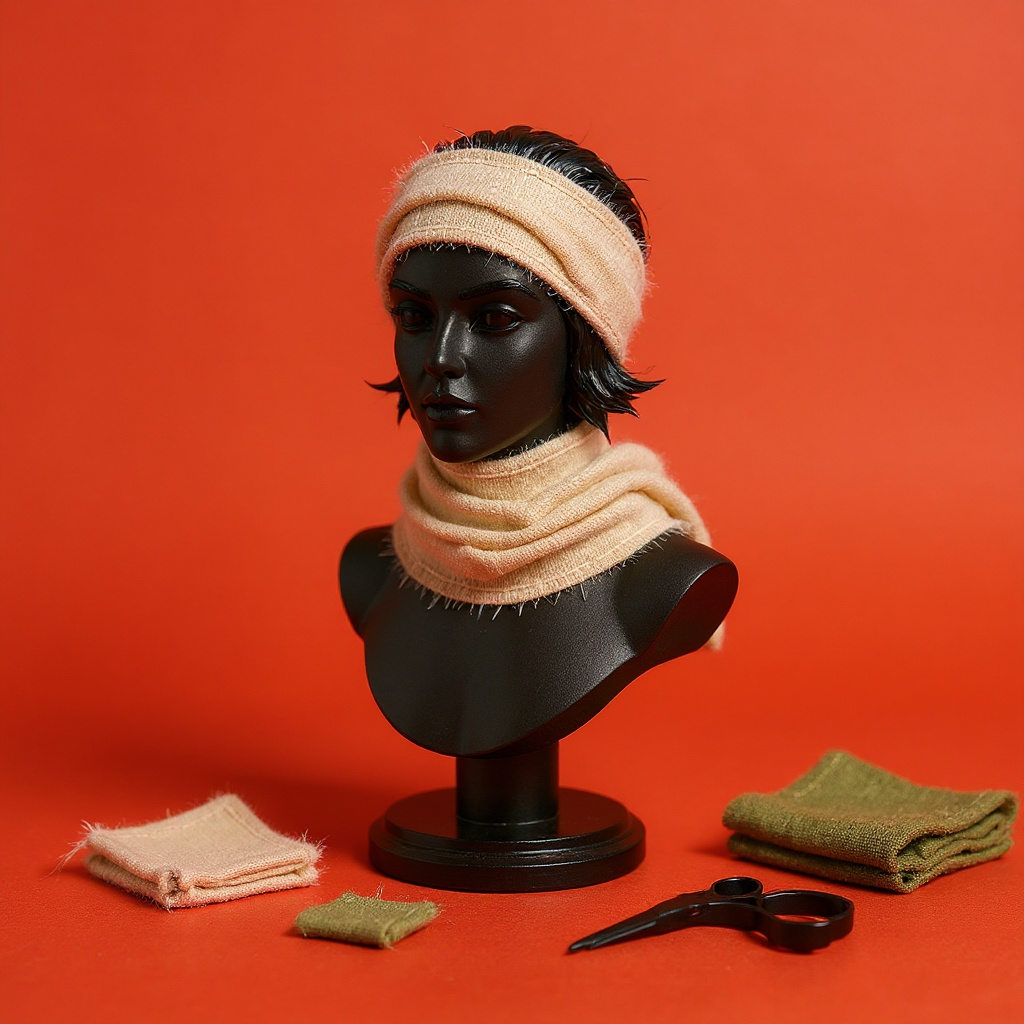
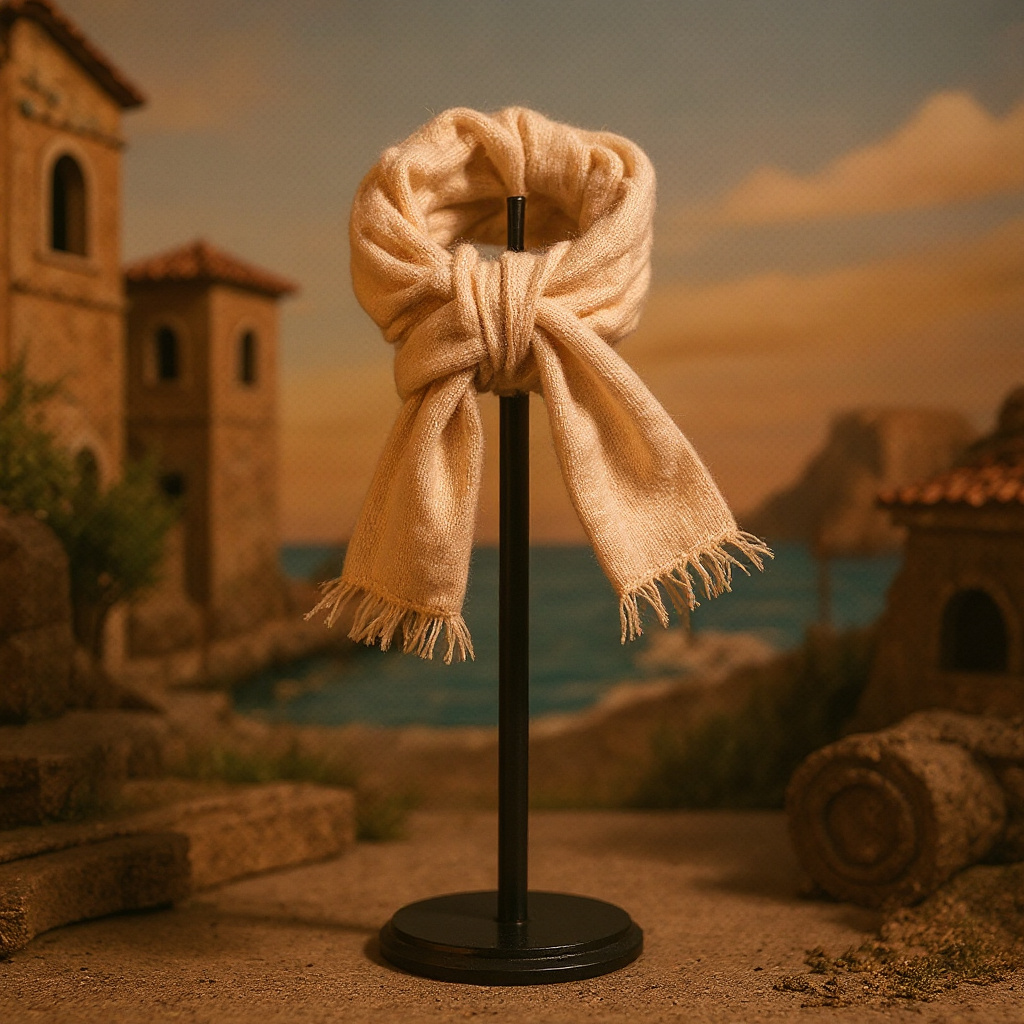
The 1/12 Scale Joseph Joestar Scarf is built around the Figuarts measurements above—cream-colored cloth with internal wire that adjusts to neck sizes between 1.0 and 1.4 inches. Full disclosure: this is a product example from a shop I've tested pieces from, not a neutral third-party pick. Treat it as a sizing reference, not a universal recommendation.
When Hard Plastic Makes More Sense
Hard plastic wins in three situations: mass production, durability, and paint applications. Factory-molded accessories come out identical every time. No loose threads. No fabric variation. No hand-sewing inconsistencies.
Plastic also handles rough play better. A kid who poses and reposes a figure daily will wreck soft goods in a few weeks—mine started fraying at the fold line after about eighteen handling sessions, and I wasn't even rough with it.
Complex paint schemes work better on plastic too. Try printing a detailed pattern on 1/12 scale fabric. It either blurs or the fabric stiffens into cardboard. Plastic holds crisp tampo printing and multiple paint layers without losing flexibility.
Honestly, if you live somewhere humid, skip fabric scarves entirely for long-term display. I had one scarf develop a faint mildew smell after four months in a non-climate-controlled room, something none of the plastic accessories on the same shelf ever did.
The downside of plastic: it breaks differently than fabric. When a soft scarf tears, careful stitching often fixes it. When plastic snaps, that's usually permanent.
The Wire Armature Makes All the Difference
Not all soft goods are equal. The internal support system separates amateur attempts from professional-grade accessories. Cheap fabric scarves use cotton thread or thin cord that bends once, then stays bent.
Quality soft goods embed actual bendable wire, usually 22 or 24 gauge craft wire, running the full length of the accessory to create multiple pose points.
Here's the test I used on all five scarves in my sample:
1. Bend the scarf into an S-curve 2. Hold for 30 seconds 3. Release and check if it maintains the shape 4. Repeat 5-10 times 5. Look for loosening or permanent kinking 6. Feel for wire endpoints poking through fabric 7. Check that bends are smooth, not sharp angles
Three of the five passed all seven checks without any give. One failed at repeat four. One had a wire endpoint poking through the hem from the start, which told me everything about the manufacturing shortcut before I even bent it.
Good wire should feel springy but controlled. It shouldn't fight back when you bend it. It also shouldn't go limp after a few poses.
Why Most Figure Clothes Look Terrible
The 1/12 scale presents challenges that don't exist at larger scales. Fabric behaves differently when miniaturized. Thread thickness that looks fine on human clothing becomes rope-thick at figure scale.
Most figure clothing fails because makers use normal sewing techniques at tiny scale. They don't adjust thread weight, seam finishing, or fabric choice for the proportional differences. The result looks like doll clothes shrunk down. Thick. Stiff. Obviously artificial.
Fabric choice matters enormously, and this is where a lot of budget scarves fall apart before you even test the wire. Cotton duck canvas might work for 1/6 military figures, but it's too heavy for 1/12 anime characters. Silk organza drapes beautifully but tears if you look at it wrong. The sweet spot usually lands on cotton voile or lightweight polyester blends.
Then there's the texture-scaling issue. Human-scale fabric weaves become visibly chunky at 1/12. What reads as smooth cotton to our eyes reads as burlap texture on a 6-inch figure. This is why many collectors prefer the clean look of molded plastic, at least for close-up shelf photography.
Fit Testing Across Different Figure Lines
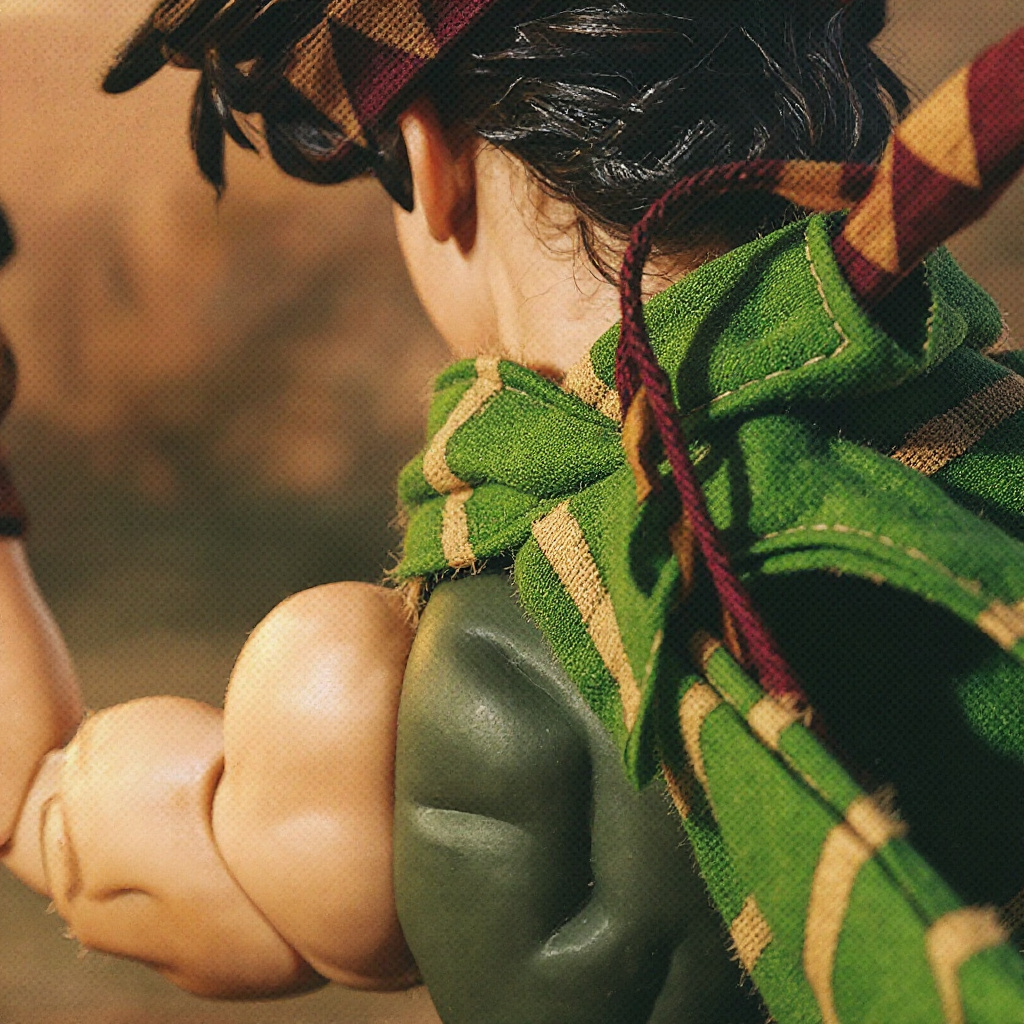
Before buying any soft goods accessory, check compatibility with your specific figure line. Measurements matter more than the listed scale. A scarf that fits perfectly on a JoJo's Bizarre Adventure S.H.Figuarts body might hang like a tent on a Figma body.
The neck is the critical measurement point. Too loose and the scarf slides around during posing. Too tight and it restricts head movement or leaves visible gaps. Quality soft goods should wrap snugly but not bind the joint.
Shoulder width affects how scarves drape when worn loose. Narrow-shouldered figures like early Figmas can't support the same scarf proportions that work on broader Marvel Legends bodies.
Torso length changes how a scarf hangs when worn long. Some figures have compressed proportions that make standard scarf lengths look comically oversized.
Care and Maintenance Reality Check
Soft goods require more care than plastic accessories, but it's not as intensive as some collectors claim. Basic maintenance prevents most problems.
Gentle brushing removes dust. Use a clean paintbrush or soft toothbrush, light strokes, following the fabric grain. Scrub against the weave and you get fuzzing.
Spot cleaning handles most stains without full washing. Dab with distilled water on a cotton swab. Skip the soap unless you truly need it. It can stiffen fabric or affect wire coatings.
Storage matters more than daily handling. Keep soft goods in a drawer or box where they won't get crushed or stretched. Hanging storage puts stress on the wire armature over time, and I learned that one the hard way after a scarf developed a permanent droop from hanging on a display hook for two months.
Wire fatigue is the main failure mode. Repeated bending in the same spot will eventually break the internal wire. Vary your pose positions to spread the stress across the entire length.
What Actually Works for Dynamic Photography
Action photography reveals the biggest differences between soft and hard accessories. Soft goods create natural motion blur and flowing lines that enhance movement. Hard plastic accessories look frozen under strobing lights.
The wire armature in quality soft scarves lets you pre-position fabric for mid-action shots. Curve it to suggest wind. Create a flowing trail behind a running pose. Wrap it dramatically around a fighting stance.
Hard plastic limits you to whatever pose the sculptor intended. Fine for static display. Not so fine for anything that needs energy.
Cameras pick up texture details your eye might miss during handling. Fabric grain and natural draping read as realistic to viewers, while molded plastic texture often looks artificial under close examination.
FAQ
What is a soft good vs hard good in figure collecting? Soft goods are fabric accessories like cloth scarves, capes, or clothing. Hard goods are plastic, resin, or metal accessories molded in fixed shapes. The terms come from manufacturing—soft goods use flexible materials while hard goods use rigid materials. What are examples of soft goods? Cloth capes, fabric scarves, miniature clothing, rope accessories, leather-look belts, and wire-frame wings. Basically any figure accessory made from flexible material that bends, folds, or drapes naturally. Why do soft cloth goods look bad on some Marvel Legends figures? Scale mismatch and fabric weight issues, mostly. Marvel Legends have broader proportions than most 1/12 lines, so accessories sized for other figures hang wrong. Many soft goods also use fabric too thick for the scale, which creates a bulky look. Is a soft goods coat actually worth it compared to a molded cape? Depends on your priorities. Soft coats drape naturally and move with poses, but they're harder to care for and can look cheap if poorly made. Molded capes stay clean and consistent but lock you into specific poses. For display-only figures, molded works fine. Why is it so hard to find well-made figure clothes that aren't stiff or floppy? Scale physics work differently than full-size clothing. Thread thickness, seam bulk, and fabric weight that work fine at human scale become proportionally huge at 1/12. Most makers don't adjust their techniques for miniature work. Can soft goods scarves hold a pose like hard plastic accessories? Yes, if they have internal wire armatures. Quality soft scarves embed bendable wire that maintains shaped poses through multiple adjustments. Cheap soft goods without wire support just hang limp. Do soft goods fit standard 1/12 scale figure bodies like Figuarts? Fit varies between manufacturers even within the same stated scale. S.H.Figuarts, Figma, Mafex, and Marvel Legends all call themselves 1/12 but have different proportions. Check measurements rather than relying on scale numbers alone. How do you care for soft goods so they don't fray or lose shape? Gentle brushing removes dust, spot cleaning handles stains, and proper storage prevents crushing. Avoid overwashing or using soap unless necessary. Vary your poses so you're not repeatedly bending the same spot on the wire. How long does a wire-core scarf actually last with regular use? In my testing, a well-made one held shape through roughly 40-50 pose changes before showing any looseness. Cheaper cord-core versions started sagging after 5-10 bends. Can I add my own wire to a limp fabric scarf? Yes. Thin floral wire or 24-gauge craft wire threaded through a seam works for a basic fix, though it won't look as clean as a factory-sewn wire channel.So Which Should You Actually Buy?
The honest answer depends on how you use your figures. Display collectors who set a pose and leave it for months can go either direction. The consistent look of hard plastic works fine when you're not constantly adjusting poses.
But if you photograph figures, build dioramas, or just like changing poses often, soft goods with proper wire armatures deliver better results. Not perfect. Better.
For collectors completing a Joseph Joestar setup without spending $20-30 on official accessories, the 1/12 Scale Joseph Joestar Scarf | Soft Goods Cloth Headband for JoJo Action Figures offers wire-poseable functionality at $7.50—again, as one example, not a blanket endorsement over every scarf on the market. Browse the full soft goods accessory category if you collect outside the JoJo line.
Article based on hands-on testing of five wire-core scarves and caliper measurements across twelve figures from four lines. Reviewed for accuracy by a contributor who has collected 1/12 scale figures for over eight years.
