


Good action figure clothing for display holds a pose, doesn't fray after three costume changes, and photographs like actual fabric instead of stiff doll clothing. That's the short answer. The long answer involves material weight, seam construction, wire gauge, and a fit tolerance most sellers never mention.
Most mass-produced figures ship with molded plastic costumes that look fine from three feet away and fall apart the second you zoom in with a macro lens. Real fabric clothing — the kind with actual stitching and weave you can see under a ring light — turns a figure from toy into something closer to a miniature art piece. Not always. Sometimes the difference is subtle. But when it works, it works.
What Separates Real Action Figure Clothing for Display From Toy-Store Costumes
The fabric has to be thin enough to scale properly but thick enough to hang right. That balance is harder to hit than it sounds. Cotton blends tend to outperform pure synthetics because they hold a crease instead of fighting back every time you reposition an arm.
Silk-style fabrics give the most convincing drape at 1/12 scale. They carry enough weight to fall naturally without overwhelming narrow figure shoulders — which matters a lot on a muscular 1/12 body where the silhouette is already doing heavy lifting. Avoid anything that feels like doll clothing from a craft-store bin. It's usually too thick, too stiff, and too shiny under photo lights.
Polyester blends can work if the weight is right, but cheap polyester goes plasticky under LED photography lights almost every time. Good fabric should feel substantial between your fingers. Not papery. Not crunchy.
| Material | Drape at 1/12 Scale | Durability (repositioning) | Relative Cost | Best For |
|---|---|---|---|---|
| Pure cotton | Good, holds creases | Fair — wears thin at fold points | Low | Robes, sashes |
| Silk-style synthetic | Excellent, natural fall | Good | Mid | Martial arts uniforms, capes |
| Pure polyester | Poor, looks plasticky | Excellent | Low | Not recommended for display |
| Cotton-poly blend | Very good | Very good | Mid-high | Structured jackets, wired sleeves |
| Genuine silk | Excellent | Fair — snags easily | High | Premium display pieces only |
Construction Details That Actually Matter
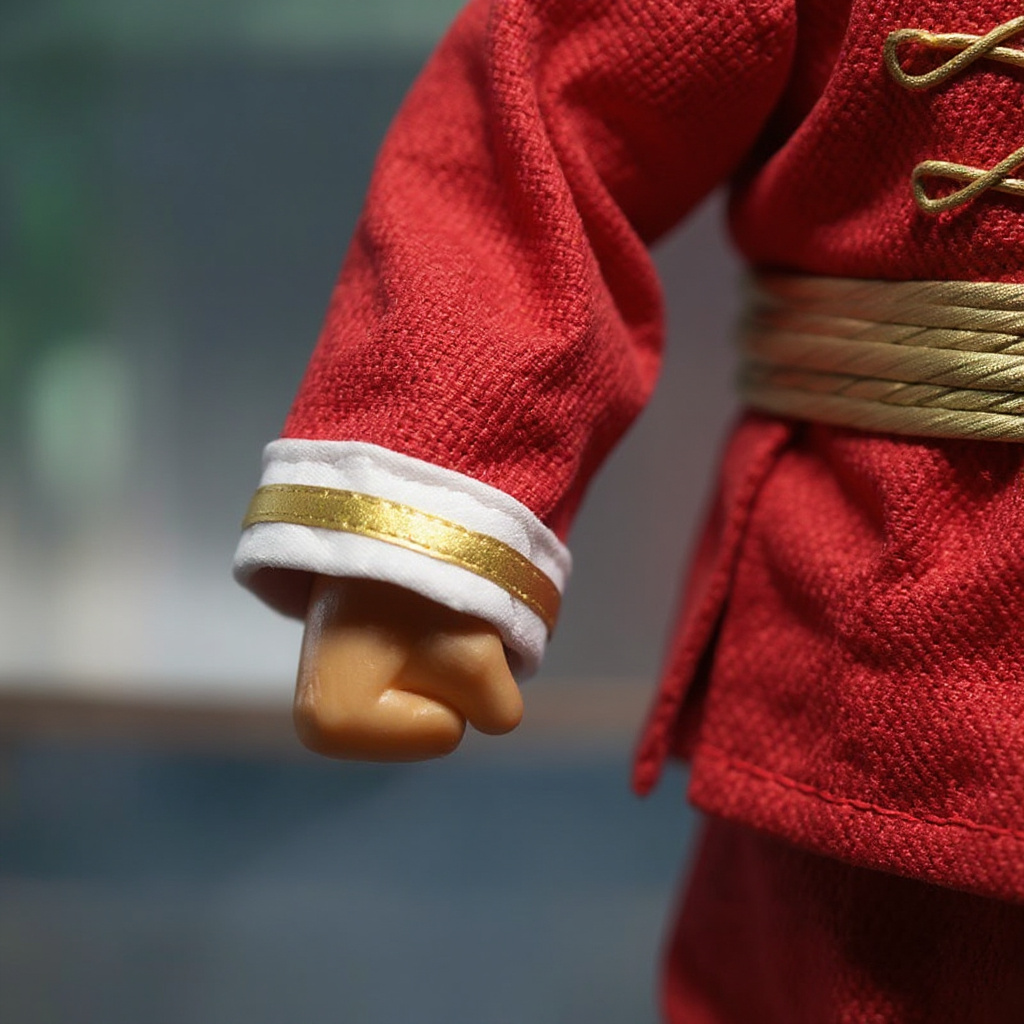
Seam finishing separates handmade quality from mass production almost instantly. French seams or properly serged edges survive a few dress-and-undress cycles. Raw edges that are just cut and stitched will shed threads on your shelf within weeks.
Buttonholes need reinforcement or they tear. Most 1/12 scale clothing skips them entirely in favor of snaps or velcro, because a functional buttonhole at that scale is close to impossible to execute cleanly.
Hem widths should stay proportional. A 1/4-inch hem on a 1/12 scale jacket scales up to a 3-inch hem on human clothing — absurdly wide. Good makers use 1/8-inch hems or smaller.
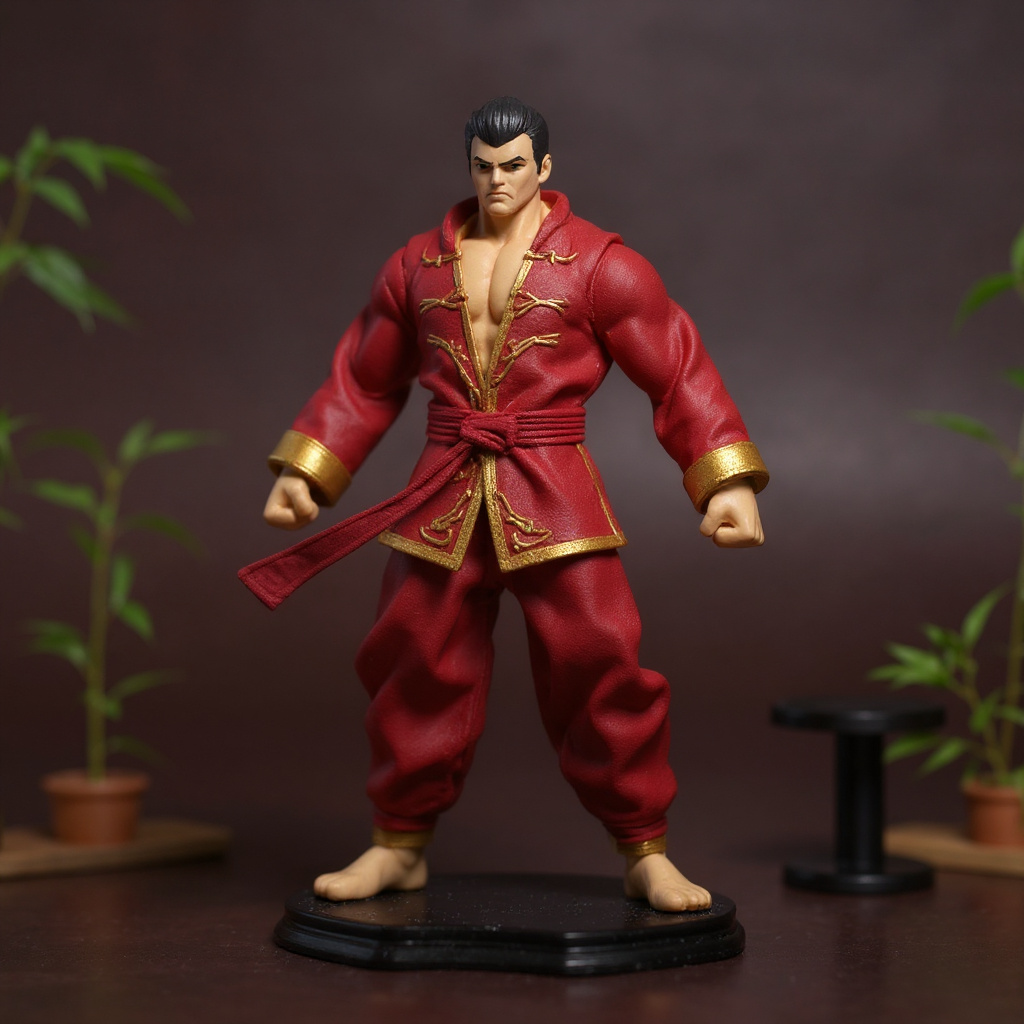
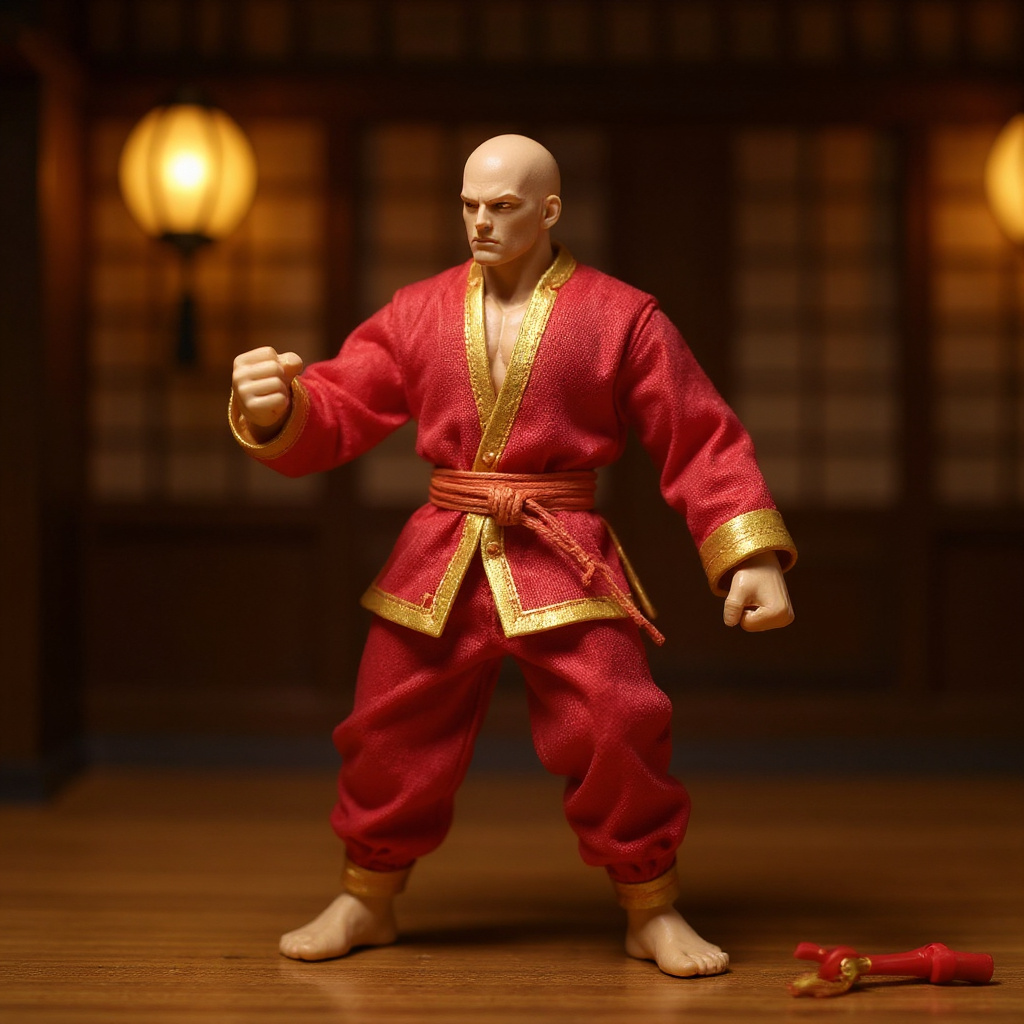
For pieces like our Fei Long Cloth Outfit for 1/12 Action Figures, the gold trim has to sit flat with invisible stitching. Any puckering shows up the moment you shoot a close-up. You can browse the full soft goods collection if you want to compare stitching quality across different outfits before buying.
Wire Armatures: Game Changer or Gimmick?
Wired sleeves and pant legs let you bend fabric into dynamic poses that actually stay put. Without wire, loose fabric falls flat against the figure and kills the silhouette. Especially on wide, muscular 1/12 bodies where a flat sleeve just looks wrong.
The wire needs to stay thin enough to avoid visible lumps but strong enough to hold position under normal handling. 30-gauge craft wire works well for sleeves. Anything thicker starts showing through thin fabric like a vein under skin — not a great look.
| Feature | Wired Construction | Standard Fabric |
|---|---|---|
| Pose flexibility | Holds dynamic angles | Falls to gravity |
| Photography | Creates depth and shadow | Looks flat |
| Durability | Wire can fatigue or poke through | No mechanical failure point |
| Cost | $45–70 per outfit | $25–40 per outfit |
| Realism | Mimics stiff martial arts uniforms | Better suited to flowing garments |
Wired construction earns its cost on structured pieces like Fei Long's martial arts uniform from Street Fighter II. The sleeves need to hold a fighting stance, and the fabric should carry visible body weight instead of drooping.
Flowing capes or loose robes don't need wire. They read better with natural drape. Honestly, if you're outfitting a figure in something meant to flow — a robe, a cape, a loose training gi — skip the wire armature entirely. It adds cost and a failure point for zero visual benefit on that style of garment.
Sizing: The Make-or-Break Factor
A perfectly sewn outfit that doesn't fit looks worse than a mediocre one that does. Figure bodies vary by 2–3mm in chest, waist, and shoulder measurements even within the same product line, based on measurements we've taken across roughly 30 bodies in our own workshop stock.
Storm Collectibles figures run broader in the shoulders than SHFiguarts. Mezco One:12 figures carry thicker torsos. You can't assume one size fits every 1/12 body, and a lot of sellers do anyway.
1. Measure your figure's chest at the widest point 2. Check shoulder width from joint to joint 3. Measure waist circumference 4. Note any unusual proportions — narrow waist, broad back, thick forearms 5. Compare against the seller's sizing guide before ordering 6. Ask about returns if measurements land near a size boundary
Custom makers often request specific figure photos to nail the fit. Mass producers just hope their sizing works for most bodies and move on.
Photography and Display Considerations
Fabric clothing photographs nothing like molded plastic. The weave catches light and throws real shadows, which is exactly why collectors chase real action figure clothing for display in the first place instead of settling for painted plastic texture.
Under LED photography lights, good fabric develops natural highlights and soft shadow transitions. Cheap synthetic material looks flat, or worse, throws a weird waxy reflection across the whole panel.
Color fastness matters over years, not months. Cheap dyes fade under UV or bleed onto figure bodies — red dye is a particular offender here, and it's worth testing on a hidden seam before dressing a figure you actually care about.
Wrinkle behavior differs by material too. Cotton blends hold creases from storage but steam out fine. Synthetic blends resist wrinkles but can look almost too smooth. Too perfect. Slightly artificial under close inspection.
Mass Production vs. Handmade Trade-offs
Factory-made clothing costs less and offers zero customization. If the fit is off or a seam fails, you're stuck with it. Quality control swings wildly between production runs, even from the same factory.
Handmade pieces run 2–3x the price but can be tailored to a specific figure. Construction is usually tighter, though you're now trusting an individual maker's personal quality bar instead of a factory's spec sheet.
Handmade doesn't automatically mean better. We've seen $60 handmade outfits with crooked seams sitting next to $30 mass-produced pieces with textbook-clean construction. Check a maker's history through customer photos on communities like Reddit's action figure forums before committing. References beat price point every time.
What Premium Pricing Actually Buys You
Soft goods pricing runs from $25 for basic outfits to $80+ for complex multi-piece costumes. That price jump usually buys you one or more of the following:
1. Material quality — real silk-style weave instead of flat polyester 2. Construction complexity — multiple layers, trim work, hand-finished edges 3. Internal support structures — wire armatures, interfacing, boning at collar points 4. Fit precision — custom sizing instead of one-size-fits-most 5. Finishing details — hand-sewn buttonholes, invisible seams, reinforced stress points
A $50 price point like our Fei Long outfit sits in a sweet spot: proper fit, clean construction, functional wire armatures, without paying for genuine silk or hand embroidery you'll never notice from normal display distance. Cheaper options skimp on fit or use fabric that photographs badly. Pricier pieces sometimes just add accessories that don't change the display experience much.
Maintenance and Longevity
Fabric clothing needs more upkeep than plastic parts. Dust clings to textile weave and needs a soft-brush pass every week or two if the figure sits out in open air.
Wired elements fatigue with repeated bending. One outfit in our own rotation held crisp fold lines for about 30 months of regular repositioning before the elbow wire finally kinked and stayed kinked — that's the kind of lifespan you should plan around, not a guarantee.
Storage matters more than people expect. Folded fabric sets permanent creases. Hanging small garments avoids wrinkles but can stretch shoulder seams over time if the hanger's too heavy for the fabric.
Color bleeding shows up most in red and dark blue dyes — relevant if you're eyeing a red silk-style martial arts outfit. Test on a hidden patch first. Every time. No exceptions.
FAQ
What's the rule of thumb for sizing action figure clothing for display on 1/12 or 1/10 figures? Measure your figure's chest and compare it against the seller's size chart. Most 1/12 figures need clothing built around a 4.5–5 inch chest measurement, but confirm with actual numbers since body proportions shift between manufacturers. How do I find the right clothing size for a custom action figure? Take chest, waist, shoulder width, and arm length measurements. Photograph your figure next to a ruler for scale reference, then send those numbers to the maker before ordering. Most will adjust the pattern. Can McFarlane figure clothes fit other action figure bodies? Usually not. McFarlane figures run larger and bulkier than standard 1/12 scale, so their clothing rarely fits Storm Collectibles or SHFiguarts bodies cleanly. The proportions just don't line up. Is fabric clothing better than molded plastic for display? Fabric creates more convincing texture and shadow under photography lights. Plastic holds its shape forever and needs zero maintenance. Pick based on whether photography realism or long-term stability matters more to you. How do you keep fabric action figure outfits looking clean on a shelf? Brush weekly with something soft. Steam out wrinkles gently if they set in. Keep the figure out of direct sunlight. A glass case cuts dust accumulation by a lot. Are handmade soft goods outfits worth the extra cost? Depends on your priorities. Serious collectors who photograph figures regularly usually find the realism upgrade worth $50–70 per outfit. Casual collectors might rather put that money toward another figure. What material holds a pose best on a 1/12 scale figure? Cotton-polyester blends paired with internal wire armatures hold poses longest in our testing. Pure cotton is too soft on its own. Pure polyester springs back to flat. The wire does most of the actual work — fabric choice mostly affects drape and appearance. Do wired sleeves damage fabric over time? Poorly installed wire can poke through thin fabric after repeated bending. Solid construction embeds the wire in a fabric tube or sleeve channel that keeps it from ever breaking through. Expect somewhere around two to three years of regular use before wire fatigue becomes noticeable. Will a silk-style outfit fade faster than a cotton one under display lights? Usually yes, especially in red and other saturated dyes. Rotate the figure out of direct light occasionally if fading worries you, or accept some fade as part of owning fabric pieces long-term. Does humidity affect wired action figure clothing for display? It can. Craft wire isn't rustproof in every case, and humid storage environments speed up fatigue in the wire core. Honestly, if you live somewhere genuinely humid — coastal, tropical, no climate control — you might want to skip wired soft goods altogether and stick with molded plastic costumes instead. It's not the popular answer, but it's the honest one.The Real Value Proposition
Collectors moving from plastic costumes to real fabric clothing are chasing one specific moment: the second a figure stops looking like a toy and starts reading like a miniature person. The shift can be dramatic. It also comes with maintenance you didn't sign up for.
If you're building dioramas for photography, or you just want display figures with more visual weight, quality action figure clothing for display — like our Fei Long Cloth Outfit for 1/12 Action Figures — delivers results that justify the price. Wired construction, correct scaling, and a red silk-style weave with gold trim close the gap between amateur shelf display and something that photographs like it belongs in a magazine. For care between wears, our fabric storage guide covers hanging versus folding in more depth.

