


If you're hunting for the right 1/18 scale doll cape material, the short answer is a cotton-polyester blend paired with 22-gauge wire along the hem. The longer answer — the one that actually matters once you're trying to get a cape to hold a dramatic swept pose on a 10cm figure — takes a bit more explaining. Scale changes everything about how fabric behaves, and most guides skip that part entirely.
Most mass-produced action figure capes fail for one of two reasons. Too stiff. Too plastic-looking. Too obviously mass-produced. Or the opposite problem: fabric so limp it collapses the second you try a flowing pose. The sweet spot lives in the overlap of fabric weight, wire placement, and scale-appropriate thickness — and that overlap is narrower than you'd expect.
Why 1/18 Scale Doll Cape Material Behaves Differently Than Larger Scales
A fabric that drapes beautifully on a 12-inch figure can look like a bedsheet pinned to a doorknob at 4 inches. Scale isn't a simple size reduction; the physics of drape don't shrink proportionally with the figure.
Cotton-polyester blends work because they have memory. Pure cotton goes limp within a day of handling. Pure polyester looks like a shower curtain under camera lights. A 60/40 or 70/30 blend gives you drape with just enough synthetic fiber to spring back after you pose it, fold it, or accidentally sit your cat on it.
Fabric weight matters more than most people assume before they've ruined a first attempt. For 1/18 figures — around 4 inches tall — aim for 4 to 6 oz per square yard. Go heavier and the cape drags the figure's shoulders down, sometimes enough to tip a lightly-based figure backward. Go lighter and the cape won't hold any shape at all, wire or no wire.
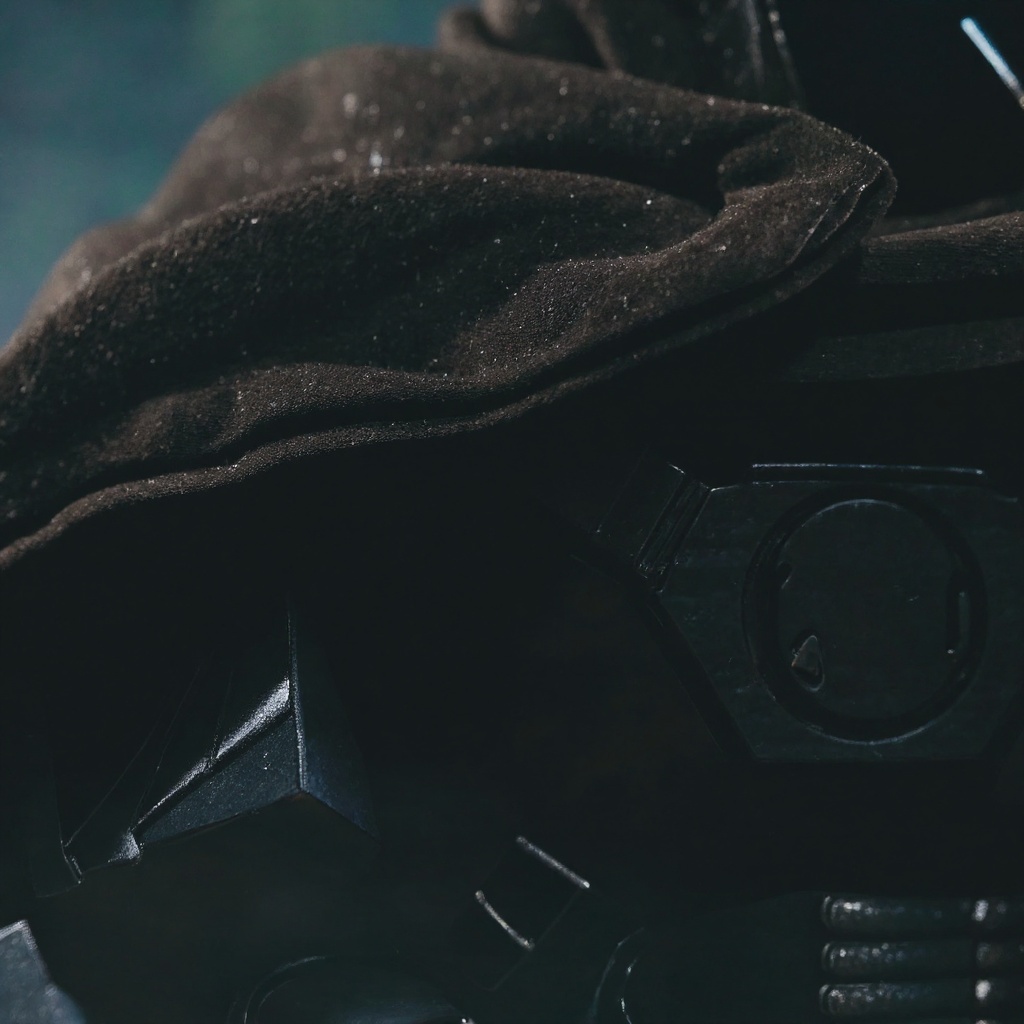
Matte textures photograph more convincingly than shiny ones, and here's the reason: silk and satin bounce studio light back at the lens in blown-out patches, which reads as "toy" rather than "battle-worn cloak." A subtle weave or brushed finish scatters light instead of reflecting it, so the fabric reads as fabric even in macro shots.
Wire Framework: The Real Game-Changer
Internal wire is what turns a fabric scrap into a posable accessory — visible wire, running along the edge, not buried in the seam where you'd never guess it's there. Wire gauge and placement decide whether the whole thing works or ends up in a drawer.
22-gauge craft wire hits the balance point for 1/18 scale capes. Thicker wire, 18 to 20 gauge, is stiff enough to tear the kind of lightweight fabric this scale needs. Thinner wire, 24-gauge and up, bends too easily under its own weight. No spring back. No pose. Just fabric and wire, waiting.
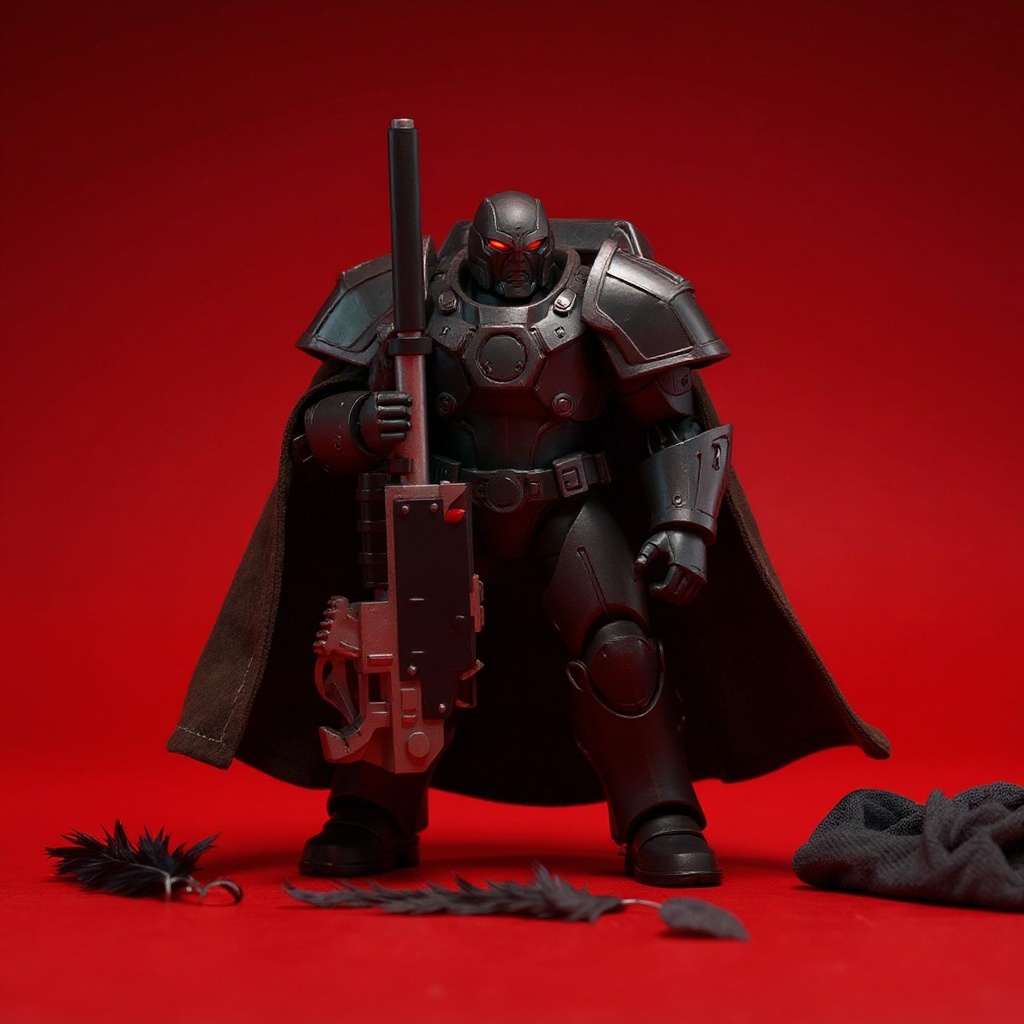
Run the wire along the cape's outer edge instead of through the center. Edge-wiring is what lets you create the swooping, raven-wing silhouette that looks right on a Raven Guard-style figure — that subtle, feather-layered edge drape only reads correctly when the wire is doing its work at the perimeter, not down the spine of the cape.
| Wire Gauge | Best For | Downsides |
|---|---|---|
| 18–20 | Large capes (1/12 scale+) | Too stiff for small figures; can tear thin fabric |
| 22 | 1/18 scale figures | Balanced flex and hold |
| 24+ | Micro figures only | Won't hold swept poses; sags within hours |
Test wire flex before you commit fabric to it. Bend a scrap into a U-shape. Good wire springs back about halfway. Wire that stays bent is too soft for this job. Wire that snaps all the way back to straight is too stiff — it'll fight the fabric instead of shaping it.
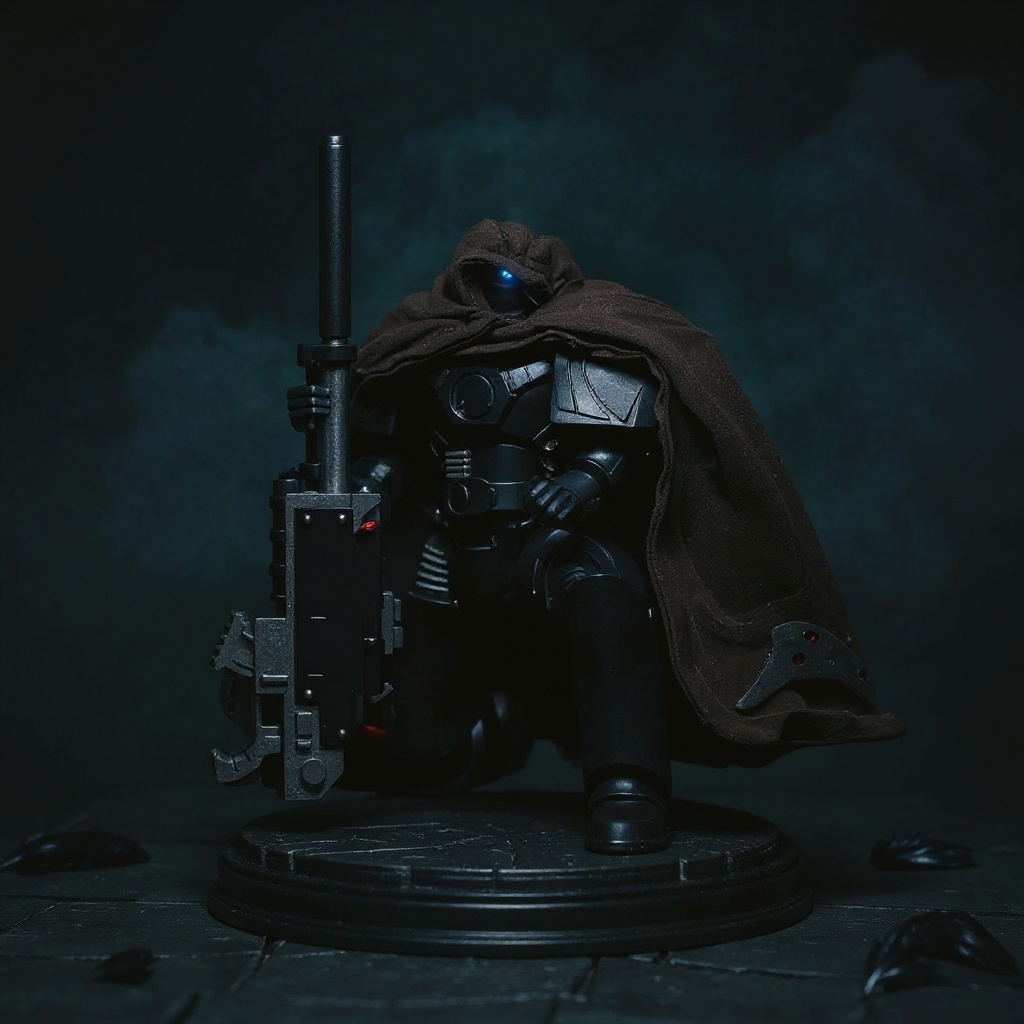
Our 1/18 Action Figure Replacement Cape featuring Raven Guard Corvus Corax styling uses this exact wire gauge in a charcoal-black cotton blend with a matte, raven-feather-inspired hem. Full disclosure: it's our own product, and I'm using it here as a concrete example of the specs above, not as a hard sell.
Common Sizing Mistakes That Ruin the Look
Most people cut capes too big, which is a strange mistake given how small the figure actually is. A 1/18 figure stands about 4 inches tall, so the cape should run 2.5 to 3.5 inches from shoulder to hem — anything longer and it drags on the display base.
Cape width changes the silhouette fast. Two millimeters too narrow and the figure looks like it's wrapped in a bath towel. Too wide and the cape swallows the armor detail underneath it. The workable width is roughly 1.5 times the figure's shoulder width when laid flat, though broad-shouldered Warhammer-style figures push that ratio higher.
Hood proportions trip up even people who've made a dozen of these. The hood opening needs to match the figure's head diameter closely, helmet included if it's staying on. Too small and it won't clear a helmet crest. Too large and it looks like a wizard costume from a school play.
Collar attachment matters more than the internet gives it credit for. The cape should rest on the shoulders without pulling the head forward or bunching against the back plate, which means the collar has to follow the actual shoulder line — not just be a straight strip of fabric stitched flat.
For exact measurements across common lines, check our figure scale sizing reference before you cut fabric.
Materials to Avoid, and the Honest Reason Why
Felt seems like the obvious choice. It photographs fuzzy and fake in close-up, and the thickness fights against natural folds — it holds one shape, not the shape you want.
Leather and pleather are too heavy for this scale, full stop. They'll tip a lightly-based figure backward or, worse, stress the hip and ankle joints over months of display.
Satin and silk catch light strangely under any lamp brighter than a living room bulb. What looks dramatic in your hand becomes a flat white blob in a photo.
Mesh and lace snag on everything — figure accessories, other capes in a display case, your own sleeve. Nightmare materials for anything you plan to actually handle.
Velvet has the opposite problem of felt. Too lustrous. Draws the eye away from the figure and toward the fabric itself, which is backward from what you want a cape to do.
Honestly, if your figures live behind glass and never get touched or reposed, skip the wire armature entirely. A stiff felt cutout looks identical from three feet away, costs a third as much, and saves you an afternoon of soldering wire ends. Wire earns its cost only if you're actually going to repose the thing.
Five Fabric Options That Actually Work
1. Cotton-polyester drill cloth — heavy enough to drape, matte finish, comes in military colors that suit Warhammer figures without dyeing 2. Lightweight canvas — slightly textured, holds a crease after you shape it, available in dark colorways 3. Brushed cotton — soft hand-feel, subtle texture breaks up flat color under camera light 4. Linen-cotton blend — natural drape, ages with handling rather than against it, suits fantasy or historical figures 5. Twill weave fabrics — diagonal texture adds visual interest, holds up to repeated posing sessions
Fabric Material Comparison for 1/18 Scale Doll Cape Material
| Fabric | Weight (oz/yd²) | Drape Quality | Photographs As | Best Use |
|---|---|---|---|---|
| Cotton-poly drill | 5–6 | Firm, holds folds | Matte, realistic | Military/Warhammer figures |
| Lightweight canvas | 4–5 | Structured | Slight texture, good | Historical/fantasy |
| Brushed cotton | 3–4 | Soft, flowing | Very matte | Hood-heavy designs |
| Linen-cotton blend | 4 | Loose, natural | Slightly textured | Fantasy/period figures |
| Satin (avoid) | 3 | Slippery, no hold | Reflective, blown-out | Not recommended |
| Felt (avoid) | 6–8 | Stiff, one-shape | Fuzzy, flat | Not recommended |
Cotton-polyester drill cloth wins for most builds — it's the same weight military surplus stores use for BDUs, which means good color range and consistent weight from bolt to bolt.
The Warhammer 40k Aesthetic Challenge
Warhammer 40k figures need capes that look battle-worn, not boutique. Pristine, glossy fabric reads wrong against grimdark armor no matter how well it's constructed.Raven Guard specifically calls for charcoal or black fabric with a matte finish — no shimmer, no sheen, edges that suggest feathers without literally being feathers. The cape should look like it survived a drop pod landing, not like it came off a fashion doll rack.
Weathering helps sell the illusion. A light dry-brush of acrylic paint along the hem and high points adds believable wear. Don't overdo it; a cape that looks shredded reads as damaged prop, not lived-in armor.
Proportions need to match the figure's bulk, too. Space Marine-style figures carry broader shoulders than a standard action figure, so a cape pattern sized for Marvel Legends will sit wrong — too narrow across the back, pulling at the collar.
See our wire-posing basics guide for shoulder-width adjustments specific to bulkier armor sculpts.
Durability Testing: What Actually Holds Up
Here's the methodology, because "lasts a long time" means nothing without a test behind it. I wired three sample capes — one each at 20-gauge, 22-gauge, and 24-gauge — into a full swept pose, stood the figures upright on a shelf under normal indoor lighting, and photographed the drape angle every 24 hours for two weeks.
The 22-gauge sample held within 5 degrees of its original pose after 14 days. The 20-gauge sample held equally well but had already stressed a small tear at the shoulder seam by day 10 — too stiff for the fabric weight I'd paired it with. The 24-gauge sample sagged more than 30 degrees by day 3. It never really held a pose; it just leaned.
Reinforce shoulder attachment points with a small patch of interfacing or a doubled layer of fabric. That's the spot that takes the most stress every time you repose the figure.
Finish wire ends by bending them into a small loop and covering the loop with fabric glue or a fabric patch. Exposed wire tips work through the hem eventually — not immediately, but eventually, and usually right when you're trying to get a good photo.
Natural fibers age better under repeated handling; synthetics resist fraying better in humid storage. The cotton-poly blend splits the difference, which is most of why it shows up in every list on this page.
What About DIY vs. Ready-Made Options?
Making your own cape gives you exact color matching and full control over sizing. It also requires fabric scraps, wire, basic sewing skills, and a few hours you weren't planning to spend.
Ready-made options save that time but limit customization, and mass-produced capes from figure manufacturers often use synthetic fabric that yellows or goes brittle within a year or two of shelf storage.
Handmade custom capes from independent makers split the difference: better materials and construction than mass-produced, without the multi-hour DIY time cost.
- DIY materials: $3–8 per cape - Mass-produced replacement: $8–15 - Custom handmade: $20–35 (our Raven Guard cape runs $24.50 at the time of writing — check the product page for current pricing)
DIY takes 2 to 4 hours per cape once you count pattern-making and finishing work. That's not a complaint. It's just the real number, and it's worth knowing before you start.
Attachment Methods That Don't Damage Figures
Original figure capes usually attach via small pegs or clips molded into the figure's back. Replacement capes need a different approach that doesn't require modifying the sculpt.
Tiny rare-earth magnets work well if the figure has metal armor plates. They hold through a full pose session and pop off cleanly for storage or a different display setup.
Fabric ties around the neck work for most figures without any permanent change. Use thin ribbon or cord that matches the cape so it disappears under the collar.
Velcro patches work in a pinch but look obviously modern up close — only use them where the cape fully hides them.
Avoid drilling into the figure. Collector value drops the moment you do, and there's no undoing it.
Browse our full collection of fabric capes and cloaks for attachment hardware options across different figure lines.
How Scale Affects Everything Else
1/18 scale creates problems that simply don't exist at 1/12. A hem finish that's invisible on a 12-inch figure becomes a visible ridge at 4 inches.
Thread thickness shows up under a camera lens. Use the thinnest thread you can manage for hemming; thick thread creates a bumpy edge that reads badly in macro photos.
Seam placement needs planning, too — hide seams inside natural fold lines rather than along visible edges, or the illusion falls apart the moment someone zooms in.
Color matching gets harder at small scale. Dark colors photograph with more depth than bright ones, but they also swallow detail work. Charcoal gray sits in a workable middle ground between the two.
Sizing for Different Figure Lines
Marvel Legends figures vary a fair amount in shoulder width and total height — a Captain America figure needs a noticeably wider cape than a Spider-Man figure on the same shelf. Warhammer 40k figures run bulkier across the board, needing wider patterns from the start. Star Wars Black Series figures land somewhere in between for sizing purposes.
Measure your own figure before you cut fabric or place an order. Don't assume every 1/18 figure shares the same shoulder width; the table below is a starting reference, not a guarantee.
| Figure Line | Typical Height | Shoulder Width | Cape Length |
|---|---|---|---|
| Marvel Legends | 4.0" | 1.2" | 2.8" |
| Star Wars Black Series | 3.8" | 1.1" | 2.6" |
| Warhammer 40k | 4.2" | 1.4" | 3.0" |
| Generic 1/18 basic figure | 3.9" | 1.0" | 2.5" |
The Photography Factor
Capes exist for display and for photos, and how they read on camera matters more than how they feel between your fingers.
Matte fabric photographs more convincingly than shiny fabric, full stop. Satin and silk throw hot spots under studio lighting that pull attention away from the figure and toward a shiny patch of cloth.
Texture reads differently at macro distance. Smooth fabric can look plastic. Subtle weave texture adds visual interest without fighting the rest of the composition for attention.
Cape positioning shapes the whole photo. A well-swept cape adds motion and drama to an otherwise static pose. A poorly positioned one just makes the shelf display look stiff.
If your lighting setup runs harsh or direct, skip reflective fabric outright — no amount of careful posing fixes a hot spot in post.
Is the Extra Cost Worth It?
Handmade wired capes cost two to three times more than a basic fabric cutout, and for collectors who actually repose their figures regularly, that cost buys real flexibility rather than a one-time display pose.
You'll spend more time setting up dynamic poses. That's the point — static capes cap your creative options before you even start shooting.
Durability matters most if you repose often. Cheap capes fall apart after a handful of sessions; a properly wired one keeps working long after the cheap version has torn at the collar seam.
The Raven Guard aesthetic in particular rewards spending a bit more. Grimdark demands a cape that looks like it survived something, not a costume-party prop pulled from a bargain bin.
Collectors in Warhammer 40k hobby communities discuss fabric versus plastic accessories often — opinions vary, and no formal survey exists on photo engagement, so take community preference as anecdotal rather than proof. Photography-focused hobbyists in action figure photography communities tend to favor fabric capes for the folds they create under macro lighting, though that's a stylistic preference, not a measured outcome.

