


Why Buy an Action Figure Clothing Set With No Doll Included?
You already own the body. Maybe you bought the figure for its head sculpt and never liked the factory outfit. Maybe the character you want has no official release. A clothing-only set solves both problems and spares you from paying for a second figure you don't need.
There is a second reason. Factory outfits on 6-inch figures are often molded or sewn from glossy synthetic fabric that fights the joints. Cloth made by hand moves with the body instead.
It isn't always the smarter buy, though. More on that below.
What a Ninja-Style Cloth Outfit Set Actually Contains
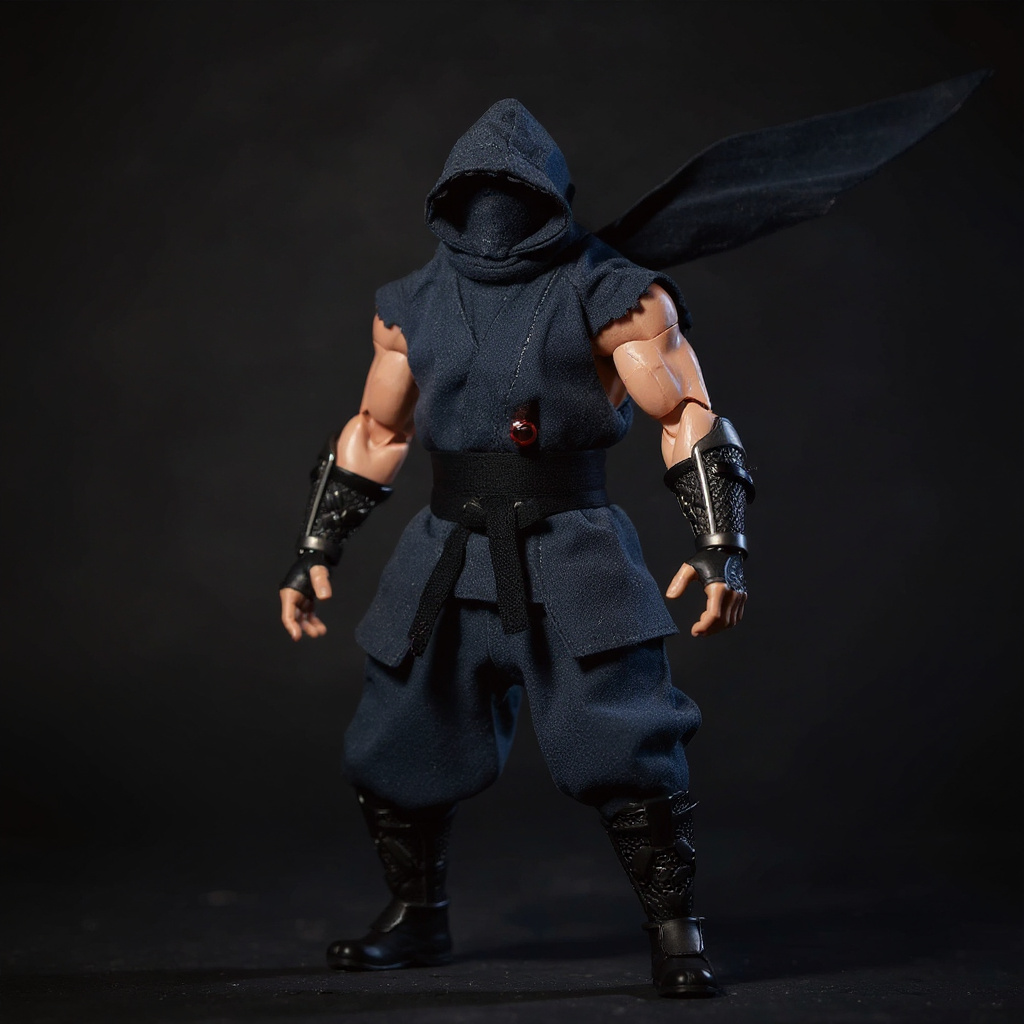
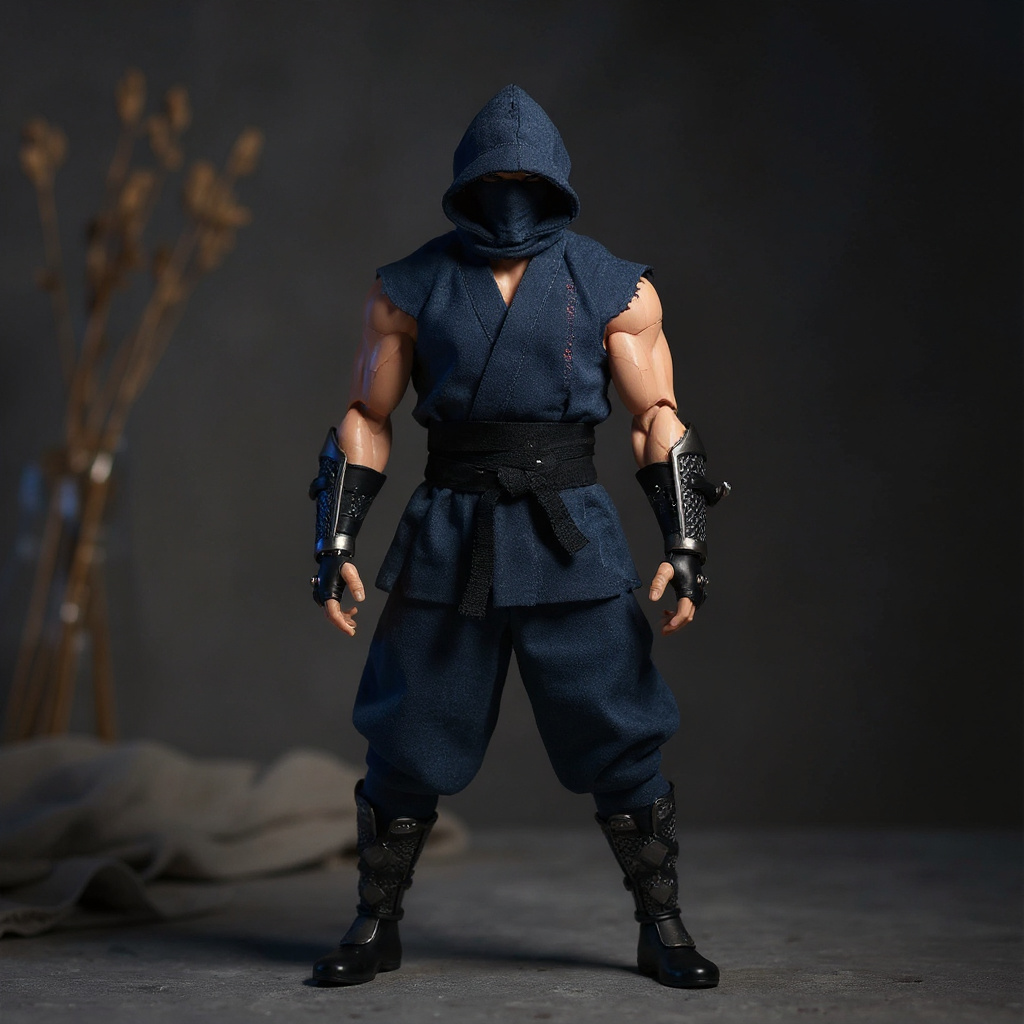
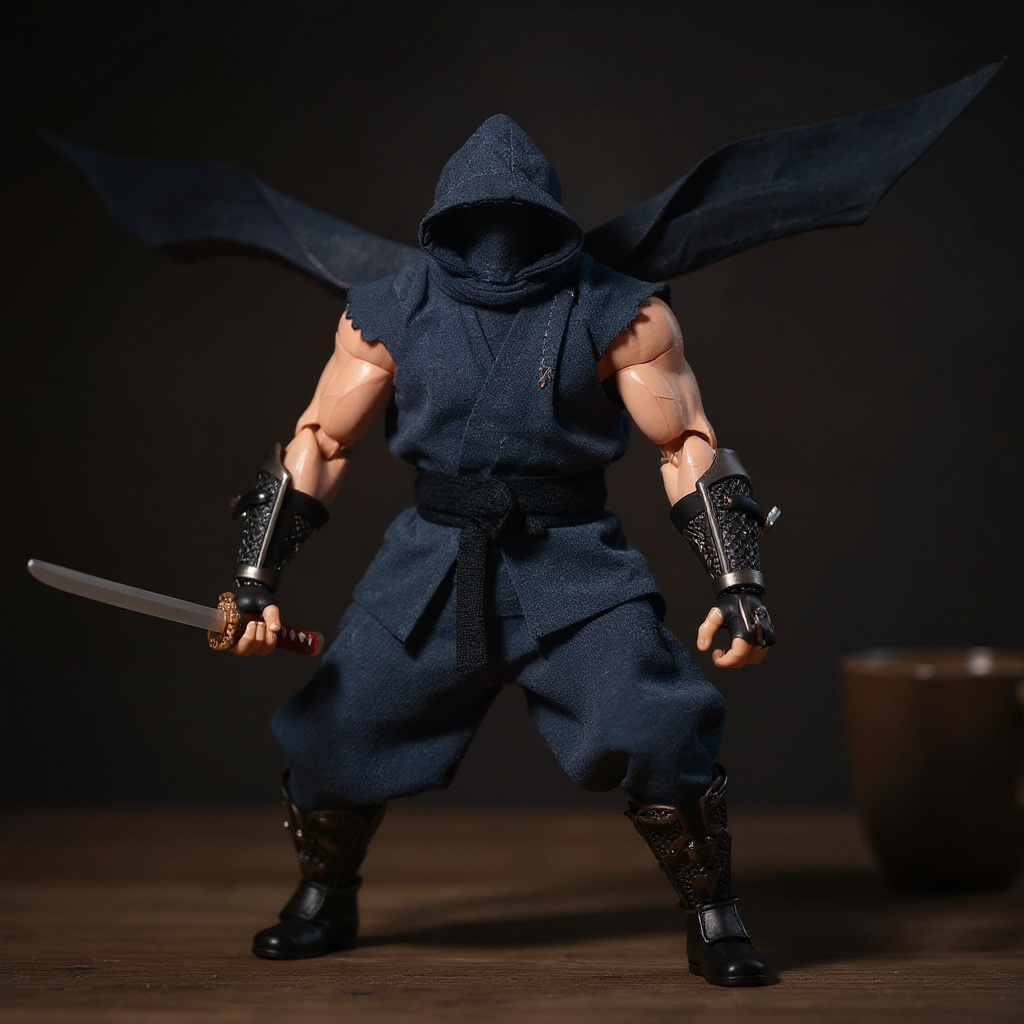
The set this guide centers on is a dark, layered shinobi look. Picture black and charcoal fabric with small red or grey accents. Sashes wrap the waist. Bandage-style wraps cover the limbs. The sleeves are wire-framed, and the hakama pants are cut loose enough to show a mid-stride pose.
The finish matters as much as the cut. Matte cotton-type fabric. Visible hand-stitching. No plastic sheen under a studio light.
When I photograph a set like this on a 1/12 body, I use one soft key light and let the shadows fall off toward the edges. Moody lighting suits dark cloth. A glossy fabric would flare in that setup. A matte one soaks the light up and shows its folds.
A clothing-only listing will normally include:
- Upper wrap or jacket layers - Hakama-style pants - Sashes and belts - Limb bandages or wraps - Small accents in red or grey
The figure in the listing photos is a display body. It is not part of the sale. Read the "what's included" line before you pay.
Action Figure Clothing Set No Doll Included: Scale and Fit Check
The "1/12 scale" label does not guarantee fit. Many 6-inch lines are marketed as 1/12 but run larger or smaller, and some use exaggerated proportions. Treat the label as a starting point.
Here is a reference table I use to sanity-check a body. The human values are round numbers for an adult man, not survey data, and the right column is simple division by 12.
| Measurement | Reference adult (cm) | True 1/12 target (mm) |
|---|---|---|
| Height | 175 | about 146 |
| Shoulder width | 46 | about 38 |
| Chest circumference | 100 | about 83 |
| Waist circumference | 85 | about 71 |
| Arm length (shoulder to wrist) | 62 | about 52 |
| Inseam | 80 | about 67 |
Your own figure will differ from this table. Superhero bodies are often broader and taller than the targets above. Slim bodies run narrower.
How to measure your figure:1. Use digital calipers for widths and a strip of paper for circumferences. Mark the paper, then lay it flat against a ruler. 2. Measure shoulder width at the widest point of the torso, not across the shoulder joints. 3. Measure chest and waist circumference with the arms relaxed at the sides. 4. Measure arm length from the shoulder joint to the wrist, and inseam from the crotch to the ankle joint. 5. Write the numbers down and compare them with the seller's listed dimensions. If the seller lists none, ask.
Some sets come with adjustable sashes or ties that absorb a few millimeters of variance. A set cut for a particular figure line leaves much less room. The Ryu Hayabusa Ninja Gaiden 2 Cloth Outfit is designed for 1/12 male bodies. It suits athletic builds best, so measure before ordering if your figure is bulky.
How to Judge Wire-Frame Construction Before You Buy
Wired sleeves and pant legs let a cloth outfit hold a pose. Execution varies a lot, and you can't test the wire through a screen. You can still check the evidence.
Wire quality checklist:1. Look for a listing photo of the garment in a pose, not just flat on a table. A set that holds a bent-arm pose in the photo has working wire. 2. Check that the description says where the wire runs. Outer sleeve edges and outer pant seams are common spots. Wire in every seam makes cloth stiff. 3. Ask for the wire material and thickness. A seller who knows the answer is a seller who built it. 4. Zoom in on the channels. Wire should sit inside the seam with no visible lumps or poking ends. 5. Look for finished wire ends. Ends tucked in or capped won't snag the fabric.
Wire has a limit. Bend metal in the same spot over and over and it work-hardens, then snaps. I can't give you an honest number of poses it survives, because it depends on gauge, alloy and how sharply you bend. Reshape in wide curves, not creases. Treat every sharp fold as a withdrawal from a limited account.
Honestly, if you display your figures in one static stance and never touch them again, wired clothing is wasted money. Pay for the cut and the fabric instead.
Handmade vs Mass-Produced Figure Clothing
The table below summarizes general patterns I've seen. These are not lab results, and individual makers vary.
| Factor | Handmade cloth sets | Mass-produced outfits |
|---|---|---|
| Fabric | Cotton or cotton-blend with a matte finish | Often polyester blends with a visible sheen |
| Stitching | Hand-sewn seams, sometimes uneven | Machine-sewn, consistent but prone to fraying at edges |
| Posability | Wire in sleeves and pants is common | Rarely wired, often stiffer |
| Fit | Tailored to a figure type; ask for dimensions | Generic sizing, loose on slim bodies |
| Price | The featured set lists at $77.12; compare at least three listings | Varies widely by brand and licence |
| Lead time | Made to order, so waiting is normal | Usually in stock |
Handmade is not automatically better. A rushed maker can ship a crooked seam, and a good factory can turn out clean, consistent garments. Judge the actual listing photos, not the category.
Fitting Your Outfit Step by Step
The first fitting takes longer than you expect. Plan for patience.
1. Strip the figure of its original clothing, including wraps and belts. 2. Inspect the new garments for loose threads before you handle them. 3. Dress from the inside out: base layers, then pants, then upper wraps. 4. Bend the wire-framed sleeves into a gentle neutral shape before you slide them over the arms. 5. Tie the sashes last, and adjust them until the layers sit flat. 6. Test the pose range slowly, one joint at a time. 7. Photograph the finished look so you can recreate it later.
Rush it and you get bunching. Tug a sleeve over a hand and you stress the seam. Slow beats fast every time.
Common Problems and How to Fix Them
1. Loose threads. Trim them with small scissors. Pulling can unravel a hand-stitched seam. 2. Color mismatch. Screens misrepresent black and charcoal, which can read as brown or blue. Ask the seller for a photo in daylight. 3. Tight fit. Check your measurements against the seller's list before you force anything. A forced fit warps the wire. 4. Sagging sashes. Re-tie them tighter. A dab of fabric-safe adhesive under a knot can help. 5. Wire poking through. Stop posing the garment. Ask the maker about a repair. Don't cut into hand-stitching yourself. 6. Dye transfer. Dark fabric can stain pale plastic. Test with a light-colored figure before you leave it on for months.
Where to Find Sellers and Collector Communities
Start with communities, then check shops.
- The Action Figures subreddit has threads where collectors name custom clothing makers. - The One Sixth Warriors forum focuses on larger scales, but its members know soft goods. - HobbyLink Japan carries licensed accessories for collectors. - The Figure Vault storefront and its full catalog list clothing-only items. - Etsy and eBay have the widest selection, with the widest swing in quality. Favor sellers who show their garments on a body.
Price at least three listings before you commit. Don't rely on one number from one shop, mine included.
Is a Clothing-Only Ninja Set Worth It?
If you already own a compatible 1/12 body, usually yes. You skip buying a second figure and get a garment cut for movement.
If you own no 1/12 bodies, no. Buy a complete figure first. Otherwise you're paying for a pretty outfit with nothing to wear it.
For a dark, layered shinobi look, the handmade Ryu Hayabusa ninja outfit at $77.12 is a reasonable pick. It combines matte fabric, hand-stitching, wrapped sashes and wire-framed sleeves. If you want the character background first, read about Ryu Hayabusa on Wikipedia and the Ninja Gaiden II game. For the pants style, see this overview of the hakama.
Not cheap. Not fast either. But worth it if posability and a matte finish matter to you.
Frequently Asked Questions
What does an action figure clothing set no doll included mean?
It means the listing sells the garments and accessories only. No figure body is in the box. Photos usually show the outfit on a display body for reference, so check the "what's included" line.Where can I buy clothing-only outfits for 1/12 figures?
Try Etsy, eBay, HobbyLink Japan and specialty shops such as The Figure Vault. Collector communities on Reddit and One Sixth Warriors also point to independent makers. Compare at least three listings, and favor sellers who show the outfit worn on a body.Will a clothing-only outfit fit my 6-inch figure?
It can, but the label isn't proof. Measure shoulder width, chest, waist, arm length and inseam, then compare them with the seller's listed dimensions. If none are listed, message the seller before you order.Do wired sleeves and hakama pants hold a pose?
Yes, when the wire is well placed and bent in wide curves. Sharp, repeated bends can snap it, because bending work-hardens metal. Avoid reshaping the same crease over and over.Are action figures dolls, and can I use doll clothes on them?
Collectors treat them as different categories, though both are poseable figures. Fashion dolls are commonly 1/6 scale, roughly twice the size of 1/12, so 1/12 outfits will not fit them. Match the scale, not the category name.What measurements do I need to make clothes for a 1/12 figure?
Measure shoulder width, chest and waist circumference, arm length and inseam. Add a few millimeters of ease for fabric thickness. Start with a simple sash or cape before you attempt wired sleeves or layered pants.Can I wash handmade figure clothing?
I wouldn't. Spot-clean with a barely damp cloth and air-dry. Water can rust or warp internal wire, and it can make dark dye bleed onto the figure.About This Guide and Methodology
The fitting steps and checks above come from dressing 6-inch figures in cloth outfits and photographing them under soft studio light. Measurements are taken with digital calipers and a paper strip. The table in the scale section is arithmetic (human reference value divided by 12), not manufacturer data. The $77.12 price was the listed price at the time of writing. Prices change, so confirm on the product page before you buy.

