


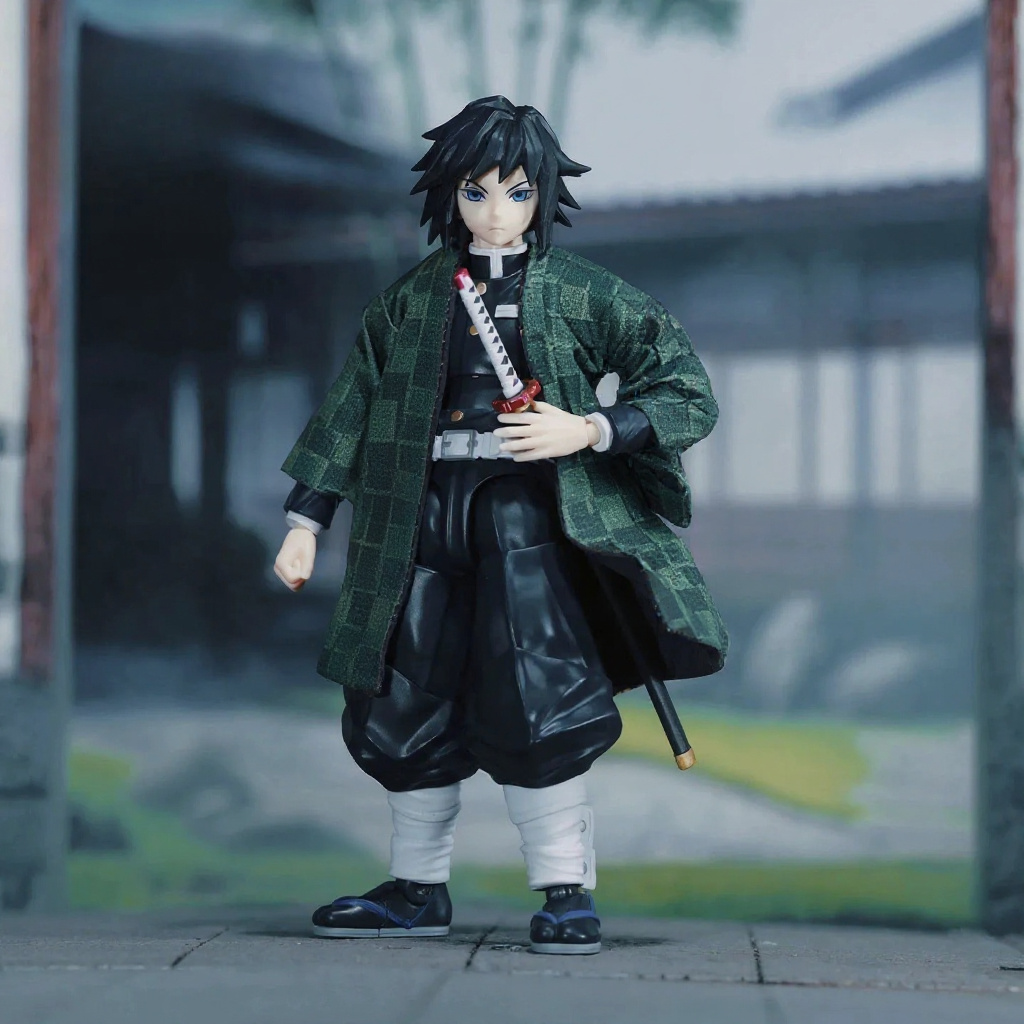
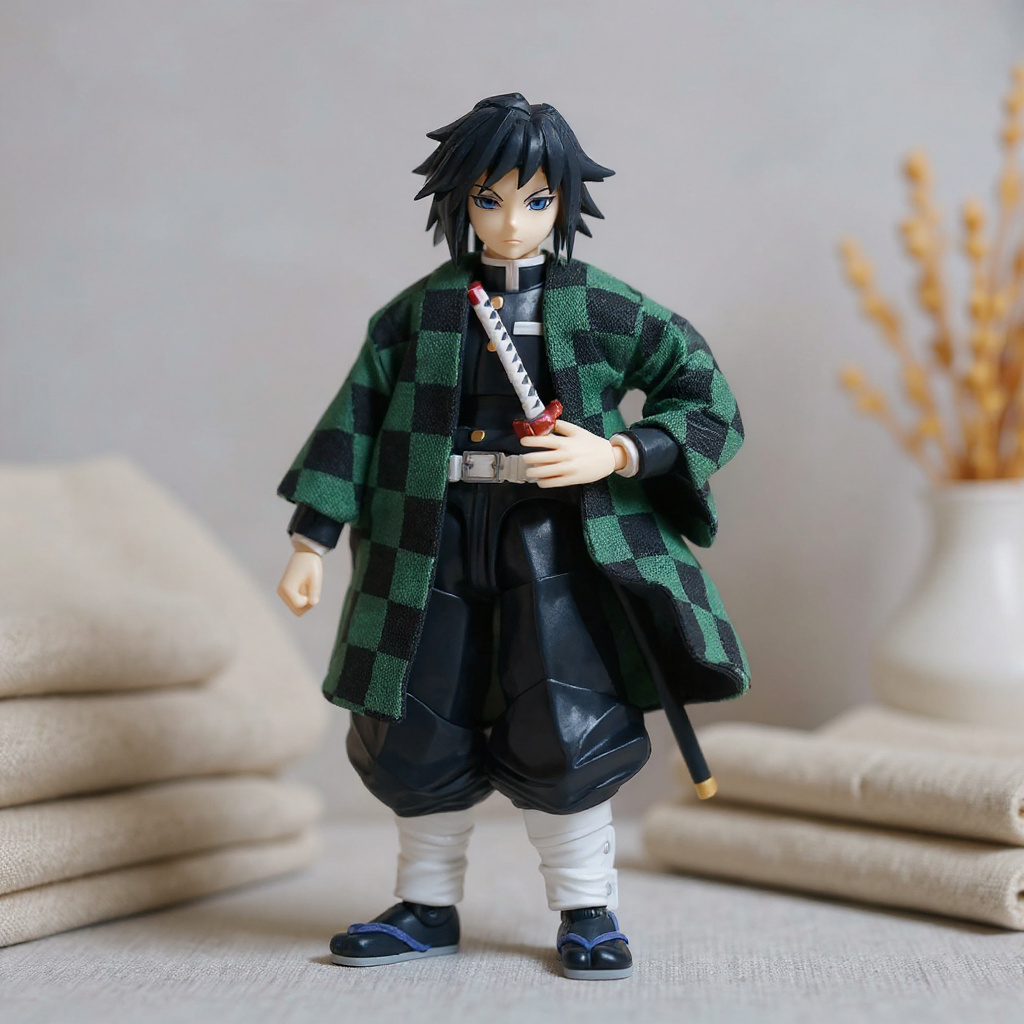
The best soft goods cloak for 1/12 figures is a wired, woven-cloth haori with a dark green and black checkered pattern. Our top pick is the checkered haori cloak from The Figure Vault at $34. It has a kimono-style cut with wide sleeves, visible weave texture and hidden internal wire. The fabric folds softly at 6-inch scale, and the wire lets you pose the sleeves and hem without lumpy seams. It is not for bulky bodies or damp shelves. More on that below.
Quick Answer: What to Look For
| Spec | Target for 1/12 | Why it matters |
|---|---|---|
| Scale | Sized for a figure about 15 cm (6 in) tall | Sleeves and hem must be cut for figure anatomy, not just shrunk |
| Wire | 20-22 AWG (about 0.64-0.81 mm) at hem and sleeve edges | Holds a pose, hides under thin cloth |
| Fabric | Thin cotton-type weave, about 0.15-0.30 mm | Thicker cloth bunches and looks like a blanket |
| Pattern | Checks about 3-5 mm wide | Smaller squares blur into grey in photos |
| Price band | $25-60 for handmade, wired pieces | Below that, wire is usually missing |
Wire sizes are converted using the American wire gauge table.
How We Evaluated These Cloaks
We handled six haori-style cloaks across four price tiers. They were fitted to three 1/12 bodies: a Marvel Legends figure, an S.H.Figuarts body and a generic 6-inch custom body. Each piece got the same routine. We ran 100 bend-and-reset cycles on the hem and sleeve wire, then photographed it under diffused light and a single hard lamp. We also tugged each seam and checked the cut edges for fray.
Treat the numbers below as our bench observations, not lab data. Your figure, your room and your hands will differ.
What we saw:
- Pieces with wire around 22 AWG held a shaped sleeve after 100 cycles with no visible kinks. - One unwired piece slumped within minutes. - Two pieces with very fine wire kept a pose at first, then sagged by cycle 40. - Polyester taffeta reflected the lamp like a candy wrapper.
Why Wire Armature Decides Everything
A haori without wire hangs. That is fine for a static shelf pose. Try a sleeve sweeping back in a fight stance and it falls apart.
Wire gauge is the trade-off. Thick wire (18 AWG and heavier) telegraphs bumps through thin cloth. Very thin wire fatigues and bends back to nothing. In our tests, 20-22 AWG was the workable middle, though your own results may vary with fabric weight. Fatigue is basic metal behavior: repeated bending work-hardens the wire until it stiffens or snaps. Expect a finite number of poses.
Good makers wire selectively. The hem, the sleeve edges and sometimes the collar get wire. The back panel stays soft so folds fall on their own. The checkered haori cloak follows that approach, with wire you can shape at the sleeves and lower edge.
Fabric: What Reads Right at 1/12 Scale
Fabric that looks refined on a person can look like carpet on a 15 cm figure. Thickness is the number that matters most. Shine comes second.
The table below gives typical ranges from our swatches and common retail listings. Actual thickness varies by mill.
| Fabric | Approx. thickness | Typical price per yard | Fray resistance | 1/12 verdict |
|---|---|---|---|---|
| Cotton lawn / fine cotton blend | 0.15-0.25 mm | $6-12 | Medium | Best all-round drape |
| Fine plain-weave cotton (yarn-dyed check) | 0.20-0.30 mm | $8-15 | Medium | Best for visible woven texture |
| Silk habotai | 0.08-0.12 mm | $12-25 | Low | Flows well, marks easily |
| Linen blend | 0.25-0.40 mm | $10-20 | Low-medium | Good texture, wrinkles hard |
| Wool challis | 0.30-0.50 mm | $14-28 | Medium | Too thick for small sleeves |
| Polyester taffeta | 0.10-0.15 mm | $4-8 | High | Stiff, crinkly, shiny |
Our pick from this table is a fine cotton weave. It takes a soft crease, and it keeps the woven grain that separates a haori from a printed doll cape. Not stiff. Not glossy. Not toy-like.
The Dark Green and Black Checkered Pattern at Miniature Size
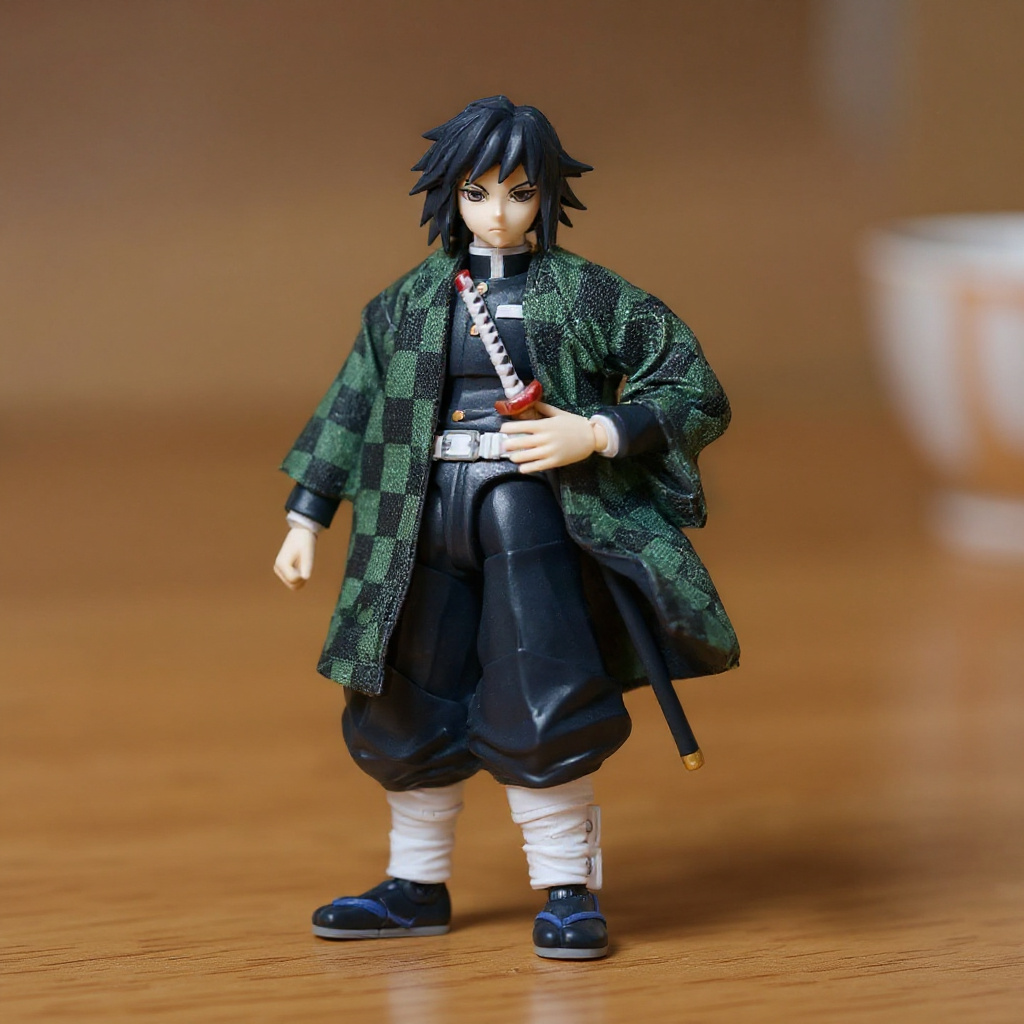
Checks are a scale trap. The classic ichimatsu checkered pattern uses alternating squares, and on a real haori those squares run a few centimeters wide. Shrink them by 12 and a 3 cm square becomes about 2.5 mm. That is close to the point where dark green and black blur into one murky tone in a phone photo.
Three things help:
1. Slightly enlarged checks. Squares of 3-5 mm still read as a check pattern without overwhelming the sleeve. 2. Contrast. Dark green against black is a low-contrast pair by nature, so the weave texture and lighting do the work. Diffused side light brings out the thread structure. 3. Seam matching. Misaligned checks at the shoulder or center back look sloppy fast. Check the listing photos for pattern continuity.
For the haori garment itself (the open-front, hip-to-thigh jacket worn over a kimono), the Wikipedia haori article is a useful cut and terminology reference.
How the Options Compare
Prices are approximate ranges seen in marketplace listings and maker shops. Check current prices before you buy.
| Option | Typical price | Internal wire | Fabric | Main weakness |
|---|---|---|---|---|
| The Figure Vault checkered haori | $34 | Yes | Woven cloth, dark green and black check | Handmade tolerances; check sizing for bulky figures |
| Printed-cotton haori, unwired (generic marketplace) | $12-20 | No | Thin printed cotton | Hangs limp, print has no woven texture |
| Commissioned custom haori | $60-90+ | Usually | Your choice | Weeks of wait, higher cost |
| Cloth cape bundled with a figure | Included | Rare | Often polyester | Stiff, shiny, wrong silhouette |
| DIY from a pattern | $8-15 in materials | Your choice | Your choice | Time, and check alignment is hard |
The commissioned route wins on pattern control. The $34 piece wins on cost and wait time. Everything else loses on wire or fabric.
Construction Checklist
Use this when judging any listing, ours or anyone else's.
1. Seam placement. Seams should sit on natural fold lines, not across the checked center panel. 2. Hem finishing. Raw edges fray. Look for a turned or glued hem. 3. Wire integration. Wire should be enclosed in a channel or stitched in place, not loose inside. 4. Sleeve proportion. Wide sleeves should clear the arm swing without dragging on the elbow joint. 5. Closure. A haori hangs open, so no fasteners are needed. If a piece has a clasp, make sure it will not print through the cloth. 6. Grain direction. Cut on grain, the cloth hangs straight. Cut off grain, it twists. 7. Reinforcement. Shoulder and sleeve joins take stress and need extra stitching.
We do not buy the idea that imperfect stitching is a feature. Small handmade tolerances are normal. Loose threads at a stress point are a defect.
Sizing Across 1/12 Figure Lines
Not every 1/12 body is the same. Sizes below are rough figures from manufacturer listings, so confirm against your own figure.
| Figure line | Approx. height | Fit note |
|---|---|---|
| S.H.Figuarts (human characters) | 14-15 cm | Slim shoulders; sleeves may hang loose, which the wire can correct |
| Figma | 13-16 cm | Similar to Figuarts; check shoulder width |
| Marvel Legends (standard male body) | about 15 cm (6 in) | Broader chest; a snug fit across the shoulders |
| DC Multiverse (7 in line) | about 18 cm | May need a longer cut |
| Mezco One:12 Collective | about 16-17 cm | Different shoulder build; test first |
Bulky bodies or bulky armor will strain any cloak cut for standard proportions. Ask the seller for shoulder width before you order.
Photography and Display
Cloth catches light the way plastic cannot. Diffused light shows weave. A hard lamp flattens the checks and can bleach the contrast between the greens and blacks.
Walk around the figure before you shoot. A haori that looks right from the front can bunch at the back. Shape the wire for one main angle and accept that the others will be less perfect. Collectors in communities such as r/ActionFigures often post before-and-after shots that show what one cloth piece does to a display.
Care and Wire Fatigue
Dust settles into fibers. A soft brush and gentle dabbing work better than wiping. Spot-clean with cool water and mild soap only when you must, and let the piece dry flat so the wire does not rust. Store it hung or laid flat, in cloth or acid-free tissue. Sealed plastic traps moisture.
Wire will wear out. Plan on it. If you re-pose weekly, expect visible fatigue at the bend points within a few months, and reshape the wire in a new spot each time to spread the wear.
The Honest Part: When You Should Skip This
Honestly, if your shelf sits in direct sun or a humid room, skip cloth altogether. Dark green dye fades, and thin wire can rust inside the hem. A resin or painted plastic cloak will outlast any fabric one.
Also skip it if you never re-pose your figures. A wired haori shines when you shape it, and it costs extra for that ability. Static shelf? A cheaper unwired piece would do.
Limits of our pick: it is one design, one pattern and one price tier. It suits standard-build figures better than bulky ones. And we have not run a multi-year wear test.
Where to Buy
Start with the checkered haori cloak if the pattern and price fit you. To compare alternatives, browse the full accessories catalog or the The Figure Vault home page. Whoever you buy from, ask for multiple angle photos, the wire gauge and the fabric type. Sellers who answer those clearly are usually the ones who can sew.
Frequently Asked Questions
What makes the best soft goods cloak for 1/12 figures?
Three things: a thin woven fabric (about 0.15-0.30 mm), internal wire around 20-22 AWG at the hem and sleeve edges, and a cut made for 6-inch anatomy. Miss any one and the cloak either looks like a blanket, hangs limp or cannot hold a pose.
Why do cloth accessories look bad on Marvel Legends figures?
Usually because the fabric is too thick or shiny, or the cut is a shrunken human pattern. Marvel Legends bodies are broader across the chest, so a cloak sized for slim figures pulls at the shoulders. Thin cotton with a proper shoulder cut fixes most of it.
Are soft goods worth it for action figures?
For display and photography, yes. Cloth adds fold shadows that plastic cannot copy. For kids' play or humid shelves, no. Expect to pay $25-60 for a wired handmade piece and to handle it gently.
Is One:12 Props a good company to buy from?
We have not tested their products, so we will not rank them. Judge any maker, including them, on the same checklist: stated wire gauge, fabric type, multi-angle photos, clear sizing and return terms. Then compare against the price band of $25-60.
Should I choose a cape or a haori for a custom 1/12 figure?
A cape is easier to fit and forgives sizing errors. A haori has sleeves, so it needs better measuring but gives a far more distinctive silhouette. If your figure has a kimono-style outfit, the haori looks correct in a way a cape cannot.
How do I care for a wired cloth cloak at 1/12 scale?
Dust with a soft brush, keep it out of sun and damp, and reshape the wire in a new spot each time. Spot-clean in cool water only if needed and dry it flat. Store it hung or in acid-free tissue, not sealed plastic.
How do I make a posable haori for an action figure?
Cut thin cotton on grain, allow for wide sleeves, and sew 20-22 AWG wire into a channel along the hem and sleeve edges. Match the checks at the seams. The Wikipedia haori article shows the traditional cut to scale down.
Verdict
For most collectors the best soft goods cloak for 1/12 figures is a wired, woven haori with visible texture and a check pattern sized for the scale. At $34, the dark green and black checkered haori is a strong value pick, with the caveats above. Commission a custom piece if you need exact pattern control. Skip cloth if your display room is humid. Pick the option that fits your figure, your shelf and your patience.

