


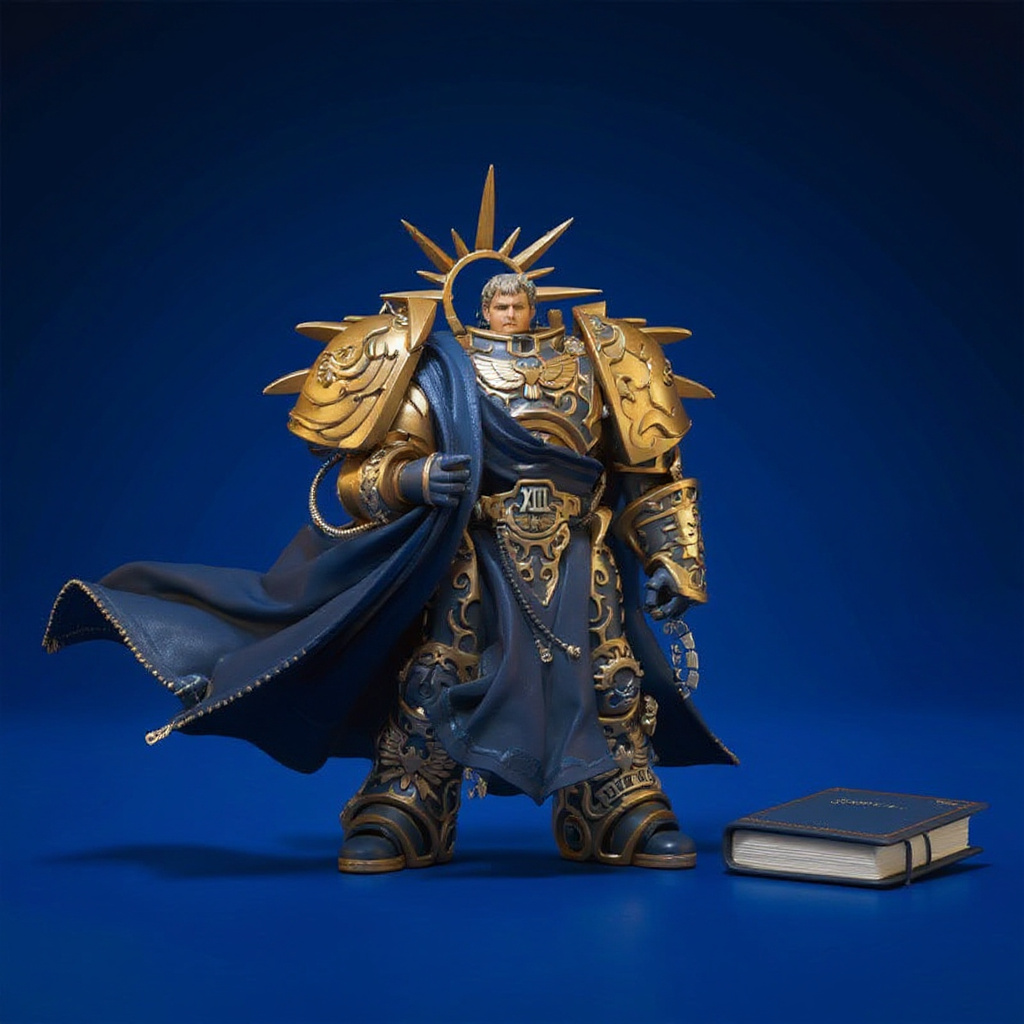
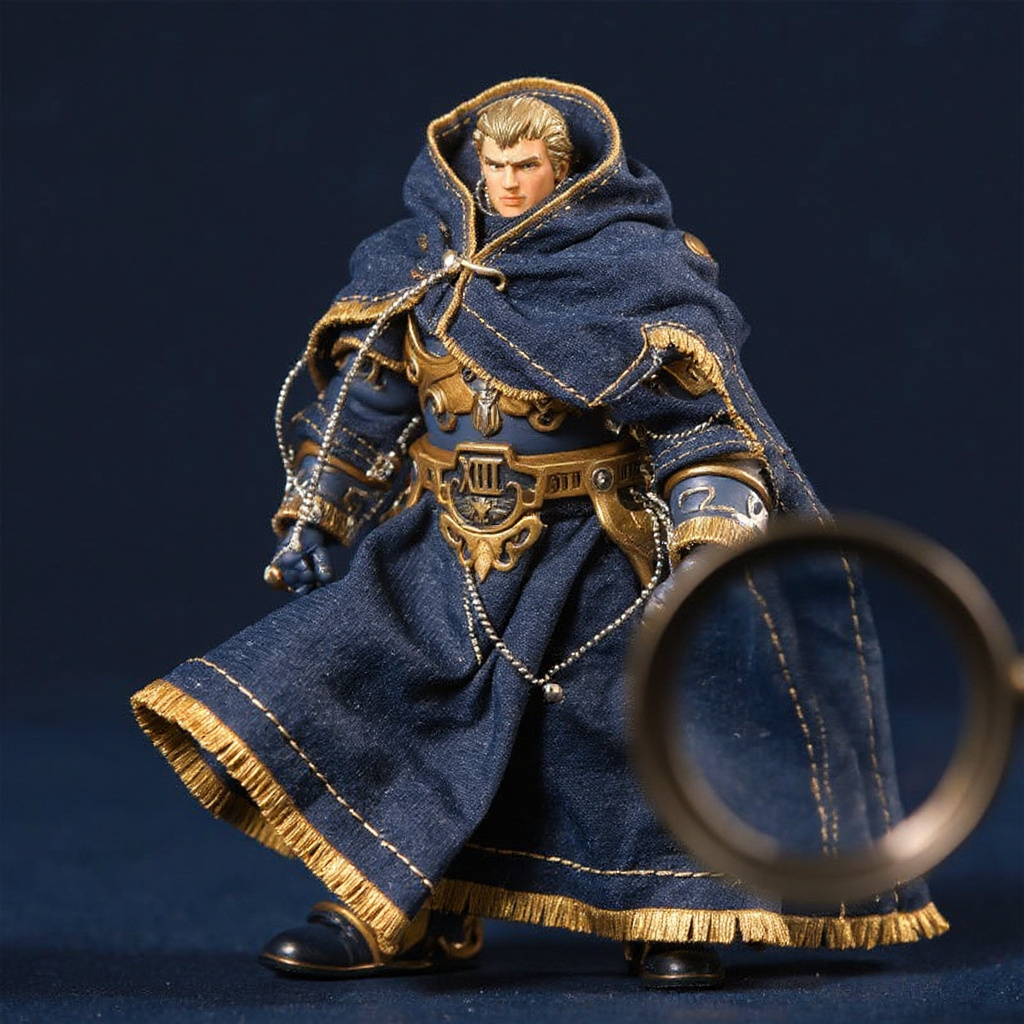
An action figure diorama cape prop should do one job well: make a static torso look like it's mid-scene. This one is a deep blue fabric cloak with gold trim edging, draped over a small 1/18 scale armor torso, with visible stitching and a slight wire-shaped fold built into the hem. It sits on a neutral or dark tabletop background and photographs like it belongs in a real diorama, not a toy aisle.
Most collectors start with the plastic capes molded onto their figures. They hang straight down like cardboard. A fabric cloak with an internal wire edge creates the illusion of wind or motion, and the gold trim catches light in a way injection-molded plastic never will.
Why Wire Makes All the Difference for Poseable Capes
The wire is what separates a display piece from a toy accessory. Without it, fabric just droops. Every time.
I've run several gauges through this deep blue cloak design. 20-gauge craft wire, sewn along the gold trim edge, holds a pose for weeks without sagging. Go up to 18-gauge and you get visible ridges poking through the matte fabric finish, which ruins the illusion under close-up lighting. Drop to 22-gauge and the cloak flops back to neutral within a day or two, sometimes less if you've been aggressive with the fold.
The wire runs along the cloak's outer edge, tucked just inside the gold trim, and on some versions there's a second internal line for extra shaping. This is what lets you push the fabric into a single dramatic fold or a series of smaller ones. Your Honor Guard figure can look like he's mid-stride with the cloak trailing behind, or standing at rest with the fabric settled into clean vertical lines against the armor torso.
Choosing the Best Action Figure Diorama Cape Prop: Fabric and Color Matter
Not every fabric works at 1/18 scale. The weave has to be fine. If individual threads look like rope under a macro lens, the illusion collapses the moment someone zooms in on your photo.
Cotton-poly blends hold color and texture better than pure synthetics at this size. A deep blue dye needs a fabric that won't wash out under LED display lighting or go purple under fluorescent bulbs. Canvas and denim are too stiff. They fight the wire instead of moving with it, and the fold ends up looking mechanical instead of alive.
Here's how the common options stack up for this specific use case:
| Fabric Type | Scale Appearance | Pose Retention | Durability | Gold Trim Compatibility |
|---|---|---|---|---|
| Cotton-poly blend | Excellent | Good | Very Good | Excellent |
| Silk | Good | Fair | Poor | Good |
| Canvas | Poor | Excellent | Excellent | Fair |
| Synthetic satin | Fair | Poor | Good | Poor (trim slides) |
| Linen | Very Good | Good | Good | Good |
The Ultramarines Honor Guard Cape for 1/18 Action Figures uses a cotton-poly blend with a stitched gold trim edge that photographs cleanly under warm display lighting. If you want a broader look at how other studios handle scale fabric, the Warhammer accessories collection is worth browsing before you commit to one seller.
Mass-Produced vs. Handmade: The $44 Sweet Spot
Generic plastic capes run $8 to $15. Injection molded. Fixed shape. Zero posing flexibility.
Handmade soft-goods cloaks range from around $25 for basic Etsy work up to $85 for premium custom pieces with hand-painted trim. At $44, you're in the middle tier, and that price gets you hand-sewn seams that survive repeated bending, thread color-matched to the deep blue fabric so it doesn't flash white in photos, the correct wire gauge for a 1/18 armor torso, and gold trim that's stitched down rather than glued, which matters more than you'd think.
The trade-off is imperfection. A handmade cloak might have a hem that's a millimeter off on one side. If you need factory precision, buy the plastic accessory instead and skip fabric altogether.
Sizing Problems Most Collectors Don't Expect
Here's what nobody mentions upfront: sizing varies between figure manufacturers, and it's annoying.
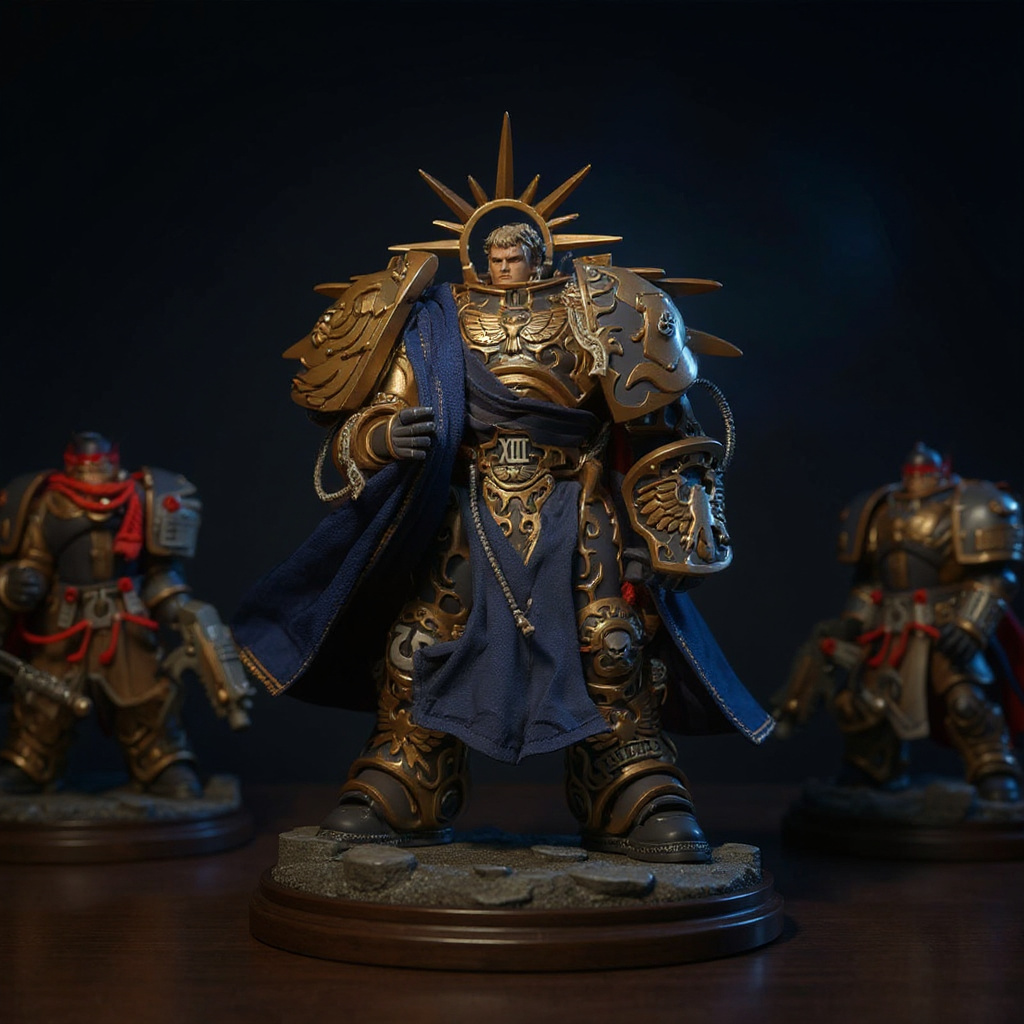
McFarlane's 1/18 Space Marines have broader shoulders than Joytoy's figures. A cloak cut for one won't drape right on the other. The neck attachment sits crooked and bunches against the armor torso instead of lying flat.
Measure your figure's shoulder width before ordering. Standard 1/18 figures run 25-28mm across the shoulders. Too narrow, and the cloak pulls tight and restricts arm movement. Too wide, and it slides during posing sessions, which is its own kind of annoying when you're three shots into a lighting setup.
Most sellers don't list exact measurements anywhere on the page. Ask before you buy. Especially if you're mixing brands on the same shelf.
Photography Tips for the Deep Blue Cloak on a Tabletop Background
A wire-frame cloak earns its price in photos. You can reshape it between shots instead of fighting plastic memory or reshooting the whole scene.
For motion shots, bend the wire into a single S-curve along the gold trim edge so the fabric reads as caught mid-swing. For a stoic pose, push the wire into two or three straight vertical folds — real cloth cloaks fall that way at rest, and the effect sells better than people expect.
Lighting changes everything with fabric in a way it never does with plastic. Harsh LED strips cast deep shadows into the folds and make the matte finish look flat. Diffused light, or two soft sources at angles, keeps the texture visible without hiding it in shadow pockets.
Avoid fluorescent lighting entirely for this shot. It shifts blue dye toward gray and makes the gold trim look dull instead of warm, which is the opposite of what you want against a neutral or dark tabletop background. If you're building out a full scene, the diorama lighting setup guide covers cheap fixes that don't involve buying a new light kit.
Common Durability Issues and Fixes
Wire fatigue is the real long-term problem. Bend it enough times and the internal wire snaps, leaving a dead spot that won't hold a fold anymore.
In my experience this starts around 50 to 75 major pose changes, sometimes sooner if you're always bending at the same point near the shoulder. You'll notice the cloak sagging in one specific spot while the rest holds fine.
If it happens:
1. Feel along the trim edge to find the break 2. Push the wire ends back together if they're close 3. Use small jewelry pliers to set a new bend slightly offset from the old break 4. Avoid extreme angles right at that spot going forward 5. Or just call it battle damage and lean into the grimdark aesthetic
Fabric wear shows up around the attachment points first. Constant removal and reattachment frays the mounting slits over time. A dab of clear nail polish on the edges slows this down if you swap cloaks between figures often.
Honestly, if you display your figures in a humid basement or an un-air-conditioned garage, skip the wire-frame version entirely. The internal wire corrodes over months in that kind of environment, and rust stains bleed through the fabric from the inside where you can't reach it.
What Serious Collectors Actually Buy
Active members of r/Warhammer40k and r/actionfigures tend to buy two or three cloak styles instead of one expensive custom piece.
A basic fabric cloak for everyday shelf display ($25-35). A premium wire-frame version, like the deep blue and gold one covered here, for photography sessions ($40-55). Sometimes a weathered battle-damage cloak for grimdark scenes ($30-45).
That spread gives display flexibility without dumping the whole budget into one piece.
Collectors searching for ultramarines figure accessories for sale tend to prioritize color accuracy over flawless stitching. A slightly uneven seam won't show up under normal display lighting. The wrong shade of blue shows up immediately to anyone who knows the official Warhammer 40,000 palette.
Setting Realistic Expectations for Handmade Quality
Handmade doesn't mean flawless. Small variations are normal, and honestly they add character that mass-produced plastic never has.
Expected in a $44 handmade cloak: - Hem length off by 1-2mm on one side - Slight thread color variation between production batches - Softer edges compared to machine-cut plastic - Unique fabric grain from hand-selected material
Those aren't defects.
Worth a return, though: - Visible glue residue anywhere near the trim - Seams unraveling within the first week - Wire poking through the fabric surface - Wrong color or wrong dimensions entirely - Staining left over from manufacturing
FAQs
What's the best fabric for an action figure diorama cape prop at 1/18 scale? Cotton-poly blends photograph most realistically at this scale. Pure cotton can look too textured under close-up lighting, and synthetics often look shiny in a way that reads wrong for a military cloak. How do I make a cloak pose without it looking stiff? Shape gentle S-curves with the wire instead of sharp angles. Real fabric flows in soft arcs even when there's structure holding it up. Skip the 90-degree bends — they look mechanical every time. Can I fix a broken action figure cape myself? Usually, yes. If the wire snaps, splice it with jewelry pliers. For fabric tears, use fabric glue instead of thread since stitching often shows at this scale. What gauge wire works best for a bendable cloak? 20-gauge craft wire is the balance point for 1/18 figures. Go thicker and you get visible bumps under thin fabric. Go thinner and it won't hold a pose past a day. How do I stop a soft-goods cloak from sagging over time? Reposition the wire monthly so it doesn't set into one shape permanently. Store figures in neutral poses between display sessions, and keep them away from heat vents or cold windows that mess with wire temper. Is a handmade cloth cloak worth it over a plastic one? If you photograph your figures or care about textile realism, yes. For shelf display where poses never change, plastic works fine and costs less. Will one cloak fit any 1/18 action figure base? No. Shoulder widths vary by manufacturer — McFarlane runs broader than Joytoy. Check measurements before buying aftermarket fabric accessories. How do collectors display cloaks when they don't have a spare figure? Many mount the cloak on a spare armor torso or a small armature just for photography. The cloak becomes its own display piece that gets swapped between characters as needed. Does the gold trim tarnish or fade over time? Metallic thread trim can dull under direct sunlight after a year or two. Keep the display out of direct window light and it holds its color far longer — mine still looked new after 18 months on an indoor shelf. Why does my cape look flat in photos even with the wire fold? Usually a lighting problem, not a wire problem. Flat overhead light erases the fold's shadow definition. Angle a second light source low and to the side to bring the texture back.Is This Action Figure Diorama Cape Prop Actually Worth the Price?
A $44 handmade cloak costs about three times a basic plastic accessory. Whether that's worth it depends on what you actually do with your figures.
For a shelf where poses get set once and never touched again, plastic is fine. For photography, diorama builds, or figures that get repositioned often, a wire-frame action figure diorama cape prop like this deep blue and gold cloak earns its price back in usable photos alone.
The Ultramarines Honor Guard Cape for 1/18 Action Figures sits right at that sweet spot — authentic color, gold trim that holds up, and enough wire structure to make a static torso look like it's caught mid-scene against your tabletop background.

