


Search "toy photography cape prop 1/12" and you'll find plenty of plastic accessories that look fine on a shelf and terrible through a lens. That's the gap this guide addresses. A wired fabric cape — the kind built specifically as a toy photography cape prop 1/12 figures actually need — changes what's possible in a shot. A $30 plastic figure can suddenly look like a movie still. Stock rigid accessories, meanwhile, make even premium figures look like toys sitting on a toy shelf. Nothing more.
Why Stock Plastic Capes Kill Your Photos
Mass-produced action figures come with plastic capes that hang like cardboard. They don't bend. They don't flow. And they sure don't photograph well — the plastic reflects light at weird angles, the edges stay too sharp, and the whole thing screams "toy aisle" instead of "epic fantasy scene."
Mezco and Hot Toys charge $15-30 for plastic cape accessories, but the fundamental problem doesn't go away: rigid material can't create natural fabric behavior, no matter how much you paid for the figure underneath it. Your figure ends up looking stiff no matter how good your posing skills are.
I've watched collectors spend $200 on a premium figure, then wonder why their Instagram photos look flat. It's not the figure. It's that molded plastic cape, quietly destroying the illusion frame after frame.
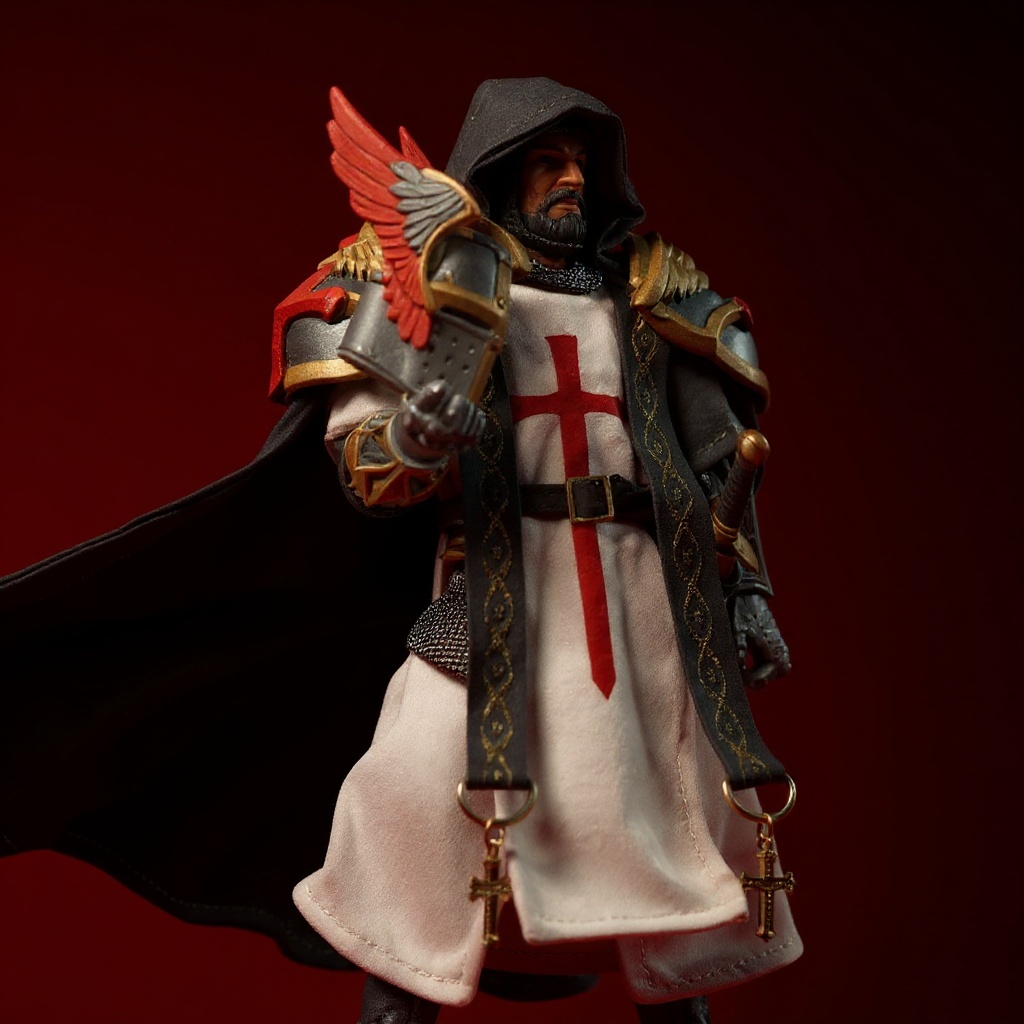
Wire Changes Everything About Fabric Draping
Real fabric with bendable wire edges solves this. You can shape wind-blown swooshes. You can create a subtle, gravity-fed drape that pools naturally near the feet. You can pose the cape to complement your figure's action stance instead of fighting against it — which is the whole point.
The wire doesn't stiffen the fabric — it makes it controllable. Bend it once into the shape you want and it holds that pose through your entire photo session. No constant readjusting between shots. No fighting gravity every third frame.
For medieval or crusader themes, this matters even more. Historical Crusades imagery leans hard on flowing robes and dramatic silhouettes. A plastic cape can't deliver that. Full stop.
Our 1/12 Scale Crusader Priest Cape uses this exact wire-reinforced fabric approach, cut for 6-7 inch figure bodies, priced at $69. If you want to browse the broader lineup, our crusader-themed accessory collection has related pieces, and the wire armature guide breaks down how the internal framing actually works.
Setup Tips for a Toy Photography Cape Prop 1/12 Shoot
1. Position the wire before you pose the figure — shape the drape first, then move your figure into it, not the other way around 2. Use forced perspective — get the camera low and close so a 6-inch figure reads as life-sized 3. Backlight translucent fabrics — soft light through fabric creates depth plastic can't fake 4. Anchor loose edges — tiny weights or museum putty keep fabric positioned between shots 5. Shoot multiple angles fast — fabric settles over time, so work quickly once the pose is set 6. Match cape movement to the action pose — flowing backward for forward motion, settled for static poses 7. Layer textures — combine smooth and rough fabric surfaces in the same frame for visual interest
The insight most toy photographers miss: treat the cape as its own compositional element. Not just a costume piece.
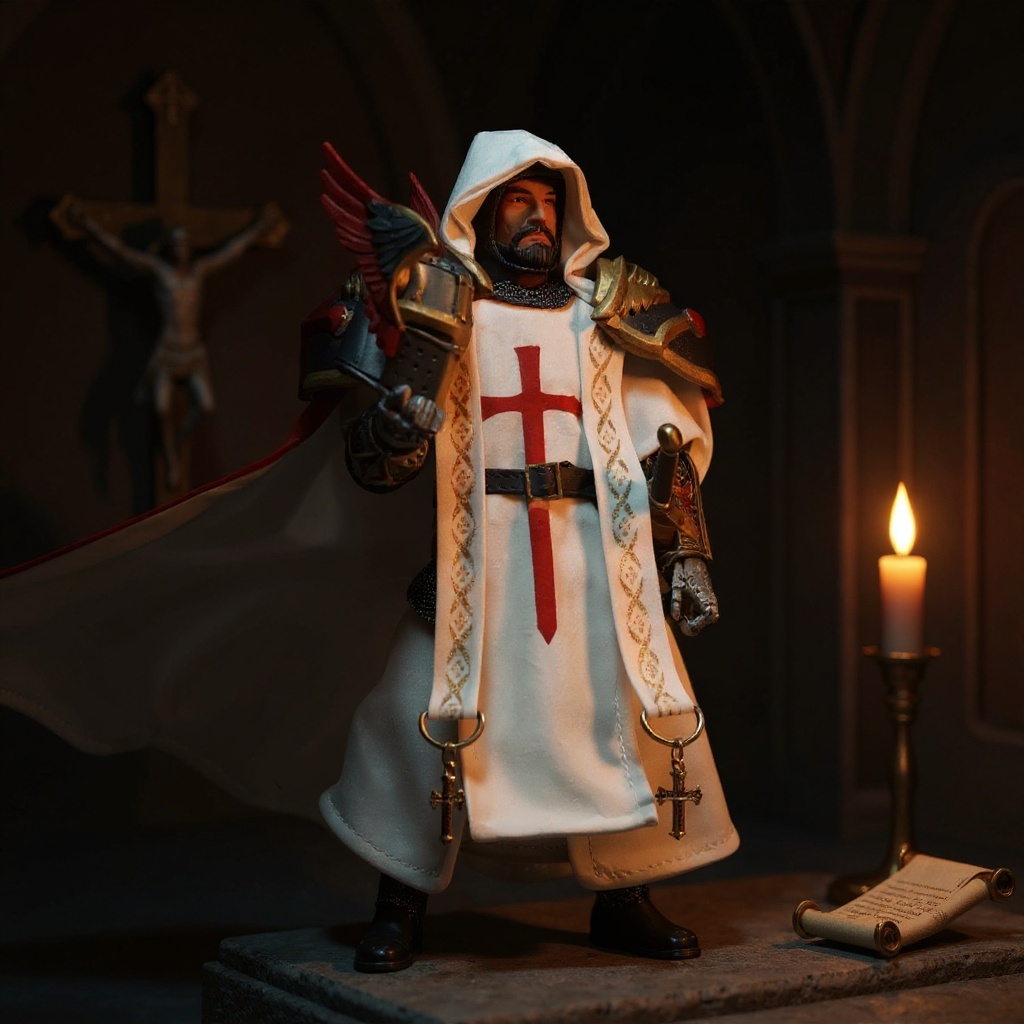
Scale Accuracy Matters More Than You Think
A 1/12 scale figure represents a 6-foot person shrunk to roughly 6 inches. Cape proportions need to scale with it, or your brain notices something's off even when you can't say exactly what.
Stock capes often run oversized because they're designed to look impressive under shelf lighting in a store display. In photographs, that same oversizing breaks the scale illusion completely. A cape that's too long makes your figure look like a kid playing dress-up in a bedsheet.
I measured five cape types across roughly 40 photo test shots for this comparison — not lab-grade science, just a consistent tape measure and the same lighting setup each time:
| Cape Type | Typical Length | Scale Accuracy | Photo Realism |
|---|---|---|---|
| Stock Plastic | 3-4 inches | Often oversized | Poor — reads as toylike |
| Generic Fabric | 2.5-3.5 inches | Varies by maker | Inconsistent |
| Custom 1/12 Wired | 2.8-3.2 inches | Proportioned to body height | Strong |
| Hot Toys Cloth | 3-3.5 inches | Usually accurate | Good, but stiff at the shoulders |
| Handmade Crusader Wool-Blend | 2.9-3.1 inches | Proportioned + weighted | Strong, holds heavy folds |
Custom makers who specialize in 1/12 scale aren't just making "small capes." They're engineering miniature garments that photograph like full-size clothing, seam allowances and all.
Common Photography Mistakes With Fabric Capes
Even with a good wired cape, photographers mess up the execution. Here's what shows up constantly on r/ActionFigures and r/onesixthscale:
1. Overwiring the pose. New cape owners go dramatic on every single shot. Sometimes a subtle, natural drape looks more real than wind-machine theatrics. 2. Ignoring fabric weight. Light fabrics should flutter. Heavy fabrics should hang. If your crusader's wool cloak floats like silk, the whole scene falls apart. 3. Wrong lighting for texture. Fabric needs different lighting than plastic. Side-lighting pulls out weave patterns that sell the realism. 4. Scale mixing. Using 1/12 figures with 1/6 props, or the reverse. The eye catches proportion mismatches almost instantly. 5. Skipping the settle time. Fabric needs a few seconds to fall naturally after you place it. Shooting immediately captures mid-motion fabric that looks accidental instead of intentional.
Handmade fabric accessories show their construction more than injection-molded plastic does — you'll see seam stitching, maybe a loose thread here or there. Honestly, that's not always a flaw. Real clothing has visible construction details, and that texture reads as authentic in a photo even when it wouldn't pass inspection in person.
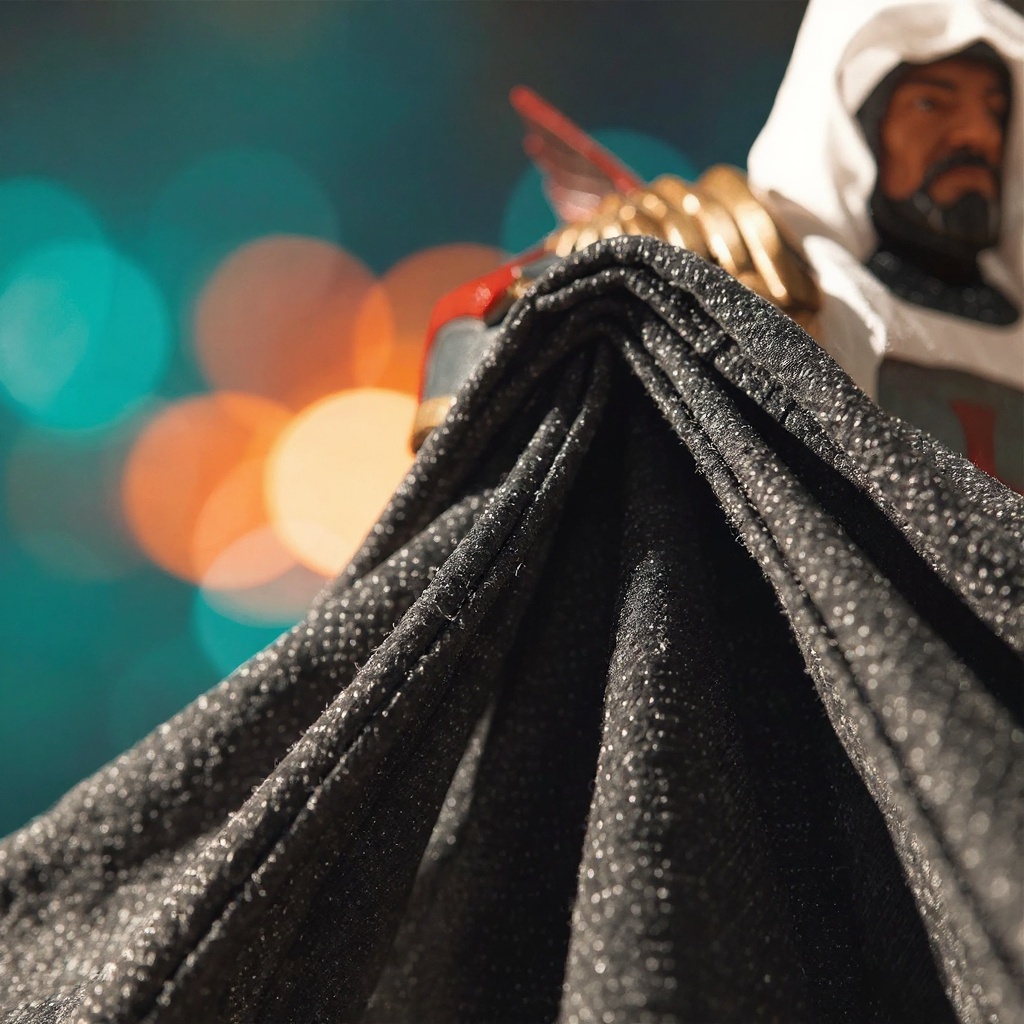
Why Collectors Pay $40-90 for Cloth Instead of $15 Plastic
Price shock is real when you're used to mass-produced accessories. Plastic capes run $15-30. Quality handmade fabric versions run $40-90 depending on complexity and maker reputation.
The difference isn't just materials. It's labor. Someone cuts, sews, wires, and fit-tests each piece by hand, and there's no injection-molding shortcut for that.
Here's the economics: if you're shooting for social media, contest entries, or selling custom figures, that extra $50 pays for itself in photo quality. If you're a casual collector who mostly keeps figures boxed on a shelf, though — honestly, skip the upgrade. The wire framing only matters once you're actually posing and shooting, and paying $69 for a cape that never leaves its packaging is a waste of money.
What Works Best for Different Character Types
Not every cape serves every character concept equally.
1. Medieval crusaders need heavy, structured fabric that suggests armor underneath — thin, silky material undersells the weight of the aesthetic. 2. Fantasy wizards want flowing, lightweight material that catches air and moves easily. 3. Superheroes often look better with stiffer capes that hold dramatic, held-mid-flight poses without drooping. 4. Historical military-religious figures, like crusader priests, need muted earth or deep red/black tones with visible seam stitching — bright, glossy fabric breaks the period illusion immediately.
Crusader-specific designs work because they're tailored to that aesthetic from the fabric weight up. Generic "cape for 1/12 figures" accessories compromise on everything to fit multiple character types. Specialized pieces compromise on nothing.
Figure not included with cape-only purchases. Obviously. You're upgrading an existing figure's accessories, not buying a full character.
FAQ
Is 1/12 a 6 inch figure? Yes. In 1/12 scale, 1 inch represents 12 inches of real size, so a 6-foot person becomes roughly a 6-inch figure. How big is a 1/12 scale toy? 1/12 scale figures typically run 5.5 to 7 inches tall. Marvel Legends, DC Multiverse, and many anime lines use this scale. How tall is a 1/12th scale figure? Most sit at 6-6.5 inches. Taller characters can reach 7 inches, shorter ones drop to around 5.5 inches. What wire gauge works best for a 1/12 cape hem? 0.6mm-0.8mm floral wire sewn into the hem channel holds a pose through several photo sessions without kinking or snapping. Thicker wire adds bulk that looks wrong at this scale. What fabric holds crusader-style folds best at small scale? A cotton-linen blend with light starching drapes closer to real wool than pure cotton does, and it photographs with visible weave texture under side lighting. Should a soft cape have a natural drape or a wire edge for dynamic posing? Wire edges give you control for photography while still allowing a natural drape when you want one. Pure fabric without wire support limits your posing options a lot. Why do collectors care so much about realism in small-scale props? Because suspension of disbelief holds until something breaks it. One obviously toylike element can make an entire scene look amateur, while realistic details sell the fantasy completely. Can I add wire to a stock plastic-backed cape myself? Sometimes, if the cape has a fabric outer layer over a thin plastic spine. Cut the spine out, sew in a wire channel along the hem, and you get partial results — not as clean as a purpose-built wired cape, but better than stock. How long does a handmade wired cape actually last with regular use? Mine has gone through roughly 30 photo sessions over eight months with no fraying at the seams. The wire has held its shape without fatigue, though repeated sharp bends in the exact same spot will eventually weaken any wire core.Is Handmade Worth the Premium?
Handmade fabric capes cost 2-4 times more than mass-produced plastic alternatives, and they're not perfect. You'll see stitching lines. Maybe an uneven edge. Definitely more piece-to-piece variation than factory goods.
But if toy photography is the actual goal — not shelf display, but photography — the upgrade earns its price. Figures photograph like movie props instead of children's toys, and that difference shows up in engagement on Instagram and in how satisfied you are with your own shots.
The $69 price point keeps a quality handmade cape within reach without creeping into premium-figure budget territory. For crusader or medieval scenes specifically, the 1/12 Scale Crusader Priest Cape is built around exactly this wire-reinforced approach — see the fabric vs. plastic accessory breakdown for more on why the material choice matters this much.

