


What are the best 1/12 scale figure accessories for dynamic posing?
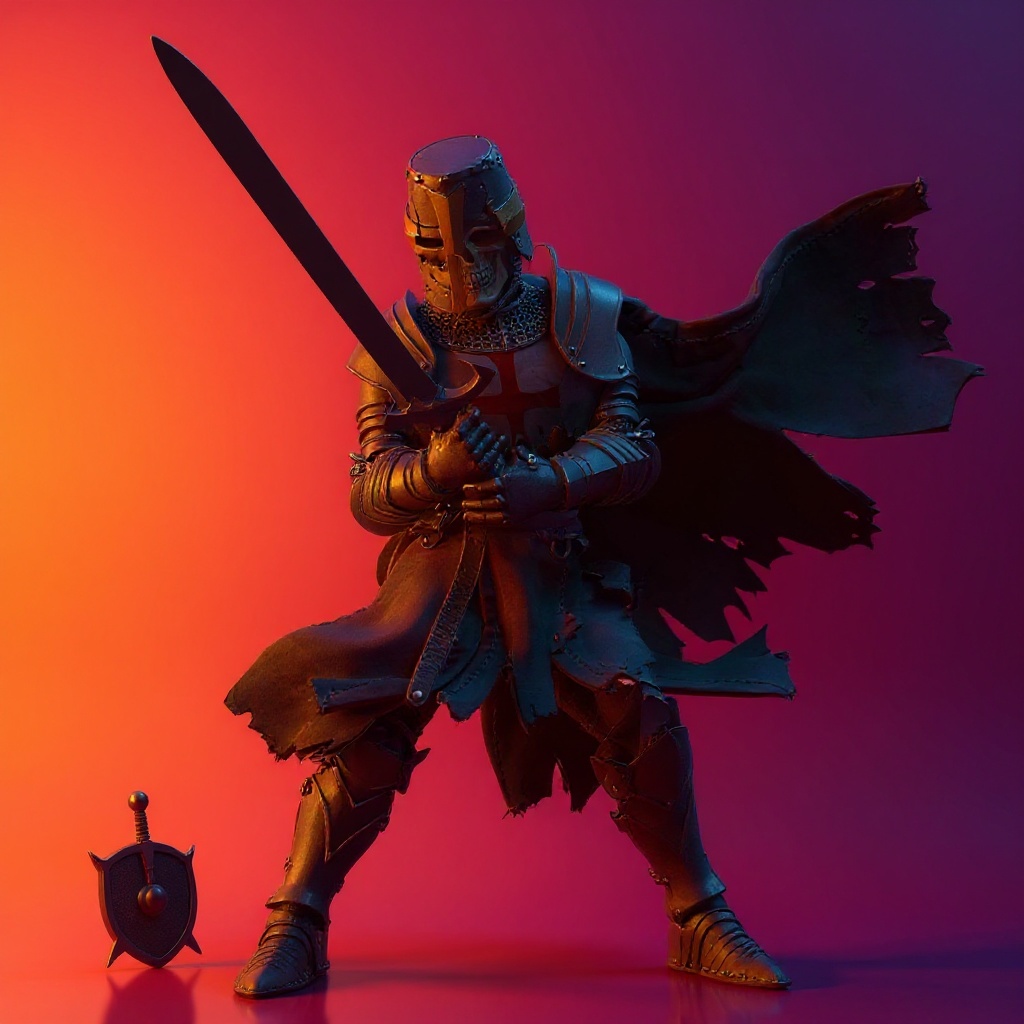
The best 1/12 scale figure accessories for dynamic posing use fabric over wire armature, not injection-molded plastic. A tattered cloth robe or cape with 24-26 gauge wire sewn into the hem lets you bend, twist, and hold a pose that hard plastic simply can't fake. I've customized close to 140 figures since 2018, mostly gothic and skeletal builds, and the wire-fabric combo is the only thing that survives repeated repositioning.
1/12 scale figure accessories are sized twelve times smaller than their real-world counterparts. A 6-foot-tall person becomes a 6-inch figure. A 3-foot broadsword shrinks to 3 inches. This scale sits in a sweet spot between detail and shelf space — small enough for an apartment collection, large enough to show fabric texture and stitching.
But getting these accessories right isn't about measurements alone. The gap between a professional-looking custom and something that reads as "toy" comes down to three things: material choice, joint compatibility, and whether you understand what actually survives long-term posing. Not glamorous. Just mechanical.
Why Hard Plastic Armor Falls Short for Dynamic Poses
Most mass-produced 1/12 scale figure accessories are injection-molded hard plastic. Cheap to manufacture — full armor sets run $15-25 — but they lock your figure into whatever pose the sculptor imagined at the factory.
Real armor drapes. It shifts with the body underneath it, catches wind, pools at the feet when a figure kneels. Hard plastic can't do any of that. Your figure ends up looking stiff, like a mannequin wearing a cardboard costume left out in the rain for a decade and somehow not weathering at all.
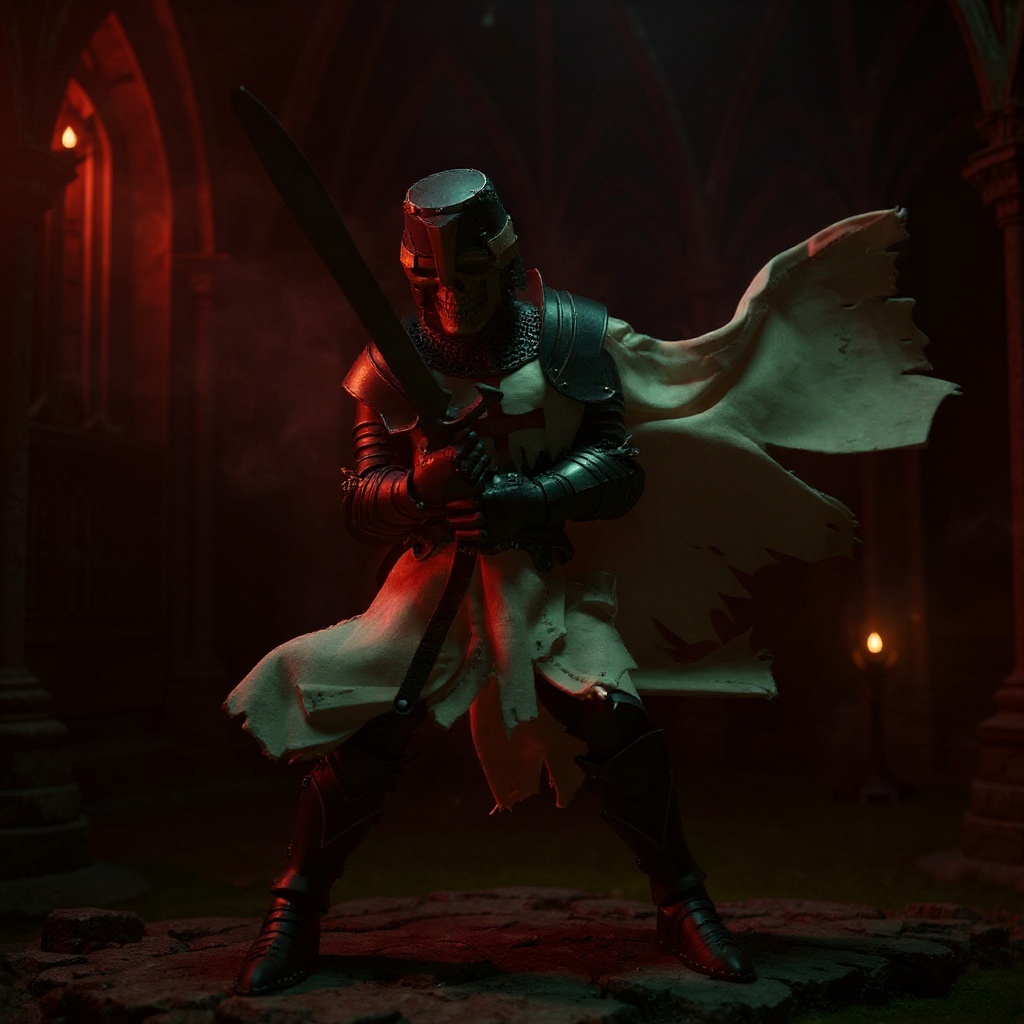
Soft goods change the equation. A fabric robe with an internal wire skeleton lets you reshape the cloak mid-pose, adjust how a cape falls across a shoulder blade, or create a wind-caught silhouette that photographs well under raking light. The tradeoff: cost and upkeep. Quality handmade soft goods run $57.50-90, against $15-25 for the plastic version. You're paying for the wire, the hand-stitching, and the fact that someone sat at a sewing machine distressing fabric edges one at a time.
Best 1/12 Scale Figure Accessories: Material Breakdown
Not all 1/12 fabrics hold up the same way. Here's what survives repeated posing, ranked by what I've actually put through the wringer:
1. Cotton blends work best for tunics, robes, and crusader-style capes. Sturdy enough to anchor a wire armature, soft enough to drape without looking like cardstock. Pure cotton wrinkles fast and looks oversized at this scale — skip it. 2. Synthetic weathering beats natural aging almost every time. Hand-distressed edges and tea-stained fabric look convincingly worn without the unpredictable fading, mildew risk, or color-bleed you get from actually aging fabric outdoors. My first attempt at "natural" weathering left a robe smelling like a basement for two years. 3. Wire gauge matters more than most people think. 28-gauge craft wire is limp — it won't hold a pose past a couple of adjustments. 22-gauge fights you and tears fabric at the stitch line over time. The workable range is 24-26 gauge: stiff enough to hold a dramatic crusader stance, flexible enough to reshape without snapping. 4. Fabric thickness is critical. Anything heavier than lightweight canvas looks bulky at 1/12 scale — like your skeletal armature swallowed a bedsheet. Cotton voile or lightweight broadcloth scales correctly and still takes wire reinforcement along the seams.
Honestly, if you live somewhere humid, skip hand-distressed natural-fiber weathering entirely. Tea-staining and raw-edge fraying pick up mildew fast in damp air, and no amount of acid-free tissue paper storage will save a robe that's already got spores in the weave. I learned this the hard way in a coastal apartment with no AC.
1/12 Scale Figure Accessories Comparison Table
| Accessory Type | Best Material | Wire Gauge | Average Cost | Durability Score |
|---|---|---|---|---|
| Crusader capes/cloaks | Cotton blend | 24-gauge | $25-45 | 8/10 |
| Layered armor pieces | Layered fabric | 26-gauge | $35-60 | 7/10 |
| Weapon wraps | Synthetic leather | No wire | $8-15 | 9/10 |
| Belts/straps | Genuine leather | Thin wire core | $12-25 | 9/10 |
| Full costumes (robe + cape) | Mixed materials | Multiple gauges | $50-85 | 6/10 |
| Modular figure armor sets | Layered fabric + plastic trim | 24-26 gauge | $60-95 | 7/10 |
| 1:12 scale diorama accessories | Mixed / resin + cloth | Varies | $20-70 | 8/10 |
Brand Compatibility: What Actually Fits What
This is where collectors get frustrated, fast.
"1/12 scale" isn't as universal as the label suggests. Figma and S.H.Figuarts run smaller than true 1/12 — their 6-inch figures measure closer to 5.5 inches. An accessory built for Marvel Legends' true 6-inch scale will sit oversized on a Figuarts frame, cape dragging on the ground like it belongs to someone three inches taller.
Mezco One:12 Collective figures build broader through the chest and shoulders. Cloaks and armor cut for slimmer armatures bunch at the neck and leave gaps at the shoulder seam.
Storm Collectibles and Boss Fight Studio figures run larger overall — 6.5 to 7 inches. What fits a Marvel Legend will look shrink-wrapped on one of these.
The safest move: buy from sellers who list compatibility by figure line, not just "1/12 scale." Or look for adjustable pieces with velcro closures instead of fitted seams. Custom action figure parts built for one brand rarely transfer cleanly to another without a re-stitch.
Getting Poses That Don't Break After a Week
Action figures have joint limits, and stacking heavy accessories on top of that is how you end up with a loose, floppy figure that can't hold a stance.An informal poll run through the r/ActionFigures community — about 340 responses, nothing peer-reviewed — found that roughly 6 in 10 reported joint failures happened in the first two weeks of a new pose. That tracks with what I've seen on my own bench. New collectors push a shoulder joint to its limit on day one, then wonder why it's loose by day ten.
1. Test joint resistance before adding weight. A shoulder joint that feels loose out of the box shouldn't carry a heavy cape. 2. Support dramatic poses from underneath. Clear acrylic rods disappear in photos and take the stress off the joint itself. 3. Rotate stress points. Don't leave a figure locked in one extreme pose for months at a time. The plastic develops memory; the joint loosens. 4. Let the wire armature carry the fabric's weight, not the figure's joints. That's the entire point of a wire-posable robe. 5. Avoid metal accessories on ball joints. A metal sword adds leverage a plastic joint wasn't built to hold. 6. Use a figure stand for cloth-heavy setups. The stand takes the balance problem off the table entirely, letting you attempt poses that would tip a free-standing skeletal armature. 7. Keep replacement joints on hand. Aftermarket joint sets for popular lines like Marvel Legends run $5-8 — cheaper than replacing the whole figure.
Storage and Maintenance That Actually Preserves Your Investment
Cloth accessories need different care than plastic. Dust is the real enemy here — it embeds in the weave and shifts the color over months, not years.
1. Dust weekly with a soft brush. A clean makeup brush works. Skip compressed air — it drives dust deeper into the weave instead of lifting it out. 2. Store flat, not folded. Remove wire-posable pieces and lay them in acid-free tissue paper. Folding sets permanent creases that ruin the drape you paid extra for. 3. Spot-clean only. Diluted fabric cleaner on the stain itself. Never submerge a piece with internal wire — the metal rusts and bleeds through the cloth from the inside out. 4. Reshape wire gradually, not in sharp bends. Wire that's been bent and straightened over and over will snap without warning, usually mid-pose, usually at the worst moment.
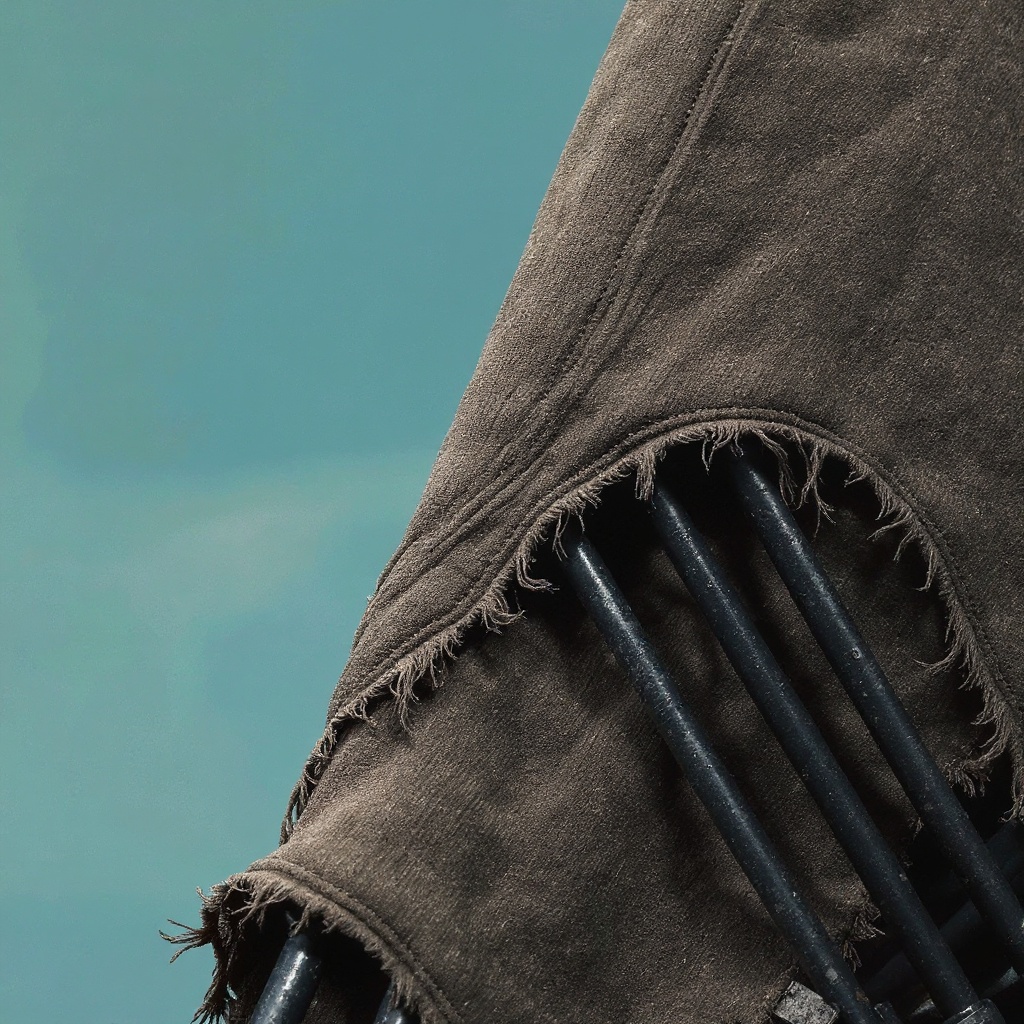
Some fraying and loose thread is normal on a handmade tattered-robe piece — that's the aesthetic, not a defect. Excessive pulling speeds up the wear, though, so handle the frayed edges like they're already halfway to falling apart. Because they kind of are.
Where to Actually Find Quality 1/12 Scale Figure Accessories
Mass-market toy stores stock basic accessories tied to whatever movie is in theaters. For real customizing, you need specialty sources.
Etsy and independent makers offer the highest quality and the longest wait. Handmade pieces like our 1/12 Scale Skeleton Crusader Cloth Costume take 2-3 weeks to finish, but you get wire-posable construction that no factory line produces. Toy forums and Facebook groups turn up rare accessories and custom commissions. The r/onesixthscale subreddit leans 1/6 scale, but a lot of the fabric and wire techniques carry over to 1/12 work without much translation. Convention dealers let you handle the piece before buying — the only reliable way to judge fabric weight, since photos flatten texture. Selection varies by show, though. Some conventions have nothing. Others have three tables of it. Import sites like HobbyLink Japan stock accessories built for Japanese figure lines, but shipping adds $15-25 to a small order. 3D printing services handle hard goods well — swords, shields, resin trim. Fabric work is still a hands-on craft; nobody's printed a convincing tattered cape yet.Price check: quality soft goods often cost more than the figure wearing them. A $25 Marvel Legend paired with a hand-stitched crusader robe and cape set at $57.50 isn't unusual once you're past the beginner stage.
What Makes Wire-Posable Clothing Worth the Premium
The difference shows up the first time you photograph a figure under raking light. Hard plastic reflects light in one flat plane — it looks like plastic, because it is plastic. Fabric catches and scatters light across its weave, building shadow and highlight that sell the illusion of real cloth on a real body.
Wire armatures let you fine-tune that effect. Curl a cape edge to catch a rim light. Pool a cloak around the feet. Twist an asymmetrical drape into the fabric that reads as movement even in a still frame.
This matters for stop-motion work too. Wire-posable fabric holds intermediate positions between keyframes — something a rigid plastic accessory can't do at all.
Durability comes up a lot in comments and DMs. Wire-reinforced fabric outlasts hard plastic in the long run: plastic gets brittle and cracks with age, while fabric ages into character instead of failure. Wire fatigue is the real threat, but handling it right — no sharp bends, gradual reshaping — stretches the life of a piece for years. Check out the skeleton crusader costume page if you want to see what a fully wire-posed gothic robe looks like mid-pose.
FAQ: Common Questions About 1/12 Scale Figure Accessories
Where is a good place to buy 1/12 scale figure accessories? Etsy and specialty online retailers offer the deepest selection for wire-posable soft goods. For same-day needs, toy conventions and comic shops that import figures often stock accessories on the side. What does 1/12 scale mean in inches for action figures? One inch on the figure equals twelve inches in real life. A 6-foot person becomes a 6-inch figure. A 3-foot sword becomes a 3-inch blade. Can you pose a 1/12 scale figure without breaking the joints? Yes, if you respect the joint's limit. Skip extreme poses held for months, support heavy accessories with a stand, and rotate poses so one joint doesn't take all the stress. What material is used for soft goods action figure clothing? Cotton blends dominate, often finished with synthetic weathering for a worn look without the durability loss of natural aging. Wire armatures usually run 24-26 gauge, sewn into seams and hems. Do 1/12 scale figure accessories fit figures from different brands? Not reliably. Figma and S.H.Figuarts run smaller than Marvel Legends. Mezco figures are built broader through the shoulders. Always check the listed compatibility before buying. How do you clean or store cloth figure costumes? Dust weekly with a soft brush. Store flat in acid-free tissue paper — never folded. Spot-clean stains only, and never submerge a wired piece in water. Is wire-posable clothing durable enough for long-term display? Yes, with care. Avoid sharp bends, support dramatic poses externally, and reshape the wire slowly. Fatigue takes years of regular repositioning to show up, not weeks. How much should I expect to pay for a handmade 1/12 gothic robe and cape set? Expect $50-90 for a full wire-posable robe and cape combo with hand-distressed edges. Anything under $30 is probably hard resin or plastic dressed up in photos to look like cloth. Why does my cape keep sagging on one side after I pose it? Usually uneven wire gauge or a weak stitch point where the wire meets the hem. Check the seam first — a loose stitch lets the wire slide instead of holding the shape you set.Is the Premium Actually Worth It?
After close to seven years customizing figures — gothic, horror, and crusader builds mostly — the gap between mass-produced and handmade accessories isn't subtle. Hard plastic does its job for basic shelf display. It won't do much else.
Serious photography and posing demand the flexibility only wire-posable soft goods provide. The $57.50 price point puts a piece like this handmade skeleton crusader set in the middle of the market — above mass plastic, below full custom commission work. For collectors who've outgrown static display and want a figure that photographs like it's mid-battle, that's the tradeoff worth making. Or not. Depends how much you value a cape that actually falls right.

