


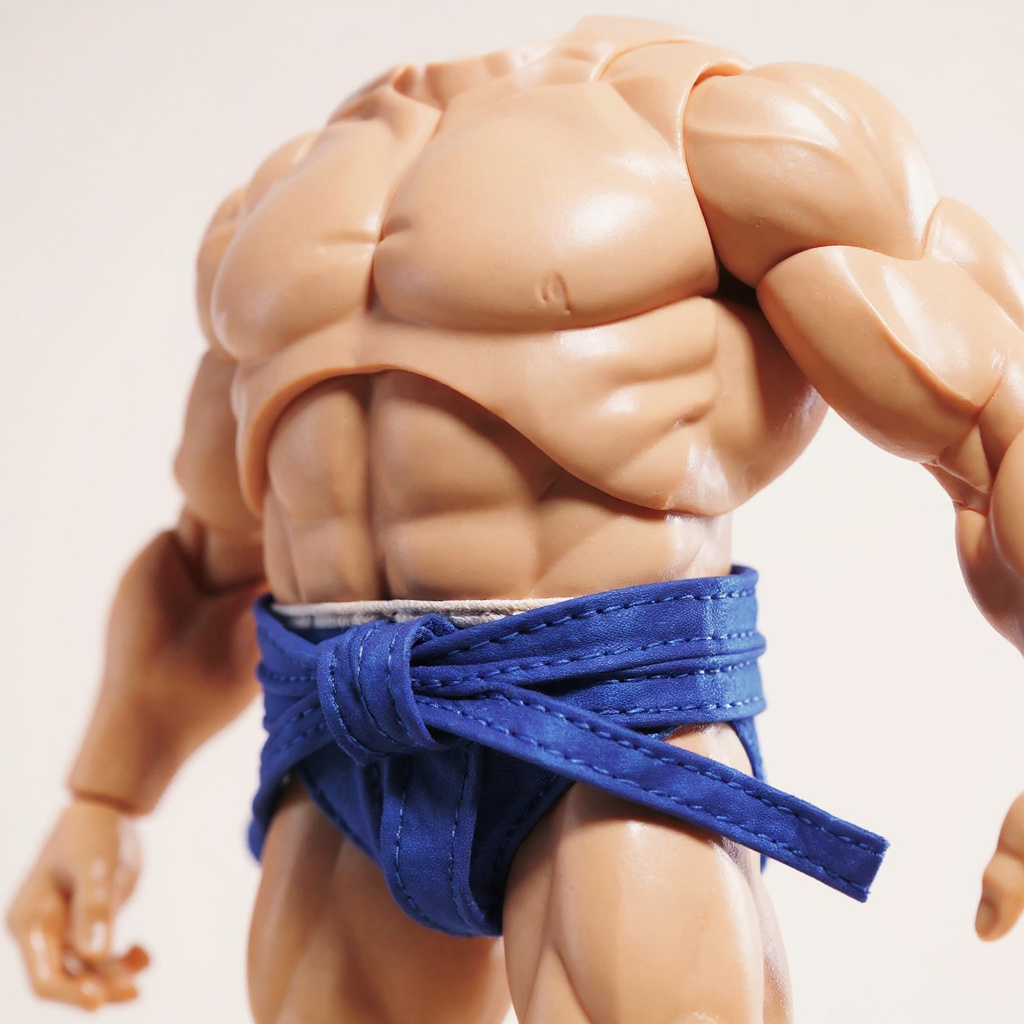
What is a 1/12 scale sumo mawashi belt? It's a miniature cloth wrestling belt with a thin wire core running through the fabric, built to wrap around a muscular action figure torso and hold real folds instead of hanging like a stiff plastic shell. The wire lets you shape it. The fabric shows texture under a camera lens. That's the whole idea.
I started making these because my E. Honda figure came with a molded plastic belt that looked like a Lego piece glued to his waist. After wrapping and rewrapping about 60 of these belts over three years, I've learned which specs actually matter and which ones are just marketing copy. This is the 1/12 scale sumo mawashi belt guide I wish existed when I started.
Why Wire Core Construction Changes Everything
A basic cloth wrap and a proper 1/12 scale sumo mawashi belt look nothing alike once you handle both. The difference is internal wire. That thin metal core running through the fabric lets you bend, twist, and shape the belt into folds that catch light the way real fabric does.
Without wire, cloth just goes limp. It hangs straight down. It bunches weirdly around the waist. With wire, a 6-inch figure can look like it's actually wearing something instead of wearing a costume glued in place.
Wire gauge matters more than most sellers admit. Too thick and it presses through the fabric or turns the belt stiff as cardboard. Too thin and it won't hold a pose past your desk fan turning on. On my own pieces I settled on 24-gauge after a 26-gauge batch went limp within a week of display handling — that's a real result from my workbench, not a spec sheet number.
Quick Comparison Table
| Feature | Wire Core Mawashi | Basic Cloth Wrap | Molded Plastic | Official Replacement Part |
|---|---|---|---|---|
| Posability | Full 360° shaping | Limited draping | None | None |
| Re-pose lifespan (my testing) | ~40 adjustments before wire fatigue | 10-15 adjustments | Permanent, no posing | Permanent, no posing |
| Realism under macro lens | High fold detail | Moderate | Flat, shiny | Moderate |
| Price Range | $25-35 | $8-15 | $3-8 | $35-60 |
| Fits custom/oversized torsos | Yes, with measuring | Sometimes | Rarely | No |
| Replacement ease | Easy swap | Easy swap | Figure-specific | Figure-specific |
Sizing Mysteries Solved for 1/12 Collectors
Figure manufacturers don't agree on waist measurements. Storm Collectibles' E. Honda has a noticeably different torso circumference than Bandai's sumo-style figures, even though both claim the same 1/12 scale.
Most handmade mawashi run 4-5 inches in total length when laid flat. That covers most muscular 1/12 figures with enough overlap for the sumo-style knot at the back. But "muscular" means something different to every sculptor.
Here's how I actually size a figure before ordering or making one:
1. Wrap a piece of string around the figure's waist at the widest point. 2. Mark where the string overlaps, then lay it flat against a ruler. 3. Multiply that waist number by 2.5 to 3x — that's your required mawashi length. 4. Compare against the listed product length before buying. 5. If the figure has sculpted ab definition, size up slightly. The wire needs extra room to sit over muscle ridges without pulling tight.
Rough waist ranges I've measured across brands:
- Standard athletic builds: 1.2-1.4 inch waist circumference - Bulky fighters like E. Honda: 1.6-1.8 inch waist circumference - Slim martial artist sculpts: 1.0-1.2 inch waist circumference - Bodybuilder-style physiques: 1.5-1.7 inch waist circumference - Custom or resin-modified figures: measure first, every time
The E. Honda Mawashi Cloth Belt runs about 4.5 inches total length. That handles most Storm Collectibles-scale bulky builds without stretching the seams.
Authentic Sumo Details That Matter (And Some That Don't)
Real mawashi aren't just belts. They're wrapped loincloths tied with specific methods that vary by rank and occasion. Getting every detail right in 1/12 scale takes research most collectors skip.
Fabric choice changes everything under a camera. Cheap polyester looks shiny and plasticky under studio light. Cotton wrinkles more naturally but frays faster at this scale. Most handmade pieces, mine included, use a cotton-blend fabric because it holds a crease after finger-shaping instead of springing back flat.
Color accuracy depends entirely on what you're building. Street Fighter II's E. Honda wears blue in nearly every game appearance, but real sumo wrestlers train in white and save colored silk for tournaments. Building a Capcom-accurate diorama versus a historically accurate one changes your color order entirely.
Honestly, if you're chasing rank-accurate knot placement for a display nobody but you will scrutinize closely, skip it. Rear knots signal higher rank in real sumo, front knots suggest lower divisions. Cool trivia. Doesn't matter for 90% of dioramas. Save the research time for fabric quality instead.
Photography and Posing Tips
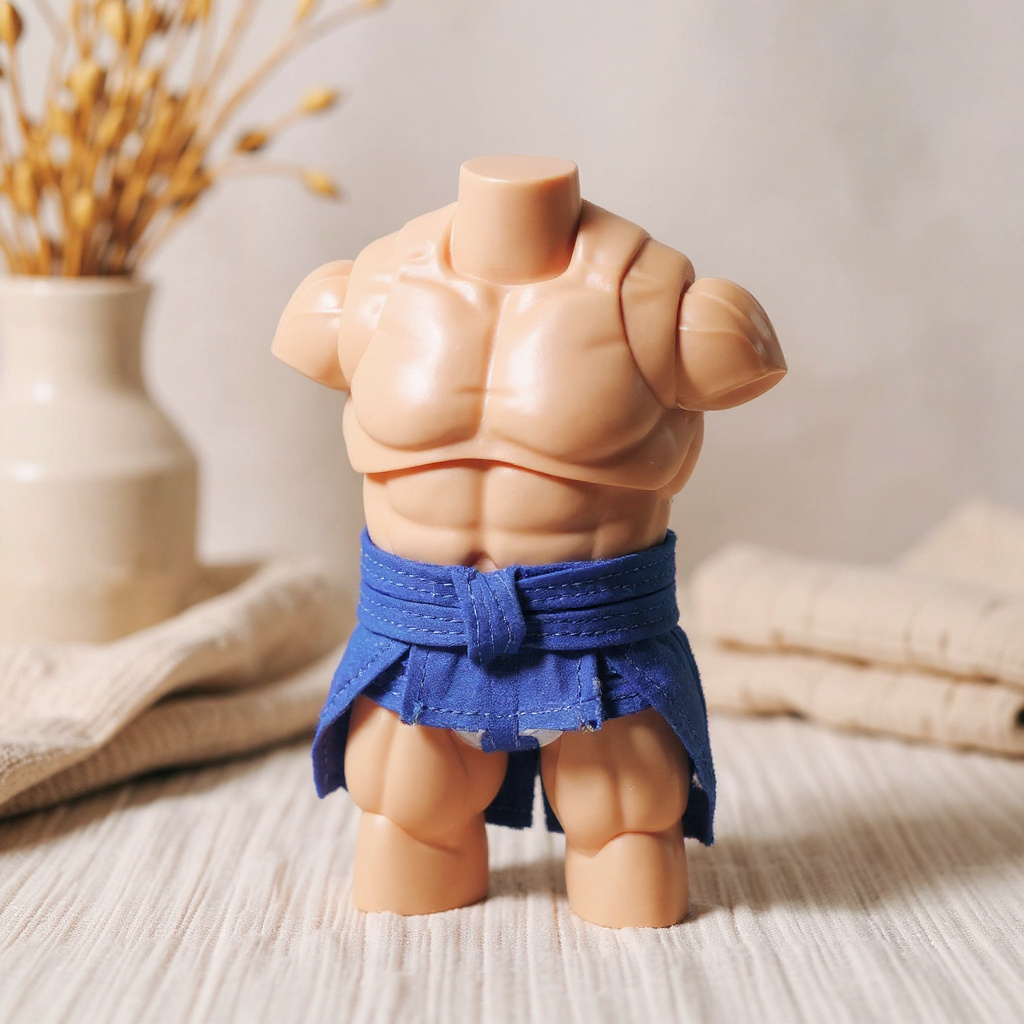
Soft goods mawashi earn their price in close-up shots where fabric texture actually shows. They need different lighting than hard plastic gear, though.
Direct flash carves harsh shadows into the folds and makes cheap fabric look worse, not better. Diffused side lighting pulls out texture without flattening it. Ring lights are fine for quick Instagram posts but tend to erase the dimensional shadow work that makes wire-core fabric worth the extra cost over plastic.
The wire lets you suggest motion. Twist the belt slightly for a mid-throw pose. Angle one fold outward to imply wind or momentum. Just don't force the wire past its bend radius — mine snapped clean after about 40 aggressive repositions, and a snapped core means a permanently limp mawashi with no fix short of replacing it.
For reddit posts and social shots, this posability advantage shows immediately. You adjust the mawashi for a new camera angle instead of unwrapping and retying the whole piece.
Handmade Quality vs. Mass Production
Handmade soft goods carry small imperfections that factory pieces don't. Slightly uneven stitching. Fabric shaped by actual hands instead of a die-cut machine. These aren't defects — they're the point.
But handmade also means inconsistency. Thread color might drift half a shade across a batch. Seam allowances vary by a millimeter or two. The wire sometimes pokes a hair past the fabric edge before it's trimmed. Normal for artisan work. Not a refund-worthy flaw.
Mass-produced alternatives cost less and sacrifice exactly the details that make handmade pieces worth buying. Factory mawashi lean on thinner fabric that tears at the knot within a season of regular handling. The wire cores run too stiff to shape or too soft to hold a pose at all.
The E. Honda Mawashi Cloth Belt sits around $29 — between $15-20 mass market pieces and $35-60 official replacement parts. You're paying for the middle ground. Better than factory quality. Not premium-collector pricing.
Common Fit and Durability Issues
Even well-made soft goods develop problems eventually. The wire work-hardens with repeated bending and eventually snaps at the same fold point every time. Fabric edges fray if handled roughly, especially at the knot, which takes the most stress in any pose.
Sizing problems show up fast when collectors assume every 1/12 figure shares the same waist. A mawashi that fits a Storm Collectibles build perfectly might sit too tight on a custom sculpt or too loose on a slimmer stock body.
Fabric choice affects how long a piece lasts on your shelf. Pure cotton softens and stretches with handling over a year or two. Cotton-poly blends hold shape longer but photograph slightly less natural under macro lighting. Neither lasts forever with heavy reposing — plan on replacing a well-used piece every couple of years if you shoot and repose often.
What Separates a Good Mawashi from a Great One
Three things: proper wire gauge, fabric weight that scales down correctly, and proportions built for a 6-inch figure instead of a doll three sizes larger.
Wire gauge makes or breaks posability, full stop. Fabric weight needs to suggest the heft of real silk without overwhelming a torso this small — full-size mawashi fabric would look like a tarp at 1/12 scale. Proportions matter more than expected too: too wide and the figure looks squat, too narrow and the belt disappears against painted muscle detail.
Color matching depends on your reference material. Game-accurate blue works for Street Fighter displays. Traditional white or deep purple silk tones work better for historical sumo dioramas. Decide what you're recreating before you order, not after.
Frequently Asked Questions
What makes a 1/12 scale sumo mawashi belt different from a stock plastic accessory? The wire core. Stock plastic belts are molded once and can't be repositioned. A soft goods mawashi can be bent, folded, and re-tied for different poses because the fabric has a metal skeleton inside it. How long does the wire core actually last before it breaks? In my own use, around 40 aggressive repositions before fatigue sets in. Gentle nudges for photo angles last much longer than full re-wraps. Will a 1/12 scale sumo mawashi belt fit any action figure at that scale? No. Waist circumference varies by brand even within the same stated scale. Measure your figure's waist with string before ordering; don't trust the scale number alone. Is cotton or a cotton-poly blend better for a mawashi? Cotton drapes more naturally but stretches with age. Cotton-poly blends hold shape longer but look slightly stiffer under close photography. Pick based on whether you display or actively repose the figure. Does knot placement (front vs. back) actually matter for display purposes? Only if you care about rank accuracy in real sumo tradition. For most Street Fighter or general figure displays, it's a style choice, not a rule. Can I re-wrap a soft goods mawashi if I mess up the first tie? Yes, that's the entire advantage over molded plastic. Just don't force the wire past its bend limit repeatedly in one sitting — let the fabric rest between adjustments. Why does my mawashi look shiny and fake in photos? Probably polyester fabric under direct flash. Switch to diffused side lighting or swap to a cotton-blend piece; the shine is a fabric problem, not a lighting-only fix. Is the E. Honda figure itself worth buying before upgrading the belt? Storm Collectibles' E. Honda gets solid praise for articulation and paint work, but the stock mawashi feels cheap next to the sculpt quality. Upgrading the belt is a noticeable, low-cost fix.Is the Upgrade Worth Your Money?
If you shoot figure photography or build detailed dioramas, a 1/12 scale sumo mawashi belt is a visible upgrade over stock plastic. The posability alone justifies the price when you're chasing a dynamic action shot.
For casual collectors who never repose their figures. It's a smaller win. Static shelf displays don't need wire-core posing, and $29 for one accessory might not feel justified if the figure never leaves its stand.
The E. Honda Mawashi Cloth Belt sits in that middle ground — better detail than mass market, lower cost than official replacement parts. If your figure's stock belt looks cheap next to the sculpt, check the E. Honda Mawashi Cloth Belt here and measure your figure's waist first.

