


Figma cape vs plastic cape debates usually skip the boring part: money. Plastic capes cost $8-15. Good fabric capes run $40-80. You're paying for posability, not decoration.
The real question is what you do with your figures. Static shelf display? A plastic cape works fine. Photography, dioramas, or windswept action shots? You need a fabric cape with wire inside it, not a plastic accessory that snaps back to attention the second you let go.
Why Most Stock Figma Capes Fall Flat
Most figma releases ship with plastic cape accessories that look decent in box photos and disappoint the moment you actually pose them. The plastic hangs straight down no matter what you do. Gravity wins. Every time.
Plastic capes also lack texture. They read as toy parts, not miniature clothing, and under studio lighting the smooth surface throws harsh reflections that break the illusion you're building. Once you finally get a plastic cape into a dramatic curve, it starts drifting back toward its molded shape within the hour. That wind-blown pose you spent ten minutes perfecting? Gone by dinner.
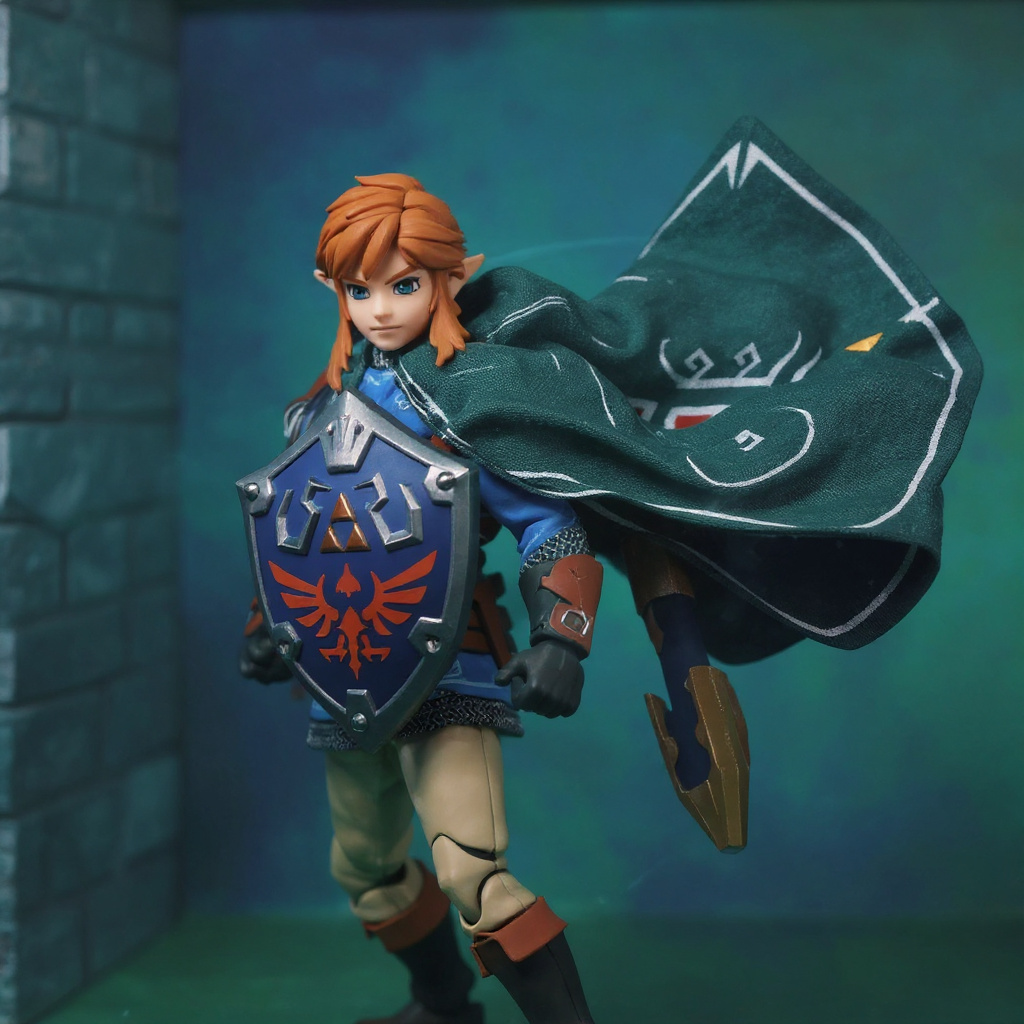
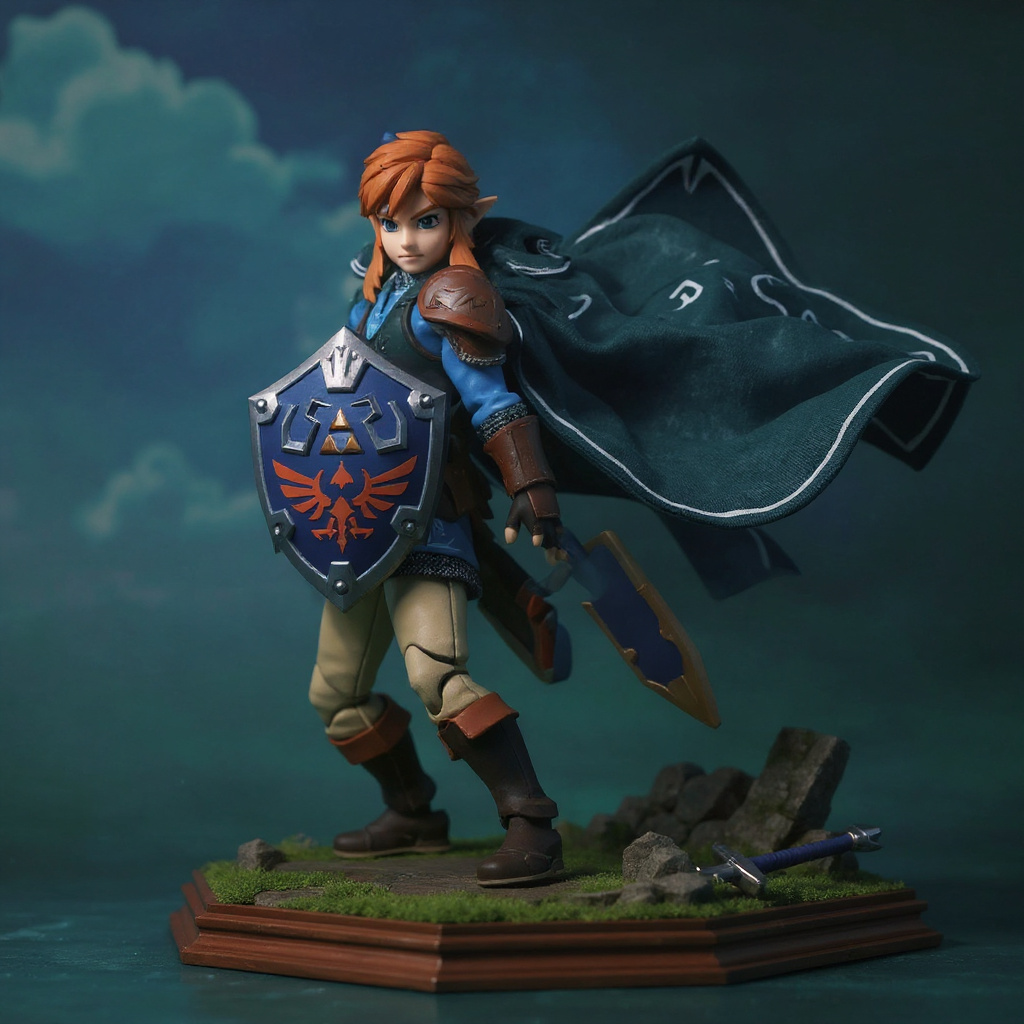
Good Smile Company's figma Link from The Legend of Zelda: Tears of the Kingdom has this exact problem. The stock plastic cloak looks fine sitting on a shelf but can't hold the flowing poses the character actually calls for.
What Makes a Fabric Cape Actually Work for Posing
A fabric cape built around an internal wire armature changes the equation completely. The wire lets you bend the cloth into a specific shape and it stays there. Wind effects. Battle stances. Dramatic mid-swoosh curves. All of it holds.
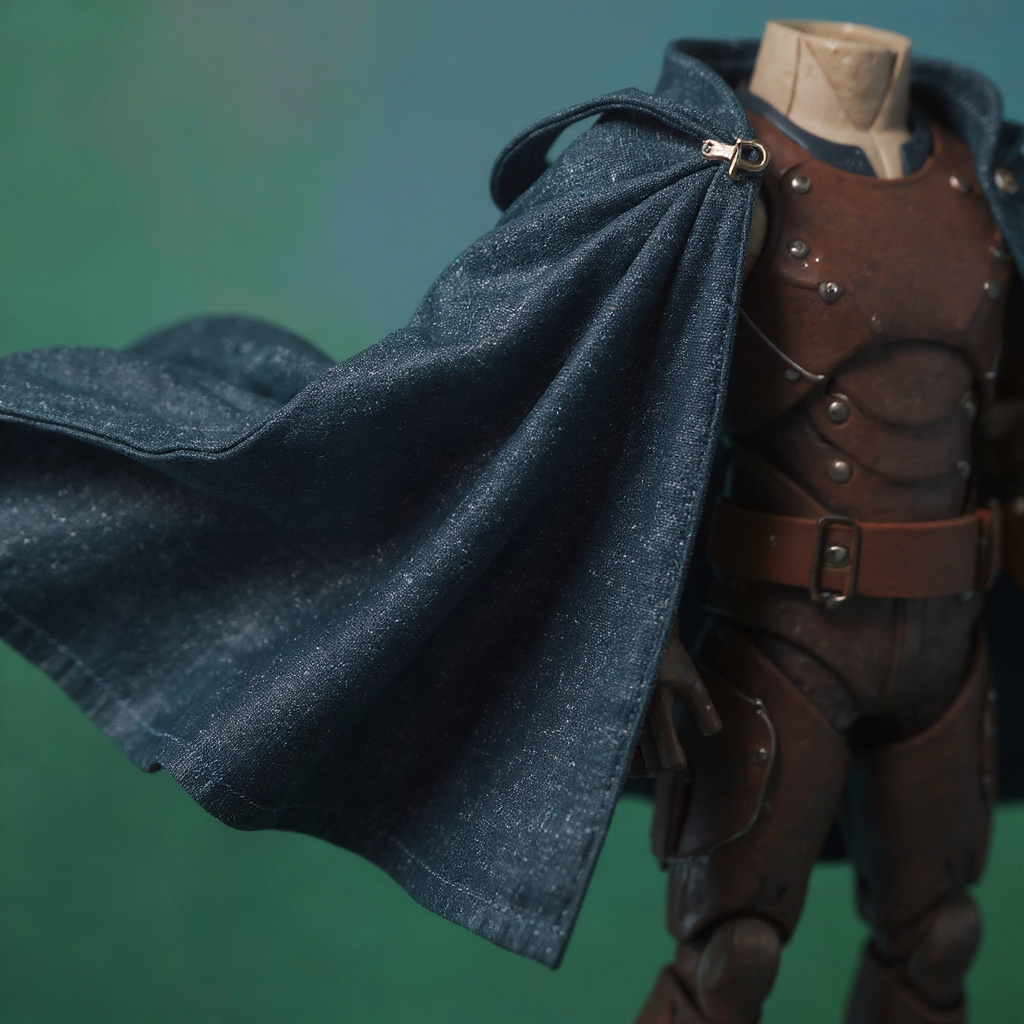
Picture the actual object: a flowing cloak in blue-green tones, visible woven texture running through the cloth, subtle wire-shaped folds that create windswept curves down the length of the fabric. A small metal clasp sits at the collar, doing double duty as a tie point and a detail piece. Drape it over a 1/12 scale action figure armor torso and photograph it under soft studio lighting, and the fabric grain and stitching catch light the way real cloth does — not the flat, glassy way plastic does.
Fabric texture photographs differently than plastic, full stop. Real cloth catches light in a scattered way, creating the small shadows and highlights that make a 1/12 scale accessory look convincing instead of toy-like.
Wire placement matters more than most buyers assume. Cheap fabric capes often run wire only along the bottom hem, which gives you one bendable curve and nothing else. Better construction runs wire through the whole panel, from collar clasp down to hem, so you control the entire silhouette instead of just the tip.
Our Link Cape Replacement for 1/12 Figma Action Figure uses that full-wire build in blue-green fabric with a metal collar clasp. At $60 it sits mid-pack for soft goods accessories, and it earns that price with posability the stock plastic cloak never had.
Figma Cape vs Plastic Cape vs Basic Fabric: Full Comparison
| Feature | Plastic Cape | Basic Fabric Cape (no wire) | Wired Fabric Cape |
|---|---|---|---|
| Price Range | $8-15 | $25-35 | $40-80 |
| Holds Dynamic Poses | No | Limited | Yes, indefinitely |
| Texture Quality | Poor, glossy | Good, soft drape | Excellent, visible weave and stitching |
| Attachment Style | Molded clip | Tie or small hook | Metal clasp at collar |
| Durability | High, rigid | Medium, fabric wears | High, wire may fatigue after years |
| Photography Results | Basic, harsh reflections | Good, natural drape | Professional, rim-light friendly |
The Real Cost Difference Breakdown
Standard aftermarket plastic capes cost $8-15 shipped. Mass produced, mostly overseas, consistent quality, zero personality.
Basic fabric capes without wire run $25-35. They look better than plastic but still can't hold a dynamic pose because there's nothing inside the cloth to argue with gravity. The fabric drapes fine. It just droops exactly where physics says it should.
Full wired fabric capes range $40-80 depending on construction and detail work. The wire armature, hand stitching, and custom sizing to fit a 1/12 scale action figure armor torso justify the jump.
Custom capes in specific character colorways can hit $100+. For most collectors the $40-60 bracket covers everything needed for dramatic photography without tipping into custom-commission pricing.
Which Material Actually Photographs Better
Fabric wins, but the gap is smaller than it used to be. Plastic casting has gotten better. Some newer figma releases ship textured plastic capes that photograph decently in flat lighting.
The gap widens fast under dynamic lighting. Fabric scatters light across its grain, creating depth. Plastic bounces light back in one hard spot that screams "toy" in every close-up.
Fabric also moves in a way that feels earned rather than posed. Even without wire, cloth responds to how you position it — small folds fall where they'd fall on real fabric. Plastic looks frozen because it is frozen.
For shelf display under normal room lighting, plastic capes hold up fine. For action figure photography enthusiasts on Reddit, the fabric cape is the accessory that actually shows up differently shot to shot.
Five Things That Make a Wired Fabric Cape Worth the Extra Cost
1. Permanent pose retention - bend it once, it holds that curve for months, not minutes 2. Wind effect simulation - build a convincing gust-of-wind silhouette without an actual fan on set 3. Layered composition control - tuck the cape behind or in front of other accessories on the armor torso 4. Lighting setup flexibility - angle the fabric to catch your key light instead of fighting it 5. Cross-figure compatibility - one well-built cape works across several 1/12 scale figures with small adjustments
The wire framework also keeps the cape out of the way of joints. You can pose arms and legs without cloth bunching up at the elbow or restricting a hip swing. That alone saves a lot of reshoots.
Common Problems with Handmade vs Mass-Produced Capes
Handmade fabric capes come with trade-offs, and nobody selling them wants to say so upfront. Stitching won't be perfectly even. Colors can drift a shade between batches. Some makers use thicker wire that leaves faint ridges pressed into the outer fabric.
Mass-produced plastic capes offer consistency and nothing else. You get what everyone else gets. No character-specific detailing, no colorway options, no metal clasp upgrade.
The most common handmade-cape complaint is loose thread at the hem edges after repeated handling. Quality swings hard between sellers — a $40 cape from someone who's sewn two hundred of these usually outlasts a $60 cape from someone learning wire placement on their tenth attempt. Honestly, if you're buying from a brand-new maker with no return photos posted, wait a month and check their feedback before ordering.
Most collectors accept the small cosmetic quirks. The posability trade more than covers it.
SH Figuarts vs Figma Cape Compatibility
SH Figuarts and figma share roughly the same 1/12 scale, but attachment hardware differs. Figma tends to use small clips or magnetic points at the shoulder. SH Figuarts more often relies on friction fit or a peg system built into the armor torso.
Most aftermarket fabric capes ship with multiple attachment options to bridge both lines — a metal clasp at the collar plus a spare tie loop underneath. The wire build flexes to fit different torso widths and connection points.
Proportion matters more than the attachment hardware does. A cape sized for a lean figma build will swim on a bulkier SH Figuarts character even if the clip technically snaps in.
Want a second option beyond Link? Browse the full collection of fabric capes for 1/12 scale figures to compare sizing across characters before you commit.
Identifying Authentic vs Reproduction Capes
Original figma plastic capes carry copyright stamps and a specific plastic formulation that feels different in hand from bootleg copies. Color matching also tends to track closer to official reference art on genuine pieces — check against the Good Smile Company figma product listings if you want a side-by-side.
Reproduction plastic capes often use a softer plastic that feels cheap but sometimes bends into a pose better than the original. The trade-off shows up later in durability and color drift.
For aftermarket fabric capes, authenticity is a smaller concern since most are custom-made rather than licensed. Focus on wire placement and stitch quality instead of hunting for a copyright mark that doesn't exist on a handmade piece.
Dynamic Photography Setup Tips
Fabric capes excel when you need the same dramatic silhouette across a dozen shots. Set the shape once. Then adjust the figure, the camera, the background — the cape holds.
Backlighting pairs especially well with a woven fabric cape. Light passes through thin spots in the weave and creates rim lighting that separates the figure from the backdrop. A plastic cape just blocks the light and throws a flat black silhouette instead.
For Zelda fans posting photography on Reddit, a well-posed fabric cape gets noticeably more engagement than a static shelf shot. Check the pose reference guide for wire armature capes before your next shoot if you're new to shaping the wire.
Maintenance and Longevity Comparison
Plastic capes need almost no maintenance. Dust them off, keep them out of a hot car, done. They'll look the same in five years as they did on day one — because nothing about them is alive enough to change.
Fabric capes need more attention and age with more character. Wire fatigues with repeated bending — expect the bend points to loosen after a couple hundred pose changes. Fabric can fade a shade under strong display lighting, and honestly, that fading sometimes makes the cape look more lived-in rather than worn out.
Most quality fabric capes last two to three years of regular posing before showing real wear. That works out to $20-30 per year of premium posability. Not cheap. Not unreasonable either, if photography is the point.
One honest caveat most cape sellers won't put on their product page: if you live somewhere humid, a wired cotton cape can develop faint rust bleed at the bend points within a year. Wipe the wire dry after handling, or skip the wired version entirely and stick with plastic if you're near the coast. See the fabric cape care and storage guide for humidity-specific storage tips.
Frequently Asked Questions
What is the best material to use for a cape? Woven cotton or a cotton-poly blend works best for 1/12 scale capes. It holds a wire shape while keeping a realistic drape and visible grain. Skip shiny synthetics — they photograph stiff. What is the best material to use for making a superhero cape? Slightly heavier weaves like thin denim or canvas give a superhero figure that dramatic flowing look. The added weight lets the cape hang with intent while the internal wire still enables sharp action poses. Why did Lego switch to rubber capes? Lego moved from fabric to rubber for durability and batch consistency. Rubber holds its molded shape, resists tearing, and keeps color better across production runs. The trade-off is less realism than cloth. What is the difference between a cloak and a cape? Cloaks usually include a hood and cover more of the body. Capes run shorter — waist or mid-thigh — and rarely cover the head. For figma accessories the two words get used interchangeably anyway. Which should I buy — SHF or figma? Both lines work fine with an aftermarket fabric cape. Pick based on the character design and joint articulation you want, not cape compatibility. Most quality capes fit either system with a small clasp adjustment. Can you collect both Figma and SH Figuarts capes interchangeably? Yes, but watch scale and proportion closely. A cape built for a slim figma frame can look oversized draped over a bulkier SH Figuarts armor torso, even when the clip or peg technically connects. Do you prefer molded plastic capes or fabric ones for photography? Fabric with a wire armature wins for photography, no contest. You shape a dramatic pose once and it holds through lighting changes, camera moves, even a full afternoon of reshoots. How do I know if I've bought a repro cape instead of an authentic one? Check for copyright markings, compare color against official reference photos, and feel the plastic. Repro capes usually run softer plastic and slightly different clip hardware than the licensed original. Does the wire inside a fabric cape rust or corrode over time? It can, especially in humid climates or near the coast. Dry the wire after handling and store the cape flat rather than folded tight at the bend points. Can I remove the fabric cape from the armor torso base and use it on a different figure? Most wired fabric capes are made to drape over or clip onto the torso rather than fuse to it, so yes — with a metal clasp collar, swapping between similarly scaled 1/12 figures is usually a two-minute job.Is the Investment Actually Worth It?
The figma cape vs plastic cape question comes down to what you actually do with your figures. Casual shelf displayers will find a plastic cape perfectly adequate. Photographers and posing enthusiasts need fabric with wire inside it.
$60 for a fabric cape feels steep until you see the posability gap in person. The ability to build and hold a dramatic curve turns a static figure into something that looks mid-adventure instead of standing at attention.
If you're building dioramas, shooting figure photography seriously, or just want a cloak that catches studio light the way real cloth does — blue-green tones, visible stitching, a metal clasp at the collar, wire folds holding a windswept curve over the armor torso — a fabric cape earns its price. Pose once, leave it forever? Plastic is fine, save your money.
Our Link Cape Replacement sits right in that gap between cost and capability. Handmade wire construction, professional-level posing control, $60 — reasonable for most collecting budgets without chasing custom-commission pricing.

