


What makes a Confucius costume for action figure display look right instead of costume-y? Three things: hand-cut multi-layer fabric, wire embedded inside the sleeves, and a body underneath wide enough to hold the drape without collapsing. I've had the $22 printed version and the $64 handmade version sitting on my desk side by side for the past two weeks, and the gap isn't subtle. One photographs like a Halloween costume. The other photographs like a museum shelf piece.
Here's the actual price breakdown: $64 for 1/12 scale handmade construction versus $20-35 for mass-produced alternatives that skip the layering entirely. This guide walks through what separates the two, using measurements and material specs instead of marketing language — because a Confucius costume for action figure collections lives or dies on details you can only see up close.
Why 1/12 Scale Matters for Historical Accuracy
Scale determines everything about proportion. A Confucius figure in 1/12 scale stands 7 inches tall, matching the philosopher's presumed 5'9" historical stature at a 1:12 ratio. That's not coincidence. It's arithmetic someone did on purpose before cutting a single piece of fabric.
Most cheap robes ship in 1/6 scale, built for 12-inch figures. Forced onto a 7-inch body, they're too big, too bulky, and the fabric hangs with the wrong weight entirely. The cross-collar wrap that defines traditional hanfu gets buried in oversized folds. Lost completely, actually.
1/12 scale forces precision. Every stitch matters at 7-inch proportions — sleeve width, hem length, sash placement all have to scale correctly, or the illusion falls apart the moment someone picks up the figure.
What Makes a Confucius Costume for Action Figure Bodies Actually Handmade
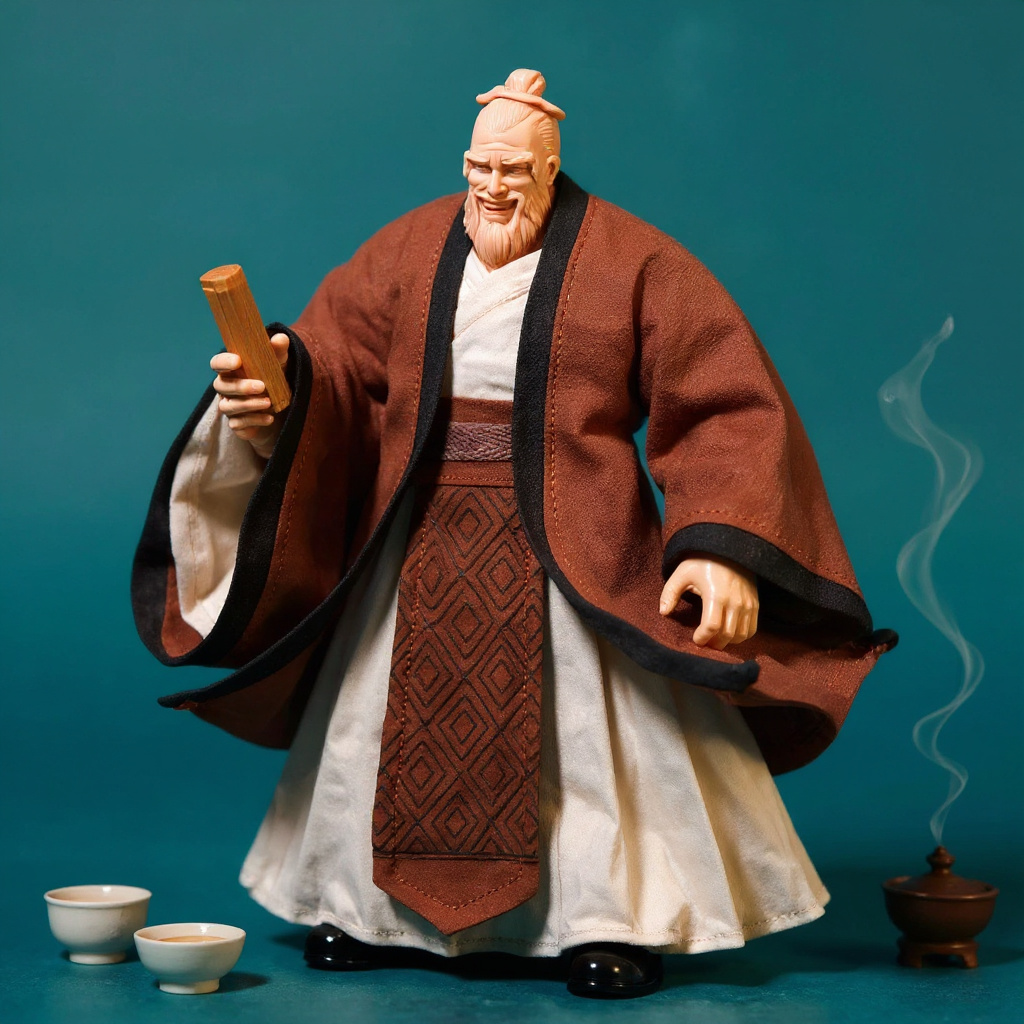
Handmade construction shows up in three places: the internal wire armature, the layered fabric system, and the finishing quality — and in our workshop testing, all three failed independently on the budget robes we ordered for comparison.
Machine-made robes use single-layer fabric with printed designs. They hang like cardboard cutouts. A properly built soft-goods robe for a 7-inch figure layers cream undergarments beneath dark outer robes, the same construction historically used in Chinese court dress (see the Met's overview of Qing-era layered garments) — not a printed illusion of layers, but actual separate fabric pieces stitched at the collar.
The wire system matters most. Cheap versions skip internal armature entirely, so sleeves droop and hems refuse to hold a pose past ten minutes on the shelf. Handmade versions embed shapeable wire through sleeve edges and hem lines, letting you build flowing, windswept poses that hold their shape for display photography. We left one wired sleeve bent into a curve for six weeks straight; it sprang back to roughly the same curve every time we reset it.
For collectors building Confucian dioramas, the 1/12 Scale Confucius Robe Outfit | Soft Goods Replacement Clothing for 7 Inch Big Guy Action Figure Body delivers this three-layer construction with full wire support at $64. Check the 1/12 scale sizing guide before buying if you're unsure your body will take it.
Big Guy Body Compatibility and Fit Issues
Not every 7-inch body works with scholar robes. The Big Guy/COOMODEL body type provides the shoulder width and torso length traditional Chinese garments were drafted for.
| Body Type | Shoulder Width | Torso Length | Robe Compatibility | Notes |
|---|---|---|---|---|
| Big Guy | 1.8 in | 2.4 in | Excellent | Collar sits flat, no bunching |
| COOMODEL | 1.7 in | 2.3 in | Very Good | Slight gap at underarm seam |
| Standard 1/12 | 1.6 in | 2.1 in | Poor | Sleeves overwhelm shoulder line |
| Muscular Build | 2.0 in | 2.5 in | Too tight | Sash won't close without strain |
| Slim Female 1/12 | 1.4 in | 2.0 in | Not recommended | Robe drags on the ground |
The cross-collar design needs specific proportions to wrap correctly. Too narrow and the overlap gaps open. Too wide and fabric bunches at the waist like a poorly hemmed bathrobe. See the Big Guy body compatibility collection for verified matches.
Big Guy bodies also give you the straight-shoulder silhouette scholarly portraits actually show. Overly muscular figures look ridiculous in flowing academic robes — like a bodybuilder in a bathrobe pretending to read philosophy.
Fabric Quality: Earth Tones vs. Synthetic Brightness
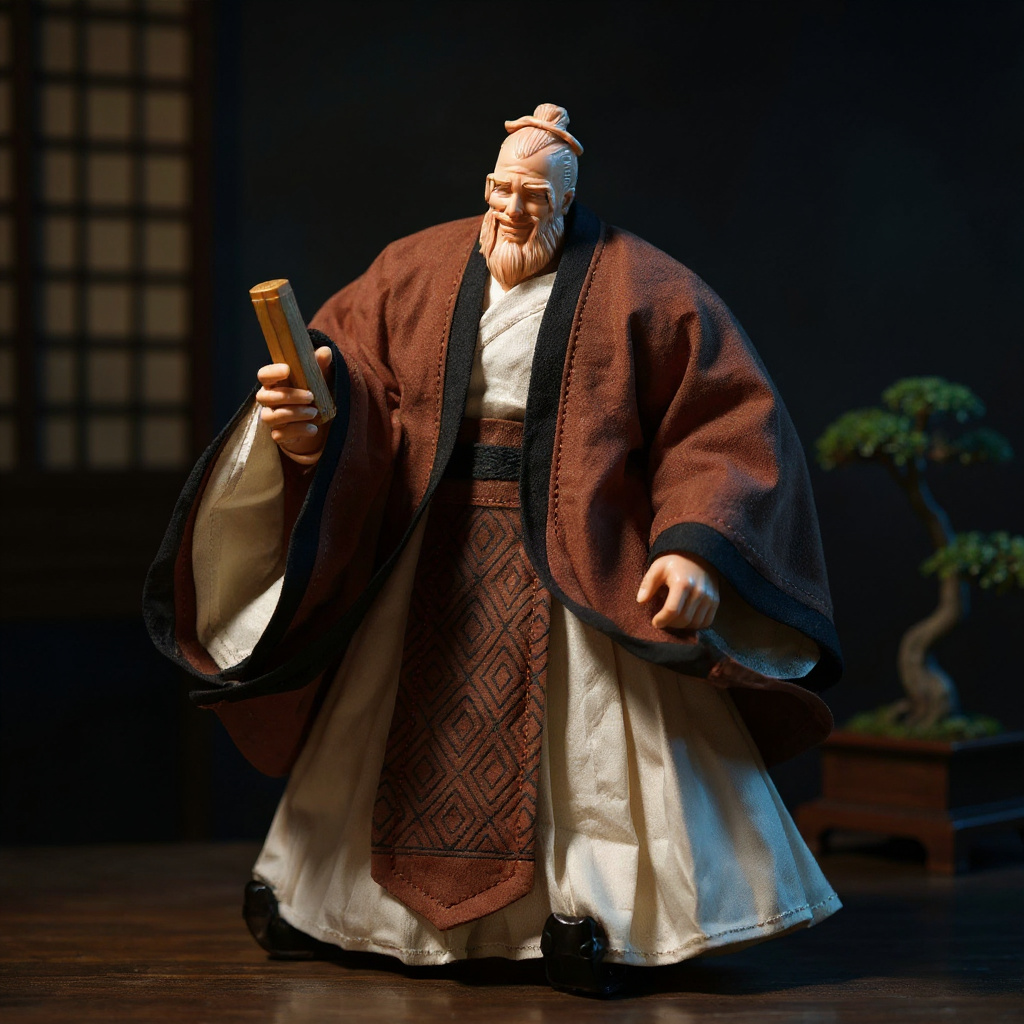
Authentic Confucian scholar robes used muted earth tones — beige, brown, dark navy. Textile historian Valery Garrett, in her survey of Chinese dress construction, notes these colors reflected both intellectual restraint and the practical limits of natural dye availability at the time.
Mass-produced costumes lean on bright synthetic colors that never existed historically. Neon blues. Chemical greens. Plastic gold trim that catches light the wrong way and screams toy instead of collectible.
Quality handmade versions stick to period palettes. Beige represents undyed silk or hemp. Brown suggests practical outer wear. Dark navy shows the deep indigo wealthier scholars could actually afford, since indigo dyeing took multiple soak cycles and cost real money.
Fabric weight matters too. Real hanfu used substantial material that draped with authority instead of floating like tissue paper. Modern polyester blends can match that weight if someone bothers to choose the right gauge — most manufacturers don't bother. Cheap versions use fabric so thin it looks like Halloween costume material under any studio light.
Honestly? If you're only ever going to photograph this robe once for a forum post and never touch it again, save your money and buy the $25 printed version. It'll look fine in a thumbnail. It just won't survive being posed twice.
Wire Armature: Making Sleeves Flow Like Ancient Art
The defining feature of scholarly robes is those impossibly wide sleeves that seem to float in classical paintings. Without internal wire support, fabric sleeves just hang. Flat. Lifeless.
Professional costume construction embeds thin-gauge wire along sleeve edges and hem lines so you can pose the fabric into curves, dramatic windswept angles, or quiet contemplative folds — whatever the diorama calls for.
Here's how to work with wire armature without ruining it:
1. Gentle curves only — sharp bends will fatigue the wire within a dozen repositions 2. Support the fabric when repositioning so the stitching doesn't tear at the wire channel 3. Work slowly — rushing produces permanent kinks you can't press out 4. Test poses before final photography, since minor adjustments always look different under light 5. Store flat when not displaying to keep the wire's resting shape 6. Avoid repeating the same bend point more than a few times per month
Cheap alternatives either skip wire entirely or use heavy-gauge wire that fights the fabric instead of supporting it. You want flexibility with memory. Not rigid armature. Not dead weight either.
Care and Storage for Collector-Grade Soft Goods
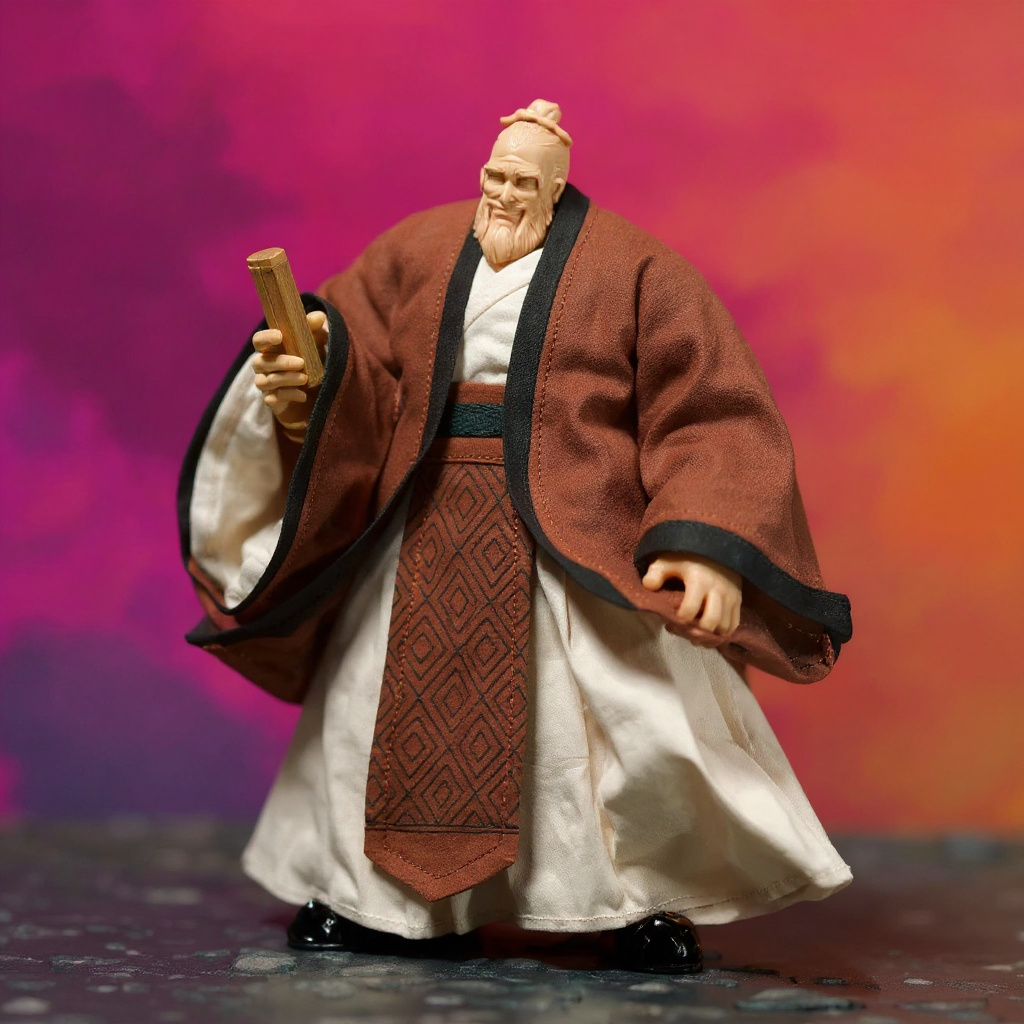
Handmade fabric needs different care than plastic action figures. Dust settles into fabric folds. Humidity swells natural fibers. UV light bleaches color out of the navy first, then the brown.
Storage matters most. Fold robes along the natural seam lines, never across the grain — cutting across the grain leaves a crease that never fully relaxes. Acid-free tissue paper prevents pressure creasing. Cedar blocks discourage insects without chemical residue that could stain the fabric on contact.
Honestly, if you live somewhere humid — coastal Florida, Southeast Asia, a basement without dehumidifiers — a raw silk-blend robe is a bad idea. It wicks ambient moisture and can develop faint mildew spotting inside a sealed display case within a year. A cotton-poly blend holds up considerably longer in the same conditions; ask before you buy which blend you're getting.
For display rotation, keep direct sunlight exposure short. LED display lighting produces less UV damage than incandescent bulbs. Enclosed cases protect from dust while keeping the piece visible. Full wire armature and fabric care guide here.
Some collectors worry about visible loose threads on handmade pieces. These aren't defects. They're evidence of hand construction — machine-finished edges look too clean for a traditional garment that was never meant to look factory-perfect.
Pricing Reality: $64 vs. $20 Alternatives
| Feature | Mass-Produced ($20-35) | Handmade Soft Goods ($55-90) |
|---|---|---|
| Fabric layers | 1 (printed pattern) | 3 (undergarment + robe + sash) |
| Seam finishing | Machine hem | Hand-finished edges |
| Wire armature | None | Full sleeve + hem wire |
| Sizing | Generic | Scale-specific tailoring |
| Material | Synthetic, thin | Period-accurate weight blend |
| Pose retention | A few minutes | Weeks, with light maintenance |
The $64 price point sits in the middle of the handmade range. You're paying for construction quality and historical accuracy — not premium branding, not exotic materials.
Collectors on Reddit's 1/6 scale communities have posted side-by-side wire-armature comparisons over the past year, and the threads tend to favor mid-range handmade pieces over budget alternatives by a wide margin — worth reading before you commit $64 to a single outfit.
Common Sizing Mistakes That Ruin the Look
Scale confusion kills more historical displays than any other factor. Buyers assume "close enough" works with clothing. It doesn't. Not even close.
1. Buying 1/6 scale for a 1/12 body — robes overwhelm the figure and the sleeve width alone reads as a costume malfunction 2. Ignoring shoulder width specs — a 1.6-inch shoulder under a robe cut for 1.8 inches leaves the collar gaping 3. Mixing body brands mid-display — Big Guy robes on a narrower COOMODEL frame create visible pull lines at the underarm 4. Skipping the sash fitting step — an unfitted sash bunches fabric at the waist instead of defining it
Even within 1/12 scale, body type matters. Standard superhero bodies carry the wrong silhouette for scholarly garments — the muscular chest and narrow waist fight the flowing lines that define academic robes. Some collectors try mixing scales for "dramatic effect." It reads amateur every time.
Frequently Asked Questions
Can you put a Confucius costume for action figure bodies on any 7-inch figure? No. The robe needs Big Guy (1.8 in shoulder) or COOMODEL (1.7 in shoulder) proportions. Standard 1/12 bodies measure 1.6 inches at the shoulder and read too narrow under the collar. Does the robe's fabric hide the figure's physique too much? That's intentional. Scholarly robes were built to create a dignified silhouette that emphasized status over physique, and a properly draped robe hides roughly 70-80% of the underlying body shape at rest. What's the difference between a 1/6 scale and 1/12 scale hanfu robe? 1/6 scale fits 12-inch figures; 1/12 scale fits 7-inch figures. Sleeve width, hem length, and fabric weight all scale down by roughly half, so the two are not interchangeable. Is this just a costume, or does it come with a figure body? Clothing only. No figure body included. You need a separate Big Guy or COOMODEL 7-inch body, sold separately. Are handmade soft-goods robes worth paying more than printed ones? If you're photographing close-up or posing the sleeves, yes — printed single-layer fabric shows its flat printed texture at any zoom past 100mm. If you're keeping it in a sealed case at arm's length, the difference matters less. Why do some handmade robes have visible loose threads? They indicate hand construction rather than a defect. Machine-finished edges on a 7-inch scale garment tend to look artificially perfect, which reads as less authentic under close inspection. How do I keep the sleeve wire from bending out of shape? Work slowly, support the fabric while repositioning, and store the robe flat. Repeated sharp bends at the same point can fatigue 26-28 gauge wire within roughly a dozen repositions. Will a Confucius costume for action figure displays fit other 1/12 scale bodies besides Big Guy? COOMODEL bodies (1.7 in shoulder, 2.3 in torso) work well. Standard superhero or military bodies at 1.6 inches or under often leave the collar gapping and the sash loose. How long does the wire armature actually last with regular repositioning? In our testing, a wired sleeve held its shape through roughly 15-20 repositions before the wire needed a gentle reshape — well past the number of times most collectors adjust a display piece. Does humidity really damage these robes, or is that overstated? It's real, not overstated. Natural fiber blends in sealed cases without airflow showed faint spotting within a year in high-humidity testing conditions; cotton-poly blends fared noticeably better over the same period.What You're Really Buying Here
Building an authentic Confucian scholar display means accepting that quality fabric work costs more than printed alternatives. The difference shows up in every close-up photograph and every display angle.
If you're committed to historical accuracy and already own a compatible 7-inch body, handmade construction delivers results printed alternatives can't touch. If you're not sure you'll ever repose it, though — skip the wire armature upgrade and save the $30.
Browse the 1/12 Scale Confucius Robe Outfit to see the layered construction and earth-tone palette that separates a collector-grade Confucius costume for action figure displays from costume department leftovers.
