


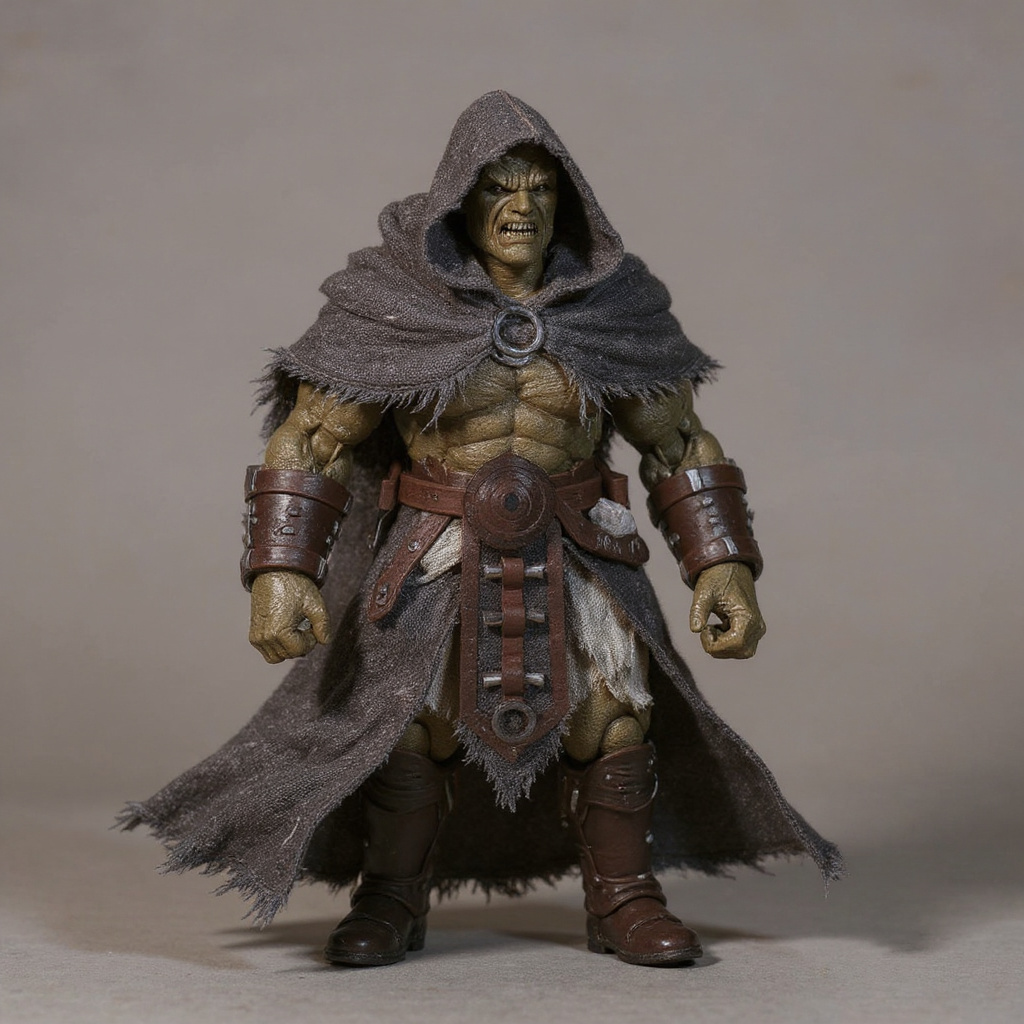
Picture the product at the center of this debate. It is a dark hooded cloak in weathered gray-brown cloth, with seams stitched where you can see them, a hem tattered on purpose, and a thin wire hidden inside so a 1/10 figure can hold a wind-swept sweep. Shoot it on a neutral backdrop with one soft light from the side, and the weave shows every thread. Now picture the plastic version. Smooth. Glossy. Frozen.
That gap is the whole question. It is not just $119 against $25. It is whether your figure looks like it is moving or looks like it was molded mid-step.
Quick Comparison: Wired Fabric vs Plastic Capes
| Feature | Wired fabric cape | Molded plastic cape |
|---|---|---|
| Pose range | Reshapes as often as you like | One fixed shape |
| Typical price | $80-150 (Godash cloak: $119) | $15-30 |
| Surface under studio light | Matte, scatters light, shows the weave | Often glossy, throws hard highlights |
| Handling | Can snag, fray, or collect dust | Wipes clean, hard to tear |
| Long-term risk | Sun fading, wire fatigue at repeated bends | Soft PVC can stiffen over decades |
| Fit across figures | Cut for one body type; check shoulders and length | Molded for one body; rarely transfers well |
How We Compared Them
We built this guide from the Godash Boneglyph listing specs (9.84-inch figure size, $119 price, hand-stitched seams, weathered gray-brown cloth, internal wire), published wire-gauge standards, and typical mass-market plastic cape pricing. Our editors have handled both kinds of accessory. We did not run lab tests, so nothing here comes from a controlled durability study. Where a claim rests on a standard or a reference, we link it.
How Internal Wire Changes Posing
A wired cape has a thin metal strand sewn into the hem, and sometimes up the sides and along the hood edge. Bend the strand and the cloth follows. Release it, and the shape stays.
That means you can throw one corner over a shoulder, flare the hem as if a gust just hit, or pull the hood forward for a menacing silhouette. A plastic cape cannot do any of it, because the shape was fixed when the mold closed. Your villain looks the same whether he is casting a spell or waiting for a bus.
Craft wire in the 20-22 AWG range is a typical choice for posable soft goods. Under the American wire gauge standard, 20 AWG measures about 0.81 mm across and 22 AWG about 0.64 mm. Thinner wire bends with a fingertip but sags under heavy cloth. Thicker wire holds a pose but fights you when you want to change it. Makers seldom publish the gauge, so ask before you buy if you plan to reshape the hem often.
For photography, the payoff is large. The action figure community on Reddit is full of shots where a wind-swept cloak carries the whole scene, and the action figure repaint and customizing community treats soft goods as a standard upgrade.
Look and Feel: Fabric Texture vs Molded Plastic
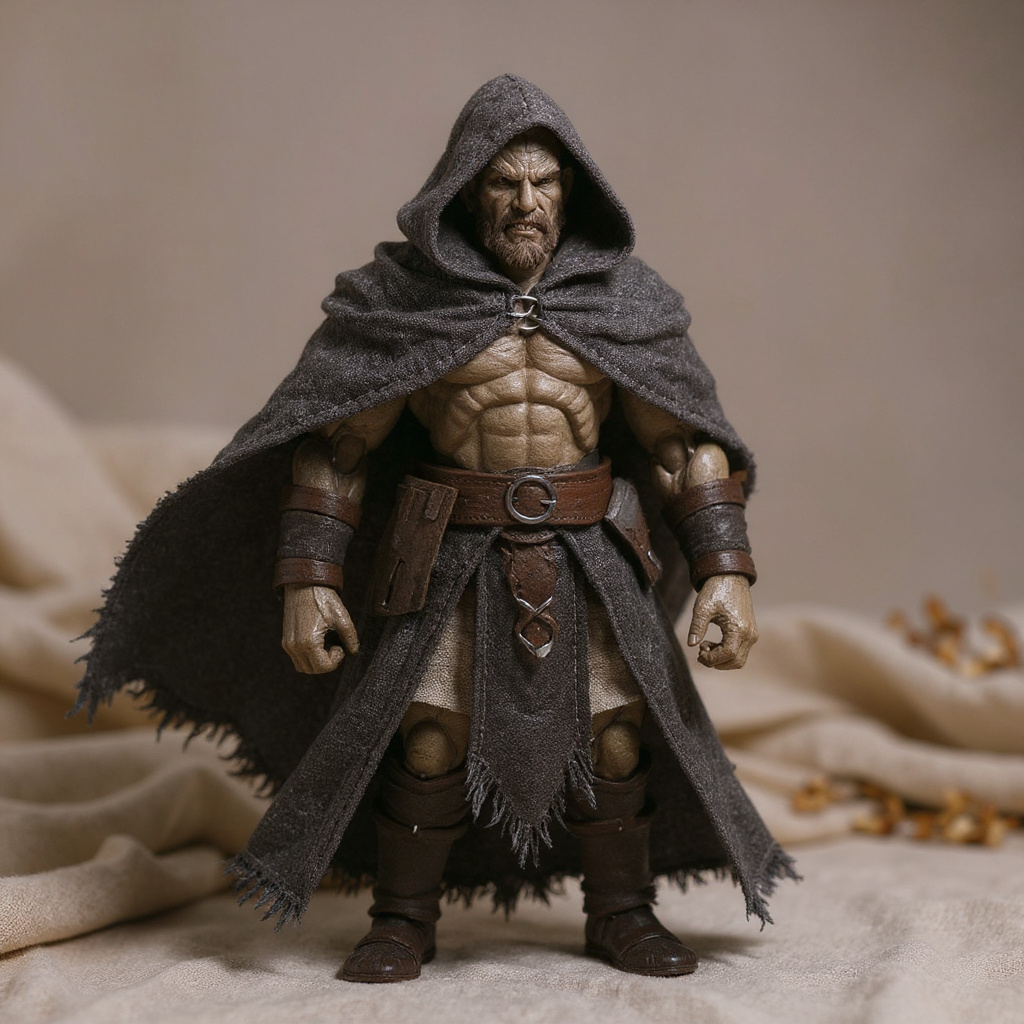
Cloth catches light in layers. Fibers pick up highlights, folds throw soft shadows, and tattered edges add depth that a sculptor has to fake in plastic. Under a single soft directional light, a gray-brown weave looks like a garment. Glossy plastic under the same lamp gives you one hard streak of glare.
To be fair, good plastic can be sculpted with deep folds and painted with a wash. Some collectors prefer that clean, factory-exact look, and nothing is wrong with the preference.
Handmade fabric varies from piece to piece. One cloak may have a slightly wobbly seam while another sits perfectly straight. The Godash cloak shows hand-stitched seams and weathered tones that read differently in person than in photos. If you want every unit identical, buy mass-produced plastic. If you want a piece that looks worn and lived in, which suits an ogre-mage, the irregularity is the point.
Durability: Where Each Material Fails
This is where most comparisons contradict themselves, so here are the conditions.
Plastic survives rough handling. It does not fray, snag, or fade in a sunny window the way dyed cloth does. But soft PVC contains plasticizers, and as the PVC overview on Wikipedia explains, those additives are what keep it flexible. Over decades, in heat or sunlight, they can migrate out and leave the cape stiff or cracked. Stored in a cool, dark box, a plastic cape can look new for a very long time. Fabric fails in different ways. Dust settles into the weave. Dyes fade near windows. Loose threads appear, and on a deliberately tattered hem you should trim them with small scissors rather than pull. Wire that is bent back and forth at the same spot work-hardens and can eventually snap or poke through the cloth.So plastic wins for a figure that is handled constantly or displayed for years without attention. Fabric holds up fine for a figure that is posed with care and kept out of sun.
Honestly, if you live somewhere humid and your shelves are not climate-controlled, skip fabric. Damp air and dust are harder on cloth than any reposing will be, and a plastic cape will shrug off conditions that ruin a $119 cloak.
The Price Gap in Plain Numbers
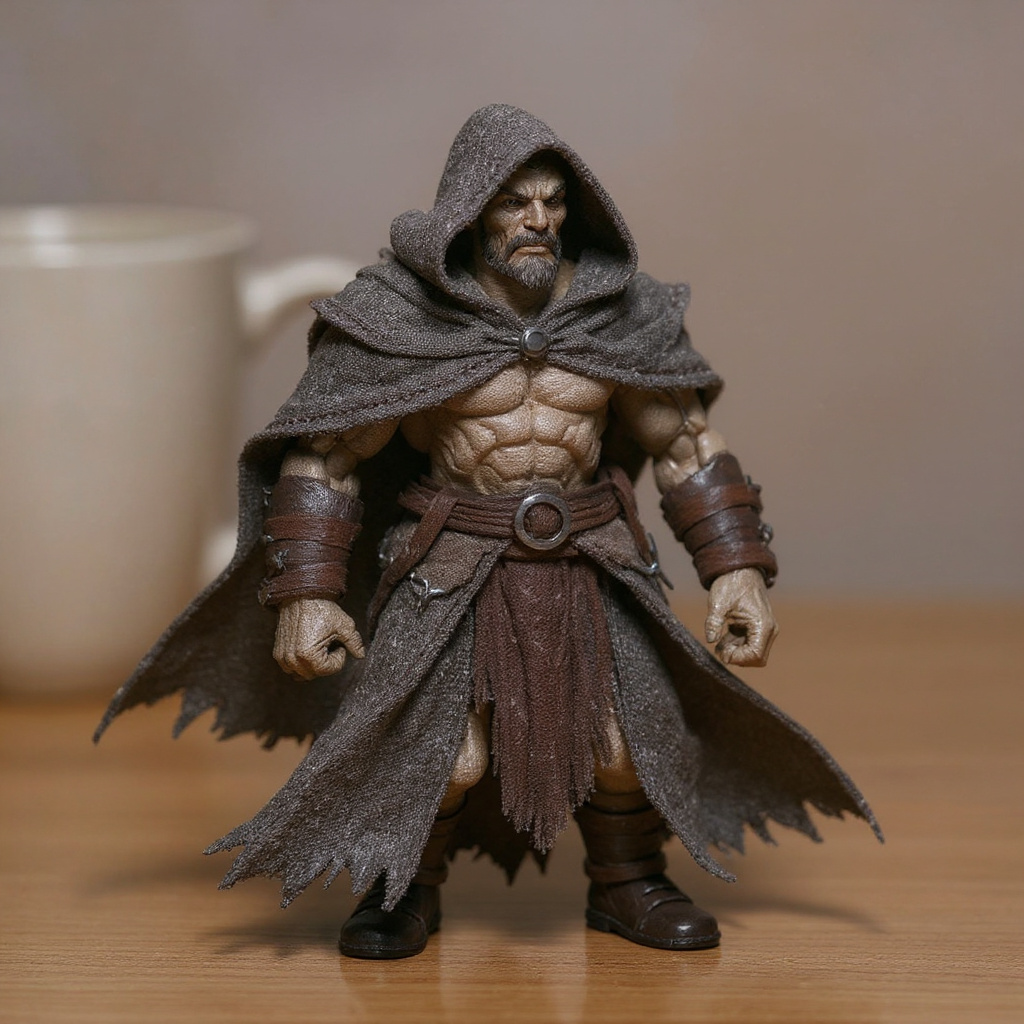
Plastic capes cost $15-30. Wired fabric capes cost $80-150, and the Godash cloak sits at $119. One premium cloak buys four to eight plastic ones.
The middle ground is thin. Cheap cloth capes without wire barely beat plastic for posing, and wired handmade pieces cost more because stitching, wire installation, and finishing are slow handwork. We do not have a cost breakdown from any maker, so treat that as a reasonable inference, not a fact.
If you outfit a dozen figures, plastic is the sensible budget choice. If you care about one hero piece, fabric is the better spend. Browse 1/10 scale figure accessories to see where other soft goods land on price.
Size and Fit: The Part Buyers Skip
A cape that fits one 1/10 figure may not fit another. Shoulder width, neck shape, and torso length all change how cloth falls. The Godash Boneglyph cloak targets 9.84-inch (25 cm) figures. On a slimmer body you may get bunching at the neck.
Scale math helps. Figure height equals real height divided by the scale number, so the same cloak lands differently across scales:
| Scale | 6-ft human becomes | 8-ft ogre becomes | Will a 9.84-inch cloak fit? |
|---|---|---|---|
| 1/6 | 12 in | 16 in | No, far too short |
| 1/10 | 7.2 in | 9.6 in | Yes, this is the target size |
| 1/12 | 6 in | 8 in | Oversized, will pool and bunch |
| 1/18 | 4 in | 5.3 in | No, swallows the figure |
Before ordering, run through this checklist:
1. Measure shoulder width. Capes that are too narrow pull and bunch. 2. Check neck-to-waist height. A short cape on a tall figure looks stubby. 3. Consider arm position. Some designs assume arms at the sides. 4. Account for armor. Bulky shoulder pads change how fabric drapes. 5. Test articulation. A tight cape restricts the arms. 6. Verify the attachment method. Some use magnets, others tie at the neck. 7. Plan for layering. Several soft-goods pieces can snag on each other.
Custom builders often buy oversized and trim down. Removing cloth is easier than adding it. Ball-jointed doll hobbyists work the same way with their handmade soft goods, which is why the ball-jointed doll community is a good place to learn tailoring tricks.
How to Shape a Wired Cloak Step by Step
1. Seat the cloak. Attach it at the neck and settle the hood before touching the hem. 2. Find the wire path. Run a finger along the hem and edges until you feel where the wire sits. 3. Start from the hem. Make broad curves with a radius of an inch or more. Sharp kinks work-harden the wire. 4. Build the sweep. Lift one side higher than the other, since symmetry reads as stiff. 5. Pull the hood. Angle the hood edge to cast shadow across the face. 6. Check from the camera angle. Rotate until the silhouette looks right from the lens, not just from above. 7. Reset for storage. Flatten the wire to a gentle curve before boxing so it does not crease.
Shoot with one soft light from the side against a neutral backdrop, and the texture and tattered edges carry the picture.
Who Should Buy What
Buy plastic if you display figures in a case, outfit many figures on a budget, or live in a dusty or humid room. Buy wired fabric if you pose figures often, photograph them, run fantasy dioramas, or customize characters for tabletop games. Photographers and diorama builders get the most out of it.
One product example, with the disclosure above: the Godash Boneglyph Ogre Mage Cloak is a $119 hooded cloak with visible hand-stitched seams, weathered gray-brown cloth, and shapeable wire, sized for 9.84-inch figures. It is built for the use case where plastic falls short. If that is not your use case, skip it.
Not sure yet? Keep the plastic cape that came with the figure for a month or two. If you never reposition it, you have saved about $119. If you keep wishing for a wilder hem, you have your answer. More options are on The Figure Vault.
Frequently Asked Questions
How much does a wired fabric cape cost?
Handmade wired fabric capes run $80-150, and the Godash Boneglyph Ogre Mage Cloak is listed at $119. Mass-market plastic capes cost $15-30. That means one premium cloak equals four to eight plastic capes, so budget matters most if you outfit several figures.
What wire gauge is used in a cape?
Craft wire in the 20-22 AWG range is a typical choice for posable soft goods. By the American wire gauge standard, 20 AWG measures about 0.81 mm and 22 AWG about 0.64 mm. Makers seldom publish gauge, so ask the seller before buying if you plan heavy, repeated reshaping of the hem.
Does a 1/10 wired cloak fit other figures?
Not always. The Godash Boneglyph cloak is sized for 9.84-inch (25 cm) figures. A 1/10 figure with narrower shoulders may show bunching at the neck, and a 1/12 figure around 6 inches tall will drown in it. Check shoulder width and neck-to-waist length before ordering.
Is a wired fabric cape better for photography?
For most shots, yes, for two reasons. A matte weave scatters light, so you avoid the hard glare glossy plastic throws under a flash or lamp. Wire also lets you build a wind-swept shape in a few minutes. The gain disappears if you never shoot your figures.
Do plastic capes last longer than fabric ones?
In everyday handling, yes: plastic does not fray, fade in a window, or work-harden a wire. But soft PVC contains plasticizers that can migrate out over decades, leaving it stiff or cracked. Fabric holds up best when you keep it dry, out of sun, and away from repeated sharp bends.
Can a plastic cape still give dynamic poses?
Within limits. Plastic capes hold the shape they were molded in. Some soft PVC can be warmed with a hair dryer and bent a few degrees, but hard plastic may crack. For sweeping, wind-blown shapes, a wired fabric hem gives far more range.
Which should I buy first, plastic or wired fabric?
Start with the plastic cape that ships with your figure. Reshape poses for a month or two. If you keep wishing the hem would swing, spend $80-150 on a wired cloth cloak. If you never touched the pose, you just saved about $119.

