


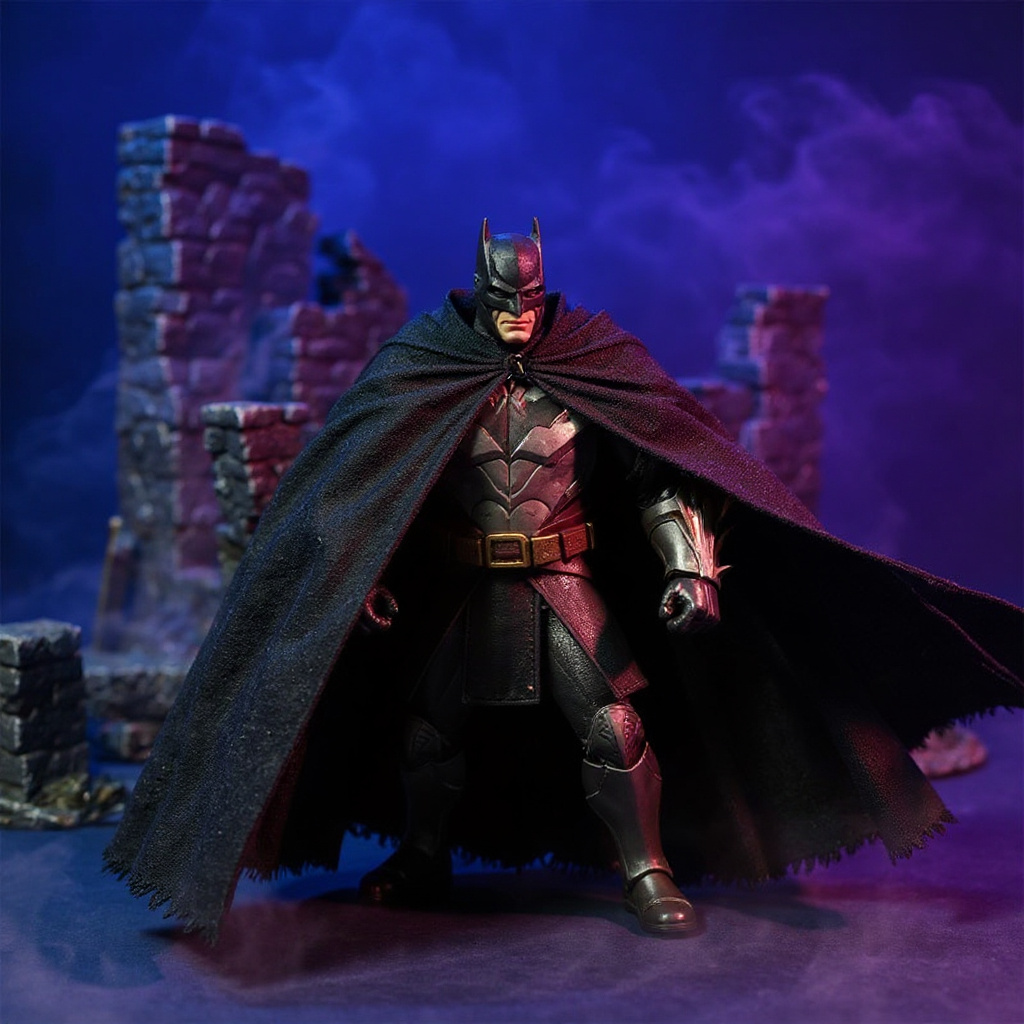
A 22-gauge wire frame stitched into 140 thread-count matte cotton-blend fabric is the backbone of any 7 inch figure fabric cape that holds a pose instead of collapsing into a limp curtain. That's the short version. The long version involves thread weight, wire gauge, and a fabric that reads as dark charcoal-black with just enough sheen to catch studio light without looking shiny like plastic.
I've built and repaired enough of these to know where they fail. Usually at the neck string. Sometimes at the hem.
Why a 7 Inch Figure Fabric Cape Needs a Wire Frame at All
Scale changes everything. A 7 inch figure sits around 1:10 to 1:12 scale, so fabric that drapes beautifully on a human mannequin turns into a stiff little tent when you shrink it down to fit a medieval-armored Batman figure's shoulders.
Without structure, even thin matte fabric just hangs straight down. Flat. Boring. No movement at all.
That's the entire argument for wire. A 7 inch figure fabric cape with an internal frame can hold a windswept pose across a shelf, a photo backdrop, or a dark moody gothic scene without a single pin holding it up. Stock plastic capes molded at the factory can't do that — they hold one shape, and that shape rarely says "gothic drama."
Fabric Choice: Matte, Dark, and Slightly Imperfect on Purpose
Here's where most buying guides get it wrong. They chase a factory-smooth finish. This particular cape style doesn't want that.
The dark charcoal-to-black matte fabric used on a proper 7 inch figure fabric cape carries a subtle sheen — enough to pick up rim lighting in photos but not enough to look like satin. Slightly frayed handmade edges are part of the look, not a manufacturing defect. If you buy one of these and the trim looks machine-perfect and laser-cut, you probably bought the wrong cape.
Cotton-blend fabric (roughly 60/40 cotton-polyester) in the 140-160 thread-count range gives you drape without collapse. Go higher than 180 and the fabric turns stiff, like cardboard trying to imitate cloth. Go lower than 120 and it looks thin under camera flash, almost see-through in the wrong light.
| Fabric Type | Thread Count | Sheen Level | Drape Quality | Best For |
|---|---|---|---|---|
| Cotton-blend matte (60/40) | 140-160 | Subtle | Excellent | Medieval Batman display capes |
| Pure cotton | 120-140 | Flat/none | Good | Static shelf poses |
| Silk | 100-120 | High gloss | Too fluid | Special one-off shoots only |
| Felt | Nonwoven | None | Poor | Armor-style shoulder pieces |
| Polyester (budget) | 160-200 | Shiny/plastic | Stiff | Not recommended for this style |
The 7 Inch Action Figure Cape Replacement uses the matte cotton-blend approach at roughly 140 thread count, which is why it photographs like fabric instead of like a toy accessory under gothic lighting.
Wire-Frame Ridges Are a Feature, Not a Flaw
Most articles will tell you to hide the wire completely. I won't. This is my contrarian point, and I'll say it plainly: for a dark, dramatic medieval cape, faint visible wire-frame ridges under the fabric are exactly what sells the illusion of movement frozen mid-motion. A perfectly smooth cape looks static. A cape with the faintest ridge line looks like it's caught in wind.
22-gauge craft wire is the sweet spot for a 7 inch figure fabric cape — bendable by hand, strong enough to hold a pose through a few photo sessions. 24-gauge is too soft; it sags again within a day. 20-gauge holds shape longer but pushes ridges that show through even heavier fabric, which some collectors hate and others (myself included) actually prefer for this exact gothic aesthetic.
The wire needs to be sewn into the fabric, not stuffed loose inside a tube. Loose wire shifts, bunches, and eventually pokes through frayed edges. Sewn-in channels keep the ridge subtle and consistent, run from shoulder to mid-cape, and create fold lines that mimic how heavy real fabric would move on a full-size cloak.
Attachment: The Small String Closure at the Neck
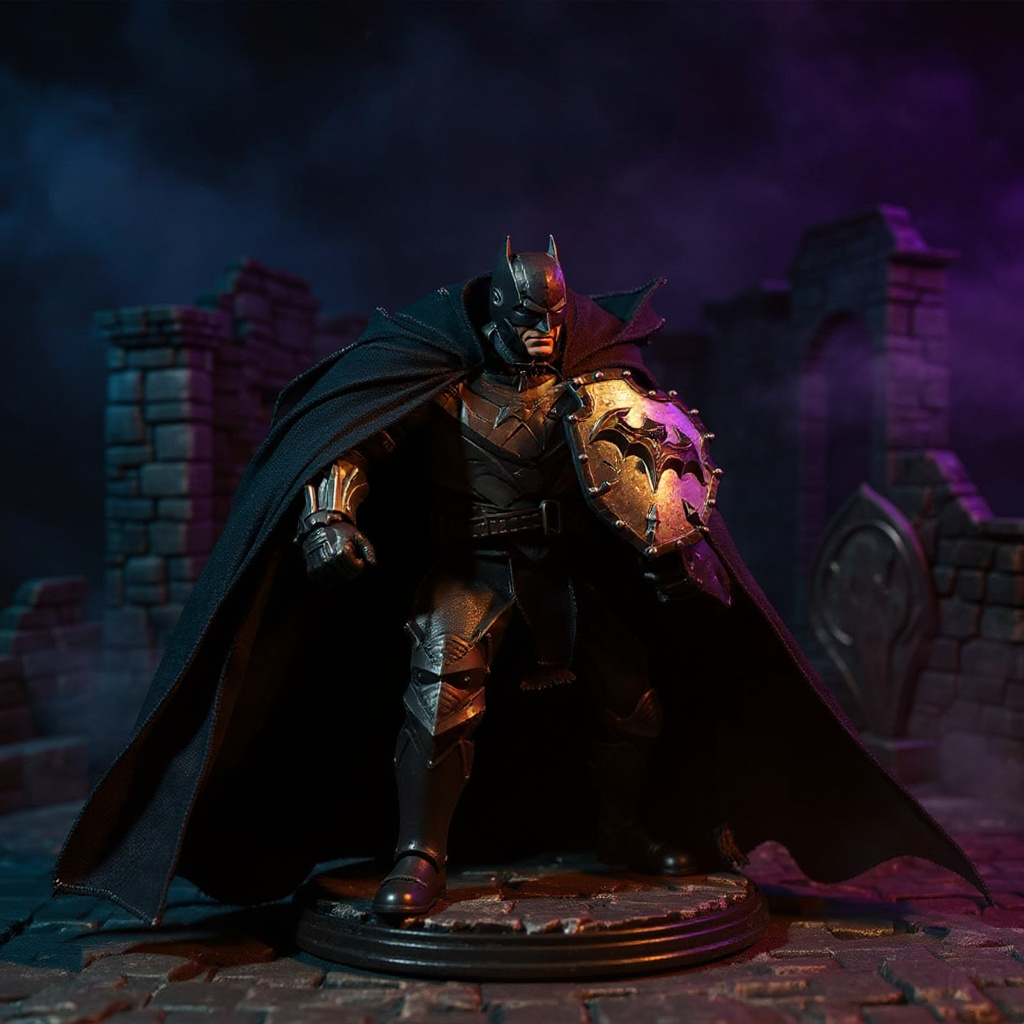
The tie-at-neck string closure is small on purpose. A wide clip or metal clasp would sit high against a medieval-armored Batman figure's gorget and rub paint over time.
Cotton string spreads pressure across a wider area than nylon cord. It's gentler against painted pauldrons and neck armor. Tie it loose enough that the cape rests on the shoulder line instead of pulling against the head joint — tight neck strings are the single most common cause of paint wear on collector forums.
Some people use clear film over contact points to prevent rub marks. It works. It also changes how the armor looks up close, so I'd rather just fit the cape right the first time.
Length, Width, and Proportion for 7 Inch Scale
Too short and the figure looks like it's wearing a bib. Too long and the cape swallows the armor detail. Neither looks good in a photo against a dark background.
For 7 inch scale, 7-8 inches of total length puts the hem around ankle height on the figure, matching classic comic proportions. Width should run about 1.5 times the shoulder width per side when spread — enough fabric for a dramatic pose, not so much that the figure disappears under it.
1. Total length: 7-8 inches, neck to hem 2. Width at shoulders: 3-4 inches across the back 3. Maximum spread: 8-10 inches fully extended 4. Neck opening: about 1 inch, adjustable with the string 5. Wire gauge: 22-gauge for structure, 24-gauge for fine detail folds
Handmade Fabric Cape vs. Stock Plastic: An Honest Comparison
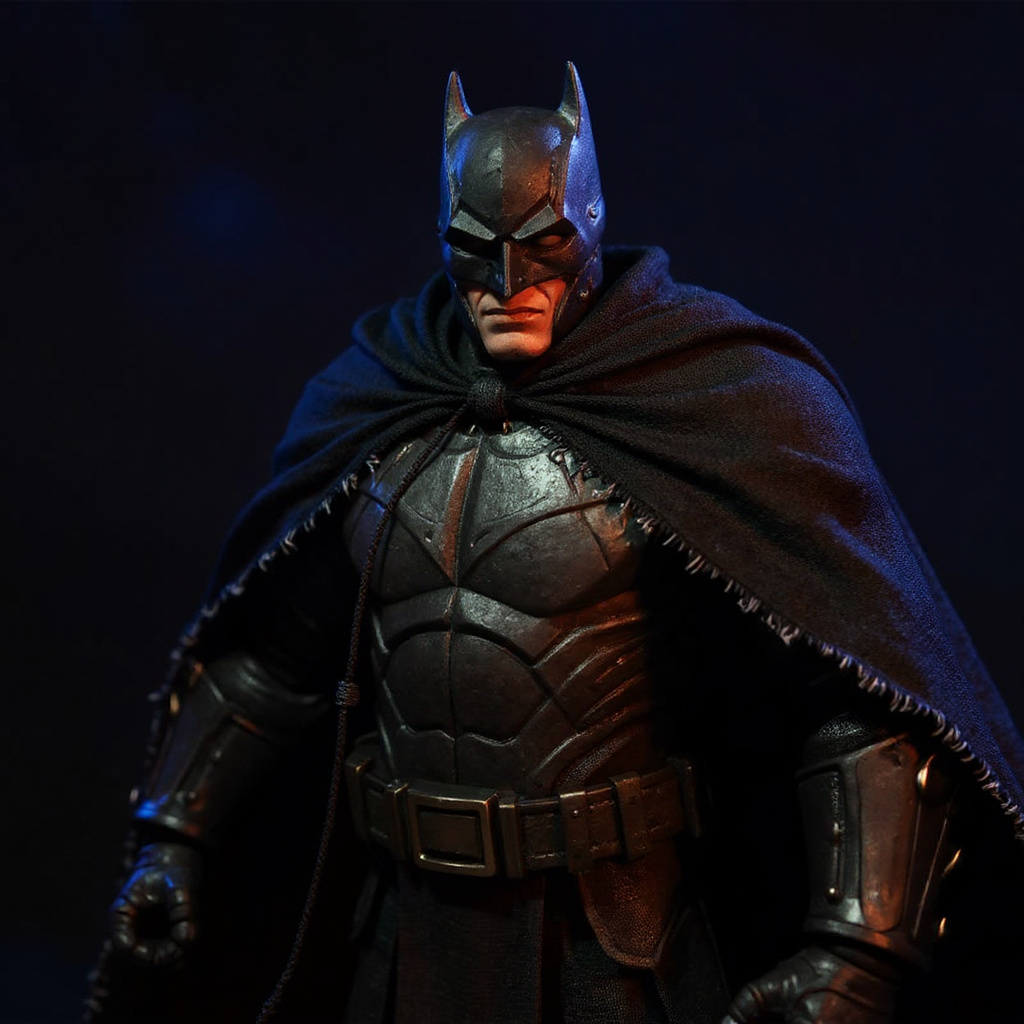
Stock plastic capes exist to complete a figure's look in the blister pack. They're not built for photography, and that's fine — that was never the job they were designed for.
| Feature | Handmade Fabric Cape | Stock Plastic Cape |
|---|---|---|
| Pose flexibility | High — reshape per shoot | None — molded one shape |
| Surface finish | Matte with subtle sheen | Glossy, reflects light oddly |
| Edge detail | Frayed, handmade texture | Clean-cut, uniform |
| Paint contact risk | Low with proper string fit | Medium, rigid edges can scuff |
| Cost | $50-70 typically | Included with figure |
| Photography result | Reads as fabric | Reads as toy plastic |
Honestly, if you only display figures behind glass and never photograph them, save your money. A stock plastic cape does the job fine on a shelf nobody zooms in on. But if you shoot against a dark moody gothic backdrop for social posts, the difference between plastic sheen and matte fabric sheen shows up in every single frame.
Quality handmade options like the Medieval Batman Soft Goods Cloak run around $59-70, which sits in premium accessory territory. For static shelf collectors, that's a hard sell. For photographers, it usually pays for itself in the first good shot.
Browse other soft-goods options in the figure accessories collection if you want to compare finishes before committing.
Does the Wire Frame Stress Figure Joints?
This question comes up constantly on collector forums. The worry: wire-framed capes strain shoulder or neck joints over time.
In practice, poor fit causes the damage, not the wire itself. A 22-gauge wire frame adds about 0.1 ounces to total cape weight — less than a coin. Modern 7 inch figures carry heavier accessories than that without complaint.
The real culprit is a tight neck string pulling against the head joint, or a cape sewn too stiff to let the shoulders rotate. Fix the fit. The wire was never the problem.
Photographing Against a Dark Gothic Background
A matte fabric cape earns its keep here. Under low, angled light against a dark moody backdrop, the subtle sheen catches just enough highlight to separate the cape from the shadows behind it — without the plastic-glare look that ruins gothic mood shots.
Position one light source low and to the side. Let the wire-frame ridges catch a thin rim of light along the fold lines. That's the whole trick. No elaborate lighting rig required.
Maintenance and How Long It Actually Lasts
Dust settles into fabric fibers and gets hard to remove without washing. A soft-bristled toothbrush handles surface dust in under a minute.
Hand wash in cold water if it needs deeper cleaning — machine washing distorts the wire frame, sometimes permanently. I ran one cape through a home wash cycle once as a test. The frame came out bent in three places and never sat right again.
The wire is the part that wears out first. In my own use, 22-gauge wire held its shape through about 2-3 years of regular reposing before it started losing spring. The fabric itself, especially dark charcoal-black dye, resists fading indoors. Direct sunlight is a different story — keep it away from a sunny windowsill if you care about the color staying even.
Fabric Cape FAQs for 7 Inch Figures
What is the best fabric for a 7 inch figure fabric cape that drapes well? Matte cotton-blend fabric — around 60% cotton, 40% polyester — in 140-160 thread count gives natural drape with enough body to hold a pose without going stiff. What wire gauge works best inside a posable cape? 22-gauge craft wire. It bends by hand and holds a shape through repeated posing. 24-gauge sags too fast; 20-gauge holds longer but pushes more visible ridge lines through the fabric. Are visible wire ridges under the fabric a defect? No. On a dark, dramatic medieval-style cape, faint ridge lines under matte fabric read as movement frozen mid-motion. It's a design choice, not a flaw, on this style of cape specifically. Can felt or silk replace cotton-blend for a small-scale cape? Silk drapes too loose at this scale and looks unnatural in photos. Felt works for stiff armor-style shoulder pieces but can't create flowing poses the way a matte cotton-blend can. How do you attach a fabric cape without scuffing painted armor? Use a soft cotton string tied loose at the shoulder line rather than a plastic clip. Tight strings against the neck are the leading cause of paint wear reported by collectors. What length should a cape be for a 7 inch scale figure? 7-8 inches total, neck to hem. That lands around ankle height, matching comic-accurate proportions without dragging on the display base. Do wired capes strain a figure's joints over time? No, not when fitted properly. The wire adds roughly 0.1 ounces. Poor neck-string fit — not the wire — is what causes joint or paint stress. How do you keep wire from poking through frayed fabric edges? Sew the wire into a fabric channel rather than inserting it loose. Frayed edges should be a finished design detail, with the wire fully encased well before it reaches the hem. Why does my cape's sheen look plastic-y under camera flash instead of matte? That usually means the fabric is a higher-polyester blend than advertised, or the thread count crept above 180. True matte-with-sheen fabric sits closer to 140-160 thread count with a cotton-heavy blend. Is a $59-70 handmade cape worth it over a free stock plastic one? For collectors who photograph figures against moody backdrops, yes. For shelf-only display where nobody examines the fabric closely, stock plastic still does its basic job.So, Is It Worth Building or Buying One?
Depends on what you actually do with your figures. Shelf display only? Stock plastic is fine, save the money.
But if you shoot photos, post them, or build dioramas with a dark moody gothic aesthetic in mind, a matte fabric cape with a sewn-in wire frame changes what's possible in every shot. The frayed edges, the subtle sheen, the faint ridge lines catching light — none of that comes from a mass-produced plastic mold.
For a deeper look at posing techniques once you own one, see our guide to posing soft-goods capes, or browse the 7 Inch Action Figure Cape Replacement | Medieval Batman Soft Goods Cloak directly if you already know the look you're after.

