


title: DIY Soft Goods for Action Figures: Wired 1/12 Scale Jacket Guide meta_description: DIY soft goods for action figures, step by step: fabric, 30-gauge wire, 1/8 inch seams and a tissue test pattern for a cropped 1/12 scale military jacket.
How do you make DIY soft goods for action figures? Measure your figure, test the shape in tissue paper, then cut cotton voile or lawn (under 90 g/m²) with 1/8 inch seams. Sew 30-gauge wire (0.25 mm thick) into the collar and cuffs so the cloth holds a pose. Finish the details by hand. Skip quilting cotton. It is too thick at 6 inches. Disclosure: this guide comes from the soft goods team at The Figure Vault, which sells a 1/12 scale jacket (described near the end). The bench tests below are small-sample tests on our own table, not lab data.

We use one project as the running example: a bright yellow, cropped, military-style jacket with epaulettes, visible stitching and wire in the collar and cuffs. It is a hard garment to get right. Yellow shows every flaw. Cropped cuts leave nowhere to hide a bad hem. If you can build this jacket, you can build almost any miniature soft goods piece.
DIY Soft Goods for Action Figures: What Changes at 1/12 Scale
A 1/12 scale figure stands about 6 inches (152 mm) tall. Fashion dolls such as Barbie run about 11.5 inches and sit near 1/6 scale, so your figure is roughly half that height. Divide every real-world measurement by 12 and the problems show up fast. A 5/8 inch seam allowance shrinks to 0.05 inch, or 1.3 mm, which no machine foot can guide and no fingertip can hold. So we cheat. The cheat is the craft.
Here is what a bad cheat costs. Say a jacket front panel finishes 1 inch wide. Add 1/4 inch allowances on both sides and you cut it 1.5 inches wide, so a third of the cloth ends up folded inside seams. On a full-size coat, that 1/4 inch is the same as a 3-inch seam allowance. Nobody would sew that. Drop to 1/8 inch (3 mm) on straight seams and 1/16 inch on tight curves such as armholes.
Fabric weight does the rest. Quilting cotton, at roughly 110 to 130 g/m², reads as canvas on a 6-inch body. Cotton voile and lawn, at 50 to 90 g/m², fold into tiny hems and look like cloth. Yellow makes the gap wider. Saturated, light colors catch every ridge and shadow, and a bulky seam on a bright yellow jacket looks like a scar.
Wire is the third variable. A thin wire inside the collar and cuffs lets the cloth keep a pose. Without it, sleeves droop against the arm and collars lie flat. With too much of it, the jacket turns into armor.
| Element | Full-size garment | True 1/12 value (÷12) | Practical value at the bench |
|---|---|---|---|
| Seam allowance | 5/8 inch (16 mm) | 0.05 inch (1.3 mm) | 1/8 inch (3 mm); 1/16 inch on curves |
| Stand collar height | 1.5 inch (38 mm) | 1/8 inch (3 mm) | 3/16 inch (5 mm) to leave room for wire |
| Hem depth | 1.5 inch (38 mm) | 1/8 inch (3 mm) | 1/8 inch (3 mm) |
| Button diameter | 5/8 inch (16 mm) | 0.05 inch (1.3 mm) | 2 mm seed bead (11/0) |
| Sleeve ease | 2 inch (51 mm) | 1/6 inch (4 mm) | 1/16 to 1/8 inch, depending on the elbow joint |
The middle column is the math. The right column is what survives a needle.
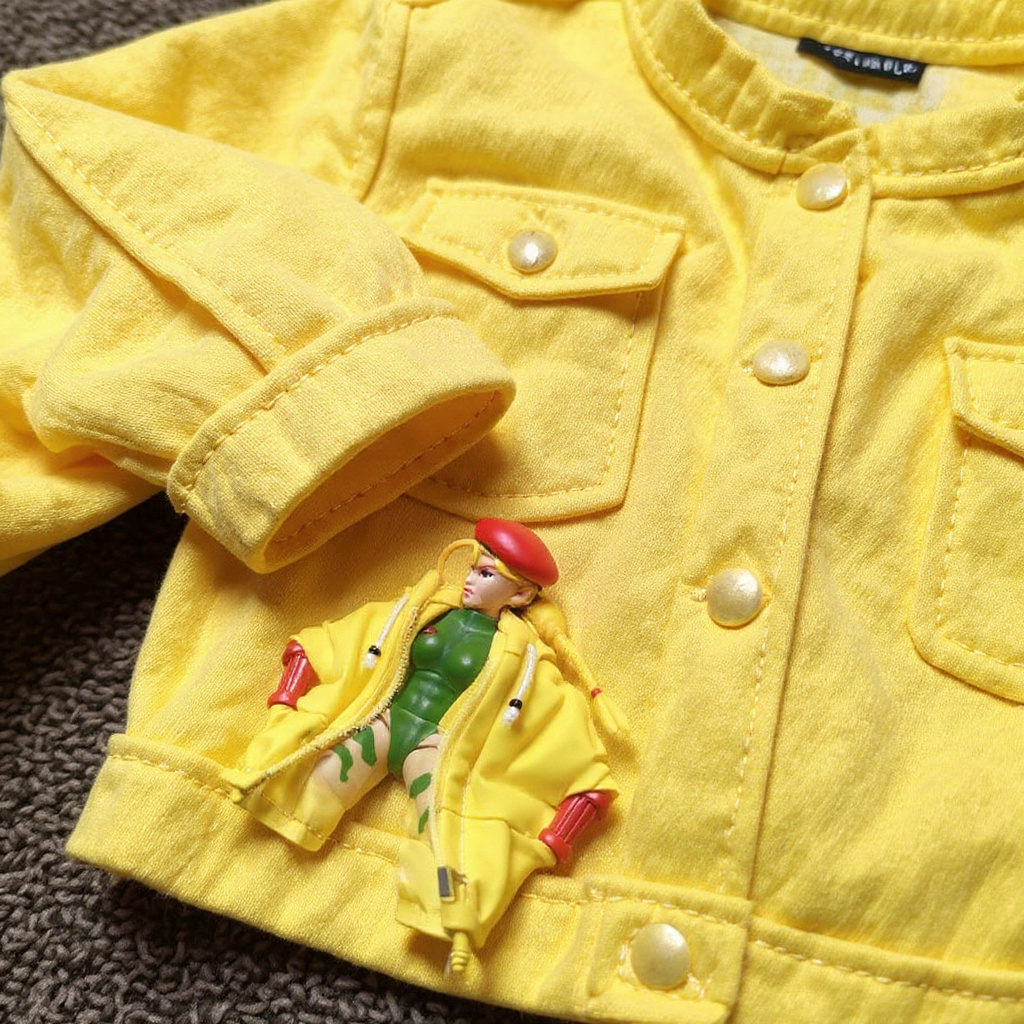
Materials for DIY Soft Goods for Action Figures: Fabric, Wire and Tools
Fabric decides how the finished piece reads from across the room. Choose from the table below and you avoid the most common failure, which is a jacket that looks like a tent.
| Fabric | Typical weight | Drape (1 = stiff, 5 = fluid) | Verdict at 1/12 scale |
|---|---|---|---|
| Cotton voile | 50 to 70 g/m² | 5 | Best for linings and shirts; frays, so seal edges |
| Cotton lawn | 60 to 90 g/m² | 4 | Best for crisp jackets; holds a press well |
| Silk habotai (8 to 12 momme) | 35 to 52 g/m² | 5 | Lovely drape; slippery to cut, tough to hand-sew |
| Quilting cotton | 110 to 130 g/m² | 2 | Skip. Seams ridge and hems stand up |
| Denim, canvas, felt | 200 g/m² and up | 1 | Skip. Reads as a rug |
Weights are typical supplier ranges. Check the label on your bolt.
Wire, notions and tools:- 30-gauge (AWG) copper craft wire, 0.255 mm in diameter per the ASTM B258 wire standard - Lightweight fusible interfacing for the collar and epaulettes - Cotton thread, 50-weight, one shade darker than the fabric for visible stitching - Microtex sharp needles, size 60/8 or 70/10, for machine or hand sewing - Round-nose jewelry pliers to loop the wire ends - Micro snaps (3 to 4 mm) and 2 mm seed beads for closures - Small embroidery scissors with a sharp tip (dull blades chew voile) - Liquid fray sealant and a toothpick to apply it
DIY Soft Goods for Action Figures: Step-by-Step Jacket Process
A first jacket takes us 6 to 10 hours, including the muslin. Later ones run 3 to 5. Those are our own numbers, so treat them as a guide.
1. Measure the figure. Record shoulder width, chest circumference, upper arm and wrist circumference, shoulder-to-wrist length and shoulder-to-waist length. Bodies from different makers vary by several millimeters, and 2 mm decides whether a jacket closes or gapes. A cropped jacket should end at the natural waist, about 1.5 to 2 inches below the shoulder seam on most 6-inch bodies. 2. Draft a tissue-paper test pattern. Cut front, back, sleeve, collar and epaulette. Tape it on the figure. Adjust. Then sew a muslin from scrap voile, because the first version always fits wrong. Action figure clothing patterns scaled down from human patterns need extra trimming at the shoulders and waist, since many figures have broad shoulders and narrow waists. 3. Cut on grain. Align the long edge of each piece with the selvage. Cross-grain cuts stretch and twist in a 1-inch sleeve. 4. Fuse the structure. Press lightweight interfacing onto the collar and epaulettes before any sewing. Finished epaulettes measure about 3/8 inch wide and 1/2 inch long on a 6-inch body. 5. Prepare the wire. Cut 30-gauge wire 1/8 inch shorter than each channel at both ends. Bend a tiny loop in each end with round-nose pliers. The loop keeps a sharp cut end from working through the cloth. 6. Sew the body. Join shoulder seams first, baste the epaulettes into them, then set sleeves flat before closing the side and underarm seams. On a machine, set the stitch length to 1.5 mm. Clip curves to 1/16 inch. 7. Encase the wire. Stitch collar and cuff pieces right sides together, turn, press, slide the wire into the channel and close the open end by hand. Wire sits between layers, never on top. Wire only the collar and cuffs. A cropped hem 1.5 inches long just gets stiff. 8. Add the visible stitching. Topstitch 1/16 inch from seams and edges with the darker thread. Hand backstitch gives the cleanest line on curves. 9. Close and finish. Sew micro snaps under the front edge, then stitch seed beads on top as buttons. Press with a low-heat iron through a pressing cloth. 10. Pose it. Dress the figure, stand the collar up and shape the cuffs around the wrists.

Troubleshooting Miniature Soft Goods
1. Wire shows as a ridge. Fold the channel fabric double, line the collar, or drop to 32 gauge. 2. Wire pokes through. Re-loop the ends and shorten the wire by another 1/16 inch. 3. Sleeves pucker. Add 1/16 inch of ease and clip the armhole curve again. 4. Edges fray. Dab fray sealant with a toothpick on raw edges before turning. 5. Collar flops. Fuse interfacing to both collar halves, or step up from 32 to 30 gauge.
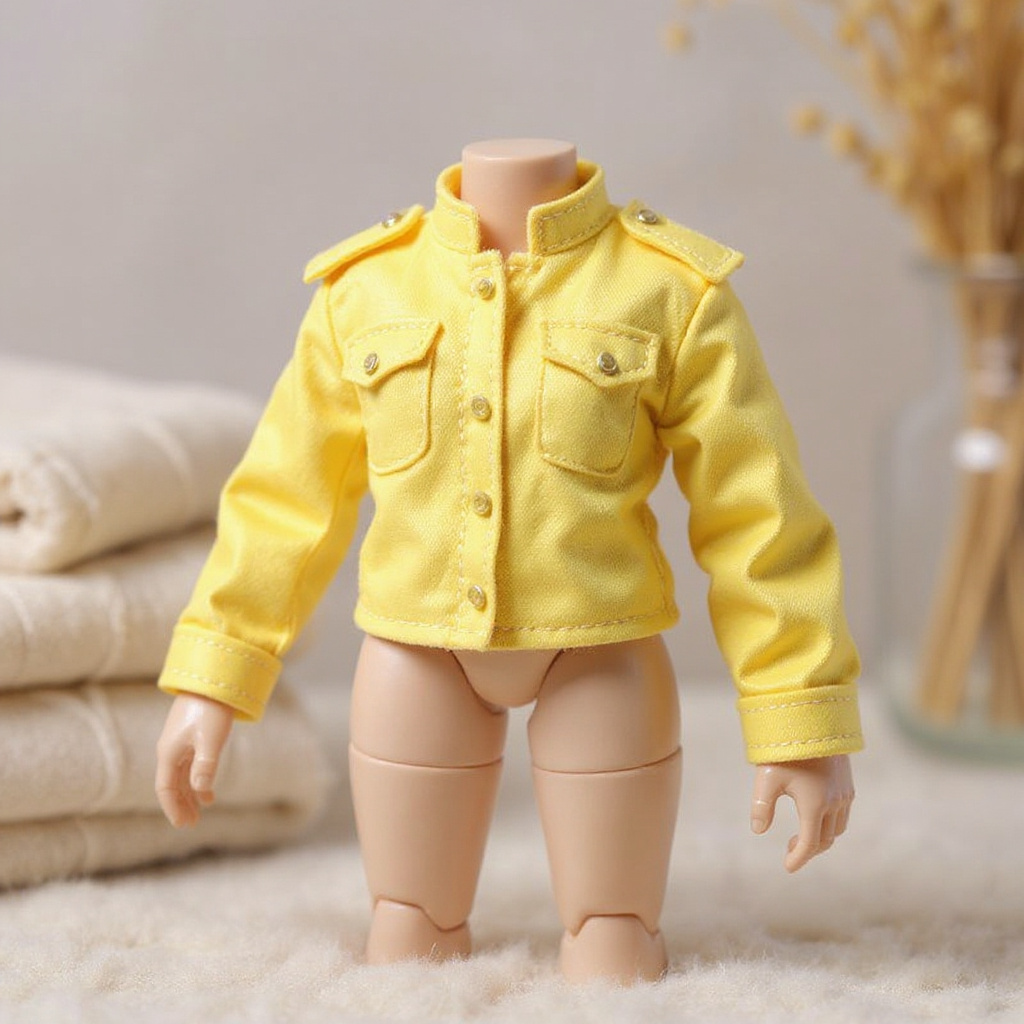
Wire Gauge Test: Which Wire Works in 1/12 Scale Fabric?
We sewed the same cuff tube three times in yellow cotton lawn (about 70 g/m²) and re-posed each cuff by hand. It is a small bench test, not a lab study.
| Wire gauge | Diameter | Visible in single-layer yellow lawn? | Re-posing result |
|---|---|---|---|
| 28 | 0.32 mm | Yes, a clear ridge | Held strongly; too stiff for a tight cuff |
| 30 | 0.25 mm | Faint, only under bright light | Held its shape through 20 re-poses |
| 32 | 0.20 mm | No | Held shape, but began to sag after about 10 re-poses |
Thirty gauge won. Not by a landslide. By enough.
Common Mistakes in DIY Soft Goods for Action Figures
Treating it like regular sewing. French seams look great on full-size shirts. At 6 inches they add a lump you can see from a desk away. Use simple seams and seal the edges. Scaling buttons exactly. A true-scale button is 1.3 mm. It disappears. A 2 mm bead reads as a button and stays on. Adding working pockets and zippers. Too clunky. Too fragile. Suggest them with topstitching instead. Ignoring grain. Cross-grain pieces hang wrong and twist. Check before every cut. Heavy weathering. Light dry brushing with thinned acrylic paint works. Heavy distressing looks like the jacket was dragged behind a truck, and a fabric you have already painted cannot be unpainted.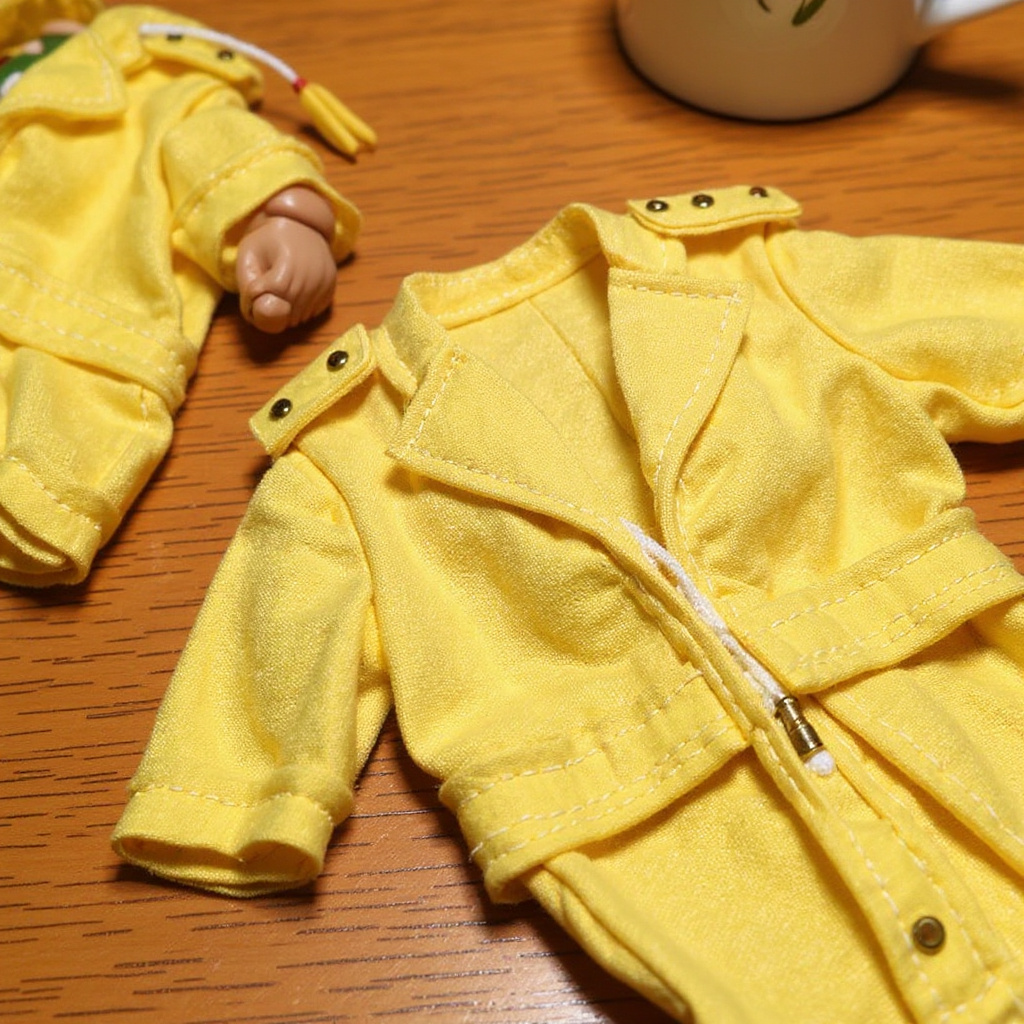
DIY vs Buying Soft Goods for Your Action Figure
Honestly, if you need one yellow cropped jacket for one figure, buy it. Your first attempt will eat a weekend, and the epaulettes alone, at 3/8 inch wide, are a miserable first sewing project. DIY makes sense if you enjoy the process, plan to make several pieces, or want a design nobody sells.
| Route | Typical cost | Time | Character accuracy | Best for |
|---|---|---|---|---|
| Mass-produced generic outfit | $15 to $25 | Minutes | Low | Casual display |
| DIY from a tissue pattern | $10 to $25 in materials | 6 to 10 hours for a first jacket | Depends on your skill | Learning and one-off designs |
| Ready-made handmade piece | $50 to $80 | Shipping time | High | A specific character look |
| Custom commission | $60 to $120 | Weeks to months | Highest | Rare or unusual designs |
These ranges are our own estimates from the market and our materials purchases, and they vary by region and maker.
If you want the Street Fighter 6 look in particular, accuracy matters more than savings. Cammy's military-style jacket combines a stand collar, epaulettes and a cropped body, and a slightly wrong shade of yellow gets noticed. Fans in Street Fighter communities on Reddit compare costume details closely, and the Action Figures subreddit is a good place to ask for feedback on a muslin before you cut real fabric.
Our product, disclosed: we sell the Cammy Yellow Jacket for 1/12 Action Figure. It is a bright yellow, cropped, military-style jacket with epaulettes, visible fabric stitching and shapeable wire in the collar and cuffs, sized for 6-inch 1/12 scale figures. The product page shows it on a small figure body, with close-ups of fabric texture and tailoring, so you can compare its construction against the standards in this guide. It was designed for the character from Street Fighter 6. It is one option, not the only one.Is DIY Soft Goods for Action Figures Worth Your Time?
It is, if the sewing itself appeals to you. The skills carry over. Learning to hold a 1/8 inch seam improves every other piece of handwork you do, from doll clothes to costume repair. Spend an evening on a tissue pattern and a voile muslin before you cut your good yellow lawn. If the muslin makes you want to throw the figure across the room, you have your answer, and buying is no failure.

