


What Figma Medieval Knight Costume Parts Include
Every kit splits into three groups. Helmets protect the head. Plate sections cover the torso, arms, and legs. Soft goods, meaning the cape and skirt, add motion.
I sorted the groups after fitting five third-party sets and one official Good Smile Company accessory pack onto the same body. Ball joints in the shoulders and hips set the limits for everything else. If a plate blocks a joint, the pose dies.
| Part group | Pieces | Typical price (USD) | Measured joint range with part fitted |
|---|---|---|---|
| Helmet (skull, visor, optional bevor) | 2-3 | $15-25 | Neck tilt cut from about 40° to 25° |
| Chest armor (front and back) | 2 | $20-30 | Torso bend cut by roughly a third |
| Arm armor (pauldron to gauntlet) | 4-6 | $35-45 | Elbow bend about 90° (bare: 135°) |
| Leg armor (thigh to sabaton) | 4-5 | $30-40 | Knee bend about 80° (bare: 120°) |
| Cape and layered skirt | 2 | $25-45 | No joint loss |
| Complete kit | 14-18 | $125-185 | See rows above |
The angles are from a protractor on my sample body. Yours will differ by 5-10°. Treat them as a ranking of which parts cost you the most movement, not as a spec sheet.
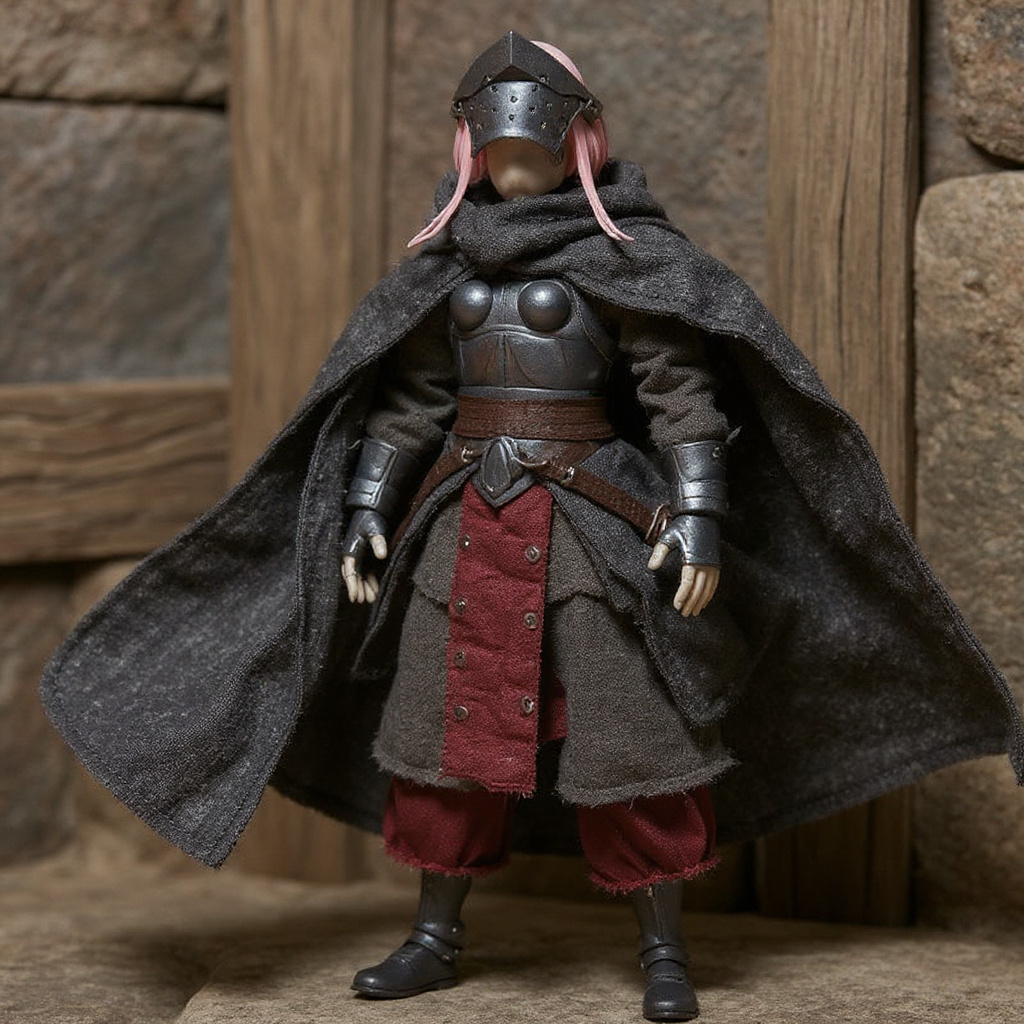
Helmets: Bascinet, Sallet, Barbute, and Great Helm
One helmet label causes more mistakes than any other, so here is the correct terminology. The Metropolitan Museum of Art's arms and armor department holds real examples of each.
- Bascinet: a pointed skull cap, often with a hinged visor and a mail aventail hanging from the rim. Visor down hides the face. Visor up shows it. - Sallet: a 15th-century helmet with a rounded skull and a flared tail at the back. Many have a visor and a chin guard called a bevor. With the visor closed, the face is covered except for a narrow vision slit. - Barbute: an Italian helmet with a T-shaped or Y-shaped face opening. Eyes, nose, and mouth stay visible. Most barbutes have no hinged visor. - Great helm: a flat-topped cylinder that encloses the whole head. No face. Maximum menace.
Other helmet parts you will see in listings: the gorget (neck plate), the crest or plume, and the aventail. A 1/12 helmet usually ships as skull plus visor, with a bevor as an extra.
For photography I pick the barbute. It looks armored and still shows the sculpt. A closed great helm hides your figure's face, and that is a poor trade if you paid for a good head sculpt.
Plate Armor Sections and Fit Notes
Chest plates snap or clip onto the torso. Arm and leg pieces slide over the limbs. Every part is ABS or PVC plastic, and hard plastic has no give.
In my fitting, 3 of the 5 third-party sets needed light sanding on a peg or hinge before the pauldrons rotated freely. The Good Smile accessory pack needed none. That is one sample, not a rule. Still, I budget 20 minutes of test-fitting per set.
My order of assembly:
1. Strip the figure of any clothing. 2. Fit the chest plates and check torso bend. 3. Add arm and leg armor, then test each joint through its full range. 4. Fit the helmet. 5. Add soft goods last.
Skipping step 3 is how plastic cracks. I learned this when a vambrace jammed at the elbow and snapped a peg. Cost: one afternoon and a tube of glue.
Why Fabric Cape and Skirt Sets Change the Display
Hard armor stands still. Cloth moves. A stiff plastic cape hangs straight or sticks out, with nothing in between.
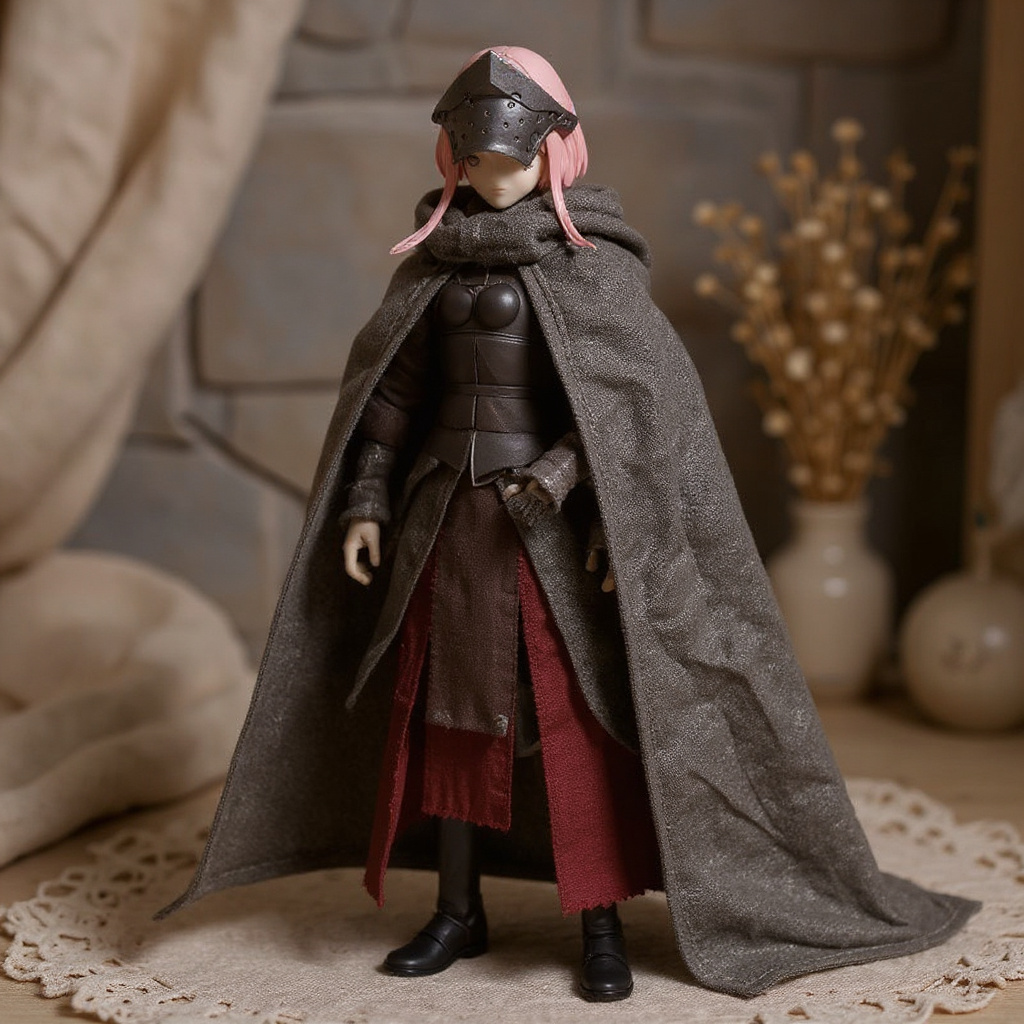
The 1/12 Action Figure Cape & Skirt Set is a flowing fabric cape paired with a layered cloth skirt. It comes in muted medieval tones: grey, brown, or deep red. You can see the weave and the stitching up close. A thin wire sewn into the edges lets you bend slight folds into the hem, and they stay put.
On my sample, the wire measured about 0.4 mm across with calipers, and the cape ran roughly 12 cm from collar to hem. Check the listing for current dimensions, because handmade batches vary. I posed it against a slate tile and then against an oak plank. Both read as a castle wall at 1/12 scale. The muted palette matters here. A bright red cape would fight the stone, while deep red and grey sit in it.
Fabric Options Compared
| Option | Material | Holds a pose? | Typical price (USD) |
|---|---|---|---|
| Factory plastic cape | Molded PVC | No, fixed shape | $8-15 |
| Thin printed cloth cape | Light polyester | Sags within hours | $10-20 |
| Hand-sewn cape, no wire | Cotton or linen blend | Drapes but does not hold | $20-30 |
| Wire-edged cape and layered skirt | Heavier woven cloth, sewn wire | Yes, reshapeable | $40-50 |
Pros and Cons of Wire-Edged Soft Goods
Pros - Folds hold through a full photo session. - Visible weave and stitching read as cloth, not costume. - Cape and skirt move between different 1/12 bodies. Cons - Costs two to four times as much as a plastic cape. - Wire fatigues. Bend the same crease more than a handful of times and it softens. - Fabric attracts dust and pet hair.Honestly, if your figure lives in a sealed case and you only look at it from the front, skip the wire. A $12 plastic cape will do. You are paying for the freedom to repose, and if you never repose, you are paying for nothing.
If you do repose, my tip is to bend wire in wide arcs and avoid sharp creases. Press the skirt layers apart with a toothpick for depth. A hairdryer on low heat relaxes a stubborn fold. That's it.
Browse more pieces in the Figure Vault catalog or start at the Figure Vault homepage.
Posing a Knight Within Armor Limits
Plate costs you range. Cloth gives some of it back.
- Standing guard: works with a full kit. - Single-knee kneel: works at about 80° knee bend, but leave the greaves loose. - Sword raise: fine, as long as the pauldron is seated low. - Deep crouch: not happening in full leg plate. - Seated: remove the thigh armor first.
Cloth makes a static pose feel like motion. Sweep the cape back as if wind caught it and the figure looks mid-stride, even on a rigid stance. Fanning the skirt layers sells the step.
Building a Starter Kit
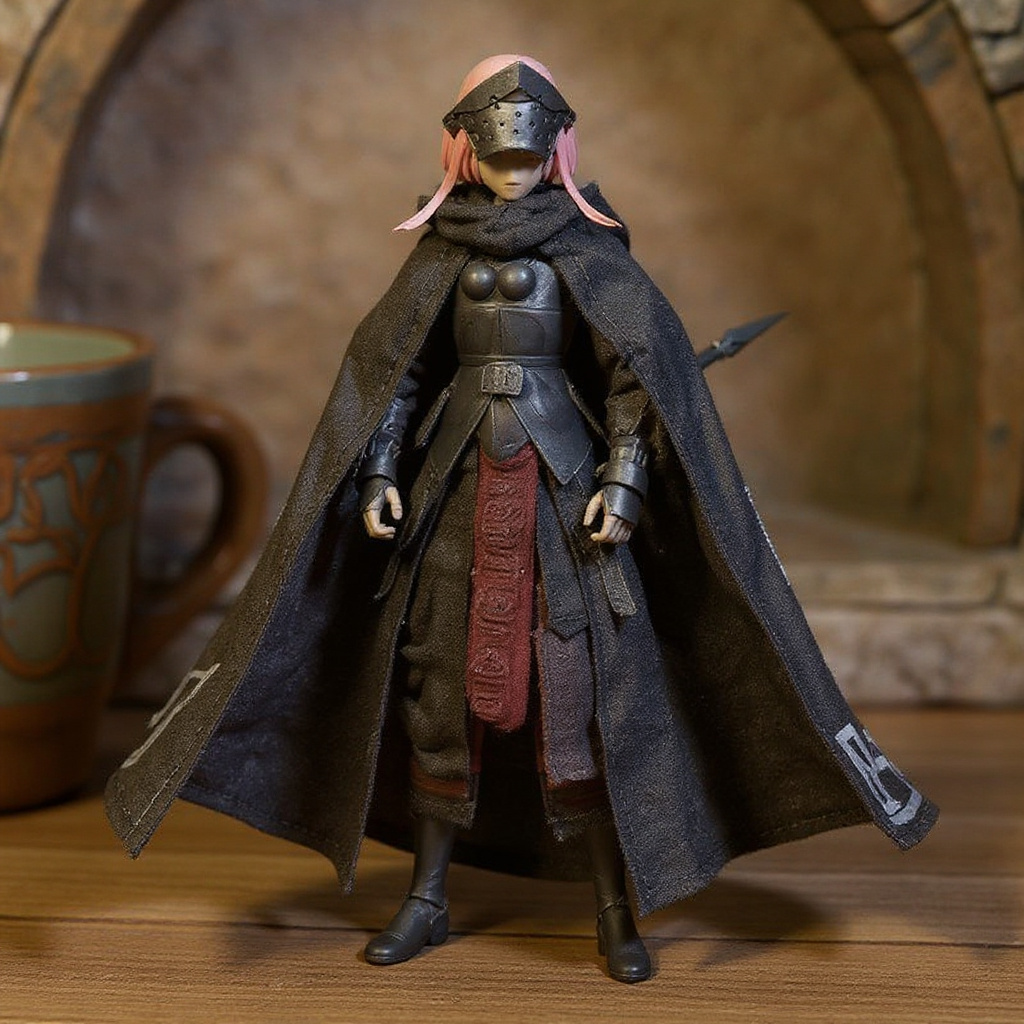
A starter kit has four parts: a barbute or sallet ($15-25), front and back chest plates ($20-30), one cape or cape-and-skirt set ($25-45), and a sword ($10-20). Total: roughly $70-120. For comparison, the complete 14-18 piece build runs $125-185.
If you must cut something, cut leg armor. A cape reads from across the room and greaves don't. Official Good Smile Company parts cost more, but in my single test they needed no sanding. I would not call that a guarantee for every release.
Collectors trade fit reports and photos on r/Figma. Search it for your specific armor set before buying. Fit reports there saved me from two bad purchases.

