


A good replacement cloak for a 6-inch knight action figure is a woven-fabric cape, 3.5 to 4.5 inches (90 to 115 mm) long. It has 22-gauge wire sewn into a fabric channel along the hem, a neck edge of roughly 45 to 55 mm, and an attachment that suits your figure: a neck loop, peg loop, or snap. Handmade versions cost about $30 to $60. Molded plastic capes cost $5 to $15. The best colors for a medieval look are deep blue, grey, and black.

What Makes a Good Replacement Cloak for Knight Action Figure Collections?
Five specs separate a cape that photographs well from one that ends up in a drawer.
- Length: 3.5 to 4.5 inches from the neck edge to the hem on a 6-inch figure. - Wire: 22-gauge (about 0.64 mm) copper or coated craft wire, enclosed in a stitched channel. - Neck width: 45 to 55 mm, so the cape clears the shoulders of a 35 to 45 mm wide torso. - Fabric: A tight weave with visible texture, in deep blue, grey, or black. - Attachment: One that matches your figure. Check this before anything else.
Miss one of these and the cape looks wrong. Miss two and it looks like a dish towel.
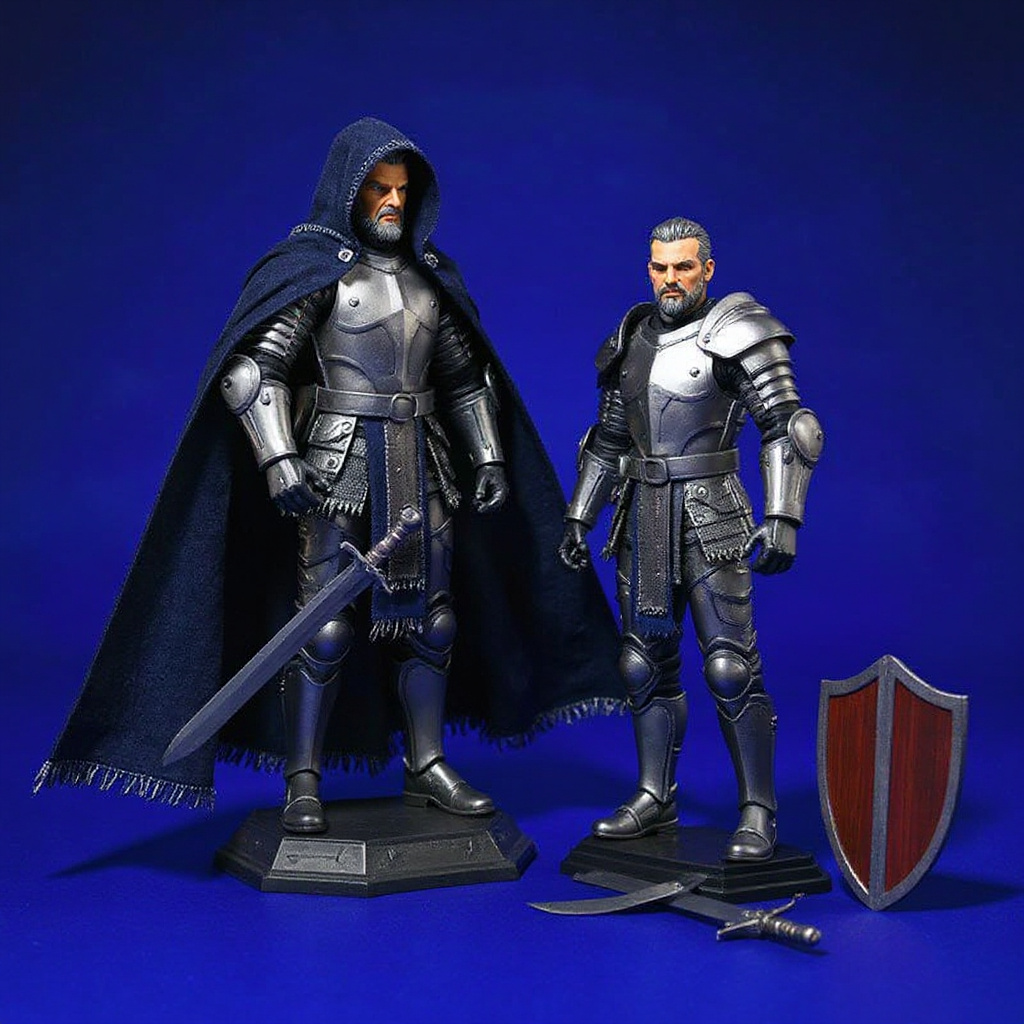
Fabric vs Plastic Capes: Measured Differences
Plastic capes are tough. They are also stiff, and they hold exactly one shape. If you photograph battle scenes, that limit gets old fast, and the action figure community on Reddit raises it often. Wire-edged fabric bends into a windswept curve and stays there until you move it again.
Fabric has real costs, though. It frays, it collects dust, and it needs a light touch. The table shows typical ranges across the market, not a single brand.
| Cape type | Typical length (6-inch figure) | Hem support | Typical price | Re-posable? |
|---|---|---|---|---|
| Molded plastic | 3 to 4 in | None (fixed mold) | $5 to $15 | No |
| Unwired cotton or felt | 3 to 4.5 in | None | $8 to $20 | Drapes only |
| Wire-edged woven fabric | 3.5 to 4.5 in | 22-gauge wire in channel | $30 to $60 | Yes |
| Wire-edged, lined, two-layer | 3.5 to 4.5 in | 22-gauge wire plus lining | $45 to $75 | Yes, holds heavier folds |
Browse more options in our action figure capes collection.
Getting the Scale Right on a 6-Inch Figure
Six-inch scale is 1:12. A 6-inch figure stands for a 6-foot person. The neck sits about 5 inches off the floor, so a cape reaching mid-calf is roughly 3.3 inches long, and one brushing the ankle is roughly 4.5 inches. That is where the 3.5 to 4.5 inch range comes from.
Shorter than 3 inches, and you have a shoulder drape. Longer than 5 inches, and it pools on the base like a wedding train.
Shoulder width matters too. Most 6-inch knights measure 35 to 45 mm across the shoulders, and this varies by line. Mythic Legions bodies with armor pieces on top run wider than a bare Marvel Legends torso. Our cape size guide lists more figure lines.
How to measure your figure before buying:1. Stand the figure upright on its base with arms at its sides. 2. Measure shoulder width with calipers or a ruler, from the outer edge of one shoulder to the other, armor included. 3. Measure from the base of the neck straight down to the ankle, then to mid-calf. 4. Check the back for peg holes or a neck ring. Note whether armor covers them. 5. Compare your numbers to the cape's listed neck width and length. Allow 5 to 10 mm of extra neck width for the fabric to sit naturally.
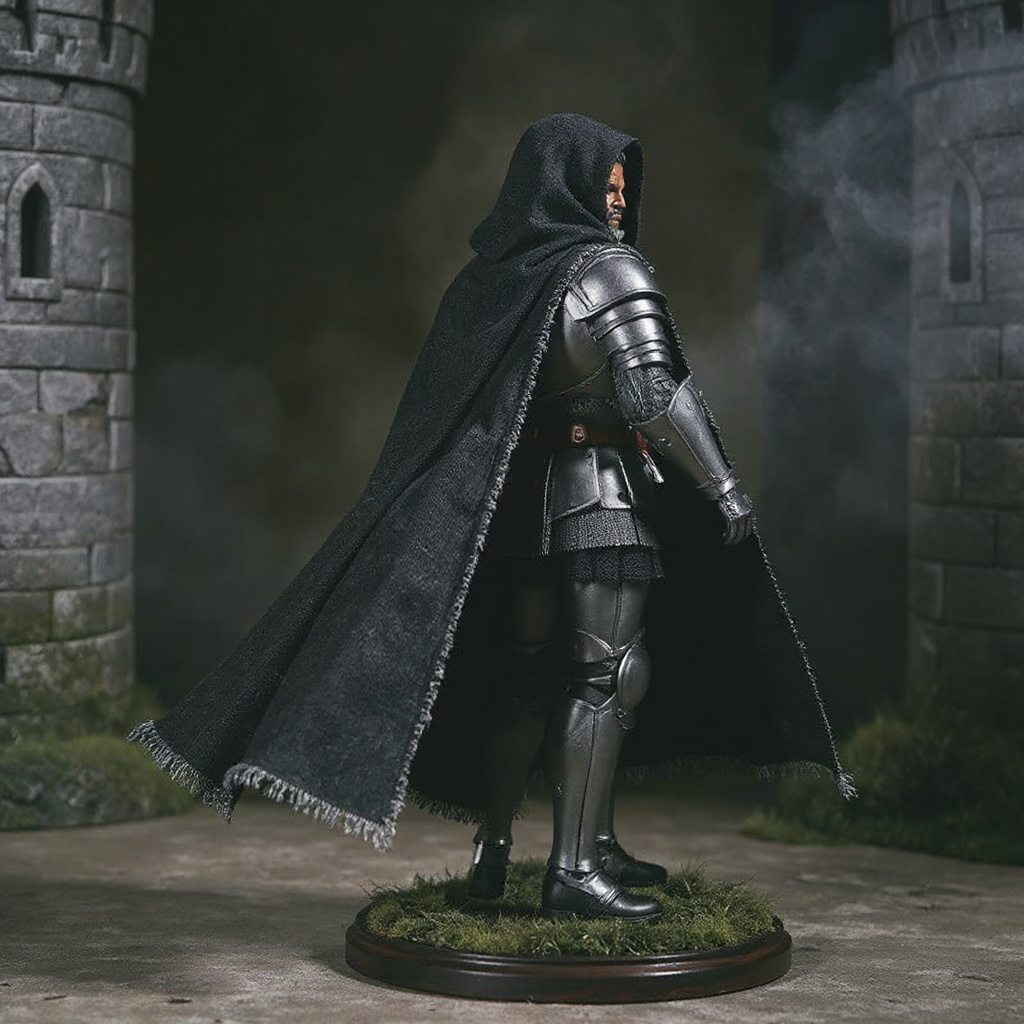
Wire Armature: The Part That Makes or Breaks the Cape
Wire gauge numbers run backward: a higher number means thinner wire (American wire gauge). At 24 to 26 gauge (0.40 to 0.51 mm), the wire bends easily but sags under a heavy hem. At 18 to 20 gauge (0.81 to 1.02 mm), it holds well but fights your fingers, and it can show as a ridge through thin fabric.
22-gauge sits in the middle. It shapes by hand, holds a curve, and stays hidden in a stitched channel.
Two cautions. First, wire work-hardens. Copper and aluminum both stiffen and eventually snap if you bend the same spot dozens of times, so vary your fold lines. Second, skip cheap paper-wrapped floral stem wire. It is steel-cored, it can rust if damp, and the rust can mark pale fabric.
The wire should run the full hem and preferably up both side edges. Corner-only wire gives you droopy middles. Loose wire not held in a channel shifts around and can scratch figure paint.
Attachment Methods and What Works Where
This is where most replacement capes fail, and it is not the maker's fault. Attachment points vary by figure line and sometimes by individual figure. Check your figure's back first.
Common methods:
- Peg loops: Fabric loops that slip over shoulder or back pegs. Secure, but only work if your figure has pegs. - Elastic neck loops: They stretch over the head and suit figures without pegs. The elastic loosens with handling, so plan to swap it out. - Snap or hook-and-loop closures: Hold well at the throat, but add bulk under a helmet or gorget. - Small magnets: Fine for light, unwired capes. With a wire hem, I found 3 mm magnets slipped during posing. - Armor-integrated attachment: Cloak clips into a pauldron or collar piece. Neat and stable when available.
My pick for figures with no pegs is an elastic loop plus a tiny dab of museum putty at each shoulder. It is not elegant. It works.
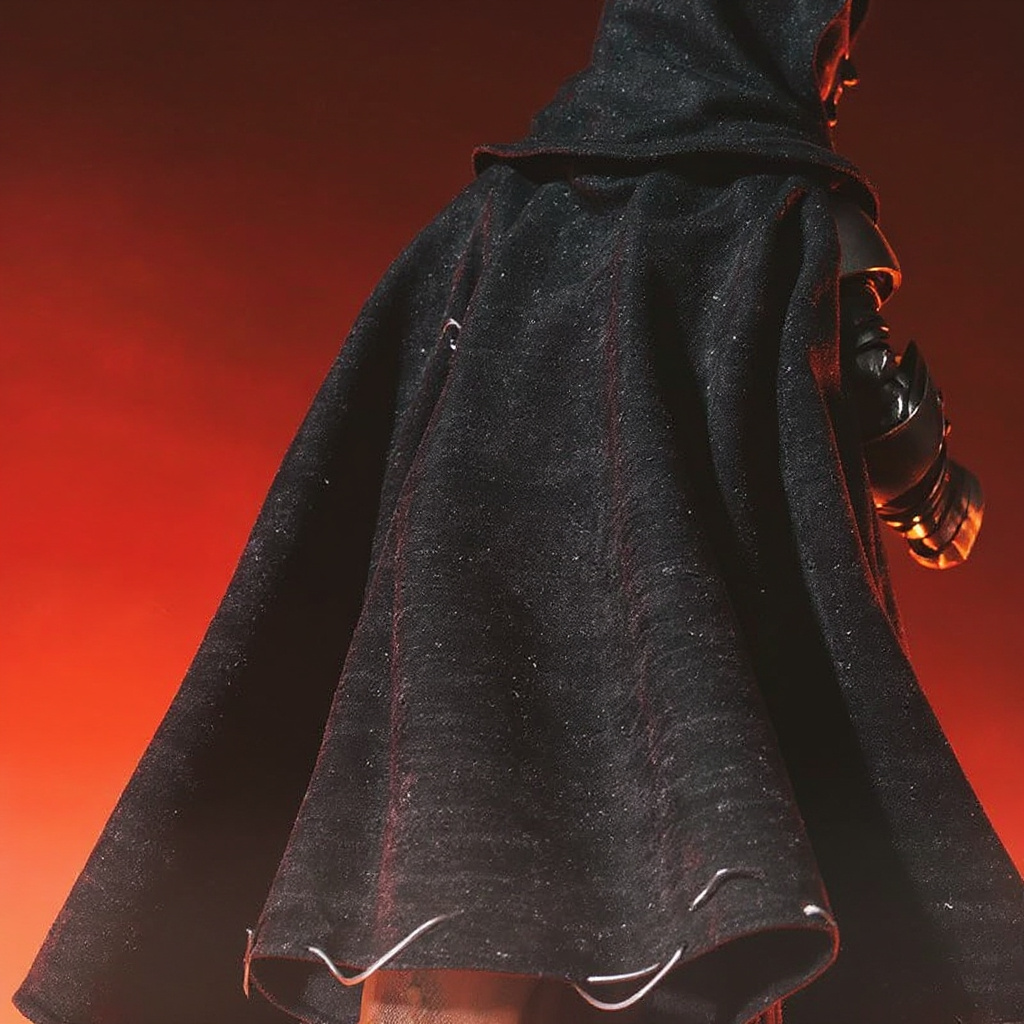
Color and Texture: Making It Look Medieval
Bright superhero red says toy. Medieval knights in art and reenactment kits are usually shown in dyed wool and linen tones, so deep blue, charcoal grey, and black read as authentic (overview of the cloak as a garment).
Texture matters as much as color. At 1:12 scale, thick yarns look oversized, like a burlap sack on a soldier. Choose a tight weave with fine visible texture. Avoid anything shiny. Satin looks like a costume-shop cape.
The Guardian Knight Cape for 6 Inch Action Figures is one option in this category. It comes in deep blue, grey, and black woven fabric with bendable wire edges, at $48.75 (mid-to-upper range for handmade soft goods). Compare it against any other cape using the five specs above. For display ideas, see our knight accessories collection and our guide to posing figure capes.
Common Problems and How to Fix Them
Loose threads show up on most handmade pieces. Trim them with small scissors. Never pull.
Wire poking through is the one that worries people. It happens when the stitched channel wears through.
How to fix wire poking through the fabric:1. Straighten the exposed wire and ease it back into the channel with tweezers. 2. Bend the affected section gently back to its original curve. 3. Sew two or three small stitches across the tear with matching thread. 4. Dab a little clear fabric glue over the stitches and let it dry fully. 5. Avoid re-bending that exact spot for a few days.
A cape that will not hold a pose usually has wire that is too thin, or wire fatigued from repeated bending at one point. Fading comes from UV light, so keep displays away from windows.
Honest Advice: When to Skip a Fabric Cape
Honestly, if your knight stands on a shelf and you never photograph it, keep the plastic cape. A $48 fabric cloak will not change how that figure looks from six feet away. Dust will settle in the weave. And if you live somewhere humid and keep figures uncased, fabric is more work than plastic.
Buy fabric when you shoot dioramas, pose battle scenes, or want the cloak to look like movie stills or comic panels. Otherwise, don't bother.
Frequently Asked Questions
What wire gauge is best for a replacement cloak for a knight action figure?
22-gauge copper or coated craft wire (about 0.64 mm) is the best balance for 6-inch figures. Thinner 24 to 26 gauge sags under a wired hem, and 18 to 20 gauge is hard to shape by hand.
How long should a cloak be for a 6-inch knight figure?
Between 3.5 and 4.5 inches (90 to 115 mm) from the neck edge to the hem. That runs from about mid-calf to the ankle at 1:12 scale.
How wide are the shoulders on a 6-inch action figure?
Most measure 35 to 45 mm across the shoulders. Figures with pauldrons can be wider, so measure with armor on before you buy.
Which 6-inch figures have cape attachment points?
It varies by line and by figure. Some have back pegs or neck rings and many do not, so check the back of your figure. Neck-loop capes are the safest choice when there is no peg.
Can a fabric cape hold a dramatic pose?
Yes, if it has wire sewn into a channel along the hem and side edges. The wire lets you bend the fabric into curves that stay in place until you move them.
Why does the wire in my cape keep breaking?
Repeated bending at one spot work-hardens the metal until it snaps. Spread your fold lines around the hem, and replace the cape or re-wire it if a section goes stiff.
Is a handmade cape worth $30 to $60 compared with a $5 to $15 plastic one?
Only if you pose and photograph your figures. For shelf display, plastic is more durable and cheaper.
What colors look best on a medieval knight figure?
Deep blue, grey, and black in a woven fabric with visible texture. They look practical and period-appropriate, and they photograph well.

