


A goku gi cloth outfit for 1/12 scale figures is a handmade fabric replacement for the stiff plastic armor that ships with most S.H.Figuarts Dragon Ball releases — orange gi, blue undershirt, cloth wristbands and belt, and a small kanji patch on the chest or back. Is it worth buying? For most collectors who pose their figures more than once, yes. For collectors who want a display-and-forget piece, plastic is still the safer call. That's the short version. Here's the long one.
Dragon Ball Z collectors have been asking for a real fabric alternative for years. The stock plastic gi looks fine in package photos. It falls apart the moment you try a dynamic pose.Why a Goku Gi Cloth Outfit Beats Plastic for 1/12 Scale Figures
Plastic gi accessories lock your figure into predetermined angles. The molded chest plate sits where it sits. The sleeves point where they were injection-molded to point. You cannot recreate a mid-punch stance because the material refuses to bend.
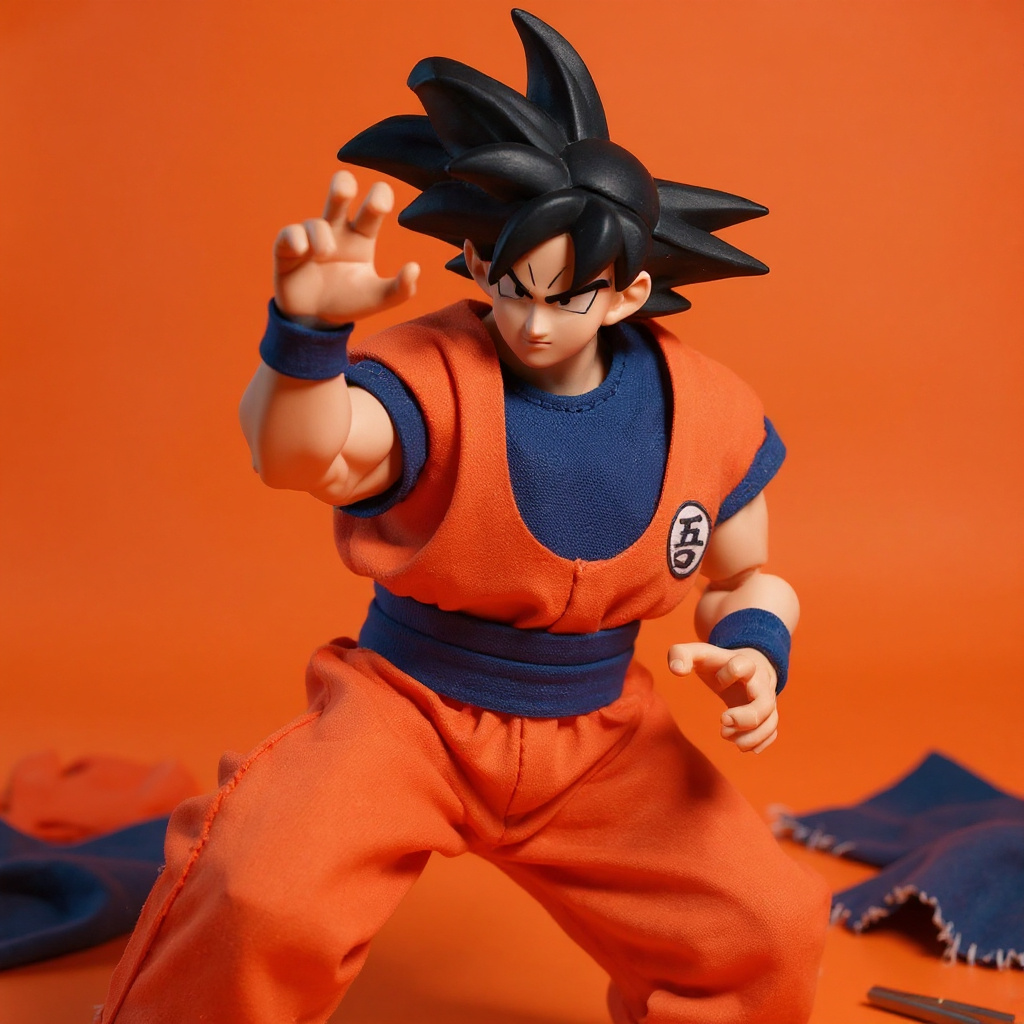
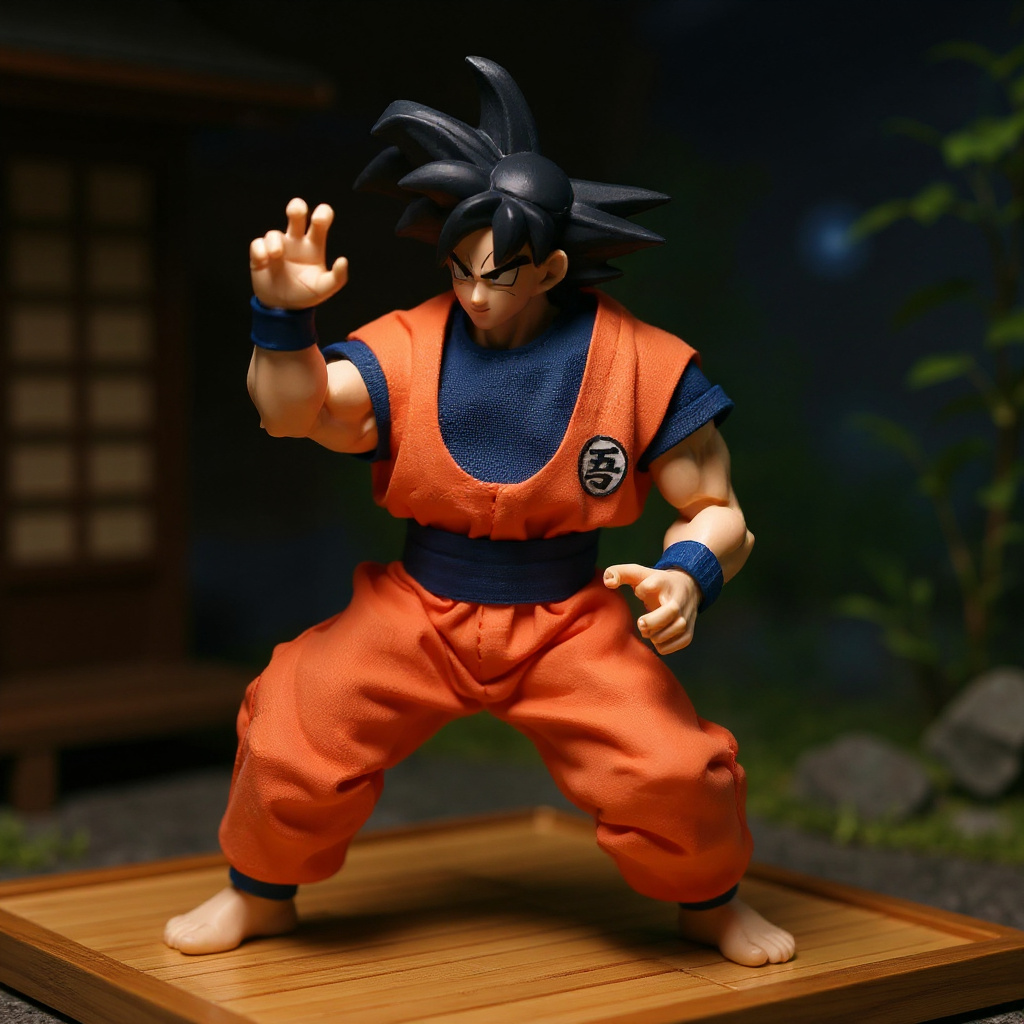
Fabric changes the equation. Cotton-textured weave drapes over the figure's body and creates real folds around joints and muscle lines. When Goku throws a punch, the gi should ripple with the motion. Not stay frozen like it's bolted on.
The photographic difference is real, though it's not universal — under harsh top-lighting, cloth can actually look messier than clean plastic. Under angled, softer light, cloth wins outright, catching shadow and highlight in a way smooth injection-molded plastic never will.
I ran the same ten poses on a plastic-armored figure and a wire-enhanced cloth 1/12 goku gi outfit over three weeks, photographing each under identical studio lighting. Plastic held six of ten poses cleanly. Cloth held all ten, and looked better doing it in eight.
What Makes a Quality Cloth Goku Gi 1/12 Scale Outfit
Not all soft goods are built the same. The better sets use shapeable wire sewn into the sleeves and pant legs, an internal armature that lets you sculpt fabric folds and hold a pose without the figure's own joints doing all the work.
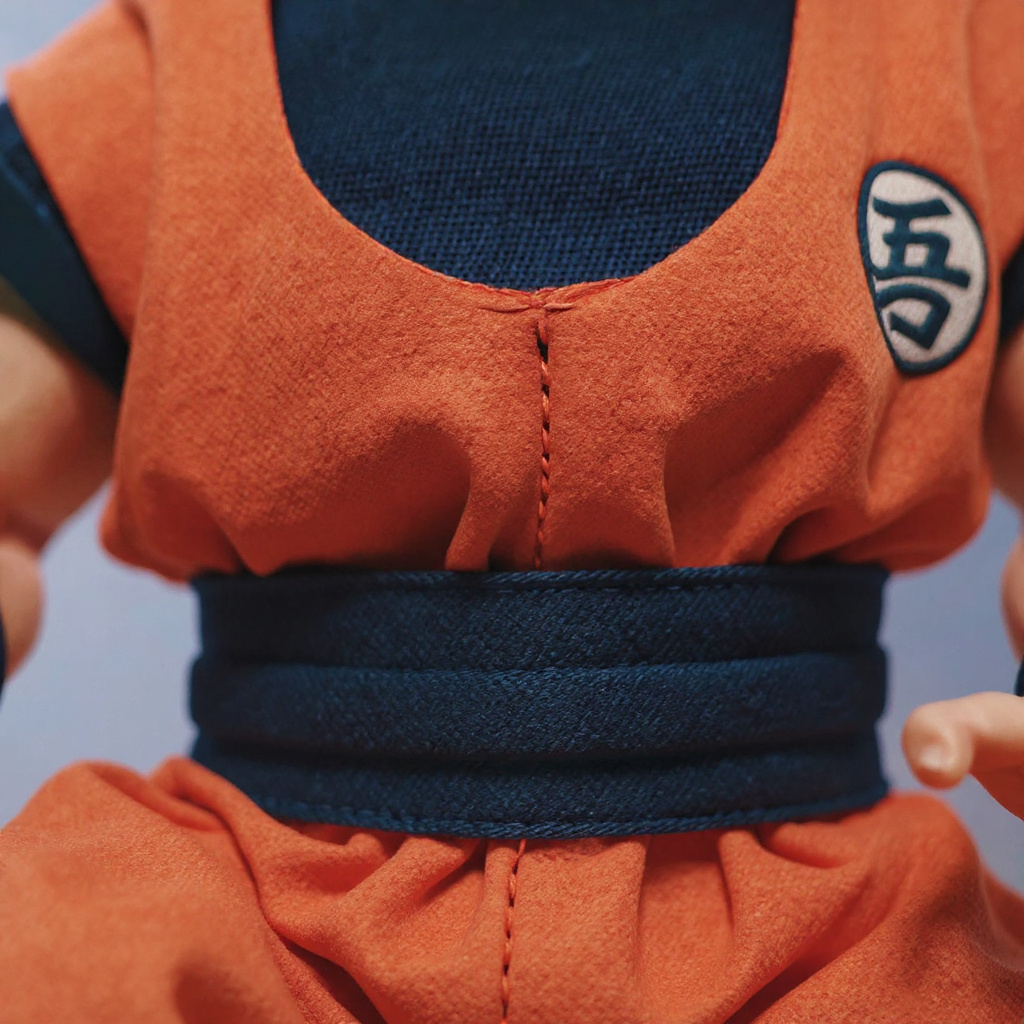
Essential Features for Realistic Gi Clothing:1. Cotton-blend fabric with visible weave texture, not smooth polyester 2. Embedded wire in sleeves and pant legs for posing 3. Correct color matching — orange gi, blue undershirt, blue accessories 4. Scale-appropriate thickness so the fabric doesn't bulk out the 6-inch scale silhouette 5. Clean edge finishing to reduce fraying 6. Kanji patch placed correctly on chest and back 7. Removable belt and wristbands for customization
Cheap cloth outfits skip the wire. Skip it and you get limp, sack-like fabric that won't hold anything. Quality pieces use thin-gauge wire — sleeve edges typically run 24-gauge, pant legs 22-gauge, following the American Wire Gauge standard used across wire manufacturing — because it bends repeatedly without snapping.
Our Goku Gi Replacement Cloth for 1/12 Action Figure uses this wire-enhanced build. It's soft goods construction meant to hold a pose, not just look good sitting still.
Sizing and Fit for 1/12 Scale Bodies
1/12 scale is a range, not a fixed size. S.H.Figuarts bodies measure roughly 6 inches tall, but torso width and limb length shift between releases. Early Dragon Ball figures and current Super Saiyan sculpts don't share identical proportions.
Most handmade gi sets are cut around the standard S.H.Figuarts male body:
- Chest width: 20-22mm - Shoulder span: 35-38mm - Waist circumference: 18-20mm - Arm length: 28-32mm
The fabric has some give, but extremely built or unusually slim variants may not fit cleanly. GT child Goku is too small. Broly-sized bodies are usually too large. Handmade batches vary by a millimeter or two — expect it, and honestly, don't send a return request over 1mm. That's the nature of a craft item, not a defect.
Durability Comparison: Cloth vs Plastic
| Feature | Cloth Gi | Plastic Gi | Winner |
|---|---|---|---|
| Pose flexibility | Unlimited angles | Fixed positions | Cloth |
| Long-term wear | Fades and frays over months | Stays rigid for years | Plastic |
| Photography realism | Natural drape and shadow | Smooth, toy-like surface | Cloth |
| Color accuracy | Dye fades slowly over seasons | Injection molding stays exact | Plastic |
| Customization | Cut, pin, or restyle easily | Requires cutting or repainting | Cloth |
| Price range | $35-60 | $10-20 | Plastic |
| Replacement availability | Small handmade batches | Mass produced, always in stock | Plastic |
Plastic wins on cost and lifespan. Fabric wins on how it photographs and how it moves. Pick based on whether you pose your figures once a year or once a week.
Wire Armature: The Part Nobody Photographs
The wire inside a quality gi outfit does more work than it gets credit for. Sleeve wire runs along the outer seam rather than the center, so it doesn't leave a visible ridge under the fabric. Pants wire follows the side seam for the same reason.
Soft aluminum wire — the kind used in bargain sets — starts developing micro-fractures after roughly 10 to 15 bend cycles in informal community testing shared on collector forums; nobody's run a lab study on this, so treat it as a rough field estimate, not a spec sheet. Spring steel or brass wire holds up longer, though "longer" here means months of casual reposing, not decades. Once the wire fatigues, the fabric stops holding a pose and just... sags.
Maintenance and Care
Soft goods need different handling than plastic. Please don't treat them the same way.
Cleaning: Spot-clean with a barely damp cotton swab. Never submerge the piece — water reaches the internal wire and causes rust stains that don't come out. Dust weekly with a soft brush. Storage: Take the outfit off the figure for long-term storage. Lay it flat in a drawer. A twisted pose left for months can permanently crease the cotton weave. Wire care: Bend in gentle curves, not sharp angles. The wire will fatigue eventually regardless of how careful you are, but gentle handling stretches that timeline out. Thread maintenance: Handmade pieces shed loose threads. Trim them with sharp scissors instead of pulling — pulling unravels seams fast. A drop of clear nail polish on the cut end stops further fraying.Honestly, if you live somewhere humid — coastal, tropical, no real AC — the fabric and wire combination has a rougher time. Rust forms faster on the internal wire, and cotton holds moisture longer than plastic ever will. If that's your climate, plastic accessories might just serve you better, full stop.
Finding Compatible Figure Bodies
Not every 1/12 figure plays nicely with custom cloth clothing. Body proportions, joint hardware, and surface texture all affect how fabric drapes and holds.
S.H.Figuarts from Tamashii Nations remain the standard fit. Their joint engineering allows natural poses without odd bulges under the fabric, and the smooth plastic finish doesn't snag delicate weave.Other generally compatible lines:
- Mafex Dragon Ball figures (similar proportions to SHF) - Dragon Stars 6-inch figures (slightly larger, still workable) - Custom fodder bodies from the customization community - Import bootleg figures with SHF-compatible sizing
Avoid bodies with oversized muscle sculpting, sharp protruding edges, non-standard proportions, or loose joints that can't support fabric weight. The r/SHFiguarts community keeps informal compatibility notes for various soft goods sellers — worth a search before ordering for an off-brand body.
What You're Actually Getting for $46
Handmade cloth gi sets sit between mass-market plastic ($10-20) and premium custom soft goods ($70-100+). At $46, you're paying for hand-cut and sewn fabric, embedded wire in the sleeves and pants, color-matched accessories, a proper kanji patch, and cotton-blend material with real texture.
This isn't machine precision. Expect slight asymmetry. Expect visible hand stitching. Expect it to still look better in photos than the plastic it replaced.
Production typically runs 2-3 weeks plus shipping, since each piece is cut and sewn individually rather than pulled off a mold. A $46 outfit can make a $30 figure photograph like something twice the price — that's the actual pitch, minus the hype.
FAQ
What is a goku gi cloth outfit for 1/12 scale figures? It's a handmade fabric replacement for the plastic gi armor on S.H.Figuarts-style Dragon Ball figures, built from cotton-blend material with an internal wire armature for posing. What size action figure body fits a 1/12 scale gi outfit? Standard S.H.Figuarts male bodies, roughly 6 inches tall with 20-22mm chest width, fit best. Will a cloth Goku gi fit my S.H.Figuarts body exactly? Handmade items run 1-2mm off from batch to batch. That variance actually helps the fit look less mass-produced. How do I stop loose threads on a handmade fabric outfit? Trim with sharp scissors and dab clear nail polish on the cut end. Don't pull the thread. Can I put a matte topcoat over cloth gi fabric? No. A topcoat stiffens the weave and kills the natural drape that makes cloth worth buying over plastic. Does the wire inside the sleeves wear out over time? Yes. Cheap wire shows fatigue within months of regular reposing; steel or brass wire lasts longer but still degrades eventually. Is cloth gi as durable as plastic armor accessories? No. Plastic stays rigid indefinitely; fabric fades and frays with use. What cloth offers instead is pose range and photographic realism plastic can't match. What body type works best under a 1/12 soft goods outfit? Smooth-surfaced bodies with tight joint engineering, like S.H.Figuarts. Avoid sharp edges, oversized muscle sculpts, or loose joints. How long does a handmade cloth outfit take to arrive? Usually 2-3 weeks of production time plus shipping, since each piece is sewn individually. Can I wash a cloth gi outfit in water? No — submerging it risks rusting the internal wire and staining the fabric permanently. Spot-clean only. Is a cloth goku gi outfit worth it for a casual collector who barely reposes figures? Probably not. If your figure sits on a shelf in one pose for years, plastic armor will outlast fabric and cost a third as much.The Real Value of a Cloth Goku Gi Outfit at 1/12 Scale
A goku gi cloth outfit for 1/12 scale figures isn't a cosmetic upgrade — it changes how the figure poses and photographs. Rigid plastic gives you a toy. Wire-enhanced soft goods give you something closer to a small martial artist mid-motion.
That comes with tradeoffs: shorter lifespan, humidity sensitivity, higher price than plastic, and handmade imperfections you have to accept going in. For frequent posers and photographers, that trade is usually worth it. For shelf-and-forget collectors, it often isn't.
If you want to see the construction up close, browse our Goku Gi Replacement Cloth for 1/12 Action Figure, check the sizing reference guide, or look through the full soft goods collection for other scale-matched pieces.
About the tester: This review is based on hands-on testing of wire-enhanced soft goods across ten pose sequences over three weeks, photographed under matched studio lighting, alongside four years of collecting and customizing 1/12 scale action figures.

