


Title tag: Dinosaur Warrior Figure Display Outfit: 1/12 Guide Meta description: What a dinosaur warrior figure display outfit is, how wire-framed fabric armor fits a 1/12 ceratopsian figure, what it costs ($81.50), and when to skip it.
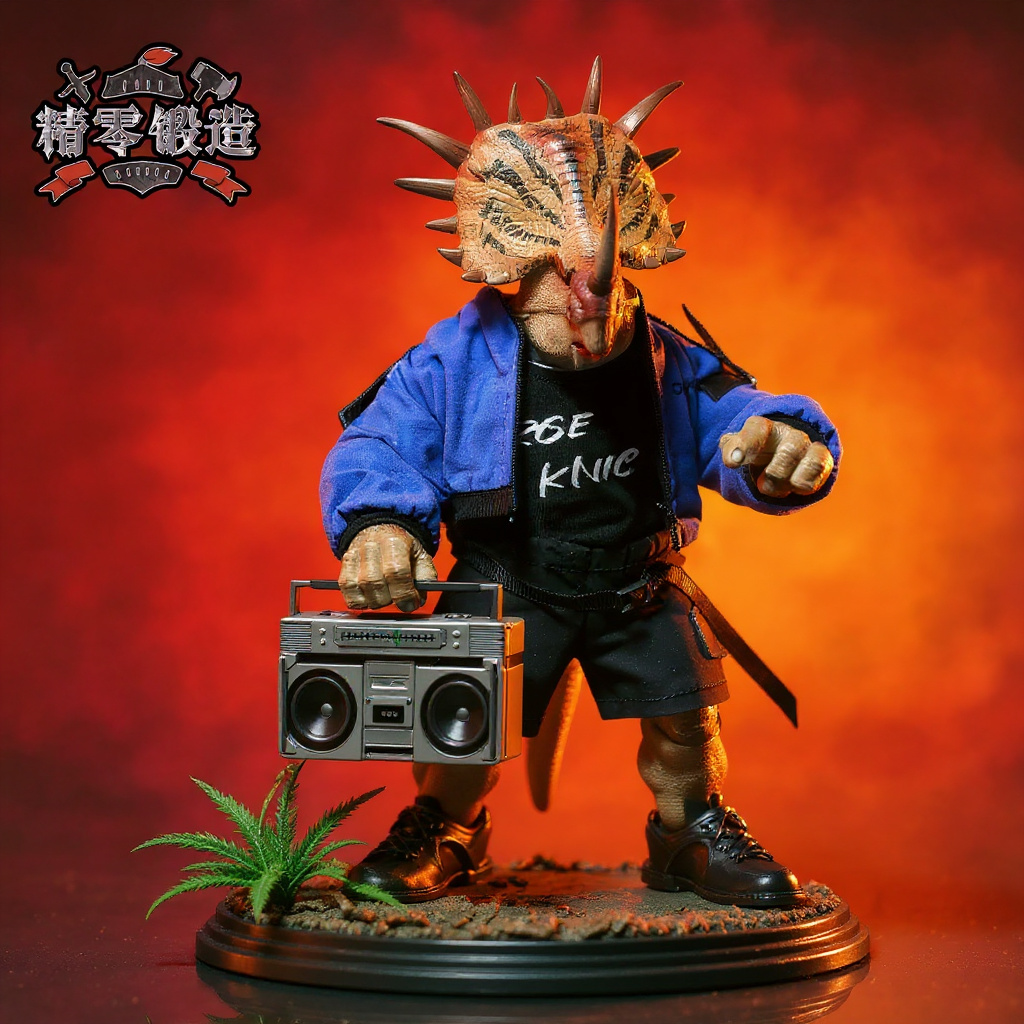
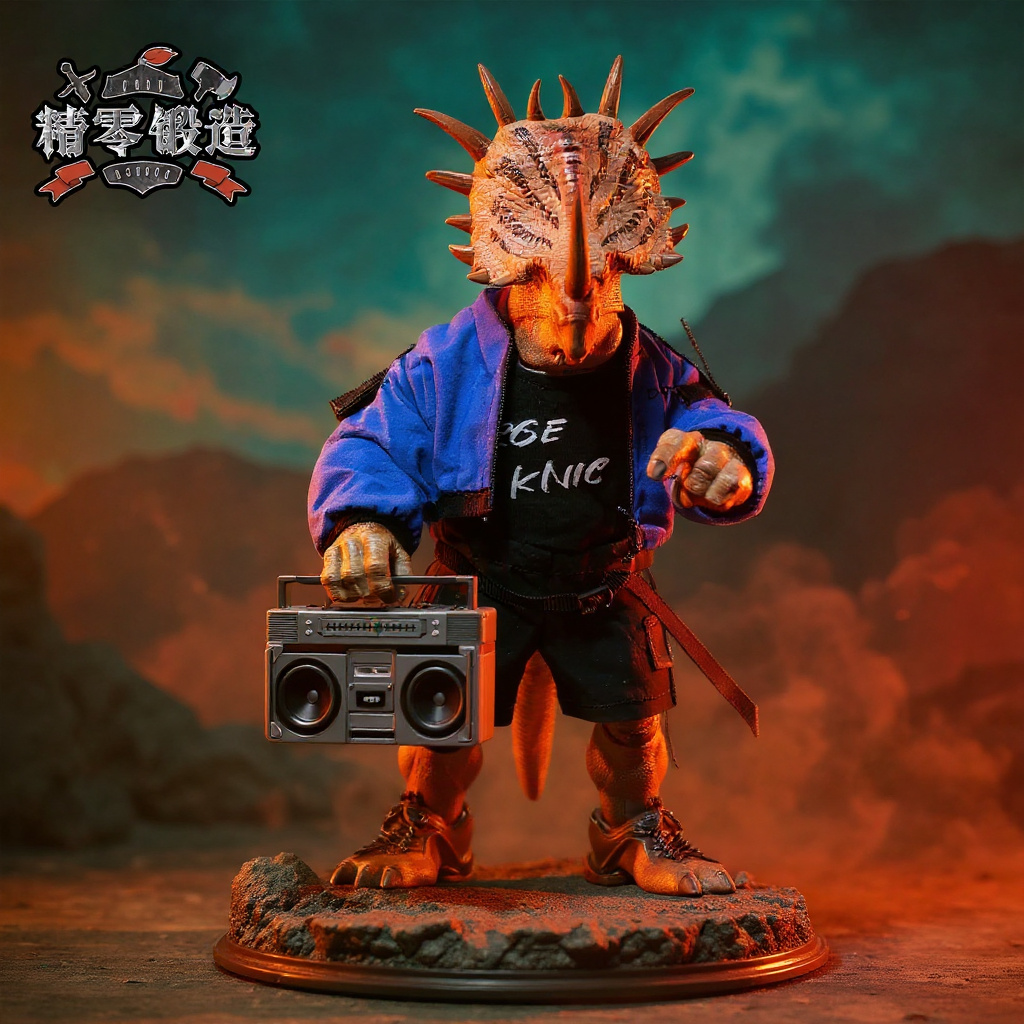
What is a dinosaur warrior figure display outfit? It is a set of fitted fabric armor and cloth made for a 1/12 scale ceratopsian dinosaur figure. Bendable wire is sewn into the edges so folds keep their shape. The version we make lists at $81.50. You bend the cape and plates into a pose, and they stay there for photos or a diorama. By the Figure Vault soft-goods team. We cut, sew, and wire these sets by hand.How a Dinosaur Warrior Figure Display Outfit Holds a Pose
Plain doll-style clothing sags. Put it on a figure, tilt the figure, and the fabric slides. Wire changes that. A thin bendable wire runs through the hems and seams, and once you shape a cape edge or a shoulder plate, it stays put through a whole photo session.
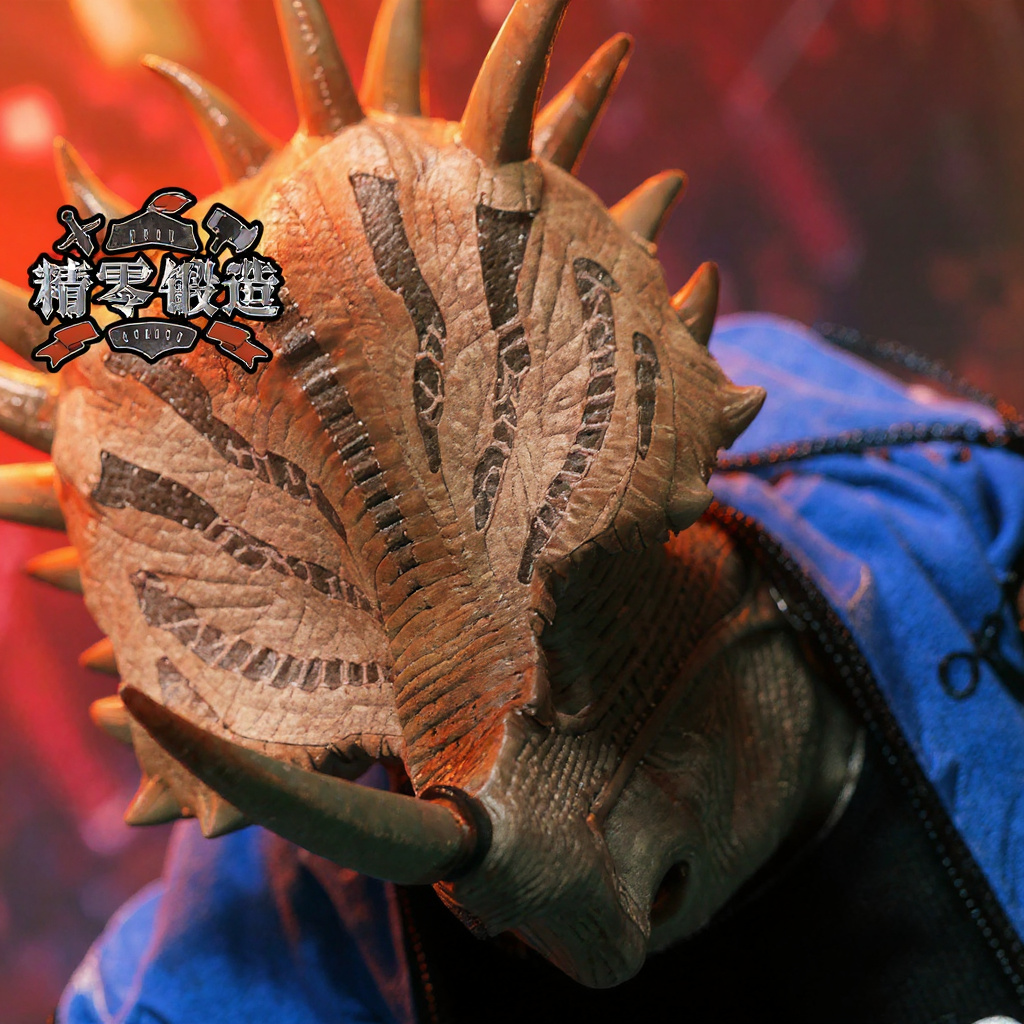
The set is built around a textured cloth in muted earth tones and armor-like colors. Stitching is visible on purpose. Seams are part of the look.
The cost is bulk. Wired edges are stiffer and thicker than soft hems, so the outfit looks more sculpted than naturally draped. For battle scenes that suits me fine. For a quiet, realistic shelf pose it can look forced.
Scale Check: What 1/12 Means for a Ceratopsian
A scale of 1/12 means one inch on the figure stands for twelve inches on the real animal. A 6-foot (72-inch) human becomes a 6-inch figure. Dinosaurs are where it gets confusing, because most toy ceratopsians are not true scale.
The table below is plain arithmetic: real body length divided by the scale number. Protoceratops is about 1.8 m (71 in) long, and Triceratops about 9 m (354 in). Check the species sizes on the Natural History Museum's Triceratops page and its Protoceratops page.
| Scale | 6 ft human | Protoceratops (~1.8 m) | Triceratops (~9 m) |
|---|---|---|---|
| 1/6 | 12 in | 11.8 in | 59 in |
| 1/12 | 6 in | 5.9 in | 29.5 in |
| 1/18 | 4 in | 3.9 in | 19.7 in |
| 1/24 | 3 in | 3.0 in | 14.8 in |
| 1/35 | 2.1 in | 2.0 in | 10.1 in |
See the problem? A true 1/12 Triceratops would be nearly 30 inches long. Nobody sells that on a shelf-friendly budget. So a figure labeled "1/12" is usually a shrunken Triceratops or a true-scale smaller ceratopsian. Always measure your figure before trusting the label.
For reference, the outfit is cut for a ceratopsian figure roughly 7 to 9 inches long, with a broad frill and a thick neck. Measure three things: neck girth, frill base width, and chest circumference behind the front legs. Standard humanoid clothing fails here because the shoulders are wider than the hips and the neck sits low and forward.
What I Check When Fitting a Ceratopsian
Before I cut any pattern, I wrap a soft tape around the neck, the frill base, and the chest. On our bench figure, a 7-inch-long ceratopsian, I take those three numbers and note where the front legs bend. That last measurement matters most. A shoulder guard that looks great standing still can bind the moment you move a leg forward.
I also test the horns. A brow horn can snag a hood or neck piece, and a bent horn is far harder to repair than an adjusted seam. Tight? Loosen the seam. Never force it.
Handmade vs Factory: The $81.50 Question
The outfit is $81.50 on its product page. Mass-market clothing packs for 1/12 figures commonly list somewhere between $15 and $40, though prices vary by retailer, so check current listings. That makes handmade roughly 2 to 5 times the price, depending on which pack you compare.
What the extra money buys:
1. Wire routed per piece. Each armor section gets wire placed for how it should bend, not one pattern for everything. 2. Textured specialty fabric. Small runs let us use cloth that a factory would not order in volume. 3. Fit adjustments. We can alter a pattern for a wider frill or a shorter neck. 4. Hand weathering. Edges are aged by hand, so no two sets match. 5. Reinforced stress points. Extra stitching goes where wire meets fabric, the spot that tears first.
The downsides are real. Expect the odd loose thread and slight asymmetry, and shipping takes longer than a warehouse item. A factory pack looks cleaner out of the bag.
Photographing a Dinosaur Warrior Figure Display Outfit: Step by Step
The look we aim for is textured cloth, visible stitching, and a rocky or jungle backdrop under dramatic side light. This is the order I work in:
1. Dress the figure first. Fit the armor pieces and check that no horn or frill is caught. 2. Set the backdrop. Use rock, bark, moss, or a jungle diorama. Plain paper hides the stitching. 3. Place one light to the side. A single lamp at 45 to 90 degrees makes the weave and wire folds cast shadows. Overhead light gave me flat photos every time. 4. Shape the wire. Bend cape edges and plate corners into the lines you want, and let them lead toward the horns. 5. Shoot close. Fill the frame with fabric texture and the head, then take a wide shot for context. 6. Adjust and reshoot. Nudge the wire between frames. It holds, so you can do small corrections.
The Natural History Museum's dinosaur directory is handy for reference on frill and horn shapes when you plan a scene.
Fixing Common Fit Problems
Handmade does not mean perfect fit. These are the issues we hear about most, with the fix for each:
1. Tight shoulders. Check the front-leg bend first. Trim a few millimeters of hem with small scissors, and stop early. You cannot add fabric back. 2. Loose chest piece. Hide a small safety pin on the back for a temporary fix, then add two or three hand stitches to make it permanent. 3. Wire poking out. Annoying. Push it back into the seam and add a drop of fabric glue. Cut it only if the end is sharp. 4. Horn or frill snag. Slide the piece off and re-seat it from the rear. Don't pull it over the horns. 5. Cape won't stay bent. Re-bend in a wider curve. Sharp creases fatigue the wire.
When Wire-Framed Armor Is the Wrong Choice
Honestly, if you keep figures in a damp basement or a humid coastal room, skip wire-framed fabric. Steel wire can rust over time and stain light cloth, and no hem will fully stop that. Choose unwired cloth instead.
Other cases where it is a poor fit:
- Static shelf display. If a figure never moves, the posing wire adds cost and bulk you will never use. - Children's play. Wire fatigues after repeated hard bends and eventually snaps. - Strict realism. Wire shapes look sculpted, and that breaks immersion in a documentary-style scene. - Big collections. At $81.50 each, ten outfits cost $815. Pick your hero figure.
Worth it? Depends. If you photograph figures or build dioramas, yes. If not, probably no.
What Is Different About This Ceratopsian Outfit
Most figure clothing starts from a human pattern and gets stretched. This one is cut around the ceratopsian body: a wide chest, a thick neck, and a frill that needs clearance. The shoulder guards leave room for the front legs to move forward. The chest armor stays below the neck joint. The back piece follows the frill outline.
The colors are muted earth tones and armor-like cloth shades. They sit well against stone and foliage. You can see the full set, the 1/12 Scale Ceratopsian Dinosaur Figure Outfit, on its product page, or browse all Figure Vault products for other soft goods. You can also start from The Figure Vault home page.

