


If you've ever searched for how to style haori on action figure and found nothing but vague tips, you're not alone. Getting dark green and black checkered cloth to drape correctly on a 6-inch body is a different problem than dressing a doll or a real person. You'll need to work with the fabric's natural drape while using strategic positioning and internal wire to nail that authentic, lived-in look.
Most collectors struggle with this because soft goods behave differently at miniature scale. Gravity works against you here. What looks natural on a full-size haori can look stiff or bunched up on a 1/12 scale figure, and no amount of fluffing fixes that on its own.
The Wire Makes All the Difference
Here's what most people don't realize: the internal wire structure is everything. Without it, your haori sticks straight out like cardboard, or it hangs limp against the figure's torso. Neither looks right. Neither photographs well either.
Wired fabric lets you create the subtle curves and folds that separate a good diorama shot from a flat one. You can bend the sleeve edges to suggest movement, or curve the hem like it caught a gust mid-step. This matters most in photography, where a single stiff fold can ruin an otherwise great pose.
Honestly, if you're only ever going to display the figure in a case without touching it again, skip the wired version and save your money. Static display doesn't need posable fabric articulation. Save the wire investment for figures you'll actually rearrange for photos.
The Giyu Tomioka Haori Cloak for 1/12 Action Figures runs $34, which sits in the middle of the wired soft goods market. Most comparable wired pieces cost $40-60. You're not paying premium prices here, but you're also not getting cardboard.
Wired Haori vs. Other Fabric Options
| Feature | Wired Haori | Standard Fabric | Hard Plastic | Fabric + Wire Kit (DIY) |
|---|---|---|---|---|
| Posability | Excellent | Poor | None | Good, if you get the gauge right |
| Realism | High | Medium | Low | Medium-High |
| Price Range | $30-50 | $15-25 | $8-15 | $10-20 plus your time |
| Durability | 3-5 years normal handling | 1-2 years before fraying | 10+ years, never degrades | Depends entirely on wire gauge |
| Photo Quality | Best | Acceptable | Stiff | Good once you dial it in |
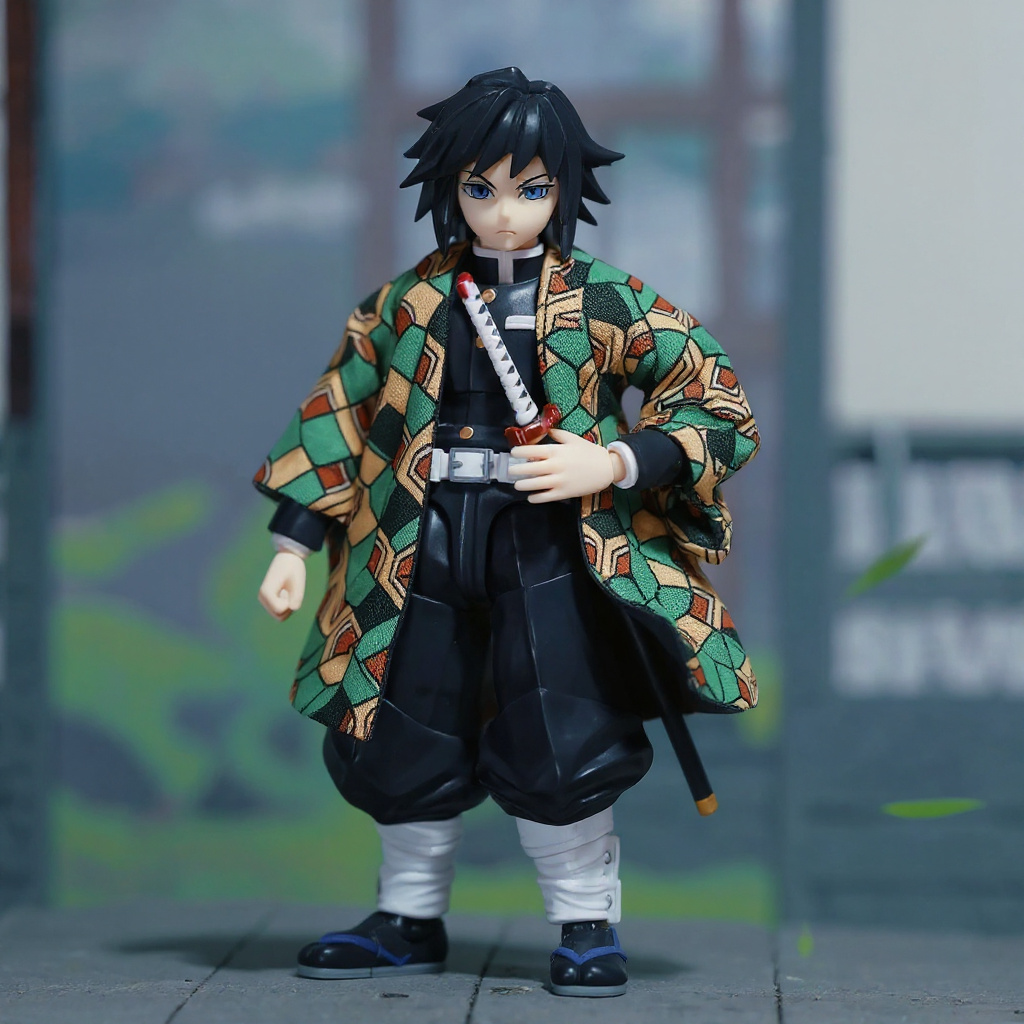
Draping Techniques That Actually Work
Start with the shoulders. The haori should sit across the figure's shoulder blades without pulling tight or bunching at the neck. Broad-shouldered figures sometimes need the fabric nudged outward half a centimeter to stop it riding up.
For the sleeves, resist the urge to let them hang straight down. Real cloth has weight. It catches air, drags, folds unevenly. Bend the wire-reinforced edges to create asymmetry: one sleeve forward, one back. This single trick does more for depth in photos than any lighting adjustment.
The hem is where you show off. Don't let it form a perfect circle around the figure's legs. Pull one side slightly forward, let the other drape back, and use the internal wire to lock that shape in place. A perfect circle reads as "toy." An uneven hem reads as "cloth."
Layering Without Bulk
This is where scale gets tricky fast. What looks proportional on a person turns into a marshmallow on a 1/12 scale figure. Choose your battles.
If the figure already wears a shirt or armor underneath, let the haori be the star. Don't try to show every layer stacked on top of another. Suggestion beats bulk, every time, at this size.
For Giyu Tomioka's character design, the checkered haori is already the dominant visual element. Let it stay that way instead of competing with extra undergarment detail nobody will notice in a photo anyway.
If you want to compare pattern options before committing, browse the full soft goods collection or check the wire armature basics guide for a deeper look at gauge selection.
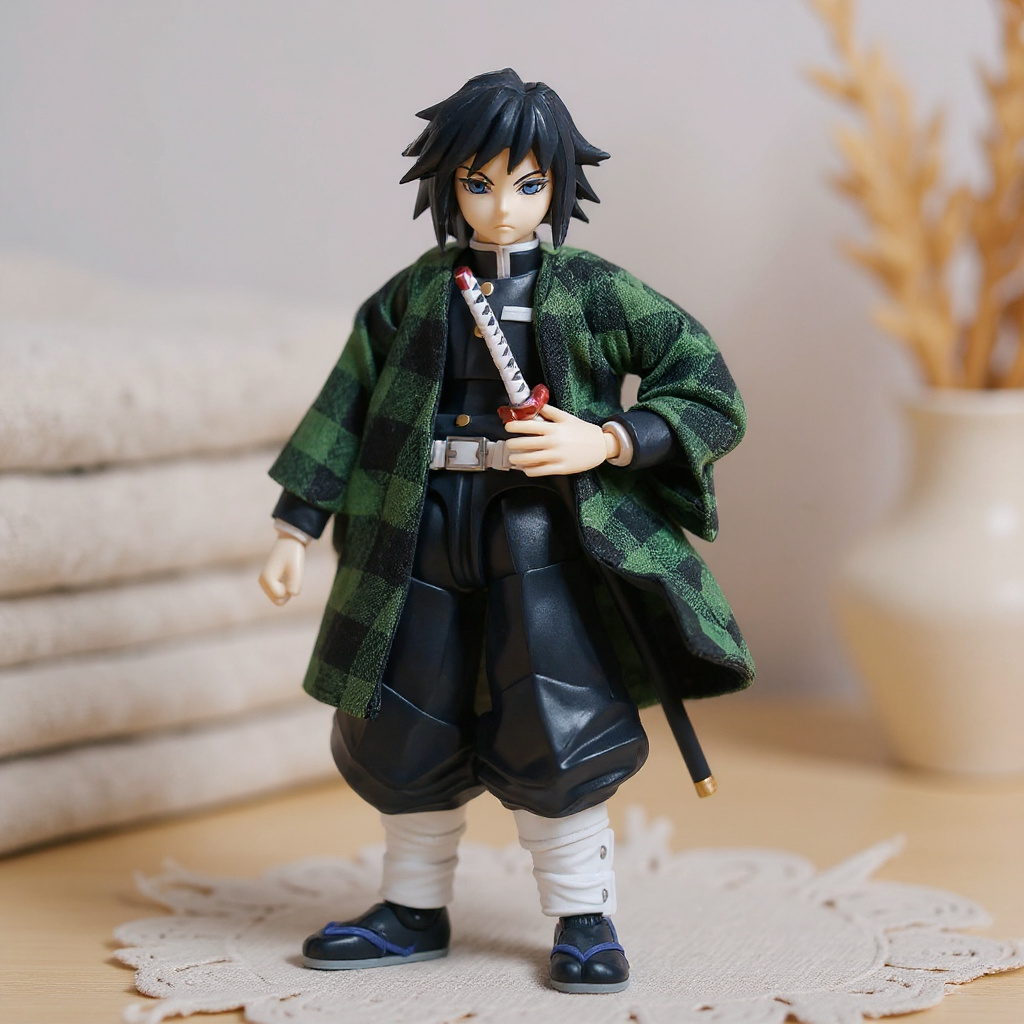
Posing Tricks for Photography
1. Use gravity as your friend - angle the figure so the haori naturally falls toward one side 2. Create asymmetry - never let both panels hang identically 3. Mind the back view - the haori needs to hold up from behind, not just from the front 4. Work with lighting - side light catches fabric weave and adds texture 5. Match the scene - a battle pose needs sharper folds than a standing portrait 6. Check for bunching - fabric shouldn't gather at the joints 7. Use wire sparingly - over-shaping looks fake fast
The biggest mistake I see in figure photography groups is over-posing the fabric. Small adjustments beat dramatic curves nearly every time.
Maintenance Routine That Actually Prevents Damage
1. Brush off dust weekly with a soft-bristle makeup brush, not compressed air 2. Hand wash only when visibly soiled, in cool water under 30°C with a drop of mild soap 3. Air dry flat for at least 12 hours before rehanging on the figure 4. Store the haori flat or hanging, never folded in a box 5. Re-shape the wire gently every few months to prevent metal fatigue
Skip step 2 unless you actually need it. Washing wired soft goods too often is the fastest way to weaken the internal wire joints, and I've killed two haori that way.
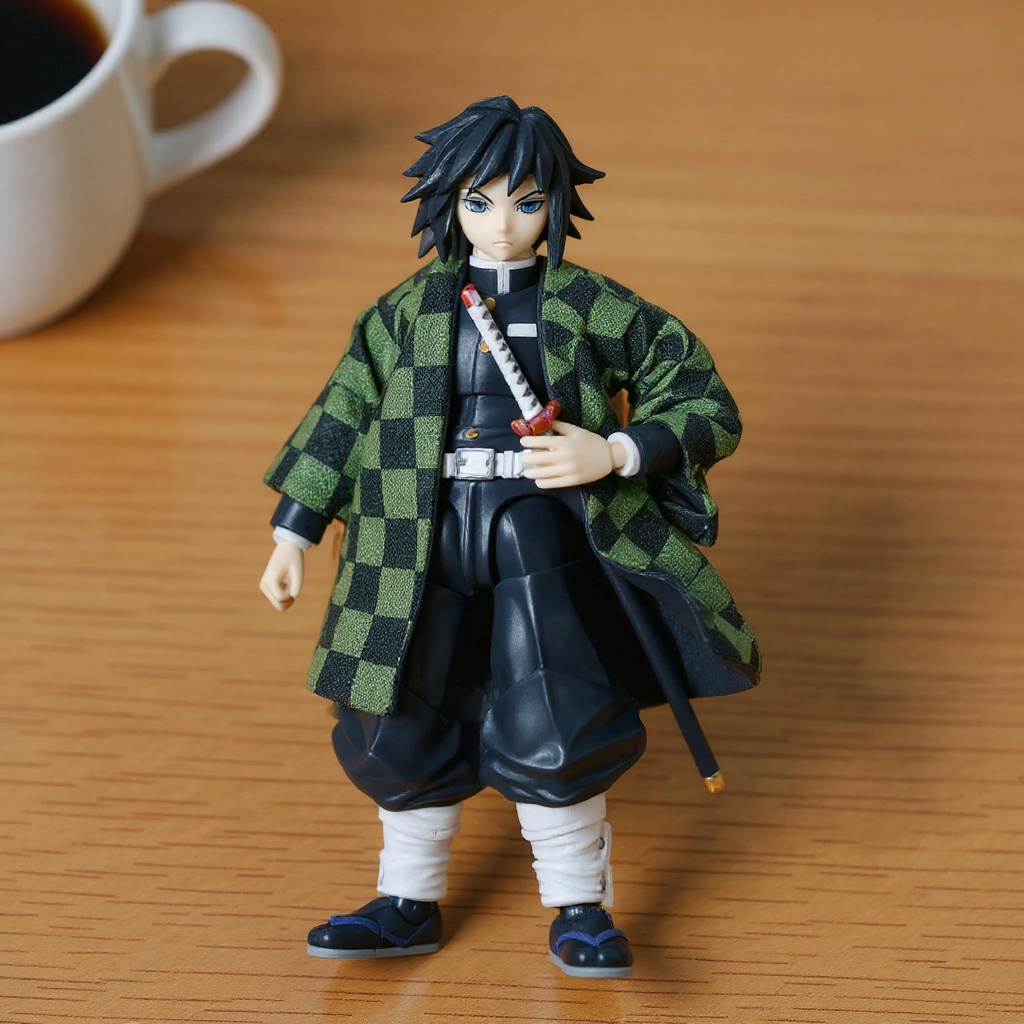
Fixing Common Problems
Stiff fabric that won't drape? That's usually cheap material or wire that's too thick for a 1/12 scale figure. There's no real fix short of replacing the garment.
Creased fabric responds to gentle steaming held two inches away for a few seconds, but synthetics can warp under heat. Test on the inside hem first. Always.
Too big or too small for your figure? Minor adjustments work. Major alterations rarely do. The proportions shift and the whole thing stops looking authentic.
The Reality of Handmade vs Mass-Produced
Handmade figure clothing has character mass production lacks. Stitching that isn't perfectly uniform actually reads as more realistic in macro photography.
But handmade also means variation piece to piece. The $34 price point for a wired haori still undercuts many licensed alternatives that hit $50+ without better construction. That's just the market right now.
The Demon Slayer fandom is particular about accuracy, so getting the checkered pattern and drape right matters if you're posting in collector groups or Reddit's action figure communities.
Frequently Asked Questions
How do you style a haori on an action figure for photos? Position the shoulders first, then shape the wire in the sleeves and hem to create asymmetric folds. Avoid tightening the fabric around the neck by more than a few millimeters, or it will look choked rather than draped. What fabric works best for a 1/12 scale haori cloak? Thin cotton or cotton-poly blends under roughly 120 GSM weight drape naturally at this scale. Thicker material bulks up fast and looks like a blanket instead of a cloak. Can you pose fabric clothing on action figures without wire? You can, but results are inconsistent. Unwired fabric usually hangs limp or sticks out at odd angles within a day of handling. How long does the wire in a haori cloak actually last? With normal handling, expect 3 to 5 years before the wire fatigues. Bending the same fold repeatedly speeds that up, so vary your poses. What wash temperature is safe for figure soft goods? Stay under 30°C (86°F) with a mild detergent, and let the piece air dry for at least 12 hours before putting it back on a figure. Is handmade figure clothing worth the extra cost over mass-produced sets? Usually yes for display photography, since fabric choice and stitching detail tend to be better. For casual shelf display where nobody's zooming in, mass-produced is fine. How do you store a haori soft goods piece between uses? Flat or hanging, never folded in a box. Folding at this scale creates creases that steaming often can't fully remove. Why does my haori keep sliding off the figure's shoulders? Usually the shoulder seam is cut too wide for the figure's frame. A few stitches taken in at the shoulder point, about 2-3mm on each side, usually solves it.Is the Investment Worth It?
Quality soft goods change how a figure reads in photos and dioramas. The gap between a $15 fabric accessory and a $34 wired haori shows up immediately once you start posing it.
If you're building out a Demon Slayer collection or just want the checkered cloak to hold a pose without fighting you, see the Giyu Tomioka Haori Cloak or browse the Demon Slayer figures collection for compatible pieces.

