


TMNT Rat King Custom Cape Specs at a Glance
Below are the numbers most buyers ask about. Dimensions come from the product listing and our own caliper checks on a sample cape. Confirm them on the product page before you order, because handmade items drift by a few millimeters.
| Spec | Value |
|---|---|
| Fabric look | Dark gray-brown, visible woven texture, frayed hem edges |
| Length (neck to hem) | About 3 in (76 mm) |
| Width, laid flat | About 4.5 in (114 mm) |
| Hem wire | Thin craft wire, bendable by hand |
| Fits | 1/12 scale, roughly 6-7 in figures |
| Neck opening | About 4 mm, sized for a 3-4 mm neck |
| Price | $34 |
| Best backdrop | Gothic sewer or rooftop, dim and moody light |
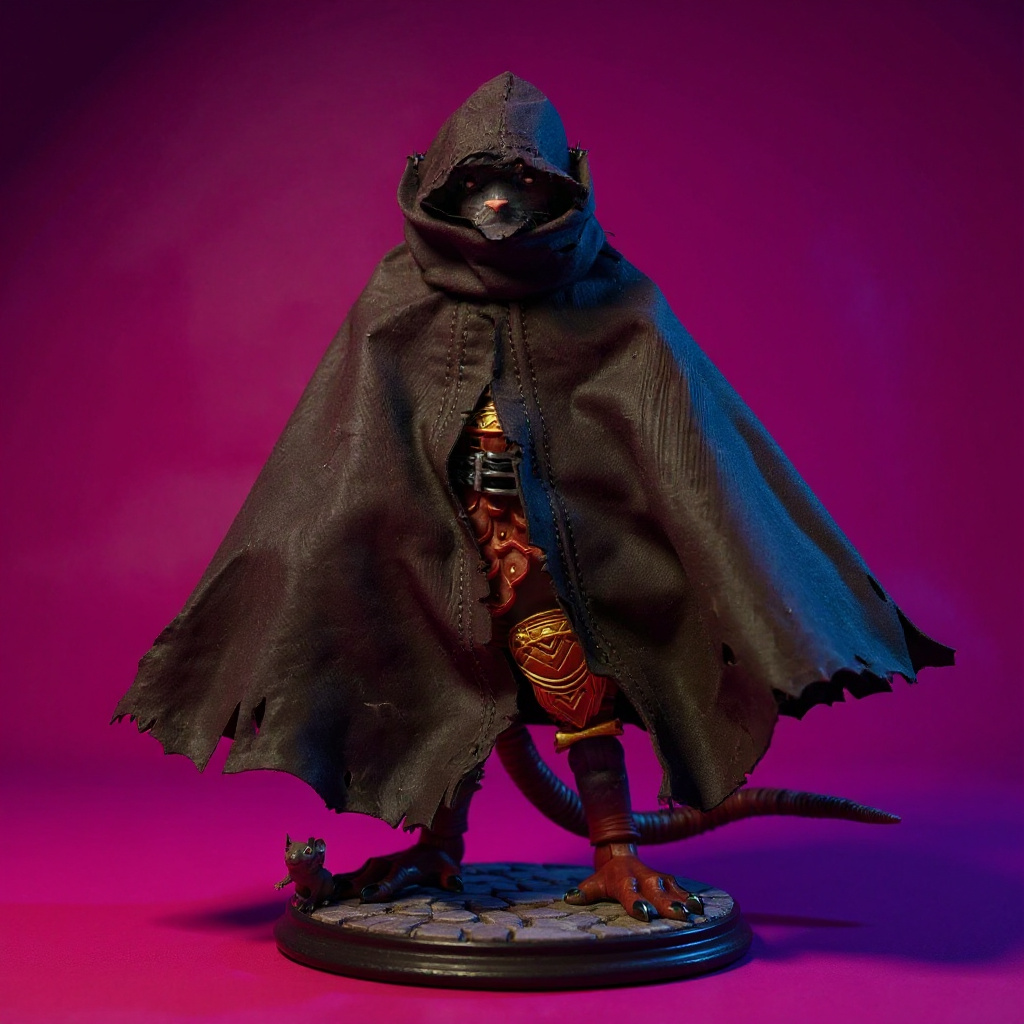
Why a TMNT Rat King Custom Cape Beats a Static Plastic One
A molded cape has one shape. You can rotate it, tilt it, and that's the end of it.
That matters for this character. Rat King lurks in tunnels and steps out of the dark, and a flat plastic sheet fights that image. Plastic also looks thick at 1/12. A real cloak at that size is maybe 3 ft of cloth in human terms, and the molded version tends to read as a shiny shell rather than something with weight.
Heat-bending is the usual workaround. Hair dryer, hot water, patience. Results vary by figure and plastic type, and many collectors report the shape creeping back over a few weeks. Not a stable fix.
What do you get with cloth? Asymmetric drape. One side thrown back over the shoulder, the other hanging in loose folds. A hem you can pull into a gust of wind.
For a deeper comparison, see our cloth cape vs plastic cape breakdown.
How the Wire Frame Holds a Pose (Bench Test)
The wire runs through a narrow channel along the hem. Bend the cloth, and the wire keeps it there. Simple, and it works because the fabric is light enough that thin wire can carry it.
We tested three sample capes by bending the hem 90 degrees and back until something gave. The first visible kink showed up around 15-20 cycles. Snapping took roughly 30 cycles in our tests. That's a small sample, so treat it as a rough guide, not a guarantee.
The practical lesson: set a pose, then leave it alone. Don't flex one spot back and forth to "fine-tune" it. Reshape by moving the bend to a new location.
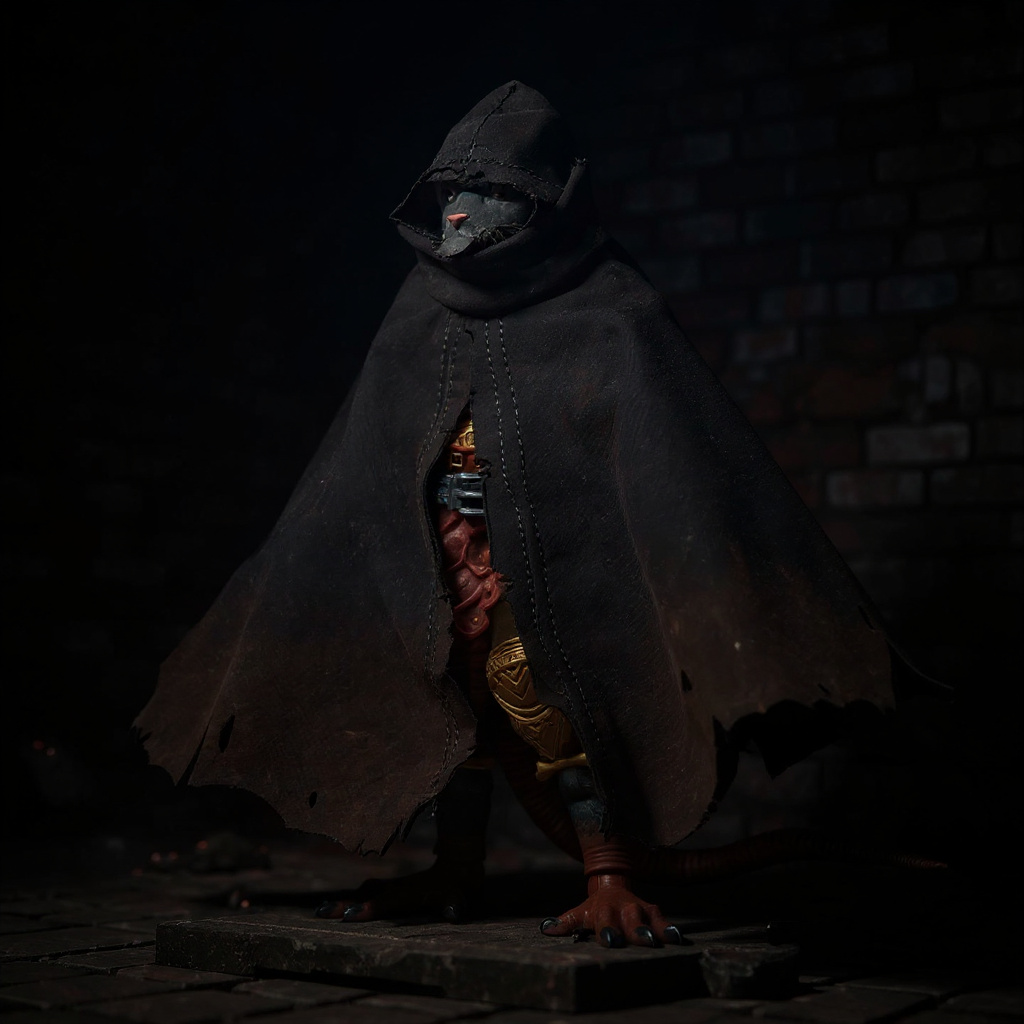
Fabric, Fraying, and the Gothic Look
The fabric is where a cape either sells the scene or kills it. Shiny polyester catches light wrong. A matte, coarse weave reads as old cloth, even from a foot away.
The Rogue cape uses a dark gray-brown cloth with a weave you can see in macro shots, plus subtle fraying along the hem. Subtle is the word. Heavy burn marks and coffee stains push a figure toward costume-party territory, and Rat King's character design) calls for quiet decay. He's a sewer-dwelling menace, not a zombie.
Uneven color helps. A cape with slightly lighter patches near the edges looks handled and worn, which suits a gothic sewer set or a rain-slick rooftop.
Measure First: 5 Checks Before You Buy
A cape that's too big makes your figure look like a kid in a bath towel. Run through this list:
1. Shoulder width of your figure (most 1/12 figures sit around 1.2-1.4 in). 2. Neck peg diameter, usually 3-4 mm, plus any collar or hood detail in the way. 3. Drop length you want: knee-length is about 3 in on a 6-7 in figure. 4. Back gear, such as packs or weapon mounts, that could stop the cape sitting flat. 5. Shelf depth, since a wind-blown cape can add an inch or more of projection.
Some makers offer size options. Others sell one size and hope. Ask before you pay.
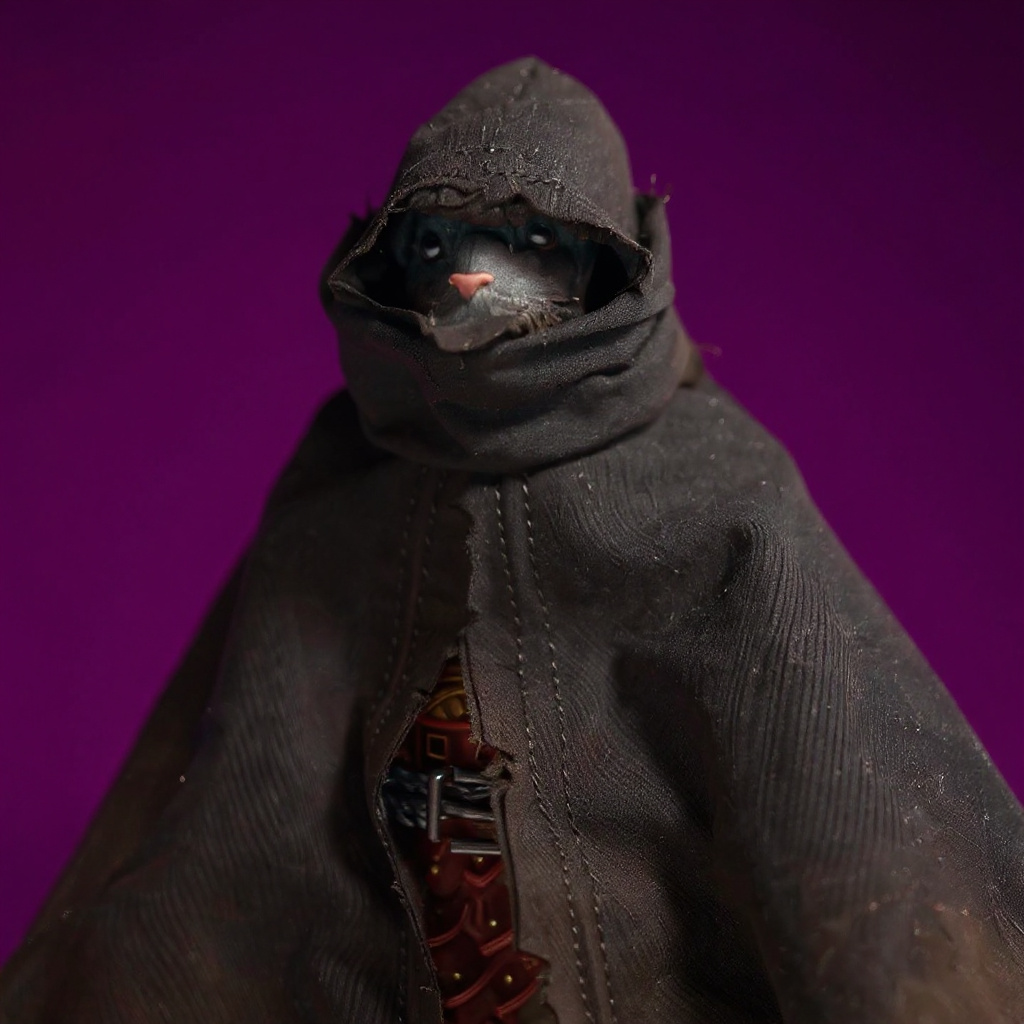
How to Fit and Pose Your Cape in 6 Steps
1. Remove or shift the original plastic cape. Warm it gently if the peg is stuck. 2. Test-fit the cloth cape on the bare torso before changing anything permanent. 3. Seat the neck opening over the peg or collar so the cloak sits evenly on both shoulders. 4. Shape the hem first. Pull one corner up and out, then let the other side fall. 5. Add two or three secondary folds near the shoulder with your fingertips. 6. Check the figure's balance. If it leans, lower the cape's flare or use a stand.
The whole process takes about five minutes once you've done it once. Fewer folds look better than many.
Photographing the Cloak: Dim Light, Sewer Dark
Moody beats bright. Put the figure in front of a dark brick or concrete backdrop, drop the room lights, and use one warm key light from the side. Fabric loves low, angled light because it throws small shadows into the weave.
Try a rim light behind the figure. The frayed hem catches it and glows. Beautiful.
Asymmetry sells realism. Fold one edge up, let the other drop, and tilt the figure's head. Real cloth never hangs in a mirror image.
For a close shot, a macro lens or phone macro mode shows the thread structure. That detail is the main reason to pick cloth over plastic. If you want more help building a set, browse our soft goods collection for related accessories.
The Honest Downsides
Here's the part most sellers skip. If your figure stands in one pose on a shelf all year, a cloth cape is a waste of $34. The factory plastic is fine. Just keep it.
And if you live somewhere humid, skip the wire version, or at least keep it in a closed case. Moisture can rust thin wire and leave stains on fabric. In a dry room it's fine. Near a damp basement? No.
Other caveats:
- Handmade means small variations. Stitching and hem length can differ by a millimeter or two. - Loose threads are normal. Trim them with small scissors, and don't pull. - Dust sticks to fabric. A soft brush works. Plastic you could just wipe. - Heavy cloth on loose joints can pull a figure out of its pose.
TMNT Rat King Custom Cape vs Other Options
| Option | Typical Cost | Pose Range | Fabric Look | Effort |
|---|---|---|---|---|
| Factory plastic cape | $0 (bundled) | Rotation only | Shiny, thick | None |
| DIY cotton + craft wire | $5-10 | Full 3D | Depends on your skills | 1-2 hours |
| Handmade Etsy cape | $25-45 | Full 3D | Varies by seller | None |
| Established soft goods maker | $30-50 | Full 3D | Consistent | None |
| Rogue replacement cape | $34 | Full 3D | Tattered, woven, gray-brown | None |
DIY is the cheapest route. Thin cotton, a hem channel, and wire. If you're handy, try it, and check an online tutorial such as the ones on Instructables for patterns. Makers with a longer track record, like those behind our soft goods cloaks, tend to cost more but offer consistent quality and support.
Collectors on Reddit's action figure communities are open about handmade quirks, and you can ask there before buying from any seller. For general background on the hobby, see the action figure overview.
Our Verdict
Buy a TMNT Rat King custom cape if you photograph your figure, change poses often, or want a gothic sewer diorama that looks right. The $34 Rogue cape gives you a tattered, woven, dark gray-brown cloak and a wire hem that holds shape. Skip it if the figure never moves.
One rule: check your measurements first. Then pose it once, and leave it alone. Wire forgives gentle handling, not constant fiddling.

