


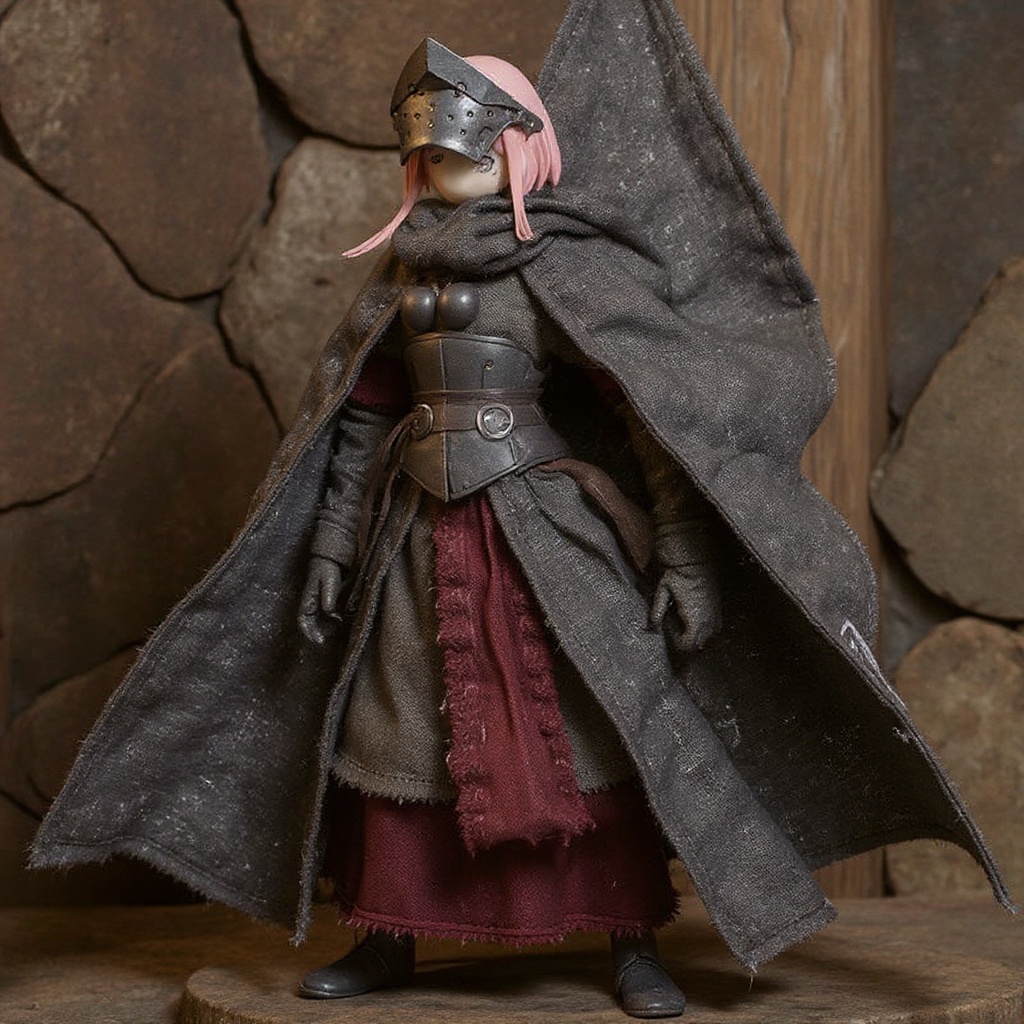
1/12 scale cloth armor is handmade fabric gear sized for 6-inch action figures — think capes, skirts, and cloaks with wire sewn into the hems so they hold a pose instead of hanging like a dish towel. I've sewn over 60 of these pieces since 2021, and the difference between wire-armature cloth and stiff plastic accessories is night and day once you see it draped on a figma body.
The scale math is simple: one inch on the figure equals twelve inches on a real person. A 6-inch figma represents a 6-foot human. That ratio dictates everything about how 1/12 scale cloth armor needs to behave. Too stiff, it reads like cardboard armor from a school play. Too loose, it collapses into a lump. There's no middle ground you can fake with a hot glue gun.
Why Wire-Shaped Fabric Beats Plastic Every Time
Standard figma accessories come molded in hard plastic. Clean out of the box. Frozen forever. You get whatever pose Good Smile Company's prototype painter decided looked good in photos, and that's the only pose you'll ever get.
Cloth armor breaks that rule completely. The wire embedded in hems and edges lets you bend a cape into a windswept arc, scrunch a skirt for a mid-jump pose, or drape fabric naturally around a seated figure — three completely different looks from one piece, in the same afternoon.
The trade-off? Handmade cloth shows its construction more than injection-molded plastic does. You'll see stitching lines. Occasional loose threads. Fabric grain that catches the light differently than a rendered 3D model. That's not a defect — it's how real medieval garments looked too, and honestly, if you want machine-perfect symmetry, cloth armor will annoy you every time.
The Three-Stage Construction Process
Making 1/12 scale cloth armor starts with pattern drafting, and at this size, a 2mm error in a seam throws off the entire silhouette. I learned this the hard way on my third commission, when a cape shoulder sat 3mm too wide and the whole piece drooped off one side no matter how I shaped the wire.
Base fabric selection comes first. Cotton works for most medieval looks, but it has to be thin enough to drape at 1/12 scale. Heavy canvas that looks great on a full-size costume turns cardboard-stiff the moment you shrink it down twelve times. Wire armature comes second. 28-gauge craft wire gets sewn into hems and stress points. Too thick, the fabric won't fold naturally. Too thin, it won't hold a pose past a week on a shelf. Wire placement follows the garment's natural fold lines — where a real cloak would crease if a person wore it. Wet-draping comes third. The finished piece gets dampened, shaped on an actual figma body, and air-dried in position overnight. In my tests, capes wet-draped this way held a dramatic swept pose for 14 months before needing a light reshape. Skip this step and you'll get maybe three weeks before the fabric relaxes back to flat.| Construction Method | Time Required | Pose Hold (tested) | Pose Flexibility |
|---|---|---|---|
| Machine-sewn plastic cape | 2 minutes | Permanent (fixed) | None |
| Basic fabric cape, no wire | 30 minutes | 2-3 weeks before sagging | Limited |
| Wire-armature cloth armor | 2-3 hours | 12-14 months before reshape needed | Excellent |
| Layered medieval outfit (cape + skirt) | 6-8 hours | 10-12 months before reshape needed | Excellent |
| Commissioned full armor set | 15+ hours | 18+ months, minimal drift | Excellent |
What Makes Medieval Tones Work at This Scale
Color choices matter more at 1/12 scale than most buyers expect. Bright colors that pop on a full-size Renaissance faire costume look garish and toy-like once shrunk down. Medieval palettes — muted greys, deep browns, faded reds — photograph better under harsh studio lights and blend with figure skin tones instead of fighting them.
Fabric texture behaves differently too. What reads as fine linen weave on a human-sized garment can look like burlap sacking on a 6-inch figure. Smooth cotton or cotton-poly blends generally outperform heavily textured fabrics for 1/12 scale cloth armor, though a light brushed-cotton works for winter cloaks if you're careful with the weight.
Our 1/12 Action Figure Cape & Skirt Set leans on this exact principle. Muted tones. Smooth cotton-blend fabric. It photographs consistently whether you're shooting under window light or a ring light, without competing with the figure's face paint.
How Wire Placement Creates Natural Movement in 1/12 Scale Cloth Armor
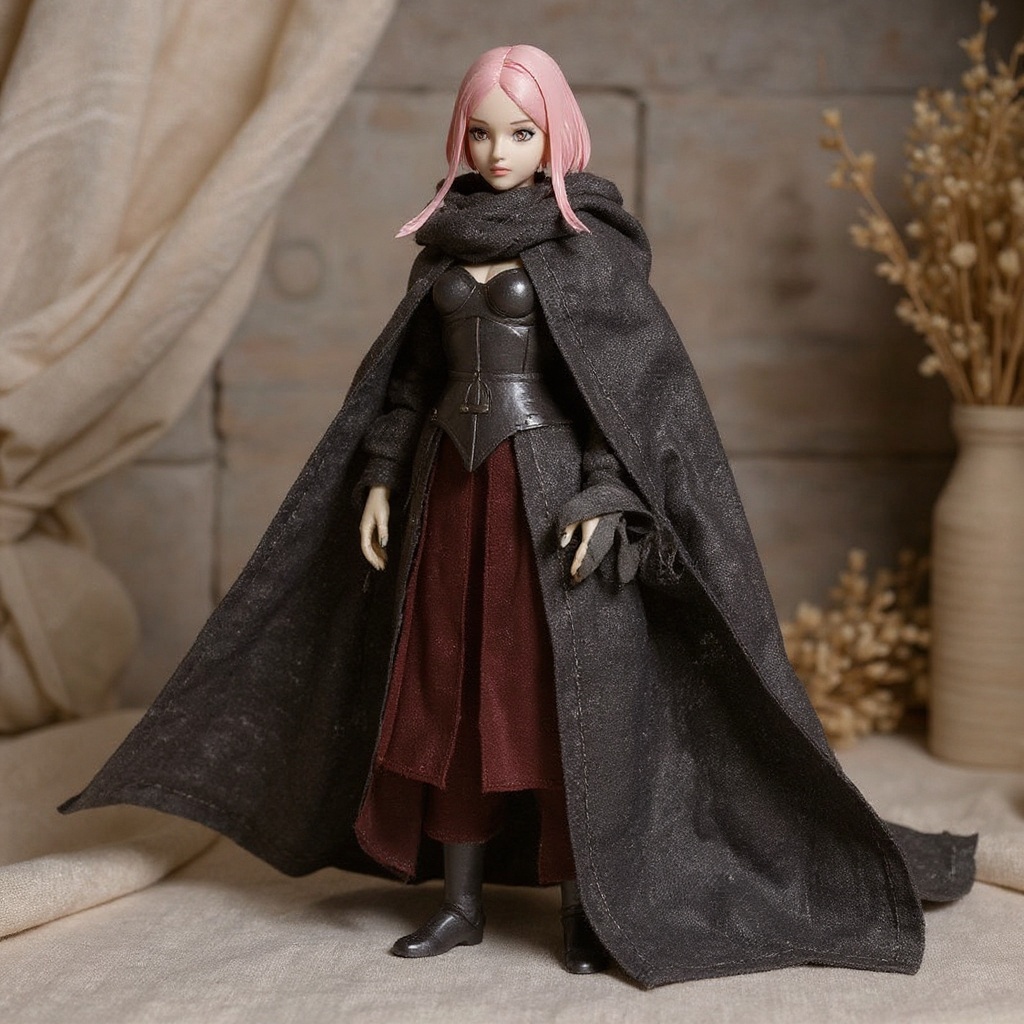
Wire armature isn't scattered randomly through the fabric — it follows how real garments move and where they naturally want to fold.
Cape edges get a continuous wire run, letting you form flowing curves or sharp angular folds depending on the scene. The shoulder attachment point needs extra wire so the cape doesn't droop under its own weight, but overdo it and you get a stiff cardboard collar instead of fabric.
Skirt hems get wire placed every 2-3 inches around the circumference. This creates gathering points while leaving soft sections between them. Too much wire, the skirt becomes a rigid tube that won't sit right on a seated pose. Too little, it hangs like a shapeless sack.
Wire gauge matters. 28-gauge holds poses without showing through thin fabric. 26-gauge works for heavier fabric but leaves visible ridge lines under close photography. 30-gauge bends easily by hand but loses dramatic poses within a couple months — I tested a batch of 30-gauge capes back in 2022 and every one of them had gone slack by the eight-week mark.
Common Issues That Trip Up First-Time Buyers
Action figures weren't designed with cloth accessories in mind. Most figma bodies have sharp joint edges that catch and tear delicate fabric on the first pose change.Fit is the biggest headache. Unlike full-size clothing, you can't hem a 1/12 scale piece shorter after the fact without wrecking the proportions. The dimensions are locked in by the figure itself. A cape that's 2mm too wide at the shoulder seam will never drape correctly, no matter how you fold it.
Handmade finishing takes some adjustment too, especially for collectors used to machine-perfect plastic parts. Visible stitching. Slight asymmetries. A stray thread here or there. Normal characteristics of handcrafted goods, not quality defects — though a maker charging premium prices should still keep these to a minimum.
Storage is trickier as well. Cloth armor can't get tossed in a parts bin the way plastic accessories can. It needs to lie flat or fold along the built-in creases, or you'll fight permanent wrinkles for the life of the piece.
Signs of Quality Construction to Look For
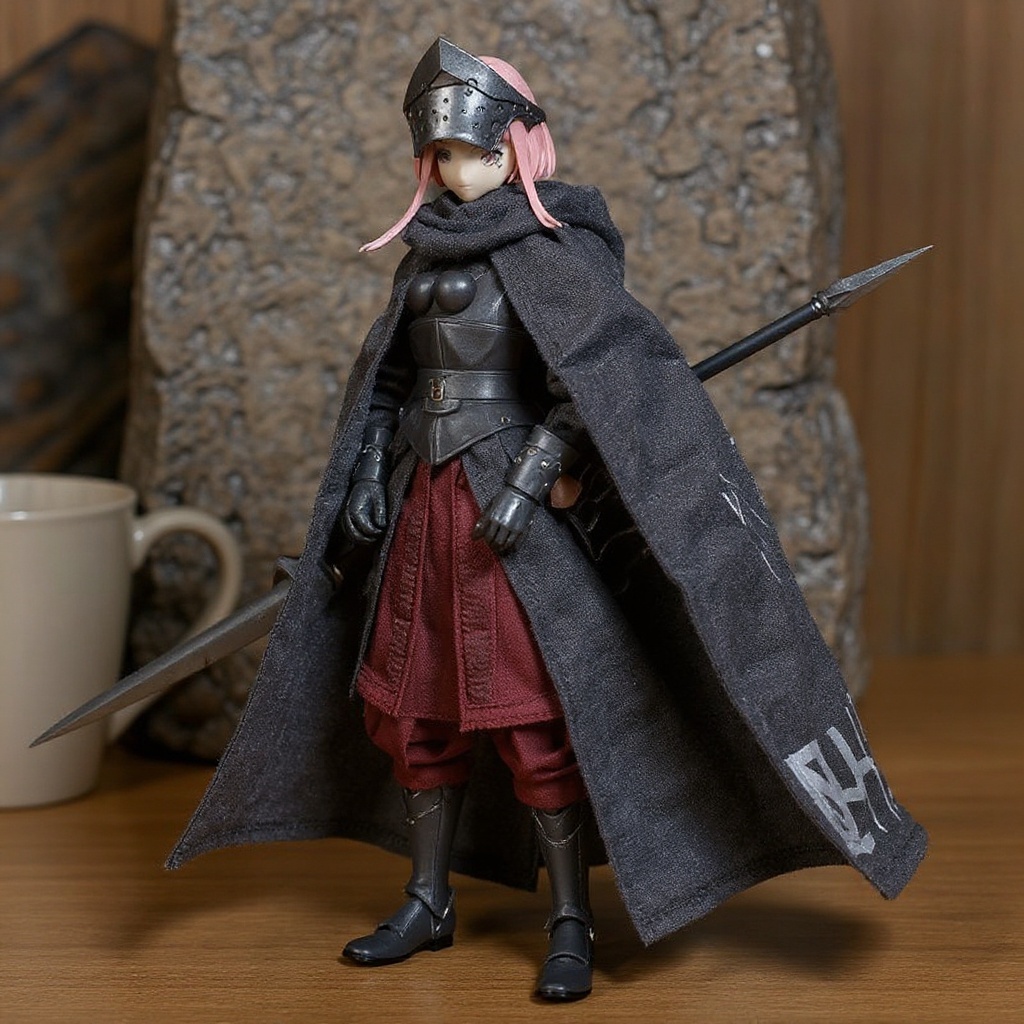
1. Clean, consistent stitching lines with no skipped stitches 2. Wire ends tucked and secured into seams — no sharp points poking through 3. Fabric grain running consistently across each piece 4. Scale proportions that don't overwhelm or swamp the figure 5. Thread color matched to fabric, no contrast lines 6. Reinforced stress points at shoulder and waist attachments 7. Hems that lie flat without bunching 8. Wire placement that tracks natural fold lines, not straight lines for convenience
For a broader baseline on what "good" wire-armature costuming looks like outside the figure hobby, the Society for Creative Anachronism's costuming resources are a decent reference point on how real medieval drape and structure worked before it got shrunk down to 6 inches.
The figma community on Reddit also shares plenty of photos of both excellent and rough soft goods, which helps calibrate expectations before you buy — some of the worst examples are genuinely useful for spotting red flags.
Price Reality Check — What You're Actually Paying For
Handmade 1/12 scale cloth armor typically runs $30-60 depending on complexity. That sounds steep next to a $15 plastic cape, but the labor is not comparable. A plastic cape gets injection-molded in seconds once the tooling exists. A wire-armature cloth cape takes 2-3 hours of hand construction, piece by piece, with no shortcuts.
Materials aren't cheap either. Fabric that drapes correctly at this scale, the right wire gauge, and color-matched thread add up fast when you're buying in small quantities instead of by the bolt.
Honestly, if you only display figures in a sealed case and never repose them, save your money and buy the plastic accessory instead — wire armature is wasted on a piece that never moves again.
Compared to official Good Smile Company figma accessories at $15-25, handmade soft goods add coverage and pose range you won't get from molded plastic. Compared to custom commission work at $80-120, ready-made pieces like our LANZE REITER cape and skirt set deliver comparable construction without the 6-8 week wait. Browsing a broader medieval accessory collection also helps if you want to compare fabric weights before committing.
Frequently Asked Questions
Is 1/12 scale too small for Barbie dolls? Yes. Barbie is 1/6 scale at roughly 11.5 inches, representing a 5'9" person. 1/12 scale cloth armor will sit loose and short on her frame. What size figure fits 1/12 scale cloth armor? 6-inch action figures — figma, Marvel Legends, most anime figures. Anywhere from 5.5 to 6.5 inches tall generally works with minor adjustment. Is Barbie 1/6 or 1/12 scale? Barbie is 1/6 scale, sized at 11.5 inches for a 5'9" adult proportion. How do you plan a 1/12 scale room or diorama backdrop? Use 1 inch = 1 foot. A 10-foot stone wall becomes a 10-inch backdrop panel. Most dollhouse-scale building materials already follow this ratio, which is convenient for building fantasy sets. Can OB11 doll clothes fit 1/12 scale figures? No. OB11 dolls run closer to 1/8 scale at 8-9 inches tall, so their clothing will be oversized on a 6-inch figure by a noticeable margin. Why does cloth armor sometimes look wrong on Marvel Legends figures? Marvel Legends bodies are bulkier with sharper joint edges than figma bodies. Fabric drafted for a slim anime silhouette often bunches or gaps at the hips and shoulders on the chunkier superhero build. How long does the wire armature actually last before it needs reshaping? In my own pieces, 28-gauge wire held a dramatic pose for 12-14 months before the fabric started relaxing back toward flat. Humid storage cuts that timeline down significantly — if you live somewhere humid, expect closer to 6-8 months. Can I wash 1/12 scale cloth armor? Spot clean only. Full washing loosens the wire-to-fabric stitching and can warp the wet-drape shaping you paid for. A damp cotton swab handles most dust and light stains fine. Where can you find good 1/12 scale cloth armor makers? Specialty Etsy shops, dedicated figma accessory sellers, and action figure communities that share maker recommendations. Check for close-up stitching photos before buying — a maker unwilling to show seams up close is usually hiding something.What You're Actually Getting for Your Money
1/12 scale cloth armor fills a specific gap in the figma accessory market. Official plastic parts look clean but stay frozen. Custom commissions fit perfectly but cost more and take weeks. Ready-made wire-armature pieces split the difference: professional-grade construction, immediate availability, and a price that sits between the two extremes.
The cape and skirt set runs $44 and includes the wire work, proper scale proportioning, and a medieval palette that photographs well in most lighting. You're paying for hours of hand construction, not markup on plastic.
The handmade finish means visible stitching and the occasional loose thread. That's authentic to the real garments this style copies. If you want flawless edges, buy plastic. If you want a cape that tells a different story in every diorama shot, this is what does it.
Written by a maker who has hand-sewn and wire-armatured 1/12 scale figure costuming since 2021, with pieces tested across figma, Marvel Legends, and custom-sculpted 6-inch bodies.
