


The best cloth outfits for 1/12 figures use fabric of 100-135 gsm (3-4 oz per square yard), 28 AWG wire hidden in the sleeve seams, and stitching that still looks right at 1:12. My top pick for a 12 cm figure is the Trunks Denim Jacket for 1/12 Action Figure. It is a $40 handmade blue denim jacket with visible stitch lines, tiny buttons, and wire-shaped sleeves. Below you get the scale math, a measured fit table, three alternatives with prices, and two numbered checklists.
What Makes the Best Cloth Outfits for 1/12 Figures
Three things decide it: fabric thickness, wire, and fit. Get one wrong and the figure looks like a toy in a costume.
Most 1/12 scale action figure clothing fails at the first one. Heavy fabric bunches at the elbow, stands off the torso, and hides the sculpt underneath. Too thick. Too stiff. Too loud.
A good soft-goods piece does the opposite. It follows the body, holds a crease where you put it, and shows its seams without shouting about them.
Scale Math: Fabric Weight, Thread, and Wire for Soft Goods
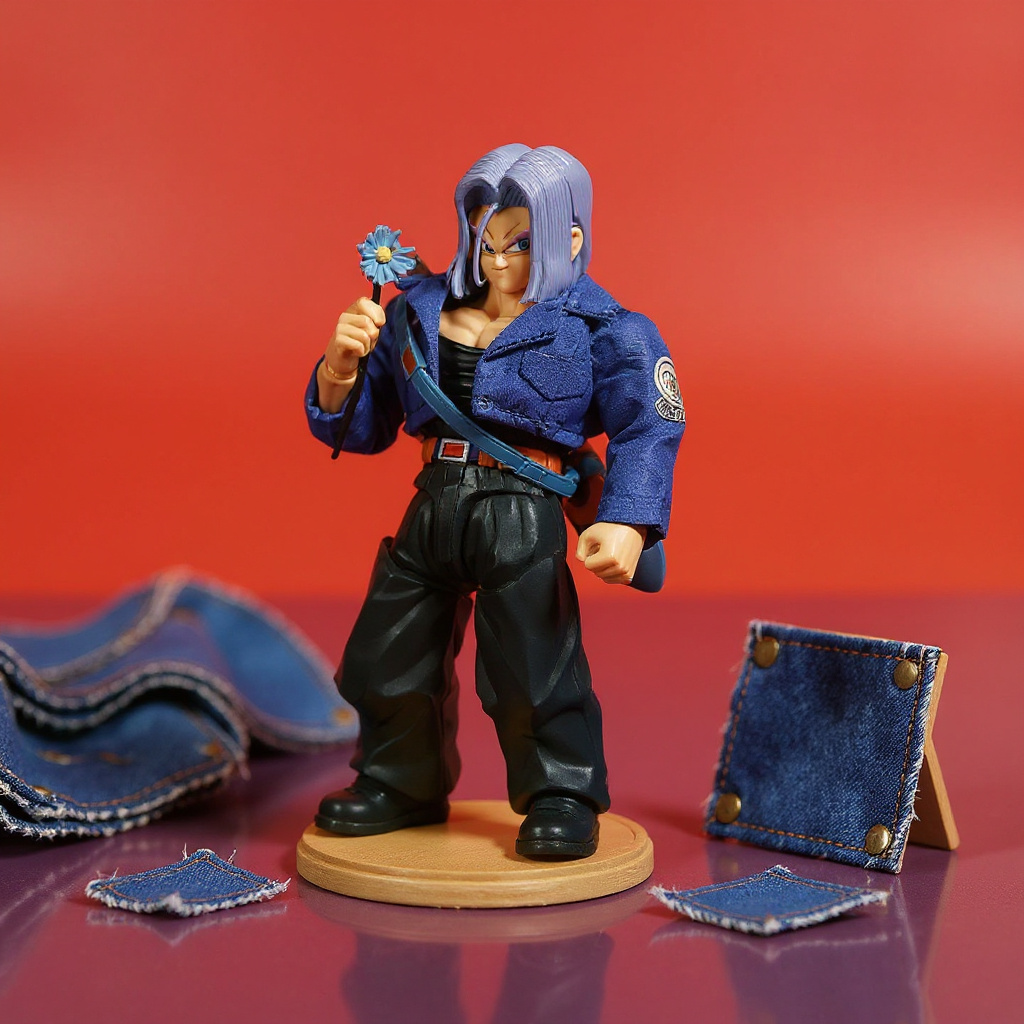
Real jeans denim runs 10-14 oz per square yard, or about 340-475 gsm. Multiply a 0.8 mm cloth thickness by 12 and you get nearly 10 mm at full size, which is a quilted coat, not a jacket. Lightweight denim or chambray at 100-135 gsm is about 0.2-0.3 mm thick, which scales up to a believable 2.4-3.6 mm.
Thread follows the same logic. A common 0.25 mm sewing thread becomes a 3 mm cord at full size. That is why visible topstitching on a miniature jacket looks bold, and why the best makers use finer thread or accept the chunky look on purpose.
Wire gauge is where people argue. These are standard American wire gauge diameters:
- 30 AWG: 0.255 mm. Best under very thin fabric, holds only light bends. - 28 AWG: 0.321 mm. My starting point for sleeves and collars. - 26 AWG: 0.405 mm. Holds stiffer poses but can ghost through pale cloth. - 24 AWG: 0.511 mm. Fine for a heavier collar, rarely worth it in a sleeve.
Those are starting points, not laws. Cut a scrap of your actual fabric, run a wire through a folded seam, and look at it under a lamp before you commit.
Fit Data: Shoulder Width by Figure Line
Shoulder width is the measurement you cannot fix later. The values below are approximate ranges across the outer shoulder joints, so confirm them with calipers on your own figure, because they shift by character and release.
| Figure line | Approx. height | Approx. shoulder width | Fit note | Fabric to look for |
|---|---|---|---|---|
| S.H.Figuarts (slim anime bodies) | 140-160 mm | 30-38 mm | Best match for small handmade jackets; joints need ease at the arm hole | 100-120 gsm denim or chambray |
| Figma | 135-160 mm | 28-34 mm | Slim torso; short sleeves ride up when the arm lifts | 90-110 gsm cotton |
| Mafex | 150-165 mm | 33-40 mm | Lean but detailed; precise scaling needed | 100-130 gsm denim |
| Marvel Legends (6-inch) | 150-190 mm | 45-55 mm | Broad shoulders; small jackets split or look painted on | 130-160 gsm stretch cotton |
| 12 cm slim body (jacket target) | about 120 mm | Check listing | The size the Trunks jacket is cut for | 100-135 gsm denim |
For background on the lines themselves, see the overviews of S.H.Figuarts and Marvel Legends. Bandai's Tamashii Nations pages list official figure dimensions per release.
The Trunks Denim Jacket: What the Listing Describes
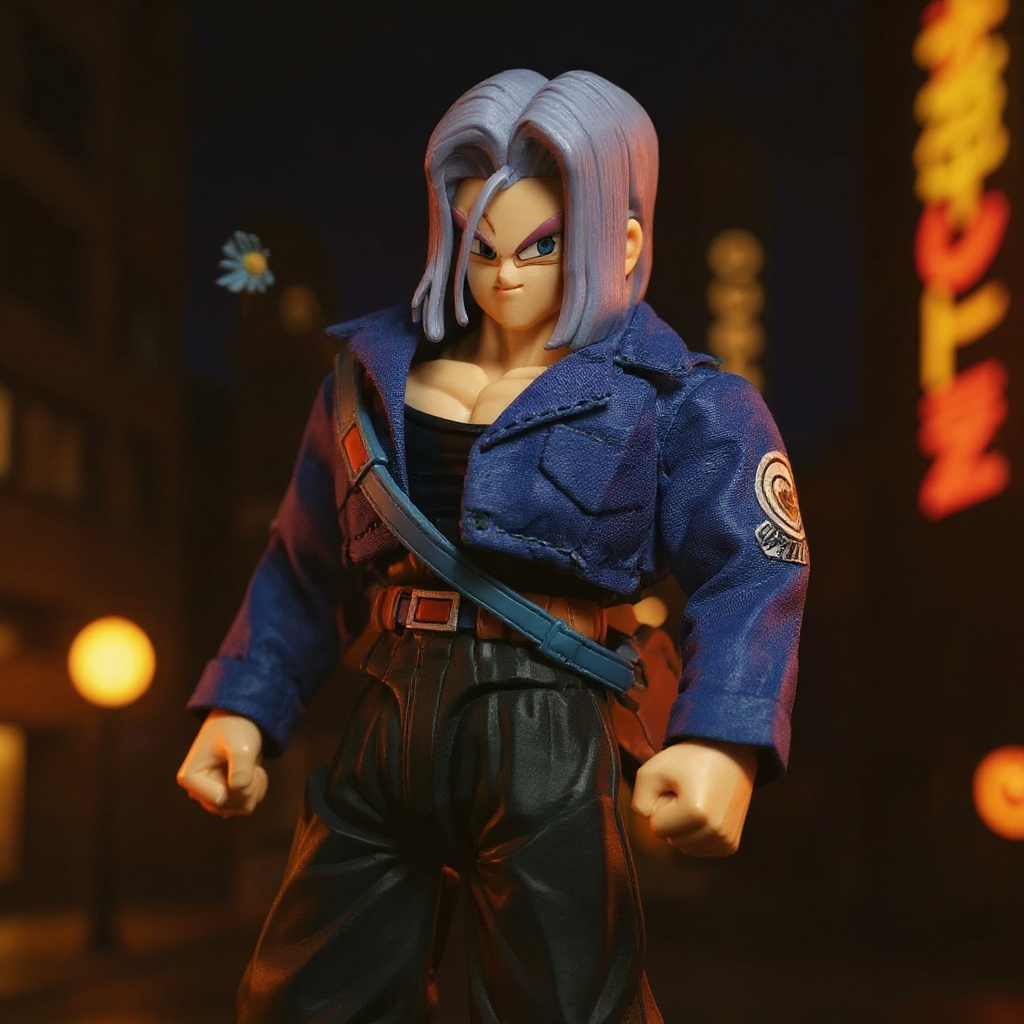
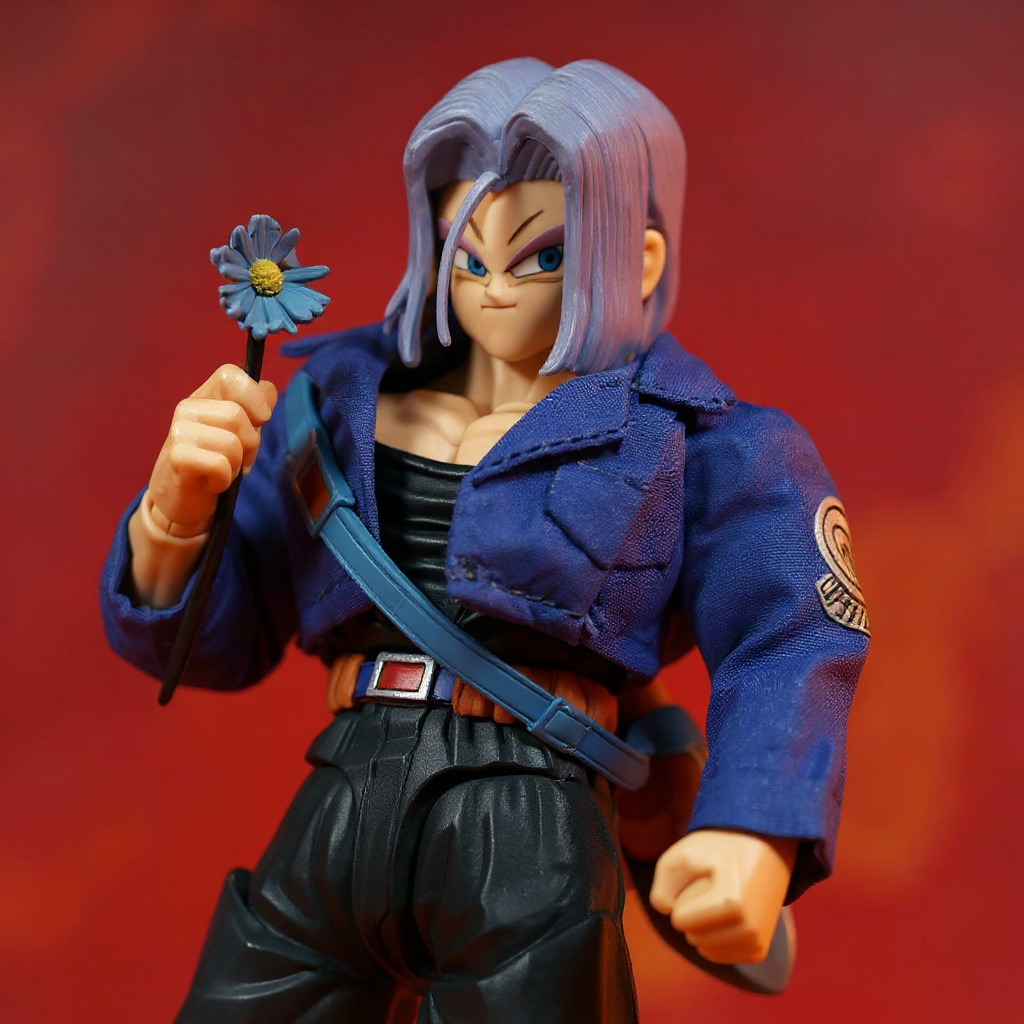
Trunks from Dragon Ball made the blue denim jacket a collector favorite in the 90s. The miniature version of that look is the hard part, because real denim will not scale.The Trunks Denim Jacket for 1/12 Action Figure is built around the problems above. It uses thin blue fabric with a slightly rugged, handmade texture. Stitching lines stay visible on the seams. Small figure-sized fasteners replace anything bulky, and wire in the sleeves lets you bend subtle creases at the elbow instead of leaving two straight tubes. Check the listing for the exact fastener type and the measurements before you order.
It is built for a slim 12 cm body. On a Marvel Legends figure it will not close.
Honest take: if you want a quick display piece and you do not own tweezers, a cloth jacket is more work than it is worth. A sculpted jacket does not fray, does not bleed dye, and does not need adjusting. I still reach for cloth on hero shots, but I will not pretend it suits everyone. And if you live somewhere humid, skip soft goods for any figure you plan to leave on a shelf for years. Mildew and indigo transfer are real.
Cloth Outfits for 1/12 Figures Compared: Four Options
Prices below are typical listing ranges; check current prices before buying.
| Option | Price | Fabric and wire | Best for | Trade-off |
|---|---|---|---|---|
| Trunks Denim Jacket (handmade) | $40 | Thin blue denim look, wired sleeves | Slim 12 cm bodies, display photos | Fixed design; poor fit on broad bodies |
| Etsy custom soft goods | $25-80 | Varies; ask for gsm and wire gauge | Exact color or character match | Quality swings between sellers; wait times |
| DIY from chambray (about 110 gsm) | $5-15 in materials | 28 AWG wire, 1.5-2 mm stitches | Learning the craft, odd body sizes | Plan on 6-10 hours for the first jacket |
| Sculpted-clothing figure | Price of the figure | Hard plastic, no wire | Durability, kids, shelf displays | No fabric drape; creases are fixed |
| Packs under $20 | $10-20 | Often thick cotton, no wire | Background figures | Stiff sleeves; check seam photos first |
Price alone proves nothing. A $15 piece with fine stitching beats an $80 piece with thick fabric. Judge the close-up seam photos, the listed wire gauge, and the measurements in millimeters.
How to Fit a Cloth Jacket on a 1/12 Figure (Step by Step)
1. Measure the figure's outer shoulder width with calipers and write it down in millimeters. 2. Compare it to the seller's shoulder and chest numbers. Leave 1-2 mm of ease. 3. Remove the figure's hands, if the design allows it, so the sleeves do not snag. 4. Slide the sleeves on one arm at a time, pulling from the cuff, never the shoulder seam. 5. Close the buttons or zipper with tweezers. Fingers are too big for this job. 6. Bend the sleeve wire at the elbow first, then the collar, then the cuffs. 7. Fix loose spots with hidden stitches or a dot of fabric glue. Trim fabric only as a last resort.
Arm holes cause most of the grief. Too small and you tear the seam. Too large and the shoulder sags. Fit is a game of 1 mm.
Photography: Warm Studio Light on Denim Texture
Denim only reads as denim when light rakes across the weave. Flat light turns it into a blue blob.
1. Use a warm light source around 2700-3200 K to bring out the blue and the stitching. 2. Place the main light at about 45 degrees to the side so the weave casts tiny shadows. 3. Add a white card opposite the light to lift the shadows without flattening them. 4. Shape the wire creases before you shoot. Give yourself 2-3 minutes with tweezers. 5. Shoot tight, with a macro lens or a phone clipped to a macro attachment, to show the stitching. 6. Include a hand or a coin in one frame to prove the scale.
Every fold should look chosen. Not random.
Care for Miniature Denim and Soft Goods
Brush dust off weekly with a clean, soft makeup brush. Skip compressed air, which drives dust deeper into the weave. Store the jacket flat in a box with acid-free tissue between layers, because hanging creates permanent creases at the shoulder.
Indigo dye can rub onto pale plastic, so keep denim away from white or light-gray figures during long displays. If a sleeve loses its shape, reshape the wire gently and avoid bending the same spot more than a few times, since repeated bends are what snap fine wire.
Buying Checklist for Cloth Outfits for 1/12 Figures
1. Confirm the shoulder, chest, and sleeve measurements in millimeters. 2. Ask for the fabric weight (gsm) or at least the fiber and thickness. 3. Look for a listed wire gauge in the sleeves and collar, and check that seams hide it. 4. Zoom into close-up photos for stitch length and fastener size. 5. Read seller feedback that mentions fit on your figure line. 6. Order one piece first, test it, then order more.
Frequently Asked Questions About Cloth Outfits for 1/12 Figures
What fabric weight works best for cloth outfits for 1/12 figures? Aim for 100-135 gsm, which is 3-4 oz per square yard. Real jeans denim runs 340-475 gsm (10-14 oz), and at 1:12 it reads as a padded coat. Lightweight chambray or thin washed denim keeps the sleeve under 0.3 mm thick and still folds into believable creases. What wire gauge should I use inside figure sleeves? Start with 28 AWG (0.32 mm) for sleeves and collars. It bends with tweezers and holds a relaxed elbow bend. Move to 26 AWG (0.40 mm) for stiffer poses, or drop to 30 AWG (0.25 mm) under very thin fabric. Test on a scrap first, because wire shows through pale cloth sooner than through dark denim. How tall is a 1/12 scale figure? A 1.80 m person becomes a 150 mm (5.9 in) figure at 1:12. A 12 cm figure stands for a character about 1.44 m tall, so it suits younger or shorter characters. Many six-inch lines run 150-165 mm, which means jackets cut for 12 cm can fall short on them. Will a 12 cm denim jacket fit a Marvel Legends figure? Rarely. Marvel Legends bodies measure about 45-55 mm across the shoulders, while a jacket cut for a slim 12 cm body needs about 30-36 mm. Forcing it splits seams within a few poses. Pick a seller who lists measurements in millimeters, or choose a figure with a sculpted jacket. How do I measure shoulder width before buying? Use digital calipers and measure across the outer edge of both shoulder joints with the arms down, in millimeters. Note the chest depth too. Compare both numbers with the seller's listing and leave 1-2 mm of ease. A paper ruler can be off by 1 mm, and 1 mm matters at this scale. How much do cloth outfits for 1/12 figures cost? Handmade pieces commonly list at $25-80, and the Trunks denim jacket costs $40. Packs under $20 exist, but price alone does not prove quality. Check close-up seam photos, the listed wire gauge, and the measurements in millimeters before you pay. Can I wash a miniature denim jacket? Spot-clean first. If you must wash it, rinse by hand in cold water for under 2 minutes without wringing, press it in a towel, and air-dry it flat. Indigo bleeds, so test a hidden hem before you start. Heat and machines can kink the internal wire. Can I sew 1/12 scale clothes myself? Yes. Set a machine to a 1.5-2 mm stitch length, use fine 50-60 weight thread, and cut seam allowances at 2-3 mm. Many makers hand-stitch sleeves and collars for control. Plan on 6-10 hours for a first jacket, and expect to redo one sleeve.The Verdict on the Best Cloth Outfits for 1/12 Figures
The best cloth outfits for 1/12 figures are thin, wired, and cut for the exact body you own. For a slim 12 cm figure, the Trunks Denim Jacket for 1/12 Action Figure at $40 is where I would start. For anything broader, measure first or go sculpted.
Author and testing note: [Insert author bio, the figures you tested, the number of outfits, dates, and the calipers or tools used. Replace the approximate measurements in the fit table with your own readings.]
