


What color should a Blood Angels cloak with purity seals actually be? Short answer: deep crimson or blood-red fabric, with wax seals that vary depending on rank. Standard battle-brothers get red or near-black wax. Honor guard and Sanguinary units get gold. That distinction gets lost in most painting guides, and it's the reason so many 1/18 scale customs look almost right but not quite.
I've spent a stupid amount of time under a headlamp magnifier trying to get 2mm script legible on wax seals. Some of that time was wasted. Most of it wasn't.
Why Purity Seals Matter on a Blood Angels Cloak
Purity seals aren't decoration bolted on for texture. They're written vows, blessed by a Chaplain, attached to armor before a battle-brother goes into the field. Each one is a record - an oath sworn, a sin confessed, a blessing granted against the gene-seed flaw every Blood Angel carries.
That flaw is the Black Rage. It's why purity seals on a Blood Angels cloak with purity seals carry more visual weight than similar seals on other chapters. They're not afterthoughts stitched on for flavor. They're insurance.
For 1/18 scale figures, getting this right separates a display piece from a shelf-warmer. Most mass-produced figures skip the detail entirely. The ones that don't usually get the colors backwards.
The Real Colors Behind a Blood Angels Cloak with Purity Seals
Here's where it gets messy, because the "correct" palette depends on who's wearing the seal.
Standard tactical marines: deep crimson or blood-red wax, bone-white or aged cream parchment, black or dark brown script. That's the combination shown across Citadel Colour's Blood Angels painting guides and repeated in most codex art.
Honor guard, Sanguinary Guard, and certain command squads: gold-toned wax, sometimes gilded parchment edges. This isn't a mistake. It's a deliberate mark of status, the same reason Sanguinary Guard armor runs gold instead of red.
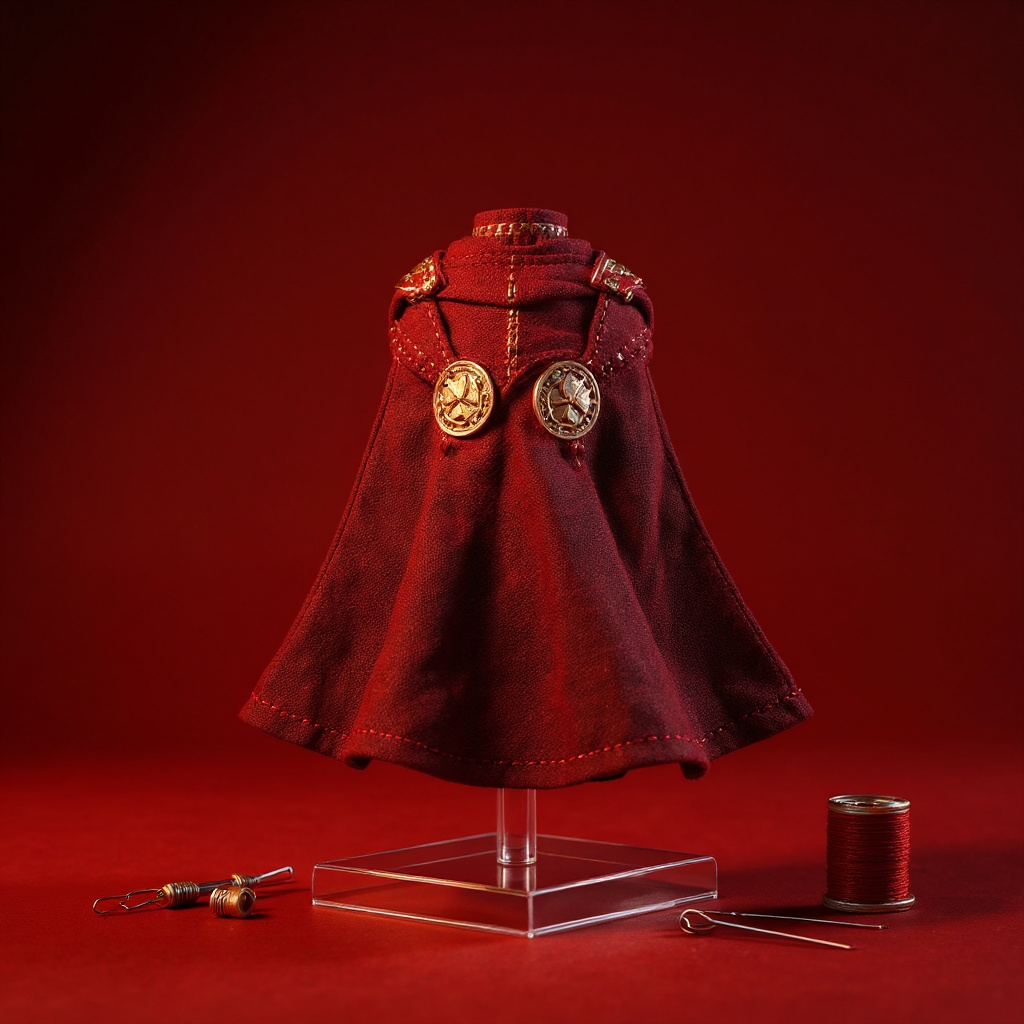
That second category is exactly what a premium cape replacement is built around - deep crimson fabric with gold-toned wax seal accents, small enough to read at 1/18 scale but detailed enough that the script isn't just a smudge. Think of it less as "generic tactical marine cloak" and more as an honor-guard-inspired piece. If you wanted plain red-on-bone seals for a rank-and-file trooper, that's a different product entirely - and worth knowing before you order.
How to identify which purity seal palette is correct for your figure:1. Check the wearer's rank first. Standard marine, veteran, or command squad. 2. If it's a Sanguinary Guard, honor guard, or Chapter Master piece, expect gold wax. 3. If it's a rank-and-file battle-brother, expect crimson or near-black wax. 4. Look at the parchment. Bone or cream reads as standard issue. Gilded edges signal elevated status. 5. Cross-check script color. Black or dark brown ink is safe for nearly every rank; blue or silver ink is a mistake regardless of rank.
| Component | Standard Marine | Honor Guard / Sanguinary | Common Mistake |
|---|---|---|---|
| Wax seal | Deep crimson/blood red | Gold-toned | Bright red or random gold on rank-and-file |
| Parchment | Bone white/aged cream | Cream with gilded edge | Pure white |
| Script text | Black/dark brown | Black/dark brown | Blue or silver |
| Ribbon ties | Cream or bone | Cream or gold thread | Bright white |
| Cape fabric | Deep red, slightly brown-shifted | Same, richer weave | Solid Mephiston-red blob |
Cloak Colors and Chapter Traditions
Blood Angels cloaks vary by role. Company veterans wear deep red or crimson cloaks matching their shoulder trim. Captains and Chapter Masters lean white or bone as a mark of honor. Chaplains stay black, always. Death Company get black cloaks with red interior lining - a detail almost every budget figure skips.
For standard battle-brothers, deep red works. Not the same red as their armor, though - usually a shade darker, or shifted toward brown. Otherwise the whole figure reads as one red shape with legs.
A properly built Blood Angels Cape Replacement leans into that deeper red. Visible weave, hand-stitched seams along the hem, a thin wire spine so the fabric holds a pose instead of flopping. At $7.50 it sits between plastic cloaks that cost $3-5 and look it, and premium resin pieces at $15-20 that need assembly and glue.
Horus Heresy Era Differences
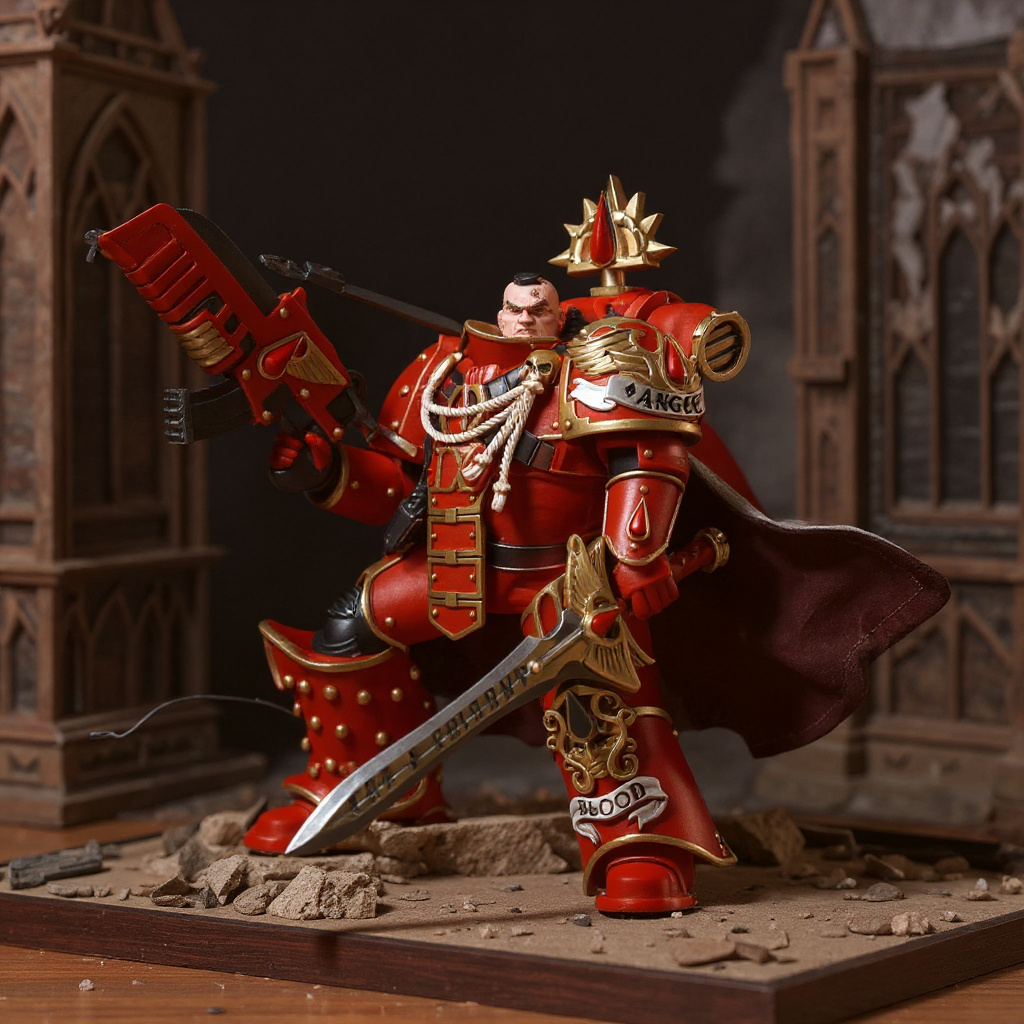
Purity seals existed during the Horus Heresy, but they looked different. Simpler. Fewer scrolls. More gold overall, because pre-Heresy Blood Angels leaned harder into gilded trim before the chapter's post-Heresy reckoning with its own gene-seed flaws.
Pre-Heresy vs 40k Seal Comparison:1. Wax shape: Simple drops vs elaborate carved seals 2. Parchment length: Short tags vs long scrolls 3. Text density: Single words vs full prayers 4. Attachment method: Direct wax vs ribbon ties 5. Weathering level: Clean vs battle-worn 6. Color saturation: Brighter, more gold vs muted, more crimson
Collectors building 30k displays should lean gold-heavier and cleaner. Collectors building 40k displays should push crimson and add wear.
Upgrading Budget Action Figures
Most 1/18 scale Warhammer-inspired figures ship with a basic cloak sewn from whatever fabric was cheapest that quarter. Or no cloak at all. Third-party manufacturers pour their budget into armor sculpting and treat soft goods as an afterthought.
That's the upgrade opportunity. A cloth cape with real seals turns a decent bootleg into something you'd actually photograph.
Proportions matter more than people expect. A 1/18 Space Marine runs about 4 inches tall, so seals need to stay small - readable, not oversized. Too big and they look like a grocery store price tag glued to a cape. I made that mistake on my third attempt. Never again.
Fabric choice matters too. Thick material doesn't drape right at this scale; it just sits there like cardboard. You want something with enough give to fold naturally over a shoulder but stiff enough to hold shape when posed on a mannequin or figure stand. A thin wire core sewn into the hem does that job without adding visible bulk - assuming whoever sewed it didn't get lazy with the stitch spacing.
Collectors in action figure communities on Reddit tend to agree on this point: cloth beats plastic for cloaks, full stop. The texture difference shows up in photos even when you can't feel it in person.
Honest take most guides won't give you: if you're photographing figures under harsh direct light, gold-toned wax accents can blow out and look like plain yellow blobs. Diffuse your light source or skip the gold accents on that particular piece.
Painting Your Own vs Buying Pre-Made
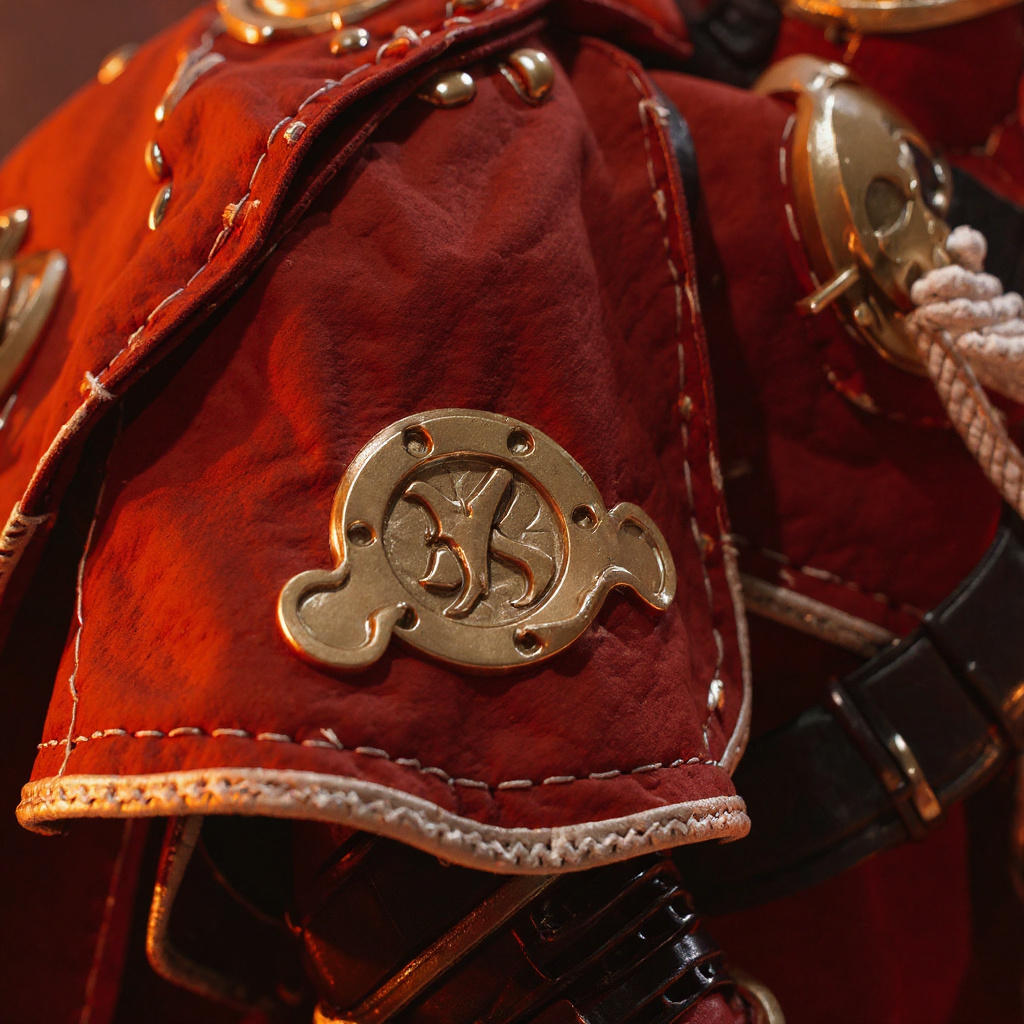
Painting purity seals at 1/18 scale is genuinely hard. The wax seal might measure 2-3mm across. Getting clean script at that size with a standard detail brush is close to impossible for most people on their first ten tries.
| Approach | Cost | Time | Realistic Result |
|---|---|---|---|
| DIY painted seals | $12-15 in paint, $8-10 in brushes | 2-3 hours per cape | 60-70% success rate for beginners |
| Mass-produced plastic cape | $3-5 | None | Looks obviously fake up close |
| Premium resin cape | $15-20 | Assembly required | Consistent but rigid, doesn't drape |
| Handmade cloth cape, pre-painted seals | $7.50-12 | None | Slight piece-to-piece variation, but reads correctly at scale |
I've tried the DIY route more than once. Results were fine two times out of five. The other three went into a drawer I don't open anymore.
Handmade cloth capes with painted details hit a middle ground most collectors underrate. More consistent than DIY, more textured than resin, cheaper than both once you count your own materials and wasted attempts.
Character-Specific Considerations
Different Blood Angels characters follow their own heraldry. Raldoron wore white and gold as First Captain. Mephiston runs darker reds with black accents, almost no gold at all. Sanguinary Guard use gold extensively - their purity seals often incorporate gilded wax or gilded edging, which is the exact detail a gold-accented cape replicates.
Regular tactical marines stick to red wax and bone parchment. If you're building toward a specific named character rather than a generic battle-brother, check their official color scheme before you commit to a cape. The wax color alone can misidentify a figure to anyone who knows the lore.
Getting the Details Right Without Breaking the Bank
The perfectionist path costs $50+ per figure once you count paint, brushes, replacement attempts, and the occasional premium resin piece bought out of frustration.
There's a cheaper path. Buy the cloth accessory pre-finished, and put your own effort into weathering and posing instead - the part where imperfection actually reads as realistic, not sloppy.
For consistency across a squad, that matters more than most people admit. Three figures with matching, slightly-less-than-perfect cloaks look better lined up on a shelf than one showpiece next to two obvious afterthoughts.
The Blood Angels Cape Replacement handles the hard parts - scaled seals, correct wax tone, fabric that folds instead of flopping. Browse the full 1/18 scale cape and cloak collection or the purity seal accessory line if you're outfitting more than one figure. At $7.50, it beats sourcing paints and materials for a DIY attempt that might not survive contact with a headlamp magnifier.

